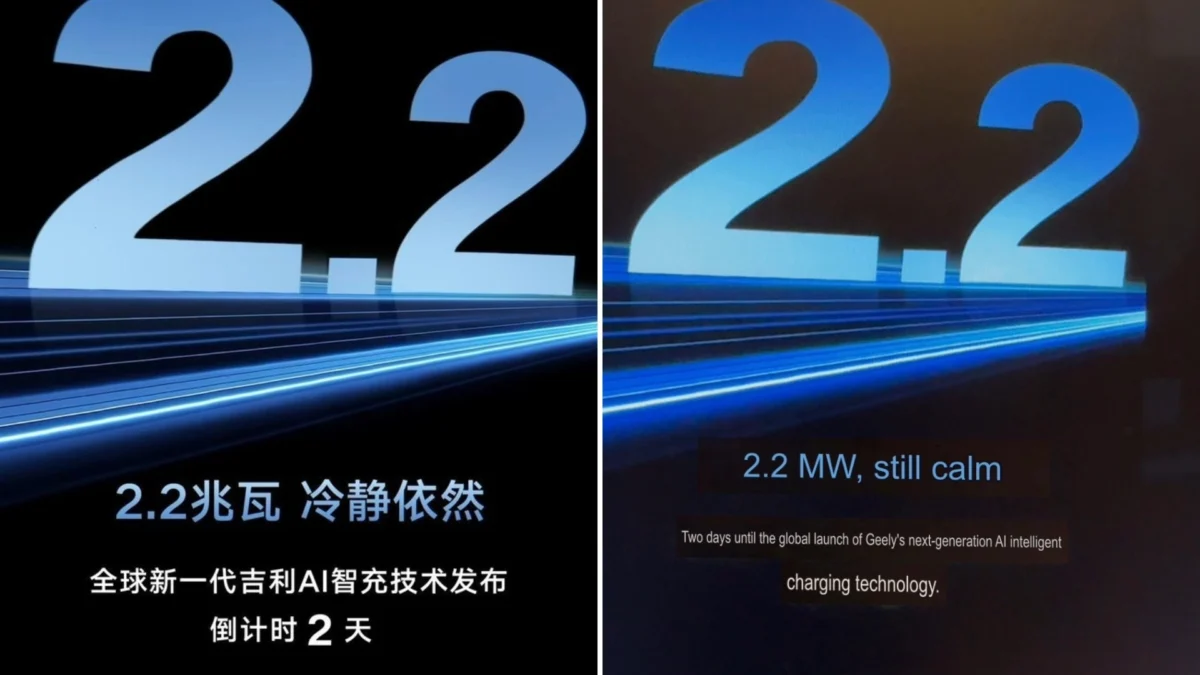
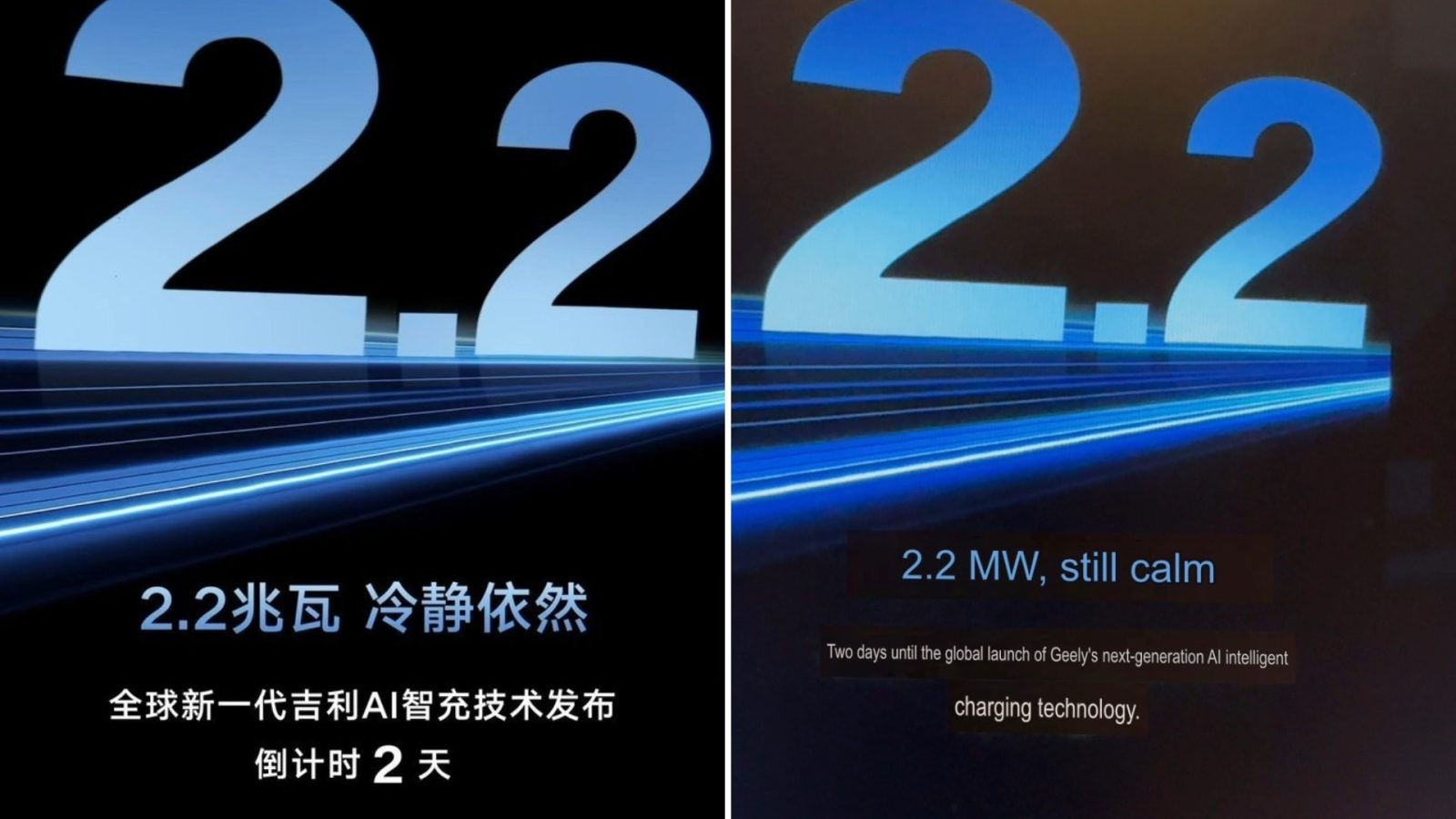
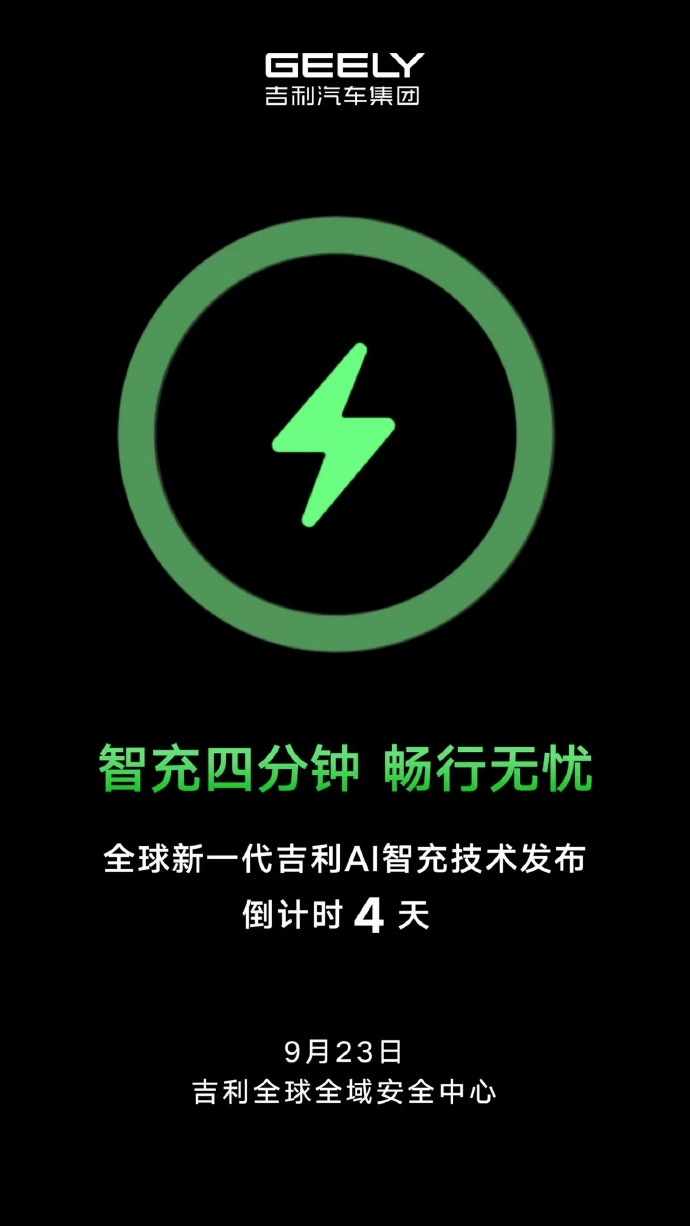
The global electric vehicle landscape is once again shifting at a breakneck pace as Chinese automotive giant Geely prepares to unveil its next-generation AI-powered smart charging technology and advanced battery architecture. Scheduled for an official debut on September 23 at the Geely Global All-Domain Safety Center in Ningbo, China, the upcoming launch promises to redefine the boundaries of EV refueling speed. According to early promotional materials and industry leaks, the new system is designed to deliver a staggering 2.2 megawatts (MW) of power, enabling a complete high-capacity charge in a mere four minutes. This development marks a monumental leap forward in a market where charging times are rapidly moving away from traditional minutes and are increasingly measured in seconds.
The upcoming announcement underscores the relentless competitive pressure within China’s domestic electric vehicle sector. As consumer expectations shift and infrastructure capabilities expand, automakers are locked in a high-stakes technological arms race. Geely’s latest innovation follows closely on the heels of rival announcements, most notably BYD’s recent rollout of its "Flash Charging 2.0" system. By pushing the boundaries of raw power delivery and thermal management, Geely aims to outpace its competitors and establish a new benchmark for ultra-fast charging reliability and efficiency in consumer passenger vehicles.
Main Facts of the Upcoming Launch
Geely’s forthcoming showcase centers on two primary technological advancements: an ultra-high-power charging infrastructure capable of outputting 2.2MW, and a complementary battery system designed to absorb this immense energy load without suffering accelerated degradation. Teaser campaigns released over the weekend across official Geely social media channels highlighted the core philosophy of the event with the tagline, "Charge in Four Minutes, Drive with Peace of Mind."
While the four-minute refueling window is the headline-grabbing figure, industry analysts note that the exact metrics of EV charging claims often depend on specific state-of-charge parameters—typically measured from 10% to 70% or 80%, as charging speeds naturally taper off as a battery nears full capacity. Nevertheless, a 2.2MW power output is approximately 50% faster than BYD’s current 1.5MW Flash Charging 2.0 architecture. To put these figures into a broader global context, Geely’s upcoming consumer-focused charger is roughly six times faster than the fastest publicly available high-power chargers in the United States. It even surpasses Tesla’s pioneering 1.2MW Megacharger stations, which were specifically engineered to supply energy to massive commercial electric semi-trucks rather than standard passenger cars.
Chronology and Industry Background
The rapid escalation of charging speeds in China has unfolded in a remarkably compressed timeframe, turning what was once a ten-to-thirty-minute inconvenience into a pit stop comparable to pumping gasoline.
- Early 2024 to 2025: Chinese automakers began heavily prioritizing 800V and high-voltage platform architectures, pushing standard fast-charging times down from 20 minutes to under 10 minutes.
- Mid-2026 (March): BYD introduced its advanced 1,500kW (1.5MW) flash-charging system, demonstrating that consumer vehicles could reliably handle ultra-high power inputs. Shortly thereafter, Tesla deployed its initial 1.2MW Megacharger locations in North America, primarily targeting heavy-duty commercial transport.
- Summer 2026 (July): Industry metrics shifted perceptibly as manufacturers began marketing charging intervals in seconds rather than broad minute ranges. The rivalry intensified with the introduction of models like the Lynk & Co 10, showcasing rapid energy intake capabilities, alongside comparisons between BYD’s Blade 2.0 (averaging a five-minute charge) and Geely’s Golden Brick battery architecture (achieving roughly four minutes and 22 seconds).
- September 23, 2026: Geely prepares to officially unveil its next-generation AI smart charging technology at its state-of-the-art testing and safety facility in Ningbo, marking the next major milestone in the ongoing sector-wide technological escalation.
Supporting Data and Technical Implications
Achieving a four-minute charge time with a 2.2MW power delivery system introduces severe engineering hurdles, particularly regarding thermal management, grid stability, and battery longevity. Pumping that volume of electricity into a relatively compact passenger vehicle battery generates massive amounts of heat, which can permanently degrade lithium-ion cells if not meticulously controlled.
To counter these physics-based limitations, Geely’s new system heavily integrates artificial intelligence. The manufacturer has indicated that its proprietary "smart charging" algorithms will dynamically manage battery temperatures, voltage thresholds, and current flows in real time. Preliminary data associated with this technological generation points to exceptional durability metrics, including claims of up to 3,500 charge and discharge cycles with minimal capacity loss. This ensures that the convenience of ultra-fast charging does not come at the expense of long-term battery health or vehicle resale value.
Furthermore, the integration of AI extends beyond thermal regulation. Smart charging networks connected to the grid can optimize power distribution during peak demand hours, mitigating the local strain that multi-megawatt chargers would otherwise place on municipal electrical infrastructure.

Official Responses and Stakeholder Perspectives
While full technical specifications will not be made public until the formal presentation at the Geely Global All-Domain Safety Center in Ningbo, industry stakeholders and automotive engineers have closely monitored the lead-up to the event. Executives within Geely have emphasized that safety, reliability, and widespread user accessibility remain the foundational pillars of the new platform, hence the choice of their premier safety testing facility as the launch venue.
Competitors have largely responded by accelerating their own research and development timelines. The domestic Chinese EV market operates under intense consumer scrutiny, where technological stagnation can quickly translate into diminished market share. Consequently, suppliers of battery components, power semiconductors, and thermal management systems have reported a surge in demand for hardware capable of handling ultra-high voltage and amperage thresholds safely.
Broader Impact and Global Market Disparities
The widening technological gap between EV infrastructure in China and Western markets continues to be a prominent topic of discussion among industry analysts. While Chinese consumers benefit from a rapidly maturing ecosystem of multi-megawatt ultra-fast chargers capable of replenishing vehicle ranges in the time it takes to walk into a convenience store, drivers in North America and Europe often contend with 150kW to 350kW chargers that require 20 to 40 minutes for a substantial top-up.

Geely’s introduction of a 2.2MW consumer-grade charging ecosystem highlights this disparity starkly. As Chinese automotive brands continue to expand their export footprints into global markets, the availability of vehicles compatible with ultra-fast charging infrastructure could become a decisive competitive advantage. However, the international deployment of such technology faces significant hurdles outside of China, primarily due to the immense capital required to upgrade local electrical grids to support megawatt-level power draws at individual fueling stations.
As the industry awaits the official September 23 disclosures, the event serves as a clear indicator of the direction in which electric mobility is heading. By transforming EV replenishment into an instantaneous experience, manufacturers like Geely are systematically dismantling the final major consumer hesitation regarding electric vehicle adoption, setting a high standard that global competitors will inevitably strive to match.