Tesla has delivered a clear signal that its Robotaxi ambitions are shifting into high gear, and it’s doing so with full autonomy in mind. On April 17, 2026, longtime factory observer and drone pilot Joe Tegtmeyer captured drone footage and still images showing approximately 14 newly built Cybercabs parked in the outbound lot at Gigafactory Texas, each conspicuously lacking a steering wheel, and potentially pedals. This significant development marks a pivotal moment in Tesla’s pursuit of a fully autonomous ride-hailing service, suggesting the company is moving beyond preliminary testing and into the production phase for its purpose-built robotaxi.
Production Shift Signals Autonomous Future
The images and video captured by Tegtmeyer reveal sleek, two-seat Cybercabs in what appears to be their final production form. Notably absent are traditional driver controls, side mirrors, and the minimalist interior that was first showcased at Tesla’s “We Robot” event in October 2024. These production units stand in stark contrast to earlier test vehicles observed at the factory’s crash-test area, which were equipped with temporary steering wheels and pedals to comply with current federal regulations during data-collection phases. The newly sighted Cybercabs, complete with production wheels, tire stickers, and the signature Cybercab styling, appear ready for deployment.
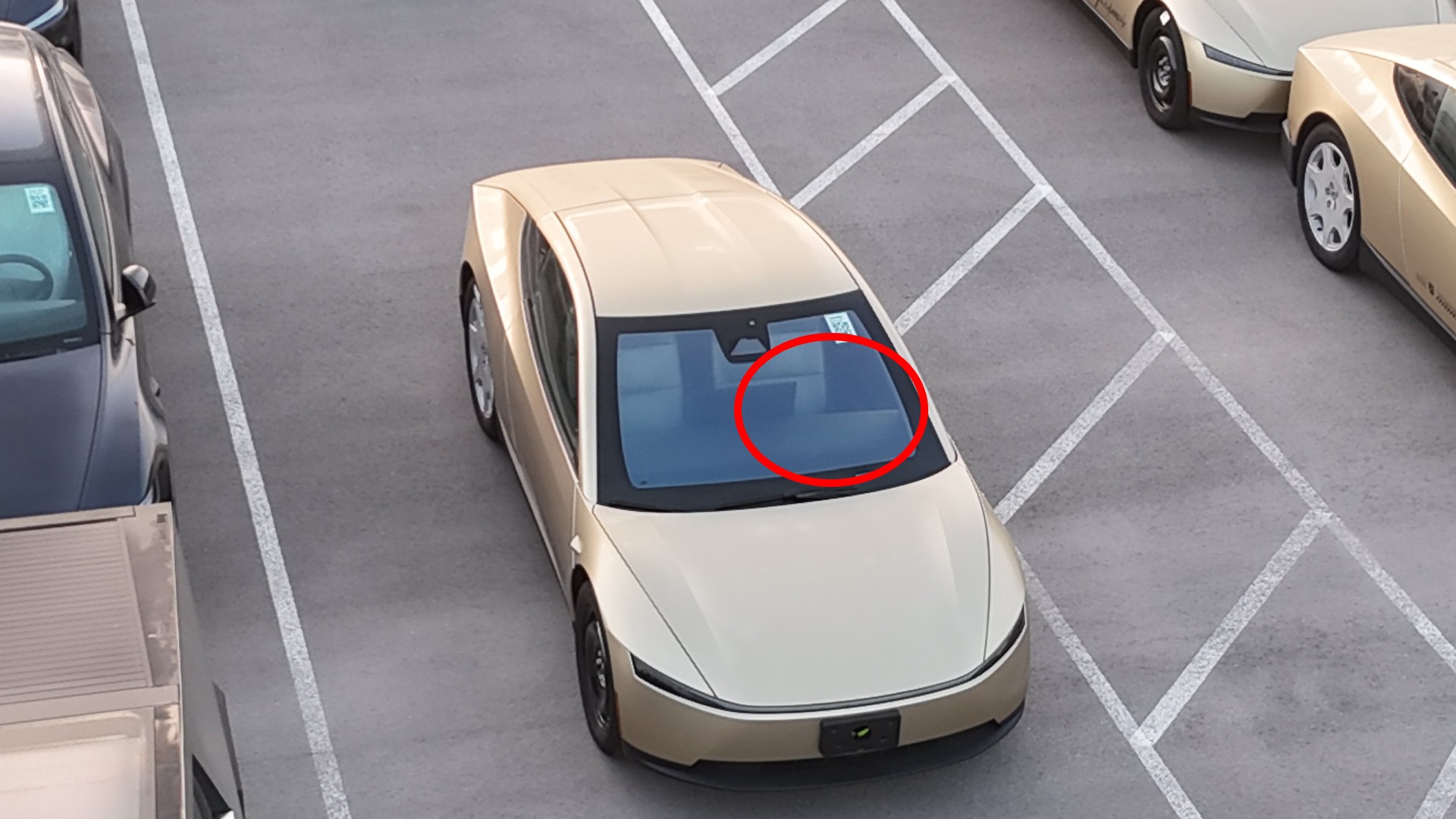
This observation represents a crucial transition, confirming that Tesla has designed the Cybercab from the ground up as a purpose-built robotaxi, engineered for unsupervised Full Self-Driving (FSD) operation. The elimination of manual controls is a strategic move aimed at reducing cost, complexity, and weight, while simultaneously maximizing interior space and optimizing range for commercial ride-hailing. It also signals that Tesla has likely cleared initial validation hurdles and is now producing vehicles to the exact specifications intended for commercial robotaxi service.
A Glimpse into the Cybercab’s Design Philosophy
The Cybercab’s design philosophy centers on maximizing efficiency and passenger experience for an autonomous future. The absence of a steering wheel and pedals directly contributes to a more spacious and comfortable cabin for passengers, who will be the sole occupants during rides. This design choice also reduces manufacturing costs, as these components are significant elements in traditional vehicle production. Furthermore, by removing the need for human intervention, Tesla aims to create a safer and more reliable transportation system.
Industry analysts have long predicted that the removal of driver controls would be a key differentiator for Tesla’s robotaxi, allowing for a more streamlined and cost-effective vehicle. This design approach aligns with Elon Musk’s vision of a future where personal car ownership might be supplanted by accessible, on-demand autonomous transportation. The Cybercab is not merely a modified existing Tesla model; it is a ground-up re-imagining of a vehicle designed solely for autonomous operation.

Regulatory Landscape and Production Cap
The appearance of steering-wheel-free vehicles in the outbound lot also brings into focus the current regulatory landscape governing autonomous vehicles. Federal Motor Vehicle Safety Standards (FMVSS) in the United States currently impose limitations on the production of vehicles without steering wheels. Specifically, the regulations generally limit such vehicles to 2,500 units per year per manufacturer without a formal exemption. Tesla has been actively engaged in navigating these regulations, and its continued filings suggest an ongoing dialogue with regulatory bodies to secure the necessary permissions for scaling its robotaxi fleet.
This production milestone suggests that Tesla is preparing to build an initial fleet, likely for pilot operations in Austin, Texas, or for further validation and data collection under real-world conditions. The company’s proactive approach in pursuing regulatory relief indicates a strong confidence in the capabilities of its autonomous driving technology and its readiness for commercial deployment.
Timeline and Production Ramp-Up
Industry watchers note that the timing of this sighting aligns with Tesla’s broader rollout plans for its autonomous ride-hailing service. Production of early Cybercab units reportedly began in late 2025 and early 2026, primarily for internal testing and to meet initial regulatory compliance requirements. Joe Tegtmeyer’s post on X highlighted the significance of the development, stating, "Something big has changed at Giga Texas with Cybercab production… ~ 14 in the outbound lot WITHOUT STEERING WHEELS! Earlier this week, the production line has begun what we are all waiting for and I would expect to see many more starting on Monday, 4/20."

If Tegtmeyer’s prediction of a surge in production materializes, observers anticipate a rapid accumulation of dozens more units at Gigafactory Texas. This accelerated production ramp-up is crucial for Tesla as it aims to establish its robotaxi network and compete in the burgeoning autonomous mobility market. The company has consistently emphasized aggressive timelines for its technological advancements, and the Cybercab’s production appears to be no exception.
Broader Implications for the Automotive Industry
The development of the Cybercab and Tesla’s aggressive push into the robotaxi space have significant implications for the broader automotive industry. For years, autonomous driving has been a distant promise, with many automakers focusing on advanced driver-assistance systems (ADAS) rather than full autonomy. Tesla’s visible progress, culminating in the production of vehicles devoid of human driving controls, signals a potential paradigm shift.
The success of Tesla’s Cybercab could accelerate the industry’s transition towards autonomous mobility. Competitors will likely face increased pressure to develop and deploy similar technologies, potentially leading to a race to market. Furthermore, the economic model proposed by Tesla, where owners can generate income from their vehicles by adding them to the robotaxi network, could fundamentally alter the concept of car ownership and the automotive business model. This "asset-earning" potential could make vehicle ownership more economically viable for a wider range of consumers.
Tesla’s Strategic Vision for Autonomous Mobility
The Cybercab represents Tesla’s long-term strategic vision for transforming transportation. The company has invested heavily in its Full Self-Driving (FSD) software, aiming to achieve Level 5 autonomy, where vehicles can operate without any human intervention in all conditions. The Cybercab is the physical embodiment of this vision, designed from the chassis up to be a fully autonomous machine.
Elon Musk has often spoken about the potential of autonomous vehicles to not only revolutionize personal transportation but also to solve urban congestion and improve road safety. By removing the inherent variability and potential for human error in driving, Tesla aims to create a safer and more efficient transportation ecosystem. The production of these driverless Cybercabs is a tangible step towards realizing that ambitious goal.
Conclusion: A New Era of Transportation Dawns
With unsupervised FSD technology advancing and regulatory discussions ongoing, these wheel-less Cybercabs parked under the Texas sun represent more than just advanced hardware. They embody Tesla’s bold bet that autonomous mobility is no longer a distant, theoretical concept but an imminent reality poised to redefine how people move. The company’s commitment to this vision, evidenced by the visible production of its dedicated robotaxi, signals a new era of transportation is rapidly dawning. The coming months and years will be critical in observing how Tesla navigates the remaining regulatory hurdles and scales its Cybercab fleet to fulfill its promise of a fully autonomous ride-hailing future.