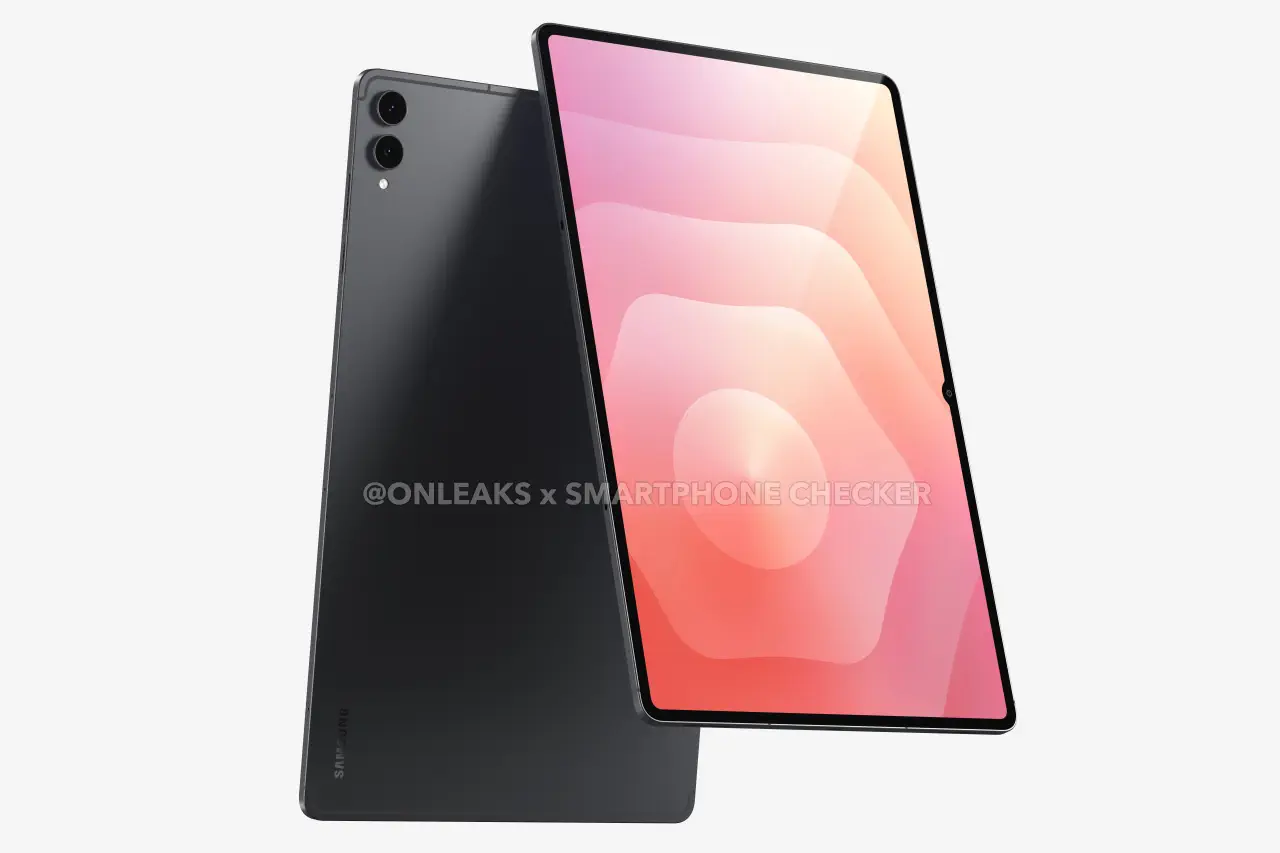
Samsung Electronics continues to cement its leadership in the global mobile computing market with the official development rollout and detailed leak regarding its upcoming flagship tablet lineup, the Galaxy Tab S12 series. Building upon the success of previous generations, industry reports stemming from reliable tech publications such as WinFuture have revealed comprehensive specifications for the upcoming Samsung Galaxy Tab S12+ and the ultra-premium Samsung Galaxy Tab S12 Ultra. These next-generation tablets aim to redefine productivity and entertainment standards by incorporating cutting-edge display technology, powerful 3nm mobile processors, robust build qualities, and deep integration with Samsung’s ecosystem running on Android 17 and One UI 9.0.
Main Facts and Lineup Overview
The Galaxy Tab S12 series represents Samsung’s continuous push to deliver laptop-class performance in a portable tablet form factor. According to the leaked documentation, the lineup will initially focus on two primary elite models: the Galaxy Tab S12+ and the larger, more expansive Galaxy Tab S12 Ultra. Both devices are engineered to cater to power users, creative professionals, and multimedia enthusiasts who demand uncompromising performance.
At the core of both tablets lies the formidable MediaTek Dimensity 9500 chipset, built on an advanced 3-nanometer architecture. This processor features an octa-core configuration capable of reaching peak clock speeds of up to 4.21GHz across 12 processing cores, ensuring that multitasking, heavy graphic rendering, and artificial intelligence-driven workloads are handled with exceptional efficiency. Furthermore, Samsung has committed to long-term software support by promising up to 7 generations of Android OS and security updates, ensuring that users’ investments remain secure, modern, and protected well into the next decade.
Chronology and Development Timeline
The leak surrounding the Galaxy Tab S12 series arrives as part of Samsung’s meticulously planned product lifecycle. Historically, Samsung has utilized late summer and early autumn windows to debut its flagship tablet and foldable smartphone portfolios. Following the commercial rollout of the Galaxy Tab S series, industry supply chain insiders and regulatory filings have progressively pointed toward a late 2026 or early 2027 release window for the Tab S12 generation.
Development phases for the MediaTek-powered tablets began internally following the finalization of the Dimensity 9500 architecture. As component manufacturers ramped up 3nm production lines throughout early 2026, Samsung secured foundational hardware allocations to begin large-scale prototyping. The recent surfacing of promotional materials and firmware configurations on developer servers indicates that the devices have entered advanced validation stages, moving closer to mass production and eventual global commercial availability.
Display Innovations and Visual Specifications
Visual excellence has long been a hallmark of Samsung’s flagship tablets, and the Galaxy Tab S12 series pushes these boundaries even further. Both the Tab S12+ and Tab S12 Ultra utilize high-end Dynamic AMOLED 2X panels equipped with adaptive refresh rates scaling up to 120Hz. This ensures ultra-smooth scrolling, responsive stylus input via the S-Pen, and fluid motion during high-framerate gaming or media playback.
The Galaxy Tab S12+ features a sprawling 12.6-inch display with a resolution of 2800 by 1752 pixels, striking a balance between expansive workspace and portable ergonomics. Meanwhile, the flagship Galaxy Tab S12 Ultra takes immersion to a desktop-replacement scale with a massive 14.6-inch Dynamic AMOLED 2X screen boasting a resolution of 2960 by 1848 pixels. Despite its expansive real estate, the Ultra model retains a remarkably thin profile, measuring just 5.1 millimeters in thickness, while incorporating a subtle notch to house advanced front-facing camera hardware.

Supporting Data and Technical Specifications
A granular examination of the leaked specifications highlights the hardware disparity and tailored feature sets designed to differentiate the two models within the flagship tier.
Memory and storage configurations vary by model. The Galaxy Tab S12+ is equipped with 12GB of RAM paired with UFS 4.0 storage options of either 256GB or 512GB. The Galaxy Tab S12 Ultra scales performance higher, offering 12GB or 16GB of RAM and storage configurations stretching up to 1TB using lightning-fast UFS 4.0 storage modules. Crucially, both models retain expandable storage support via a microSD card slot capable of accommodating up to an additional 2TB of data.
Imaging capabilities on modern tablets have evolved past basic video-calling tools into legitimate content creation systems. The Galaxy Tab S12+ features a robust 13-megapixel primary rear camera accompanied by a 12-megapixel ultra-wide sensor. The Galaxy Tab S12 Ultra elevates this setup by integrating a dual rear camera system comprising a 13-megapixel main sensor and an 8-megapixel ultra-wide sensor. On the front, both devices feature a 12-megapixel ultra-wide camera capable of recording crisp 4K video at 60 frames per second, catering directly to remote professionals and content creators.
Powering these extensive hardware arrays are substantial battery capacities. The Galaxy Tab S12+ houses a 10,600mAh battery, while the larger Tab S12 Ultra incorporates an 11,600mAh power cell. Both devices support 45W fast charging technology via USB-C, ensuring that users can rapidly replenish their batteries despite the massive capacities. Furthermore, both tablets feature an IP68 dust and water resistance rating, significantly enhancing durability against accidental spills, dust exposure, and outdoor usage.
| Specification | Galaxy Tab S12+ | Galaxy Tab S12 Ultra |
|---|---|---|
| Display Size | 12.6-inch Dynamic AMOLED 2X | 14.6-inch Dynamic AMOLED 2X |
| Resolution | 2800 × 1752 | 2960 × 1848 |
| Refresh Rate | 120Hz Adaptive | 120Hz Adaptive |
| Processor | MediaTek Dimensity 9500 (3nm) | MediaTek Dimensity 9500 (3nm) |
| CPU Architecture | 8 Cores, up to 4.21GHz | 8 Cores, up to 4.21GHz |
| RAM | 12GB | 12GB / 16GB |
| Internal Storage | 256GB / 512GB (UFS 4.0), microSD up to 2TB | 256GB / 512GB / 1TB (UFS 4.0), microSD up to 2TB |
| Rear Camera | 13MP Main + 12MP Ultra-Wide | 13MP Main + 8MP Ultra-Wide |
| Front Camera | 12MP Ultra-Wide | Dual 12MP Ultra-Wide setup |
| Video Recording | Up to 4K at 60fps | Up to 4K at 60fps |
| Battery Capacity | 10,600mAh | 11,600mAh |
| Charging Speed | Up to 45W Fast Charging | Up to 45W Fast Charging |
| Weight | 555 grams | 693 grams |
| Thickness | — | 5.1 millimeters |
| Ingress Protection (IP) | IP68 Dust and Water Resistance | IP68 Dust and Water Resistance |
| Included Accessories | S-Pen included in-box | S-Pen included in-box |
| Operating System | Android 17 with One UI 9.0 | Android 17 with One UI 9.0 |
Official Responses and Industry Context
While Samsung has not yet issued a formal global press release confirming every leaked detail prior to its official hardware launch event, industry analysts have closely monitored the strategic shift toward MediaTek silicon within Samsung’s premium tier. Historically reliant on Qualcomm Snapdragon platforms for its top-tier international releases, Samsung’s utilization of the MediaTek Dimensity 9500 signals a major diversification in its supply chain strategy. This move reflects confidence in MediaTek’s cutting-edge 3nm fabrication process and its ability to deliver superior thermal efficiency and multi-core computational prowess.
Competitors in the high-end tablet space, notably Apple with its iPad Pro lineup, have continuously pushed the boundaries of mobile processing power and slim form factors. By introducing IP68 durability alongside massive AMOLED displays and a commitment to 7 years of software updates, Samsung is directly addressing enterprise and creative markets where device longevity and resilience are paramount purchasing factors.
Broader Impact and Market Implications
The impending launch of the Galaxy Tab S12 series carries significant implications for the broader Android tablet ecosystem. For years, the Android tablet market struggled with software optimization and long-term support parity compared to personal computers or competing tablet ecosystems. Samsung’s aggressive pledge of 7 generations of software updates bridges this gap, offering enterprise-grade security and lifecycle management.
Furthermore, the inclusion of robust 5G cellular connectivity options—with localized pricing expectations rumored around high-tier price points scaling past the $200 mark for cellular modules depending on regional carriers—positions the Tab S12 series as true standalone productivity hubs. As remote work, digital nomadism, and mobile-first creative workflows continue to expand globally, the combination of a 3nm processor, IP68 water resistance, and expansive 14.6-inch canvas ensures that Samsung’s new flagship tablets will play a pivotal role in shaping the future of portable computing.