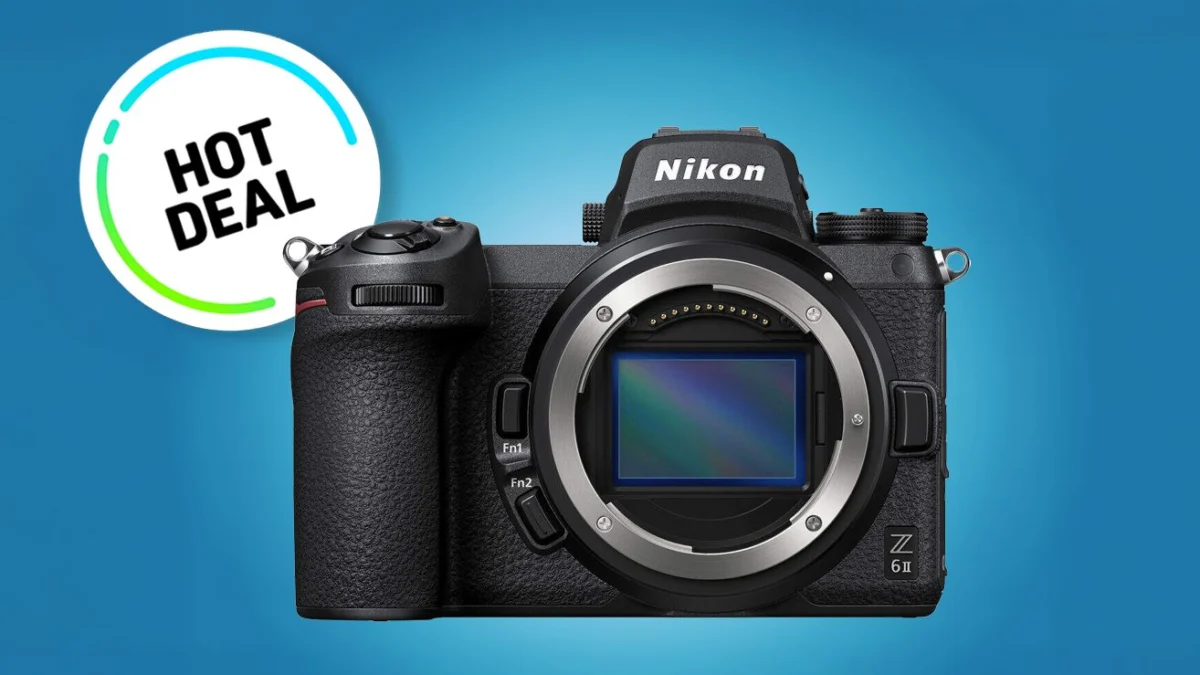
Photographers and content creators looking to upgrade their gear without breaking the bank have been handed a significant opportunity, as the acclaimed Nikon Z6 II full-frame mirrorless camera has dropped to a historic low price of just £921.97 via major online retail channels. This substantial discount brings the powerhouse body-only configuration into an entirely new price bracket, making professional-grade mirrorless imaging far more accessible to enthusiasts and hobbyists.
The price adjustment arrives in the wake of the market debut of the Nikon Z6 III. While the successor model brings cutting-edge advancements and modern sensor architectures to the forefront, its launch at nearly double the price point of the current Z6 II deal has prompted many budget-conscious buyers to re-evaluate the older model. Industry analysts note that despite approaching six years since the broader Z6 architecture’s initial market introduction, the Z6 II remains a formidable imaging tool capable of satisfying the demanding standards of commercial, event, and portrait photographers.
Chronology and Evolution of the Z6 Lineage
The journey of Nikon’s mid-range full-frame mirrorless ecosystem began with the release of the original Nikon Z6. While praised for its ergonomic design, exceptional electronic viewfinder, and robust build quality, the first-generation camera faced constructive criticism from professional circles—most notably for its reliance on a single XQD/CFexpress card slot, which hesitant wedding and event photographers viewed as a potential risk during high-stakes commercial shoots.
Responding directly to professional feedback, Nikon introduced the Z6 II as an iterative yet vital evolutionary step. Equipped with dual processing engines and expanded media storage capabilities, the camera successfully bridged the gap between enthusiast-tier operation and professional dependability.
The timeline of the series highlights Nikon’s measured approach to research and development:
- Late 2018: Nikon launches the pioneering Z6 and Z7 full-frame mirrorless cameras, establishing the revolutionary Z-mount lens ecosystem.
- Late 2020: The release of the Nikon Z6 II and Z7 II addresses early adopter feedback by introducing dual processors and dual card slots.
- Mid-2024: The introduction of the Nikon Z6 III pushes video capabilities, readout speeds, and processing power even further, subsequently paving the way for aggressive retail discounting on its predecessor.
Technical Specifications and Performance Metrics
At the heart of the Nikon Z6 II is a 24.5-megapixel backside-illuminated (BSI) CMOS sensor. This sensor architecture is engineered to optimize light gathering, resulting in exceptional high-ISO performance, a wide dynamic range, and minimal noise in challenging low-light environments.
Powering the camera are dual EXPEED 6 processing units. This dual-processor setup translates to a noticeable performance leap over single-processor predecessors, allowing for increased buffer capacities, a quicker continuous shooting rate of up to 14 frames per second, and a more responsive operating system overall. Autofocus performance is driven by a sophisticated 273-point hybrid phase-detection AF system that covers approximately 90 percent of the frame horizontally and vertically. Integrated eye-detection and animal-detection autofocus algorithms ensure that moving subjects—whether humans, dogs, or cats—remain sharply in focus across dynamic shooting scenarios.
For commercial and event professionals, the inclusion of dual memory card slots—one supporting CFexpress Type B and XQD cards, and the other accommodating standard SD UHS-II media—is arguably the most critical hardware feature. This redundancy allows for simultaneous backup recording, overflow storage, or the separation of RAW and JPEG files, eliminating the single-point-of-failure anxiety that deterred some professionals from adopting the first-generation model.
Market Implications and Consumer Value Analysis
The recent price reduction to approximately £922 alters the competitive landscape of the mid-range mirrorless market. Industry observers indicate that manufacturers and major retailers frequently adjust pricing structures on previous-generation hardware to clear warehouse inventory following the introduction of a flagship successor.
For consumers, this dynamic creates a distinct value proposition. While the Nikon Z6 III incorporates advanced partial-stacked sensor technology and higher-resolution electronic viewfinders tailored for high-end videography and hyper-fast action, the Z6 II retains nearly all the fundamental photographic capabilities required for professional print production, studio work, landscape documentation, and portraiture.
"Purchasing a mature camera platform like the Z6 II at a heavily discounted rate allows photographers to allocate more of their capital toward high-quality optics," notes retail market analyst Jessica Vance. "In digital photography, glass often dictates image quality far more than marginal sensor upgrades. Investing in the S-line of Nikon Z lenses while saving hundreds of pounds on the camera body represents a strategically sound path for developing professionals."
Ecosystem Expansion and Future Outlook
The broader implications of this pricing strategy extend into Nikon’s wider Z-mount ecosystem. By lowering the barrier of entry to full-frame mirrorless bodies, Nikon encourages broader adoption of its native mirrorless lenses, driving long-term brand loyalty.
Photographers entering the ecosystem at this price point gain access to an expanding catalog of specialized glass, ranging from ultra-wide-angle primes to versatile telephoto zooms. Furthermore, existing Nikon DSLR users who have delayed transitioning to mirrorless due to hardware costs now face a financially viable upgrade path that preserves backward compatibility via the FTZ mount adapter, enabling the continued use of legacy F-mount lenses without optical degradation.
As retail inventories for the Z6 II continue to adjust in response to high consumer demand driven by these promotional price points, prospective buyers are advised to monitor stock levels closely. Whether serving as a primary workhorse for a budding commercial studio or acting as a reliable second body for established professionals, the Nikon Z6 II at its current valuation stands out as one of the most compelling hardware investments currently available in the digital photography market.