
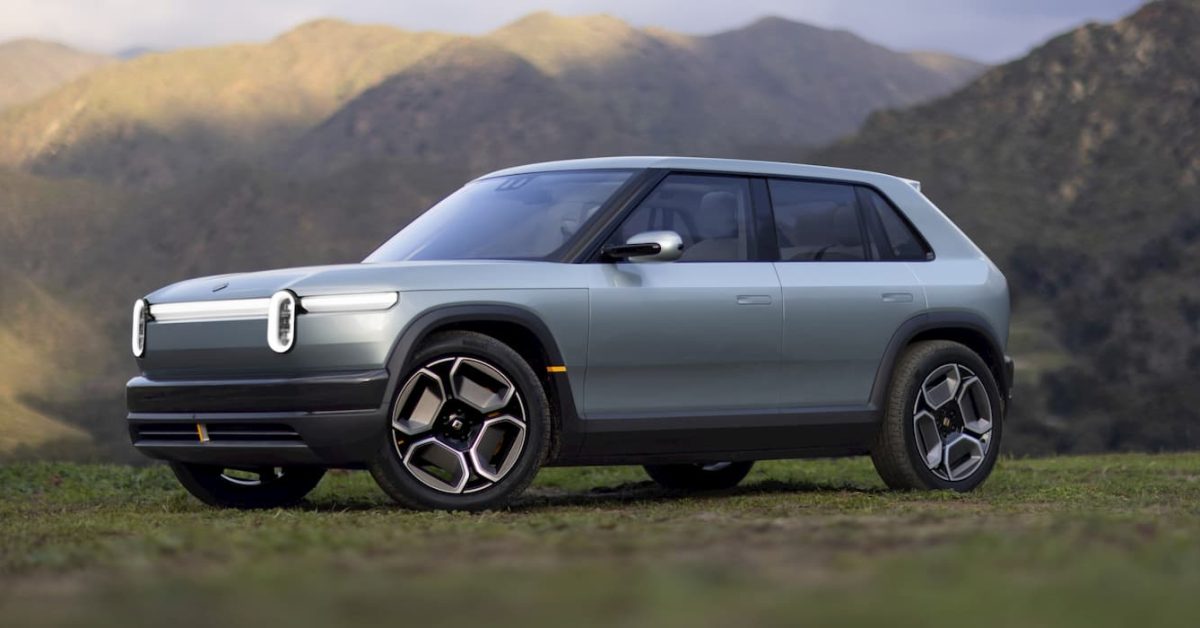
Electric vehicle manufacturer Rivian is mapping out a long-term product strategy that will progressively lower the barrier to entry for consumers, according to recent statements from Chief Executive Officer RJ Scaringe. Speaking in a comprehensive interview with the mainstream media, Scaringe outlined the company’s trajectory following the commercial rollout of its midsize R2 platform, indicating that the upcoming R3 crossover and a subsequent R4 model will introduce significantly more accessible price tiers to the brand’s expanding portfolio.
While specific price tags remain unconfirmed, the disclosures offer the clearest indication yet of how the American EV startup intends to penetrate the heart of the mass-market automotive sector. This strategic roadmap mirrors the path blazed by industry pioneers, moving deliberately from high-margin luxury flagships toward high-volume, cost-competitive family vehicles. As the automotive industry grapples with shifting consumer demands, affordability, and regulatory pressures, Rivian’s blueprint provides a fascinating case study in scaling an electric vehicle enterprise from the ground up.
The Evolution of Rivian’s Product Strategy: From Flagship Luxury to Mass-Market Accessibility
Rivian’s initial market entry relied on its R1 platform, which yielded the R1T pickup truck and R1S SUV. Positioned firmly in the premium segment, these initial offerings carried substantial price tags, serving a niche clientele of early adopters and outdoor enthusiasts. However, startup realities heavily dictated these early pricing structures. As an unproven manufacturer without established supplier networks or manufacturing scale, Rivian lacked negotiating leverage.
According to Scaringe, the company had to absorb a 40 to 50 percent premium on supplier pricing during the early days of the R1 development cycle. This dynamic made it economically impossible to lead with an affordable, high-volume vehicle without facing catastrophic financial losses. Instead, Rivian utilized the "halo vehicle" approach—building brand equity, proving out its technology, and establishing manufacturing capabilities before attempting to drive down costs.
The paradigm has since shifted. With thousands of R1 vehicles on the road and a rapidly maturing supply chain, Rivian’s standing with global tier-one suppliers has transformed. Scaringe noted that automotive component executives are now actively seeking out Rivian, shifting the balance of power and allowing the automaker to secure better terms for its upcoming high-volume vehicle architectures.
Deconstructing the R2 Baseline and the R3 Cost Advantage
The foundational vehicle for Rivian’s mass-market push is the R2 midsize SUV. Frequently cited in media reports as a $45,000 vehicle, the R2’s actual market rollout involves a staggered pricing and production timeline that complicates immediate cost comparisons.
When Rivian detailed the full R2 lineup and pricing structure, it revealed a methodical ramp-up schedule:
- Performance Launch Edition ($57,990): Scheduled as the initial market introduction to capture early, higher-margin demand.
- Premium Trim ($53,990): Set to follow shortly after the initial launch phase.
- Standard Long Range ($48,490): Projected to enter production in early 2027.
- Standard Rear-Wheel Drive ($45,000): The entry-level variant, scheduled to arrive in late 2027.
Given this tiered rollout, Scaringe’s assertion that the upcoming R3 crossover will be priced "materially lower" than the R2 introduces several possibilities depending on the chosen baseline. However, previous guidance offered by Rivian leadership suggests that the R3 is engineered to target the mid-to-high $30,000 range. This positions the compact crossover directly against mainstream internal combustion engine vehicles and competing mass-market EVs, such as the Tesla Model Y and various offerings from traditional legacy automakers.
Furthermore, Scaringe confirmed that the follow-up R4 model will push price points down even further. While the R4 and subsequent R5 are conceptualized as sibling vehicles utilizing an entirely new platform, engineering teams have not yet been fully mobilized for their development. Consequently, the R4 remains a strategic pricing direction rather than a product with a firm release date.

Manufacturing Footprint and Production Timeline
Bringing affordable electric vehicles to market at scale requires massive industrial capacity and logistical efficiency. Rivian is anchoring its volume ambitions in its upcoming manufacturing facility located in Stanton Springs, Georgia.
The timeline for Rivian’s operational expansion underscores the methodical nature of its industrial scaling:
- September 2025: Rivian officially breaks ground on the Georgia manufacturing plant, designated to handle production for both the R2 and R3 vehicle lines.
- June 2026: Commercial deliveries of the R2 officially commence, driving a significant uptick in production volume and prompting Rivian to revise its full-year 2026 delivery guidance upward to between 65,000 and 70,000 vehicles (compared to roughly 42,000 units the previous year).
- Late 2026 to Late 2027: Gradual introduction of varying R2 powertrain trims, culminating in the base $45,000 rear-wheel-drive variant.
- 2028: Scheduled commencement of R3 production at the Georgia facility.
The Georgia factory is designed with immense scalability in mind. Structured across two distinct developmental phases, the plant is engineered to achieve a total annual production capacity of up to 400,000 units. This localized production capacity will be vital for mitigating logistical costs, navigating geopolitical trade dynamics, and meeting regional consumer demand.
Financial Realities and the Path to Profitability
Despite the operational success of the R2 rollout and rising delivery volumes, Rivian continues to operate in a capital-intensive environment characterized by near-term financial losses. For the current fiscal year, the company has guided an adjusted EBITDA loss ranging between $1.8 billion and $2 billion as it continues to absorb the heavy capital expenditures associated with factory construction, tooling, and supply chain ramping for the R2.
Financial analysts note that this cash burn is a standard phase for growth-stage electric vehicle manufacturers attempting to build out multi-platform manufacturing ecosystems. The success of the R2 platform is viewed by Wall Street as the primary catalyst required to stabilize Rivian’s balance sheet, improve gross margins, and achieve long-term operational profitability before the capital-intensive R3 manufacturing lines come online in 2028.

Industry Implications and Competitive Landscape
Rivian’s sequential rollout strategy has drawn frequent comparisons to Tesla’s historical playbook—moving from the Roadster and Model S luxury vehicles toward the high-volume Model 3 and Model Y architectures. However, the modern EV landscape is considerably more competitive than it was a decade ago.
Today, Rivian faces a crowded field comprising aggressive legacy automakers transitioning their fleets to electrification, established EV market leaders, and an influx of low-cost international competitors, particularly from Chinese manufacturers expanding into global markets. By positioning the R3 as a distinct, attractively priced crossover below the $40,000 threshold, Rivian aims to carve out a secure, loyal consumer demographic that values utility, design, and software integration without the premium price tag attached to larger utility vehicles.
Ultimately, Scaringe’s recent remarks reinforce the brand’s commitment to democratizing electric mobility. If Rivian can successfully execute its Georgia factory ramp-up, control its supply chain expenditures, and deliver the R3 within the anticipated mid-to-high $30,000 range, the company could cement its status as a cornerstone of the North American automotive manufacturing sector for decades to come.