Jaguar Land Rover (JLR) has officially announced a safety recall affecting 23,677 vehicles across several of its most popular models due to a significant electrical component malfunction. According to documentation filed with the National Highway Traffic Safety Administration (NHTSA), the recall centers on a potential failure of the DC-to-DC converter, a critical piece of hardware responsible for managing voltage transitions between the vehicle’s high-voltage battery and the 12-volt electrical system.
This recall, identified by the NHTSA under campaign number 26V599000, underscores the increasing complexity of modern automotive electrical architectures. As vehicles transition toward more sophisticated electrification, the reliance on stable power conversion becomes paramount. When this specific converter fails, it disrupts the flow of electricity to the 12-volt system, which powers essential vehicle functions. Without this power, the vehicle enters a state of progressive system degradation, eventually leading to a complete loss of propulsion and the potential failure of external lighting systems, posing a substantial risk to road safety.
The Technical Nature of the Failure
The DC-to-DC converter acts as a bridge in hybrid and electric vehicle architectures. In the context of JLR’s affected lineup, this converter is tasked with stepping down high-voltage power to maintain the charge of the auxiliary 12-volt battery. This battery is essential for powering onboard electronics, including engine management systems, safety sensors, infotainment, and lighting.
When the converter experiences an internal fault, the 12-volt system stops receiving the necessary charge. Initially, the vehicle may rely on the remaining capacity of the 12-volt battery. However, once that battery is depleted, the vehicle can no longer support the control units required to operate the engine or electric motor. This leads to a “cascade of failures,” where the vehicle’s various control modules shut down, resulting in an immediate and unpredictable loss of engine power. Furthermore, the failure of exterior lighting during such an event significantly reduces the vehicle’s visibility to other motorists, increasing the likelihood of a collision.
Chronology and Identification of Affected Models
The identification of this issue follows a period of internal quality monitoring and field data analysis by Jaguar Land Rover. The company, through its internal investigations, determined that specific software configurations within the power distribution module were susceptible to internal errors that could trigger the converter failure.
The scope of the recall is broad, covering several model years and vehicle lines that share similar electrical architectures. The breakdown of affected units is as follows:
- Range Rover Sport: 10,882 units
- Range Rover: 6,539 units
- Range Rover Velar: 4,374 units
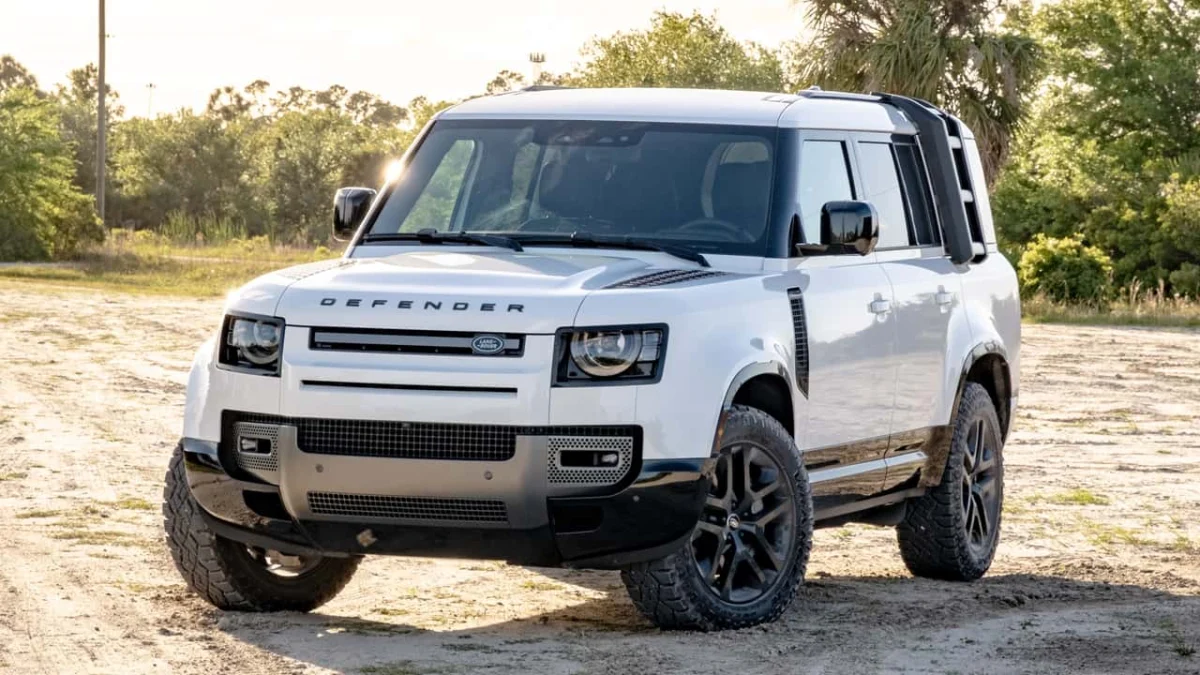
- Land Rover Defender: 1,876 units
- Discovery Sport: 3 units
The wide variance in the number of affected units—ranging from over 10,000 in the Range Rover Sport to just three in the Discovery Sport—reflects the specific production batches and software versions installed at the time of assembly. Owners of these vehicles are scheduled to be notified by mail by November 13.
The Remediation Process
Unlike many automotive recalls that require the physical replacement of heavy, expensive, or labor-intensive hardware, this particular issue has been identified as a software-related fault. Consequently, JLR has developed a firmware update designed to recalibrate how the DC-to-DC converter handles voltage loads and error reporting.
Authorized Jaguar Land Rover retailers will perform this update free of charge to the vehicle owner. The procedure involves connecting the vehicle to the manufacturer’s proprietary diagnostic equipment to flash the updated software onto the power distribution module. This process typically requires minimal shop time, allowing owners to have their vehicles serviced and returned to them promptly.
Safety regulators and the manufacturer emphasize that owners should not attempt to ignore the recall notice. While the vehicle may currently appear to be operating within normal parameters, the nature of the electrical fault is such that it may not provide the driver with advance warning before the power loss occurs.
Contextualizing Modern Automotive Reliability
The history of Jaguar Land Rover has, at times, been haunted by perceptions of electrical fragility—a reputation that dates back to the era of Lucas Electronics in the mid-20th century. While the modern industry has moved far beyond the mechanical and analog limitations of that era, the transition to software-defined vehicles has introduced a new set of challenges.
Modern luxury vehicles like the Range Rover and the Defender are essentially rolling supercomputers. The number of lines of code required to operate these vehicles has increased exponentially over the last decade. As such, recalls related to software—rather than mechanical failure—are becoming the industry standard. This shift offers a significant advantage: manufacturers can often fix critical safety flaws without needing to dismantle the vehicle, provided the consumer brings the car to the dealership for the necessary update.
However, the frequency of such recalls also highlights the challenge of "over-the-air" readiness. While some manufacturers have successfully implemented full over-the-air (OTA) update capabilities, many legacy platforms still require a physical visit to a dealership to ensure that the firmware is correctly installed and verified. This adds an administrative burden on the dealership network and the consumer, even when the underlying fix is simple.
Broader Industry Implications
The JLR recall is part of a larger trend of high-profile safety campaigns affecting the automotive sector. In recent months, manufacturers such as Ford, Volkswagen, and Toyota have issued large-scale recalls regarding issues ranging from tire pressure monitoring systems to fuel tank integrity and electronic power loss.
For the consumer, these recalls reflect a dual reality: automotive safety standards are higher than ever, and manufacturers are under intense scrutiny by regulators to identify and mitigate risks as soon as they are discovered. The NHTSA’s role in tracking these issues ensures that companies are held accountable for potential hazards.
For current JLR owners, the path forward is clear. By utilizing the VIN (Vehicle Identification Number) look-up tool on the official NHTSA recall website, owners can confirm whether their specific vehicle is included in this campaign. Furthermore, reaching out to local dealerships allows owners to schedule the software update at their earliest convenience, ensuring the long-term reliability and safety of their vehicle.
While the "ghosts of electrical issues past" may provide fodder for industry observers and critics, the technical reality of this recall is a straightforward matter of modern software maintenance. The proactive approach taken by Jaguar Land Rover to rectify the converter issue via a software patch is a standard, albeit necessary, procedure in the current automotive landscape. By addressing the potential for power loss before it results in a road incident, JLR is following the established safety protocols that protect both the driver and the brand’s reputation for safety and engineering integrity.
As the industry continues to push toward more electrified and digitally integrated platforms, the ability to rapidly identify, communicate, and remediate software-based risks will remain the definitive measure of a manufacturer’s commitment to quality. For the 23,677 owners affected, the resolution process provides a path to restore full operational integrity to their vehicles, ensuring they remain roadworthy and safe for the thousands of miles ahead.