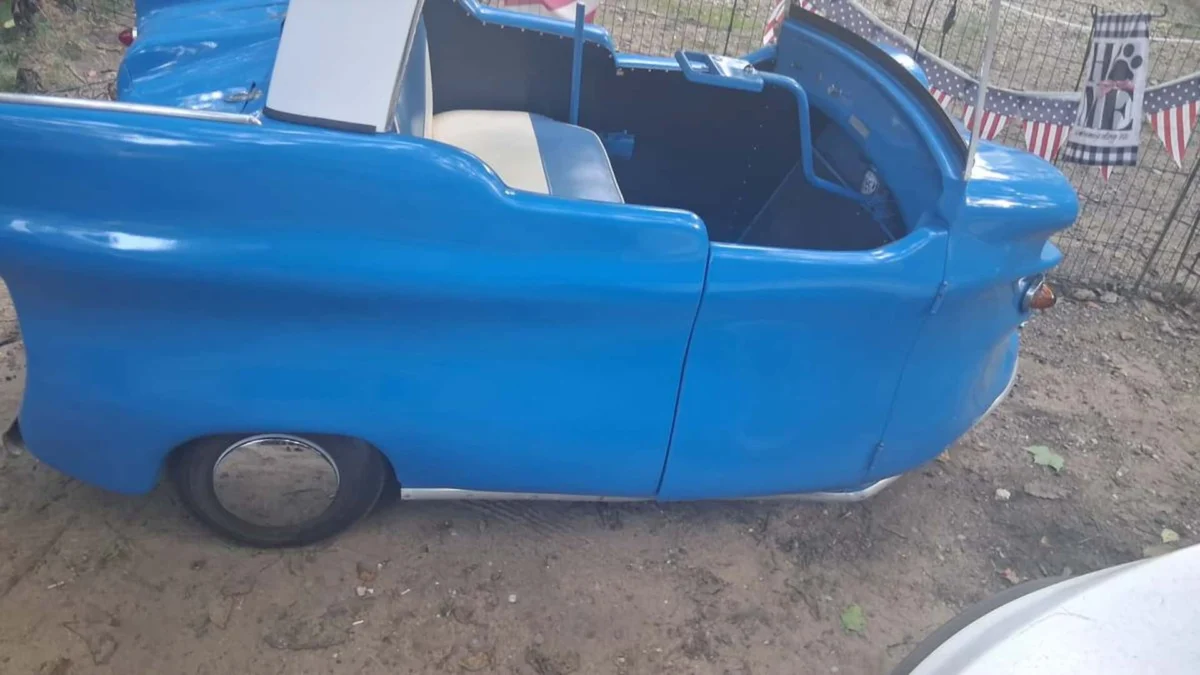
The recent surge in popularity of ultra-compact electric quadricycles, such as the Citroën Ami and the Fiat Topolino, has been framed by many automotive analysts as a revolutionary shift in urban mobility. These vehicles, designed for short-distance commutes and dense city navigation, are frequently marketed as the vanguard of the green transport transition. However, a deep dive into automotive history reveals that the concepts currently being championed by European manufacturers were effectively engineered and sold in the United States more than six decades ago. The Electric Shopper, manufactured by the Electric Car Company of Long Beach, California, stands as a testament to early innovation in the electric vehicle (EV) sector, offering performance metrics that remain strikingly relevant in today’s micromobility landscape.
A Chronology of Micro-Mobility
To understand the significance of the 1961 Electric Shopper, one must examine the timeline of electric personal transport. In the 1960s, the automotive industry was dominated by large, internal combustion engines, yet a small niche of inventors saw the potential for battery-powered convenience. The Electric Car Company entered this space with the "Shopper," a vehicle designed specifically for suburban errands.
Fast forward to 2020, when the automotive landscape was radically different. With the global push toward decarbonization, Stellantis launched the Citroën Ami, a low-speed, two-seat electric quadricycle. Its success prompted Fiat to release the Topolino, which drew heavy aesthetic inspiration from the 1930s-era "little mouse" vehicle. Despite the sixty-year gap, the fundamental philosophy of these vehicles—minimal footprint, limited range, and low top speeds—mirrors the exact design brief of the 1961 Electric Shopper. While modern iterations benefit from lithium-ion battery technology and digital connectivity, the physical constraints and intended use cases have remained largely static.
Technical Parity: Past and Present
The technical specifications of the 1961 Electric Shopper are perhaps the most compelling argument for its historical importance. Equipped with a 1.5-horsepower rear-mounted electric motor, the vehicle was never intended for high-speed transit. Its top speed of approximately 18 miles per hour allowed it to navigate residential zones safely, a performance figure that is almost identical to the initial launch specifications of the Fiat Topolino.
Furthermore, the range of the Electric Shopper—approximately 30 miles on a single charge—remains competitive even by modern standards. While the updated Fiat Topolino offers a range of 46 miles, the gap is relatively narrow considering the technological leaps in battery density that have occurred over the last half-century. The Shopper utilized lead-acid battery technology, which, while heavy and inefficient by contemporary standards, provided a functional solution for the "last mile" or "neighborhood" commute long before the term "micromobility" entered the common lexicon.
Aesthetic Design and Cultural Significance
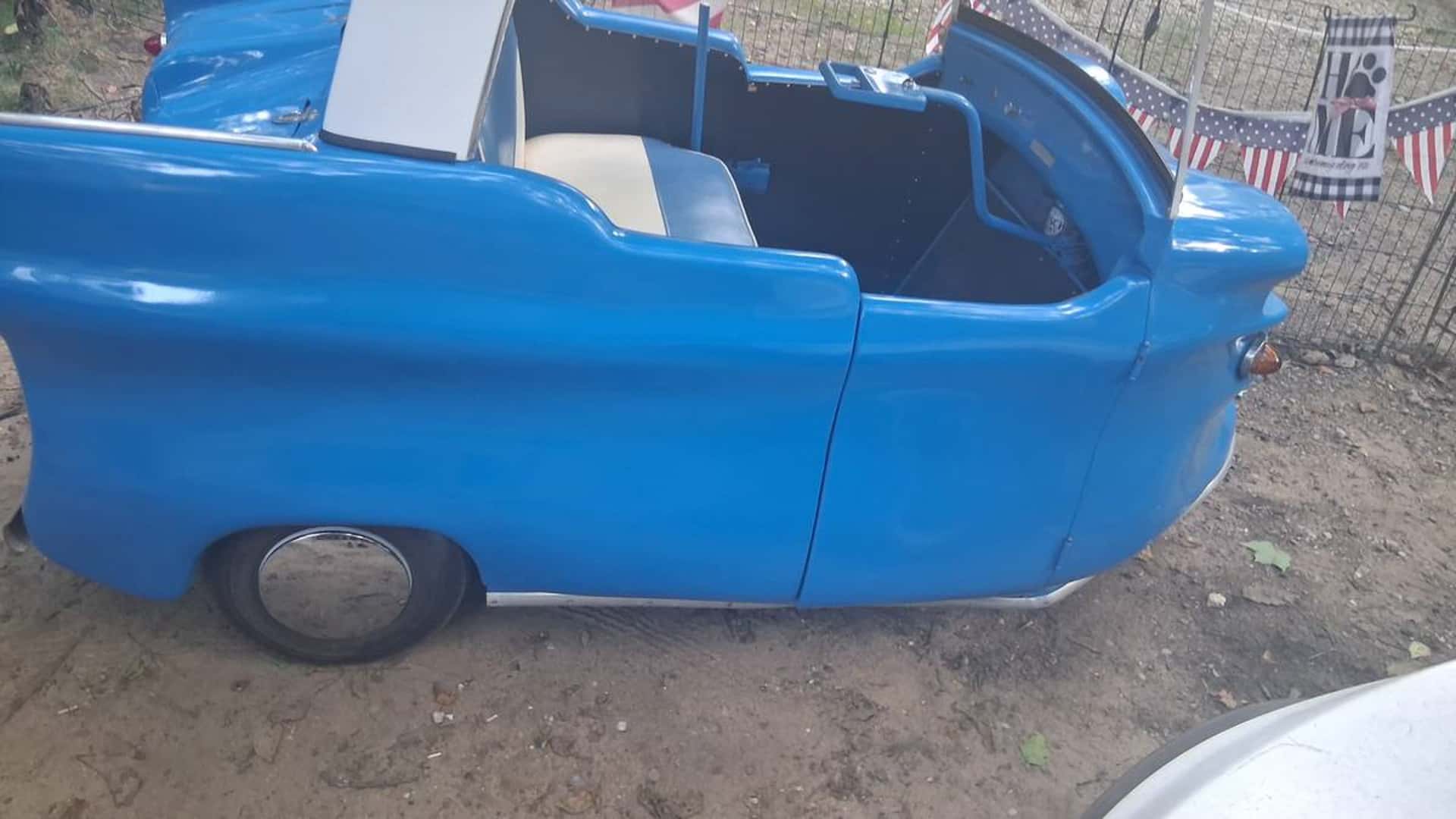
Visually, the Electric Shopper is a product of its time, capturing the exuberance of 1950s and early 60s design. It features classic automotive tropes of the era: sculpted headlights, pronounced tail fins, and a two-tone paint scheme with a white roof. These design elements serve to soften the utilitarian nature of the vehicle, making it approachable rather than industrial.
The rarity of these vehicles today adds a layer of prestige that the mass-produced Citroën Ami or Fiat Topolino cannot currently claim. With only about 15 documented examples estimated to remain in existence, the Shopper has transitioned from a practical grocery-getter to a sought-after collector’s item. Institutions such as the Route 66 Electric Vehicle Museum have recognized the historical weight of these cars, placing them alongside other artifacts that document the evolution of American transit.
Market Implications and Ownership Challenges
The current listing of a 1961 Electric Shopper on the secondary market for $12,500 has prompted debate regarding the value of rarity versus utility. From a purely functional standpoint, a modern Fiat Topolino offers superior safety features, a warranty, and a more robust dealer support network for a similar price point. However, the value proposition for the Shopper lies in its provenance and its status as a pioneering EV.
The high mileage—129,000 miles—reported by the seller suggests that the Shopper was not merely a museum piece but a functional, frequently used vehicle during its lifecycle. This longevity speaks to the simplicity of the engineering. With fewer moving parts than a traditional internal combustion engine, the Electric Shopper proved that electric propulsion could be durable. However, potential owners must weigh this against the scarcity of parts and the inherent limitations of 1960s electrical architecture.
Broader Impact on Modern Urban Transit
The resurgence of the micro-car segment reflects a growing recognition that personal automobiles are often over-engineered for the task of moving a single person through a city. The average commute in many major global metropolises is less than 10 miles, and the average vehicle occupancy is rarely above 1.5 people. In this context, the 1961 Electric Shopper was a solution to a problem that urban planners are only now fully prioritizing: space efficiency.
The implication of the Shopper’s existence is that the barrier to electric vehicle adoption has historically been a lack of consumer appetite for small, slow vehicles, rather than a failure of the technology itself. While the 1960s consumer was largely focused on the power and prestige of V8 engines, today’s urban dweller is increasingly incentivized by fuel costs, parking constraints, and environmental mandates.
Analysis of the Micro-EV Sector
Experts observing the current market note that the "Electric Shopper" model of transportation is finally seeing its moment. The success of the Citroën Ami and its siblings is driven by legislative changes, such as the classification of these vehicles as quadricycles, which allows for lower insurance premiums and simplified licensing requirements in several European jurisdictions.
If the 1961 Electric Shopper were to be re-released today with modern safety components—such as crumple zones, airbags, and modern braking systems—it would likely find a receptive audience. The primary hurdle for these small vehicles remains the "highway speed" limitation. While the Topolino is receiving a software update to reach 25 mph to comply with residential road regulations, the fundamental inability to navigate high-speed arterial roads remains the greatest obstacle to widespread adoption.
Conclusion: A Legacy Reclaimed
The Electric Shopper is more than just a quirky footnote in the history of the automobile; it is a precursor to the next generation of urban mobility. As society grapples with the transition to sustainable transport, looking back at the Electric Car Company’s 1961 offering provides a vital lesson in humility. Modern innovation is often iterative, and the concepts we celebrate today—compact, efficient, and electric—have deep roots in a past that was perhaps more forward-thinking than it was given credit for at the time.
Whether one is a collector of rare automotive history or a proponent of the modern EV movement, the story of the Electric Shopper serves as a reminder that the most radical ideas are often those that simplify our needs rather than complicate them. As we move forward, the legacy of these small, "little mouse" vehicles will likely continue to influence how we design our cities and our commutes, proving that the most efficient way to travel may not have changed as much as we think.