Wall Street stalwart and long-term institutional investor Ron Baron has renewed his bullish stance on Tesla, advising prospective investors to secure shares in the electric vehicle and clean energy pioneer without delay. Speaking during a broadcast appearance on CNBC’s Squawk Box, the founder and CEO of Baron Capital argued that upcoming commercial expansion, spearheaded by rapid advancements in autonomy, positions the company for unprecedented growth.
Baron’s renewed advocacy is heavily anchored in the soaring adoption rates of Tesla’s Full Self-Driving (FSD) software suite. According to recent corporate disclosures, active FSD subscriptions reached 1.48 million during the second quarter, marking a substantial 56 percent year-over-year increase. Furthermore, company executives report that approximately 55 percent of all new vehicle deliveries in North America now leave dealerships with an active FSD subscription enabled. For institutional backers like Baron Capital, this high attach rate signals a critical inflection point: Tesla is successfully transitioning from a traditional automotive manufacturer into a high-margin software and artificial intelligence platform.
A Long-Term Bet Rooted in Decades of Conviction
Baron Capital’s financial alignment with Elon Musk’s ventures is extensive and well-documented. The investment firm first established a position in Tesla in 2014, following years of direct dialogue that originated around the company’s 2010 initial public offering roadshow. Building on this automotive success, Baron expanded his firm’s portfolio in 2017 by securing a substantial stake in SpaceX.
During his recent media appearance, Baron quantified the staggering return on these investments, noting that bets on Musk-led companies have generated approximately $30 billion of the total $71 billion in realized and unrealized profits produced for Baron Capital clients. Currently, the firm maintains an exposure of roughly $25 billion in SpaceX and $5 billion in Tesla. On a personal level, Baron disclosed that SpaceX remains his single largest personal holding at approximately $5 billion, complemented by roughly $1.5 billion held directly in Tesla shares, alongside additional indirect exposure through various fund allocations.
This deep financial commitment has naturally fostered a close advisory relationship with Musk. When questioned by media hosts regarding ongoing market speculation surrounding a potential structural combination or merger between Tesla and SpaceX—a topic that has gained traction across Wall Street financial institutions—Baron revealed that he has previously discussed the strategic merits and drawbacks directly with Musk. Rather than publicly debating the corporate mechanics of a potential tie-up, Baron emphasized his unwavering support for Musk’s overarching vision, stating that whatever corporate structure leadership deems optimal will receive his full backing.

Evolving Automotive Landscape and Emerging Innovations
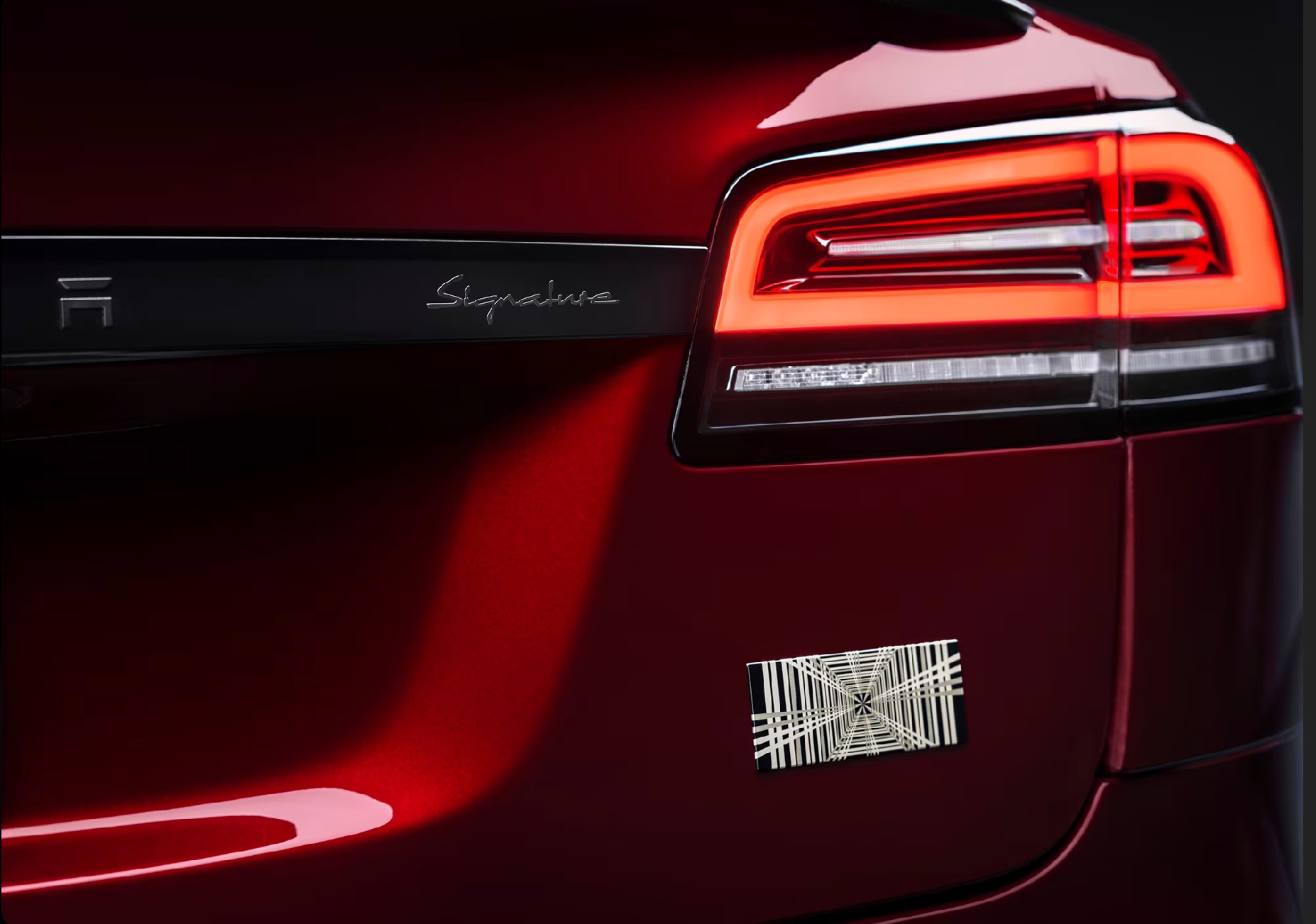
Baron’s public endorsement coincides with a transitional period for Tesla’s physical product lineup. Earlier this year, the manufacturer elected to sunset the original Model S sedan, marking the end of an era for the vehicle that initially redefined the global perception of electric mobility. Demonstrating his personal loyalty to the brand, Baron confirmed that he acquired one of the final farewell editions of the Model S, praising it as his favorite automobile of all time.
However, the vanguard of Tesla’s future value proposition lies far beyond legacy luxury sedans, resting instead on autonomous ride-hailing networks and physical artificial intelligence. The recent commercial deployment of the Cybercab in Austin, Texas, represents the realization of years of iterative engineering. Operating without a traditional steering wheel or accelerator and brake pedals, the purpose-built robotaxi fleet has rapidly become the focal point of Tesla’s long-term business model.
The launch of the Cybercab platform has simultaneously drawn international attention and intense regulatory scrutiny. Just days after public operations commenced in Austin, a tragic aviation incident near Miami International Airport inadvertently placed a regional staging lot of gold-painted Cybercabs under the media spotlight. An Amazon Prime Air Boeing 767 cargo freighter operated by 21 Air overran the airfield perimeter during inclement landing conditions, resulting in a fatal accident that damaged surrounding property. While local emergency services confirmed the aircraft struck multiple vehicles parked near the perimeter, federal investigators from the Federal Aviation Administration (FAA) and the National Transportation Safety Board (NTSB) quickly clarified that the ongoing inquiry remains strictly focused on flight data, runway conditions, and aircraft performance parameters. Tesla officials declined to comment directly on the proximity of the staging lot, while Elon Musk acknowledged the surreal coincidence on social media with a single-word assessment.

Global Expansion and International Market Strategies
While domestic operations in Texas continue to scale, Tesla is concurrently accelerating its international footprint for autonomous transport. The official regional division, Tesla Asia, announced a comprehensive multi-city promotional tour designed to introduce the Cybercab platform to major metropolitan centers across East Asia, including Hong Kong, Tokyo, Beijing, and Shanghai.
Unlike the commercial robotaxi services currently operating in select American test markets, the Asian deployment is initially structured as a series of static public showcases and exhibitions rather than active ride-hailing operations. Industry analysts note that introducing the technology to dense Asian urban centers serves a crucial strategic purpose. It allows Tesla to gauge consumer sentiment and build brand awareness within competitive regional markets where domestic autonomous ride-hailing alternatives—such as Baidu’s Apollo Go and Pony AI—have already established a formidable commercial presence.
This international outreach aligns directly with the directives outlined in Tesla’s Master Plan Part IV. The foundational document emphasizes that autonomous electric vehicles and humanoid robotics, such as the Optimus platform, are essential components of an overarching strategy to dramatically reduce the per-mile cost of transportation, alleviate urban traffic congestion, and lower carbon emissions on a global scale.

Financial Implications and Wall Street Outlook
Financial analysts across major institutions continue to re-evaluate Tesla’s valuation models in light of its accelerated integration of autonomy and artificial intelligence. Investment banking firms such as JPMorgan and Jefferies have recently published analyses addressing the strategic viability of a deeper corporate synergy between Tesla and SpaceX, noting significant overlapping ambitions in aerospace engineering, energy storage, satellite communications, and localized AI computing infrastructure, such as the jointly developed Terafab chip production facility in Austin.
While short-term market fluctuations and regulatory evaluations—such as ongoing National Highway Traffic Safety Administration (NHTSA) audits concerning vehicle certification processes for steering-wheel-free automobiles—continue to introduce periodic volatility, institutional proponents like Ron Baron remain entirely unfazed. By framing Tesla primarily as a software and robotics enterprise rather than a traditional car manufacturer, bullish investors argue that the current market valuation fails to account for the exponential scaling potential of autonomous fleets and network-effect software revenues.
As Tesla prepares for upcoming product demonstrations, including the scheduled unveiling of its next-generation Roadster near the SpaceX test facility in McGregor, Texas, the company stands at a definitive crossroads. Whether through the mass adoption of Full Self-Driving subscriptions or the global commercialization of purpose-built robotaxis, the corporate trajectory championed by Baron and executed by Musk relies on the premise that autonomy will fundamentally redefine modern commerce and personal mobility for decades to come.