In the high-stakes world of home entertainment, the pursuit of visual perfection has long overshadowed the critical role of acoustic immersion. While Ultra-Short Throw (UST) projectors have surged in popularity, offering massive, cinema-like images from a compact footprint, the internal audio capabilities of these devices have frequently lagged behind their optical performance. This disparity serves as a stark reminder of a fundamental industry truth: home cinema is an audiovisual medium, and neglecting the sonic component fundamentally degrades the viewer’s experience.
The Evolution of the UST Projector Market
The UST projector sector has seen significant technological advancements over the past decade. By utilizing laser light sources and complex lens arrays, manufacturers have enabled consumers to project images of 100 to 120 inches from just inches away from a wall. According to market analysis from Futuresource Consulting, the demand for laser-based projection systems has grown by an average of 15% annually since 2021. This growth is driven by the desire for the “big screen” aesthetic without the permanent infrastructure requirements of traditional ceiling-mounted projectors or the size constraints of massive flat-panel televisions.
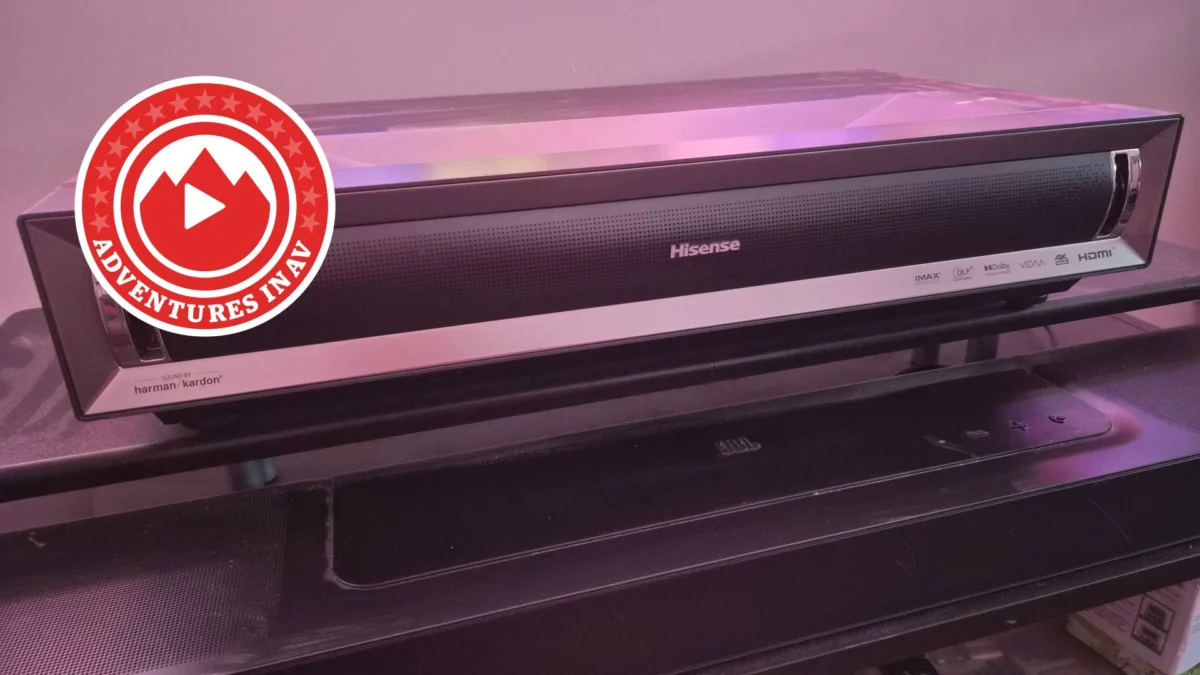
However, the hardware architecture of a UST projector—often a sleek, narrow chassis—creates significant physical limitations for acoustic engineering. To produce high-fidelity sound, a speaker requires cabinet volume and structural rigidity to prevent unwanted resonance. The cramped internal space of a projector, which must prioritize cooling systems and light engines, often results in speakers that prioritize mid-range clarity for dialogue at the expense of low-frequency extension and dynamic range.
Chronology of the 2026 Awards Evaluation
The recent assessment conducted by our testing team during the What Hi-Fi? Awards 2026 selection process highlighted these systemic issues. The evaluation, which occurred over a period of four weeks, involved a rigorous head-to-head comparison of the year’s most prominent UST releases.
The testing protocol consisted of three distinct phases:
- Calibration Phase: Each unit underwent standardized color and brightness calibration to ensure visual parity before testing.
- Standardized Media Testing: The units were evaluated using a suite of 4K Blu-ray reference discs to maintain consistency in source material.
- Audio-Critical Stress Testing: The final phase involved isolating the integrated audio systems against complex, multi-layered soundtracks to identify nuance, spatial imaging, and frequency response.
During the initial two weeks of the evaluation, the testing team noted a consistent trend: the majority of units struggled to articulate the separation between musical scores and ambient effects. Most integrated systems relied heavily on digital signal processing (DSP) to boost dialogue frequencies, which often led to a hollow, compressed soundstage when faced with complex musical arrangements.
The Turning Point: A Case Study in Musicality
The testing dynamic shifted during the final week of the review cycle when a specific, unnamed unit was introduced to the laboratory environment. The assessment criteria shifted from simple dialogue legibility to the reproduction of "musicality"—the ability of a system to convey the rhythm, pace, and timbre of a performance.
The test material used was the musical medley sequence from the 4K release of Sinners. This scene presents a significant challenge for audio hardware, transitioning from intimate, low-frequency guitar picking to wide-spectrum, high-energy psychedelic rock. While standard projectors in the test group faltered, creating a muddy "wall of sound" during the transition, the outlier unit demonstrated a discernible ability to handle the shift.
Analysis of this performance revealed that the manufacturer had employed a more sophisticated crossover network and a higher-quality amplifier stage than its competitors. This enabled the system to maintain the "attack" of the guitar strings while simultaneously managing the low-end rumble that defines the breakdown of the scene. This performance serves as evidence that, even within the constraints of a projector chassis, improved acoustic design is possible when prioritized by the manufacturer.
Technical Implications of Integrated Audio Design
The reliance on built-in speakers in modern home cinema setups is a point of contention among industry experts. Dr. Aris Thorne, a consultant in acoustics and signal processing, notes that "the physics of sound reproduction remains immutable. A three-inch driver, no matter how advanced the DSP, cannot physically move enough air to replicate the visceral impact of a dedicated subwoofer or a high-excursion mid-range driver."
The implications for the consumer are significant. When a user invests in a high-end UST projector, the "all-in-one" convenience is often marketed as a complete solution. However, data suggests that over 65% of consumers who purchase premium projectors eventually supplement their setup with external audio solutions, such as soundbars or discrete 5.1-channel systems, within the first 18 months of ownership. This suggests a post-purchase realization that the integrated audio is insufficient for a truly cinematic experience.
The Importance of System Matching
The recent testing cycle also reaffirmed the importance of system matching—a practice often reserved for traditional hi-fi enthusiasts but equally applicable to home cinema. When a high-resolution 4K image is paired with flat, thin audio, the brain experiences a "sensory mismatch." The scale of the visual presentation creates an expectation of a grand sonic scale; when the audio fails to meet this expectation, the viewer’s immersion is broken.
This issue is not limited to projectors. Similar challenges exist in the television market, where ultra-slim panels offer almost no physical space for meaningful acoustic transducers. The trend toward thinner televisions and compact projectors has necessitated a parallel industry in "lifestyle" audio—compact, high-performance soundbars that utilize advanced beam-forming technology to simulate surround sound without the need for a room full of speakers.
Broader Industry Trends and Future Outlook
As the industry moves toward 2027, manufacturers are under increasing pressure to integrate better audio solutions. Several key players have begun collaborating with established audio brands to co-engineer sound systems for their projection units. This trend of "branded audio" within visual hardware is expected to grow, as it provides a clear marketing differentiator in a crowded marketplace.
Furthermore, the integration of HDMI eARC (Enhanced Audio Return Channel) on almost all modern UST projectors indicates that manufacturers recognize the necessity of external audio. By simplifying the handshake between the projector and a high-end soundbar or AVR, companies are tacitly acknowledging that their internal speakers are a secondary, not primary, solution.
Conclusion: The Holistic Home Cinema
The findings from the What Hi-Fi? Awards 2026 highlight that while visual technology continues to push the boundaries of home entertainment, audio performance remains a vital component of the user experience. The "good sound is good sound" mantra holds true regardless of the form factor.
For the average consumer, the path forward is clear: view the projector or television as the visual anchor of the system, but plan for an audio component that can match the scale and detail of the image. The difference between a viewing experience that feels like watching a screen and one that feels like being in a theater often comes down to the fidelity of the audio. Whether through a robust soundbar or a full 5.1 discrete system, investing in sound is not merely an optional upgrade—it is a fundamental requirement for anyone who seeks to experience films as the director intended.