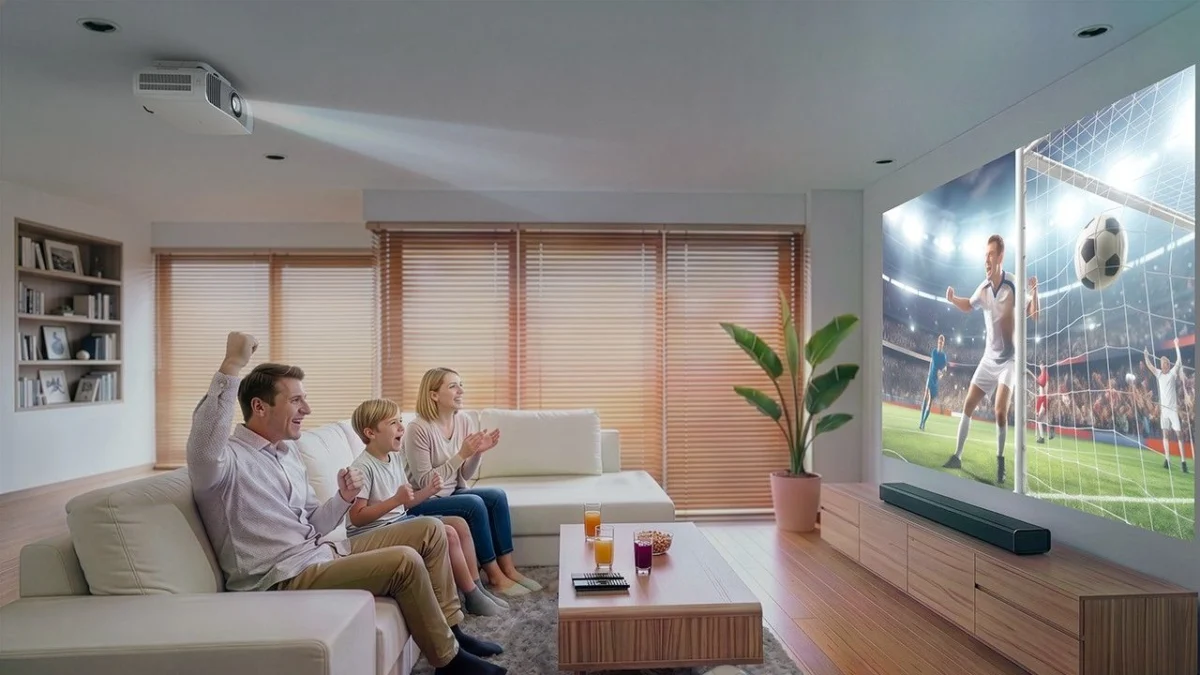
Artificial Intelligence has transitioned from a buzzword in the software sector to a fundamental hardware component, and Epson is the latest industry titan to integrate the technology into its core product lineup. The company has officially unveiled a quartet of 4K home cinema projectors—the EH-LS5000, EH-LS6000, EH-LS7000, and EH-LS7500—marking a significant shift toward AI-enhanced image processing for the consumer projector market. This release represents a strategic move to maintain market share against increasingly sophisticated high-end television displays and competitive projection technologies.
The Technical Foundation: MediaTek Integration
At the heart of this new range is the MediaTek MT9681 chipset, a powerhouse of processing capability that serves as the engine for Epson’s new suite of AI features. By utilizing this advanced silicon, Epson is providing support for 4K resolution at a fluid 120Hz refresh rate via HDMI 2.1 connectivity. This is a critical development for the gaming community, as it allows for low-latency, high-frame-rate performance that was previously a struggle for many home cinema projectors.
The AI-backed image-processing engine does not merely manage connectivity; it acts as a real-time optimizer. It continuously scans incoming video signals to adapt picture settings, significantly improving upscaling performance for sub-4K content, enhancing contrast ratios, and refining motion interpolation to eliminate jitter in fast-paced action scenes. This chipset-first approach underscores a broader industry trend where the "smart" capabilities of a device are increasingly defined by the underlying processor’s ability to manipulate pixels in real-time.
Segmenting the Range: From Entry-Level to Professional
Epson has structured the launch to cover a broad spectrum of consumer needs, segmenting the four models into two distinct categories. The EH-LS5000 and EH-LS6000 are positioned as the more accessible, consumer-friendly options, while the EH-LS7000 and EH-LS7500 target the premium home theater and dedicated media room market.
All models utilize Epson’s proprietary 3LCD technology. Unlike single-chip DLP projectors that use a color wheel, 3LCD technology splits white light into three individual beams—red, green, and blue—using liquid crystal chips. This process is engineered to prevent the "rainbow effect" often associated with budget projectors and to ensure superior color brightness, which remains a primary selling point for the brand.
The entry-level duo showcases impressive brightness specifications: the EH-LS5000 outputs 2500 lumens, while the EH-LS6000 reaches 3400 lumens. When paired with Epson’s newly introduced LD Boost Technology, these units can achieve a 12 percent increase in brightness without a corresponding rise in fan noise, a common grievance in the home cinema space where cooling requirements often dictate the acoustic profile of the device.
The Premium Tier: Performance and Versatility
For users looking to outfit dedicated cinema spaces, the EH-LS7000 pushes the brightness envelope further to 3600 lumens, making it a robust solution for rooms with ambient light that would otherwise wash out a lesser display.
The most notable inclusion, however, is the EH-LS7500. Billed as the company’s inaugural short-throw professional home 4K projector capable of 3500 lumens, it bridges the gap between massive-screen immersion and the practical constraints of small or multi-use rooms. This model is specifically marketed toward versatility, with the capability to project images up to 500 inches, making it a viable candidate for high-end applications such as indoor golf simulators or professional-grade home entertainment centers.
Smart Home Integration and Standardization
Recognizing the modern demand for a connected home, Epson has integrated Matter support across the entire range. Matter is the industry-unifying protocol designed to simplify the connection between smart home devices, allowing these projectors to be controlled via a centralized dashboard or through integrated voice assistants. This inclusion marks a transition for projectors from being "passive" display devices to being active, intelligent nodes within the broader smart home ecosystem.
While the inclusion of Matter is a forward-looking decision, the omission of certain HDR formats may give pause to videophiles. The range supports HDR10 and HLG (Hybrid Log-Gamma), which are industry standards. However, the absence of dynamic HDR formats like HDR10+ or Dolby Vision—which adjust brightness and contrast on a scene-by-scene or frame-by-frame basis—suggests that Epson is prioritizing overall light output and AI-driven processing over the specific metadata-rich formats favored by high-end streaming services and 4K Blu-ray collectors.
Historical Context and Market Positioning
The launch of these four units follows the success of the award-winning EH-LS9000, which set a high bar for Epson’s projection technology. By releasing the LS5000 through LS7500, Epson is effectively "filling in" the space beneath its flagship model, creating a more cohesive product ladder for customers.
The shift to AI-processing is not an arbitrary choice. As display technology evolves, the delta between the quality of a native 4K source and upscaled content is narrowing. Epson’s investment in the MediaTek MT9681 suggests that the company is aiming to reduce the reliance on external upscaling devices, such as high-end AV receivers or dedicated video processors, by baking that intelligence directly into the projector’s hardware.
Broader Implications for the Industry
The arrival of these units in the European market—with global rollouts expected to follow—signals a hardening of the projector market’s focus on gaming and smart-integration. Historically, projectors were viewed as devices for movies and presentations. The current trend toward "gaming-first" features, such as 4K/120Hz support and reduced input lag, signifies that manufacturers are viewing the projector as a primary display for all forms of media, not just cinematic viewing.
Furthermore, the emphasis on high-lumen output in the LS7000 series suggests a response to the dominance of OLED and Mini-LED televisions. To compete with the high peak brightness of modern TVs, projector manufacturers must innovate in light source technology. Epson’s LD Boost Technology is a direct response to this competitive pressure, attempting to offer the brightness of a TV-like experience with the sheer scale that only a projector can provide.
Analysis of Future Challenges
While the hardware specifications are competitive, the success of the EH-LS range will likely hinge on the effectiveness of the AI image processing. As consumers become more discerning about motion artifacts and image clarity, the "black box" nature of AI processing will be under scrutiny. If the AI is too aggressive, it may introduce artifacts that purists find undesirable; if it is too subtle, the market may not perceive the value proposition over existing non-AI projectors.
Additionally, the continued lack of dynamic HDR support like Dolby Vision may limit the appeal of these units to a small subset of the market that prioritizes absolute image fidelity over the convenience of a "smart" projector. Nevertheless, for the average home user and the growing community of home gamers, the combination of 3LCD color vibrancy, high-lumen output, and a unified smart-home standard makes this range a formidable new entry.
Conclusion and Availability
As the market enters the final quarter of the year, Epson’s latest range provides a compelling update to its home cinema portfolio. The move toward AI, combined with the practical application of short-throw technology and smart-home interoperability, positions these projectors to capture both the casual media consumer and the dedicated enthusiast. With the rollout currently underway across Europe, the industry will be watching to see how the AI-driven performance translates to real-world viewing conditions, potentially setting a new benchmark for what is expected from a modern home cinema display.