On 13 September 1996, the global music landscape was irrevocably altered by the death of Tupac Shakur. Shot four times in a drive-by incident in Las Vegas, the rap icon’s passing served as a harrowing crescendo to the intense friction between East and West Coast factions that had come to define the mid-1990s gangsta rap era. The violence that had long simmered within the industry’s narrative had spilled into the streets, leaving a void that felt both cultural and existential. Yet, precisely three days later, as the investigation into Shakur’s death commenced, a young producer from California named Josh Davis—professionally known as DJ Shadow—released a debut album that offered an entirely antithetical vision of what hip-hop could be.
That album, Endtroducing, did not rely on the aggressive storytelling or G-funk synthesizers dominating the Billboard charts. Instead, it was a masterpiece of reconstruction, a sonic mosaic built from the discarded remnants of musical history.
The Technological Leap: Sampling as Architecture
In the mid-1990s, the standard production model for hip-hop was largely functional: producers would loop a recognizable breakbeat or a catchy melodic hook to provide a foundation for an MC. DJ Shadow, however, treated the Akai MPC60 MKII sampler not as a tool for repetition, but as a digital loom. By sourcing thousands of obscure, forgotten, and discarded vinyl records, he synthesized a new genre of instrumental hip-hop.
The technical implications of this method were profound. Endtroducing holds the distinct honor of being recognized by the Guinness World Records as the first album to be composed entirely of sampled sounds. This was not merely an aesthetic choice; it was a feat of engineering. Shadow’s process involved isolating specific frequencies, rearranging transient peaks, and layering textures in a way that stripped the source material of its original context, creating a seamless, original narrative from the scraps of others.
The Crate-Digger’s Odyssey
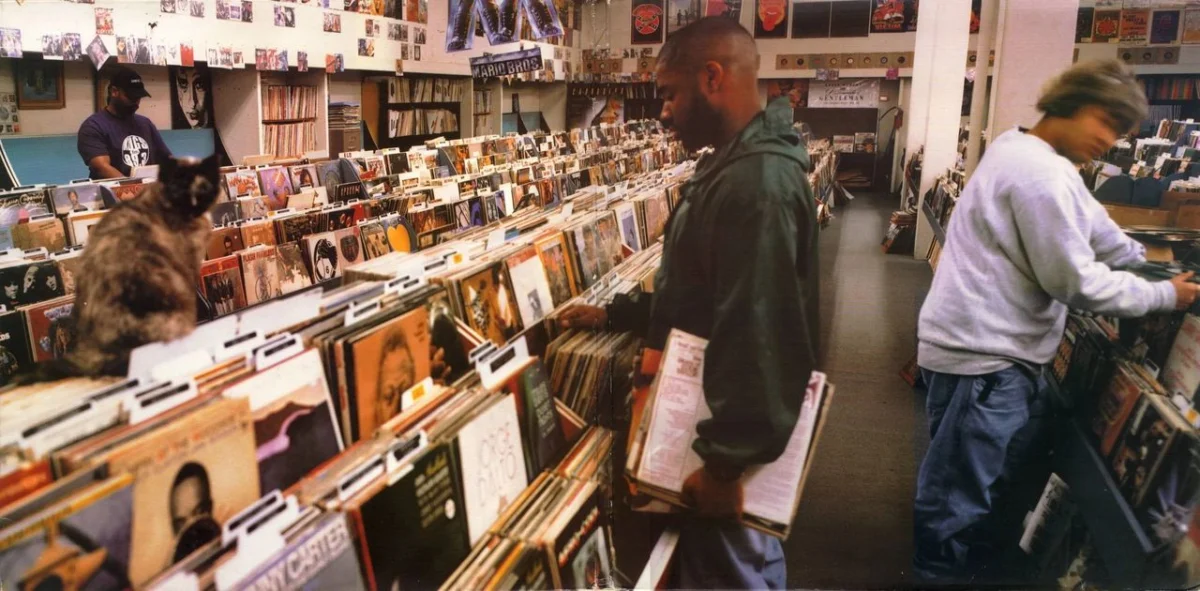
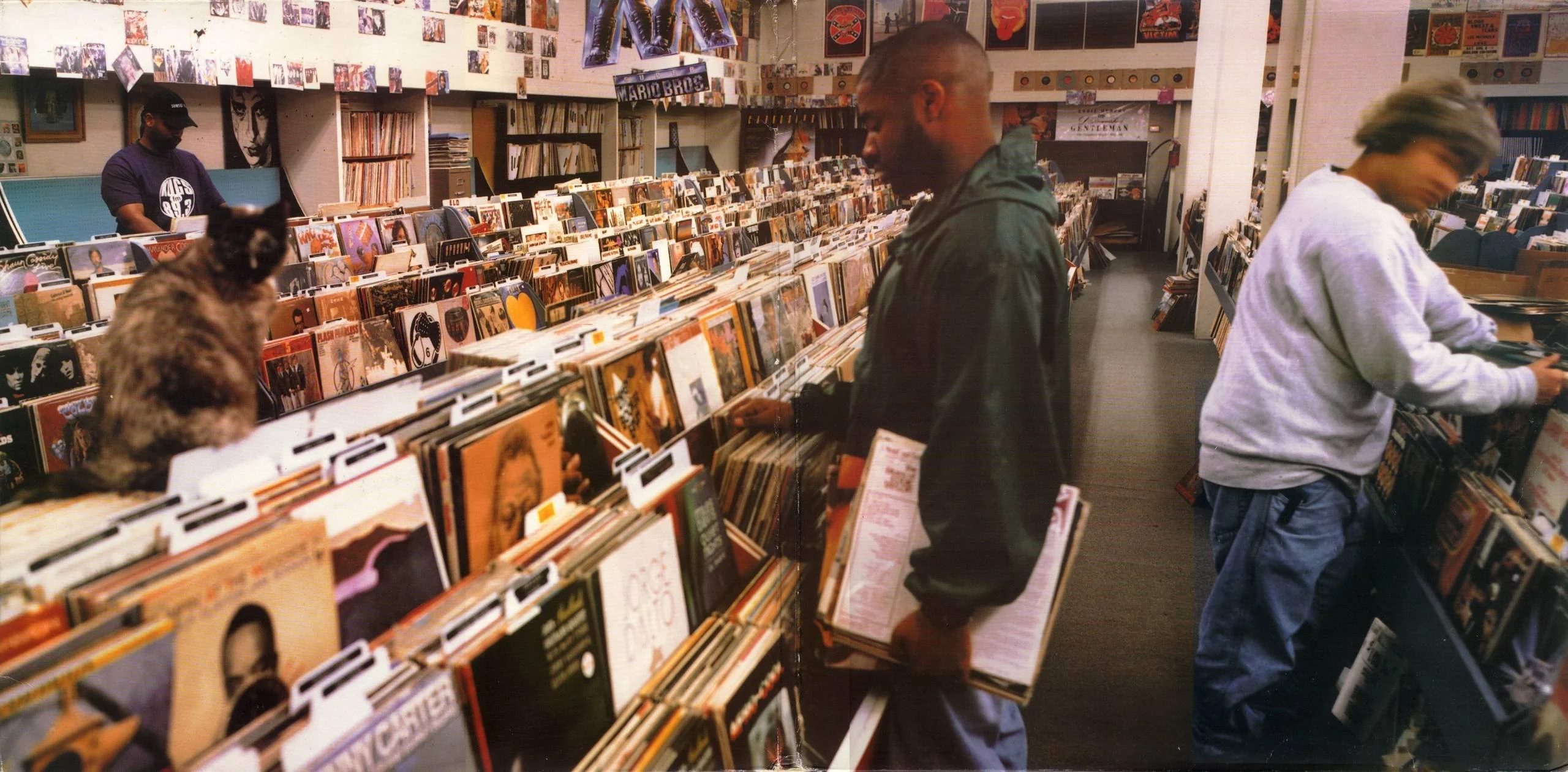
Shadow’s methodology was rooted in the obsessive culture of "crate-digging." His personal collection, rumored to exceed 60,000 records, served as the library for his compositions. Central to this process was Rare Records, the Sacramento-based music store immortalized on the album’s front cover. This shop was not just a retail space for Shadow; it was a research laboratory.
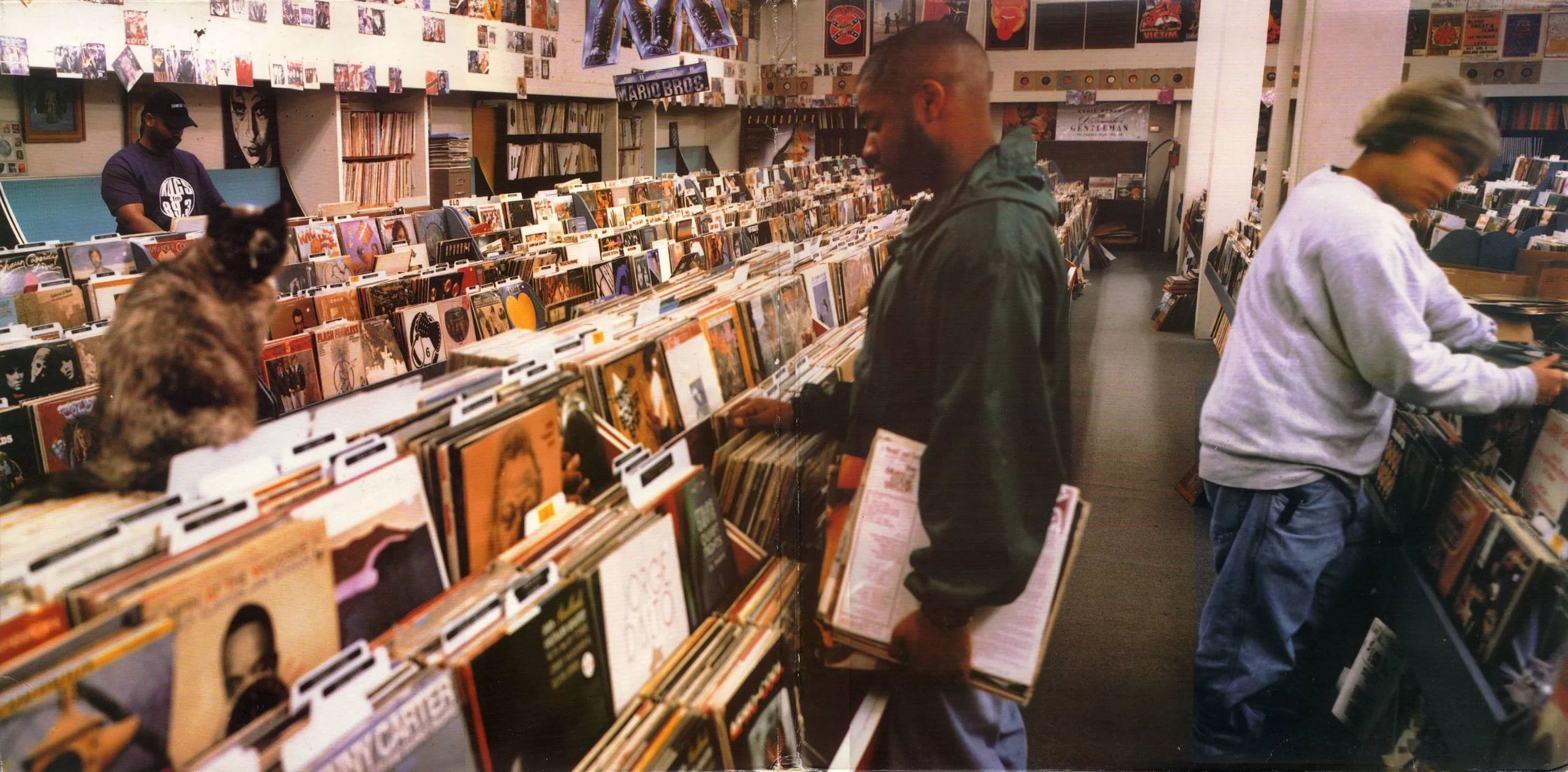
The breadth of his influences was staggering. While he utilized household names—integrating the heavy metal weight of Metallica’s "Orion," the psychedelic urgency of Pink Floyd’s "On the Run," and the ethereal textures of Björk’s "Possibly Maybe"—he treated these samples with a democratic reverence. By the time a sample was filtered through his MPC, the source material was transformed. A snippet of a 1970s jazz piano or a fleeting drum fill from a forgotten funk b-side would be re-pitched, re-timed, and re-contextualized to serve the emotional arc of the track.
A Technical Breakdown: Testing the Hi-Fi
For audiophiles, Endtroducing remains a definitive test of high-fidelity sound systems. The album is characterized by a dense, layered production that requires significant dynamic range and clarity to resolve.
Tracks such as "Building Steam With a Grain of Salt" exemplify the complexity of Shadow’s work. By utilizing piano parts from Jeremy Storch’s "I Feel a New Shadow," he built an ominous, haunting atmosphere. For a playback system, the challenge here is the "stuttering" drum breakdown; if a system lacks the transient speed and composure required, the frantic percussion can quickly descend into a muddy, indistinct wall of noise.
Similarly, "The Number Song" demands exceptional control over the lower-frequency spectrum. The drone that permeates the track requires depth and texture, while the sudden entry of brass instruments mid-way through tests the system’s ability to transition between disparate instrumental layers without distortion. "Changeling," with its sprawling, atmospheric synths, requires a wide soundstage to properly convey the spatial depth intended by the producer.
Cultural Context and The 1996 Shift
The release of Endtroducing occurred at a volatile moment in music history. The commercial dominance of Death Row Records and the tragic demise of Tupac Shakur meant that the public perception of hip-hop was deeply tied to themes of conflict and urban reality. Shadow’s work, which was largely instrumental and introspective, provided a necessary counter-narrative.
While Biggie Smalls and Tupac were defining the lyrical intensity of the genre, Shadow was quietly expanding its structural boundaries. The album did not have the benefit of traditional radio-friendly hooks or celebrity features. Instead, it relied on a moody, cinematic quality that appealed to fans of ambient music, trip-hop, and electronica as much as it did to traditional hip-hop listeners. It proved that hip-hop could be abstract, atmospheric, and highly intellectual, paving the way for the "experimental" label that would later define the careers of artists like J Dilla, Madlib, and Flying Lotus.
The Legacy of the "Perfect World"
"Midnight in a Perfect World" stands as the album’s emotional epicenter. By extracting a piano refrain from David Axelrod’s "The Human Abstract," Shadow tapped into a vein of melancholy that resonated with listeners exhausted by the hyper-masculinity of the mainstream rap scene. The track’s production—combining woozy, pitch-shifted synths with deep, soulful drum programming—created an auditory experience that felt both nostalgic and futuristic.
Shadow’s choice of the title "Endtroducing" was initially intended as a final statement on that specific period of his development, or perhaps even a nod to the end of a certain way of producing music. Yet, in retrospect, it served as an introduction to a new paradigm. By 1996, the technology of sampling had become a subject of intense legal and ethical scrutiny. Shadow’s ability to create a work of such profound originality using only pre-existing sounds challenged the industry’s definitions of authorship and intellectual property.
Analysis of Impact
The long-term implications of Endtroducing are measurable in the evolution of music production technology. As digital audio workstations (DAWs) replaced hardware samplers, the barrier to entry for "sampling as composition" lowered. However, the artistry displayed by Shadow—the manual dexterity required to chop, sequence, and layer on an MPC60—remains a gold standard.
Furthermore, the album’s enduring popularity in the audiophile community underscores the shift in how we evaluate "test" music. While many test tracks focus on high-frequency purity or vocal placement, Endtroducing demands a system that can handle complex, multi-layered, and often dissonant samples without losing the "groove." When the drums kick in on "Organ Donor," which repurposes a Giorgio Moroder deep cut, the system must convey a sense of momentum and physical impact that is often lost on lower-end equipment.
Conclusion
In the wake of the 1996 tragedies that defined the hip-hop headlines, Endtroducing emerged as a quiet, powerful testament to the creative potential of the medium. It did not need to shout to be heard; it simply required a listener to pay attention. Nearly three decades later, the album remains an essential entry in the canon of modern music. It is a reminder that in the hands of a master architect, the discarded fragments of the past can be rearranged to create a timeless, coherent, and profoundly human experience. DJ Shadow did not just make a record; he constructed a blueprint for the future of instrumental sound, one sample at a time.