The landscape of consumer health technology is undergoing a significant shift as startup Vital Signals officially enters the market with the Signal Ring, a wearable device designed to provide clinical-grade blood pressure readings without the need for traditional cuff calibration. While established players like Apple and Oura have integrated various cardiovascular health features into their devices, the Signal Ring represents a specialized leap forward by offering both systolic and diastolic measurements directly from the finger. This development addresses a long-standing challenge in the wearables industry: providing accurate, actionable blood pressure data in a form factor that users can wear comfortably 24 hours a day.
The Rise of the Signal Ring and the Calibration Breakthrough
For years, the "holy grail" of wearable health tech has been non-invasive, calibration-free blood pressure monitoring. Most current devices that claim to measure blood pressure, such as certain smartwatches available in international markets, require the user to calibrate the device every few weeks using a traditional inflatable arm cuff (sphygmomanometer). This process ensures the optical sensors stay aligned with the user’s actual physiological baseline. However, Vital Signals claims that the Signal Ring has bypassed this requirement through advanced sensor technology and proprietary algorithms.
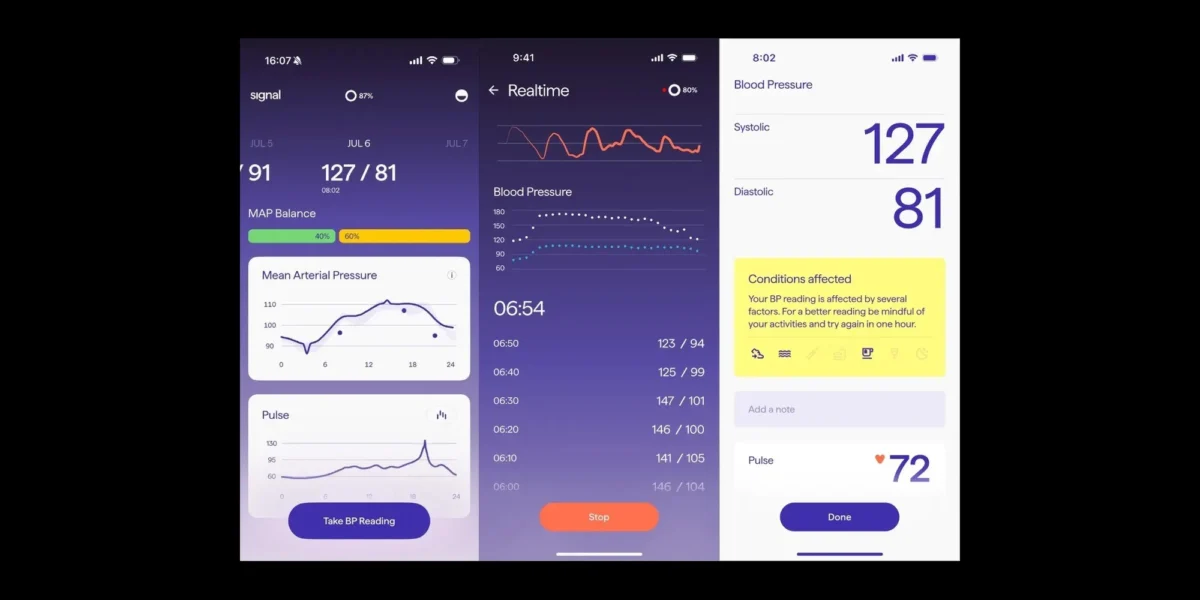
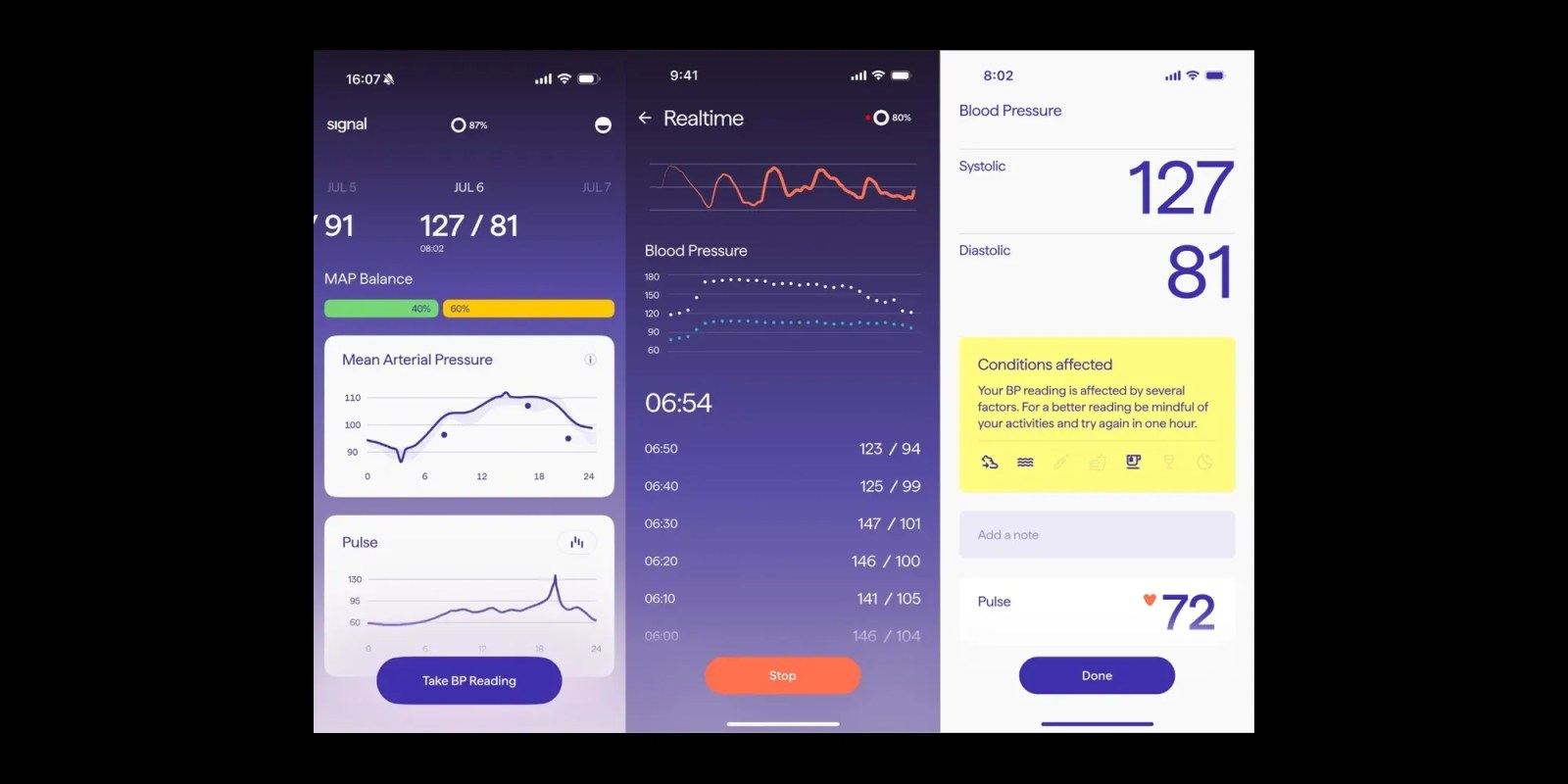
The Signal Ring, priced at $399, is positioned as a high-end medical-adjacent tool. Unlike many of its competitors, it does not require a monthly subscription to access health data, a move that distinguishes it from the Oura Ring’s recurring revenue model. Pre-sales for the device have commenced, with the first wave of shipments expected to reach consumers in October 2026. The companion app provides users with a comprehensive dashboard of their cardiovascular health, displaying live readings alongside long-term trends to help identify patterns of hypertension or hypotension.
Hypertension: The Global Challenge of the Silent Killer
The primary driver behind the development of the Signal Ring is the global health crisis of hypertension. Often termed the "silent killer," hypertension (high blood pressure) frequently presents no external symptoms until a catastrophic event, such as a myocardial infarction (heart attack) or a cerebrovascular accident (stroke), occurs. According to the World Health Organization (WHO), an estimated 1.28 billion adults aged 30–79 years worldwide have hypertension, and nearly half of them are unaware of their condition.
The medical necessity for constant monitoring is particularly acute for aging populations. Traditional blood pressure monitoring is often reactive, occurring only during biannual doctor visits. Even for patients who own home-use cuffs, "white coat syndrome" or improper cuff placement can lead to inaccurate readings. A wearable device that monitors blood pressure passively throughout the day and night offers a more representative "average" of a person’s cardiovascular state, capturing the "nocturnal dipping" or lack thereof that is often a precursor to heart disease.

Comparing the Signal Ring to Apple Watch and Oura
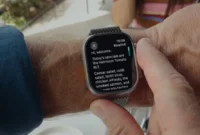
The announcement of the Signal Ring comes at a time when Apple has expanded its own cardiovascular capabilities. With the release of watchOS 26, five Apple Watch models—including the Apple Watch Series 10, Series 11, and the Ultra series—possess the hardware and software necessary to detect signs of hypertension. However, Apple’s approach remains conservative. Rather than providing a specific numerical reading (e.g., 120/80 mmHg), the Apple Watch monitors for baseline shifts and sends alerts if the user’s data suggests a move toward a hypertensive state.
Apple’s strategy focuses on "notifying" rather than "diagnosing," a distinction that helps the company navigate complex FDA regulations while still providing life-saving utility. Similarly, the Oura Ring provides cardiovascular insights but has largely focused on heart rate variability (HRV), sleep stages, and readiness scores. While Oura has explored blood pressure features, it has not yet deployed a calibration-free numerical reading system to the same extent promised by Vital Signals.
Tom Moss, the CEO of Vital Signals, has been transparent about the Signal Ring’s niche. He noted that the device is specifically engineered for those at risk. For younger, healthy individuals who simply want to track steps or sleep, Moss suggests that the Apple Watch or Oura Ring may be more appropriate. The Signal Ring is a "purpose-built" tool for chronic disease management rather than a general-purpose lifestyle tracker.
The Technical Evolution: From Razer to Vital Signals
The pedigree of the leadership at Vital Signals suggests a deep understanding of hardware engineering. Tom Moss, a veteran of the tech industry, previously held leadership roles at drone manufacturer Skydio, the gaming hardware giant Razer, and the smartphone startup Nextbit Systems. His transition into health tech was prompted by a personal health scare—a near-fatal encounter with undiagnosed hypertension.
This personal mission has influenced the company’s focus on clinical validation. Vital Signals reported that the Signal Ring underwent a trial involving thousands of participants. The data from these trials indicated that the ring’s optical sensors could match the accuracy of traditional arm cuffs across various skin tones and body types. The technology relies on photoplethysmography (PPG), which uses light to measure blood volume changes in the tissue. By analyzing the pulse wave shape and velocity, the Signal Ring’s algorithms calculate the pressure exerted against the arterial walls.
Regulatory Landscape and Clinical Validation
Despite the promising trial data, the Signal Ring is navigating a rigorous regulatory environment. As of July 2026, the device is awaiting formal clearance from the U.S. Food and Drug Administration (FDA) as a Class II medical device. This status is critical for the device to be recommended by physicians and potentially covered by health insurance or Health Savings Accounts (HSAs).
The challenge for any wearable seeking medical-grade status is the "Gold Standard" comparison. The FDA typically requires that new devices demonstrate substantial equivalence to existing, approved technologies. For blood pressure, this means the device must perform within a narrow margin of error when compared to an invasive arterial line or a professional-grade manual cuff. The Signal Ring’s claim of "no calibration" is a bold one, as the FDA has historically been skeptical of calibration-free PPG-based blood pressure monitoring due to the high variability in individual arterial stiffness and peripheral resistance.
Economic and Healthcare Implications
If the Signal Ring successfully gains widespread adoption, the economic implications for the healthcare system could be profound. Hypertension is one of the most expensive conditions to treat, not because the medication is costly, but because the complications—kidney failure, heart surgery, and long-term stroke rehabilitation—are astronomical.
A move toward continuous, passive monitoring allows for "precision medicine." Instead of a doctor adjusting a patient’s dosage based on a single measurement taken in a clinic, they could review a month’s worth of data showing how the patient’s blood pressure responds to stress, diet, and exercise in real-time. This proactive approach could significantly reduce emergency room visits and hospitalizations.
Furthermore, the Signal Ring’s "no subscription" model challenges the current trend of "Hardware as a Service" (HaaS). By offering the device for a flat fee of $399, Vital Signals is betting that consumers are fatigued by monthly fees and prefer a one-time investment in their long-term health.

Timeline of Development and Future Outlook
The journey of the Signal Ring can be traced through several key milestones in the mid-2020s:
- Early 2024: Vital Signals founded by Tom Moss following his departure from the drone industry.
- 2025: Commencement of large-scale clinical trials involving 5,000+ participants to refine the calibration-free algorithm.
- May 2026: Apple releases watchOS 26, introducing hypertension alerts but stopping short of numerical readings.
- July 16, 2026: Vital Signals officially announces the Signal Ring and opens pre-orders.
- October 2026: Expected shipping date for the first consumer units.
Looking ahead, the success of the Signal Ring will likely trigger a response from major tech conglomerates. If a startup can achieve calibration-free monitoring, industry analysts expect Apple, Samsung, and Google (Fitbit) to accelerate their own research and development in this area. The next frontier for the Signal Ring will be the integration of other chronic condition monitors, such as non-invasive glucose tracking, though that technology remains several years away from commercial viability.
For now, the Signal Ring stands as a specialized sentinel for cardiovascular health. It represents a shift in the wearable market from "generalist" devices that do many things adequately to "specialist" devices that do one critical thing exceptionally well. As the global population ages and the burden of chronic disease grows, tools like the Signal Ring may transition from luxury gadgets to essential medical necessities.