Suunto, the Finnish manufacturer of precision sports watches and dive computers, has officially announced its comprehensive Q2 software update, introducing a suite of new features designed to enhance navigation, training metrics, and the overall user experience across its latest hardware and mobile application ecosystems. This quarterly release marks a significant milestone for the brand as it continues to refine its software-as-a-service approach to hardware ownership, though the rollout also signals a strategic shift in how the company manages legacy device support. The update primarily targets the Suunto Race 2 and Suunto Vertical 2, alongside a specialized set of enhancements for the Suunto Ocean dive computer and a refreshed interface for the Suunto mobile app.
Advanced Mapping and Navigation Enhancements
The cornerstone of the Q2 update is a significant overhaul of Suunto’s on-device mapping capabilities. Recognizing the increasing demand for high-fidelity topographical data among trail runners, hikers, and mountaineers, Suunto has introduced more descriptive map labels. Users will now find it easier to identify water features and mountain peaks directly on the watch face. This addition addresses a common critique of previous firmware versions, where identifying specific landmarks in complex terrain required frequent cross-referencing with external maps or mobile devices.
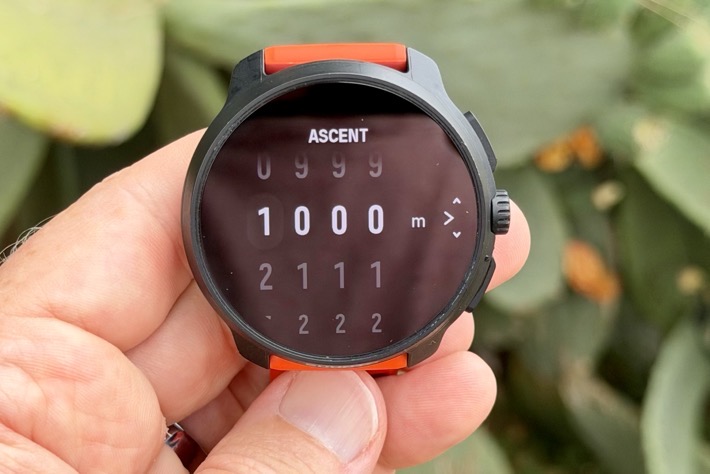
Furthermore, the update introduces a map layer selection option. This tool allows users to toggle specific data overlays on or off, including contour lines, place names, street labels, and Points of Interest (POI) listings. By providing this level of customization, Suunto enables athletes to tailor their navigation screen to the specific requirements of their environment—for instance, prioritizing contour lines during a mountain ascent while switching to street labels for urban navigation.
One of the most anticipated technical improvements is the massive expansion of route storage. Previously capped at a restrictive 15 routes, the Suunto Race 2 and Vertical 2 can now store up to 200 routes locally. This 1,233% increase in capacity is a critical update for ultra-endurance athletes and travelers who frequently operate in remote areas without consistent access to a smartphone for route syncing.
New Training Metrics and Environmental Tools
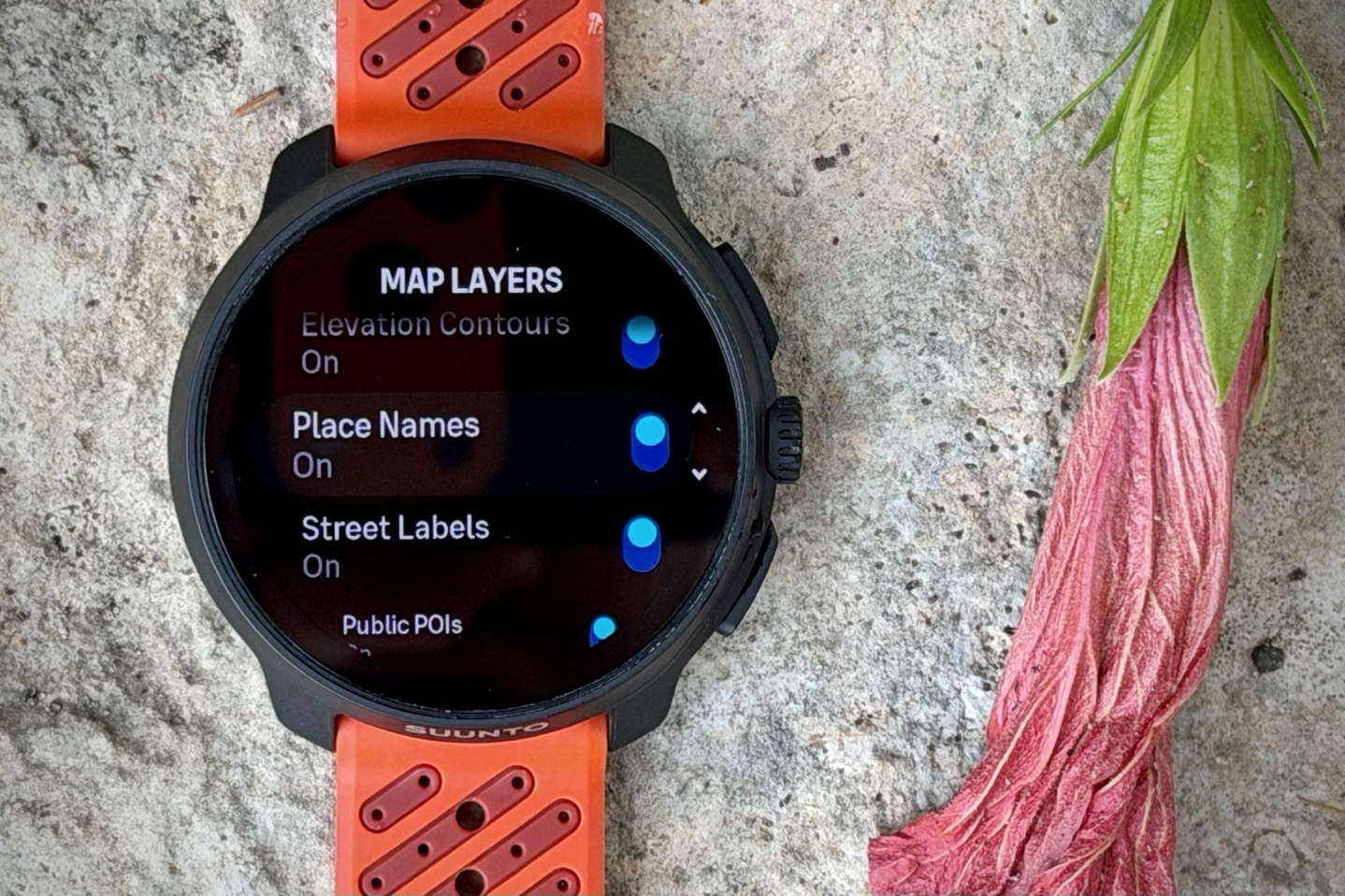
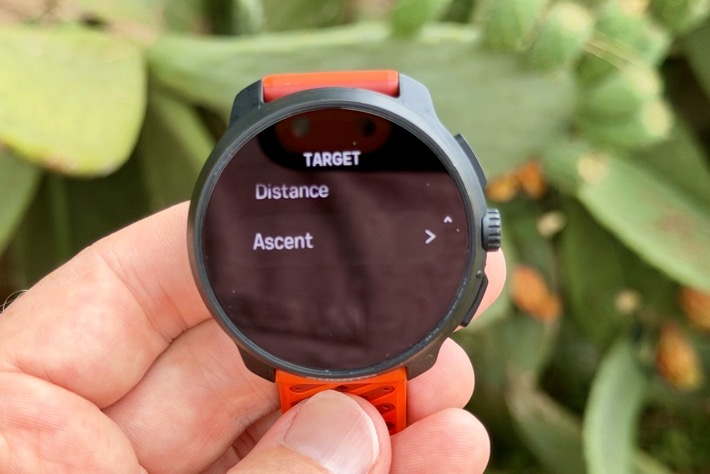
Beyond navigation, Suunto has integrated new data fields and training targets to better serve specialized athletic disciplines. A new vertical gain training target has been added, allowing users to set specific ascent goals in vertical meters. This feature is particularly relevant for trail runners and cyclists training for high-altitude events where total elevation gain is a more critical performance metric than horizontal distance.
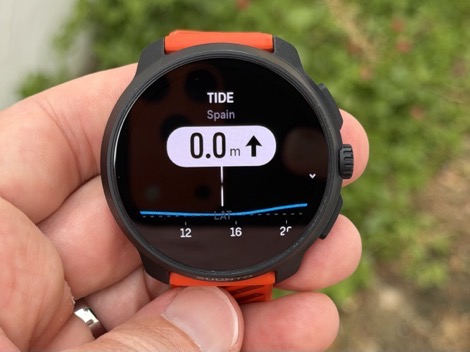
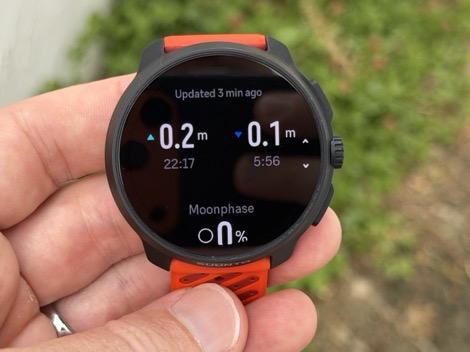
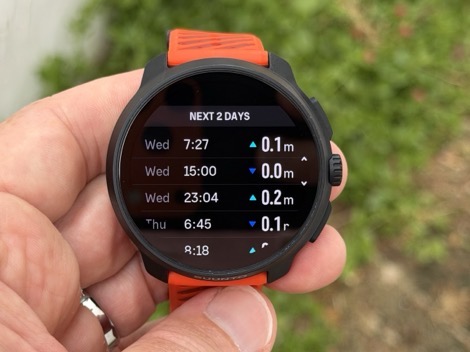
Environmental awareness also receives a boost with the introduction of a tides forecast feature. This tool, which syncs data from the Suunto app to the watch, provides high and low tide information essential for coastal runners, surfers, and sailors. While the feature requires the watch to be in proximity to a paired smartphone to refresh the data, it provides a vital layer of safety and planning for those operating in tidal zones.
To streamline the user onboarding experience, Suunto has implemented a QR code pairing option, simplifying the initial connection between the watch and the mobile application. Additionally, the company has improved the efficiency of the SuuntoPlus ecosystem. By compressing SuuntoPlus applications, the manufacturer has significantly increased syncing speeds, reducing the latency users experience when downloading new tools or data screens to their devices.
Expansion of the Suunto App and Ecosystem
The Suunto mobile application serves as the backbone of the user experience, and the Q2 update brings several visual and functional enhancements to the platform. The mapping interface within the app now includes a new shading option for 3D maps, which provides a more intuitive visualization of steep terrain and topographical gradients. This is complemented by the introduction of a "City Map" type, which renders buildings with 3D styling, aiding in urban navigation and route planning.
For social engagement, Suunto has updated its sharing overlays. When users post their completed activities to social media or the Suunto community, they can now choose from a wider variety of backgrounds and data overlays, such as power curves, distance milestones, and heart rate zones. The user profile section has also been redesigned to prominently display badges and personal records, fostering a sense of achievement and progression within the athlete’s digital identity.
Specialized Updates for the Suunto Ocean
The Suunto Ocean, the brand’s flagship hybrid sports and dive watch, received a dedicated set of updates late last week focused on technical diving and sensor integration. Chief among these is the addition of Closed Circuit Rebreather (CCR) mode, a feature previously reserved for the company’s dedicated EON series dive computers. This addition significantly elevates the Suunto Ocean’s utility for technical divers who require precise gas management and decompression monitoring.
The update also brings support for multiple tank pods, allowing divers to monitor the air pressure of several tanks simultaneously. Other dive-centric improvements include new Time to Surface (TTS) values and a fix for map-related bugs within the dive interface. Notably, the Suunto Ocean now supports heart rate belt integration during dives, providing underwater athletes with more accurate biometric data than can typically be achieved via wrist-based optical sensors in aquatic environments.
Chronology of Suunto’s Software Lifecycle
The Q2 2026 update follows a consistent release cadence established by the company over the past 24 months.
- January 2026: Focused on battery optimization and initial support for the Vertical 1 series.
- April 2026: Introduced the Suunto Race S and expanded SuuntoPlus features to the first-generation Race and Vertical models.
- July 2026 (Current): A concentrated update for the "Generation 2" hardware (Race 2, Vertical 2, and Ocean).
This timeline highlights a shifting strategy in Suunto’s firmware support. Historically, the brand was known for providing long-term updates to older models. However, the current Q2 update is restricted to the newest hardware versions. This move mirrors the strategies of competitors like Garmin and Wahoo, who often reserve the most resource-intensive software features for their latest processor architectures. While this may cause concern among owners of the original Suunto Race or Vertical, it allows the company to push the limits of the more powerful hardware found in the second-generation units.
Market Context and Competitive Analysis
The decision to increase route storage and enhance 3D mapping is a direct response to the aggressive feature expansion seen from competitors such as COROS and Garmin. COROS, for example, recently released a firmware update that extended high-level metrics to its previous-generation units, maintaining a reputation for legacy support. Garmin, meanwhile, continues to lead the market in mapping detail and local database storage (such as pre-loaded tide data that does not require a phone sync).
Suunto’s focus on the "Vertical 2" and "Race 2" suggests a prioritization of performance over broad compatibility. By optimizing the syncing speed of SuuntoPlus apps through compression, Suunto is addressing a specific pain point—the speed of the Bluetooth data transfer—which has often been a bottleneck for the brand compared to the Wi-Fi-enabled syncing found in high-end Garmin models.
Implications for the User Base
For the end-user, the Q2 update represents a significant value add, particularly for those who utilize their watches for complex navigation. The transition from 15 to 200 routes effectively removes one of the most persistent "quality of life" hurdles for Suunto power users. The inclusion of peak and water labels brings the Suunto mapping experience closer to the gold standard of professional handheld GPS units.
However, the exclusion of the Suunto Race 1 and the Suunto Race S from this specific update cycle may indicate that Suunto is moving toward a more rapid hardware-software decoupling. Analysts suggest that as sports watches become more sophisticated, the hardware requirements for rendering 3D maps and managing large databases of POIs may exceed the capabilities of older chipsets.
Conclusion
Suunto’s Q2 update reinforces the company’s commitment to its premium "Adventure" and "Race" lines. By delivering a mix of safety features (tides and improved labels), performance metrics (vertical gain targets), and technical dive capabilities (CCR mode), Suunto is solidifying its position as a versatile tool for multi-sport athletes. While the restricted hardware compatibility marks a change in the company’s traditional philosophy, the depth of the features provided ensures that the Suunto Race 2 and Vertical 2 remain competitive in an increasingly crowded market. Users are encouraged to update their devices via the Suunto app to access these new capabilities immediately.