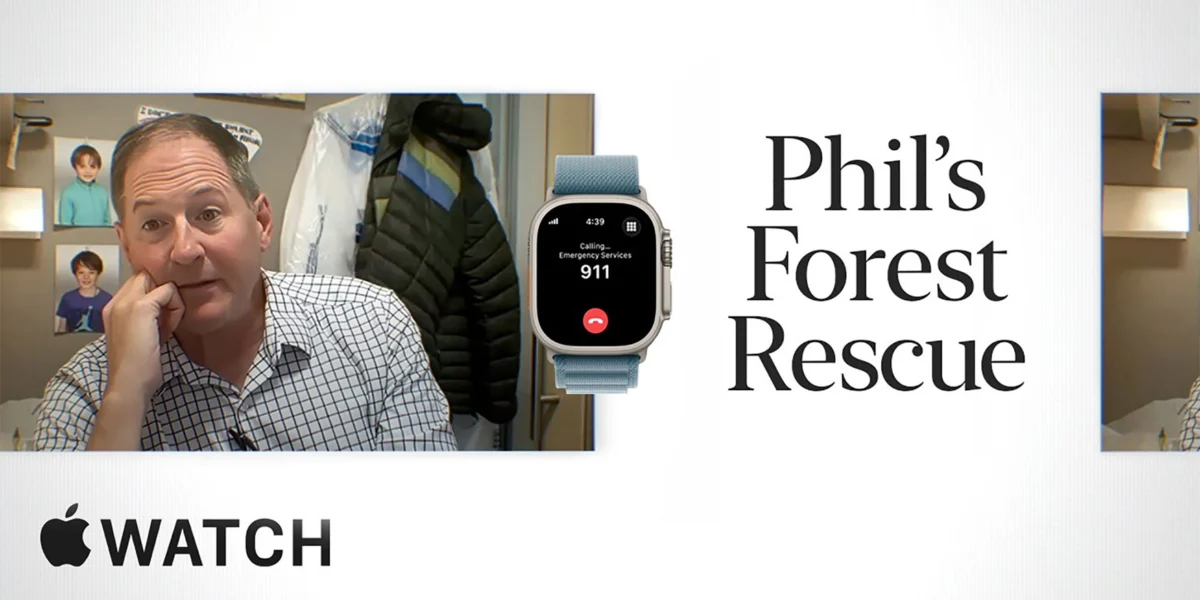
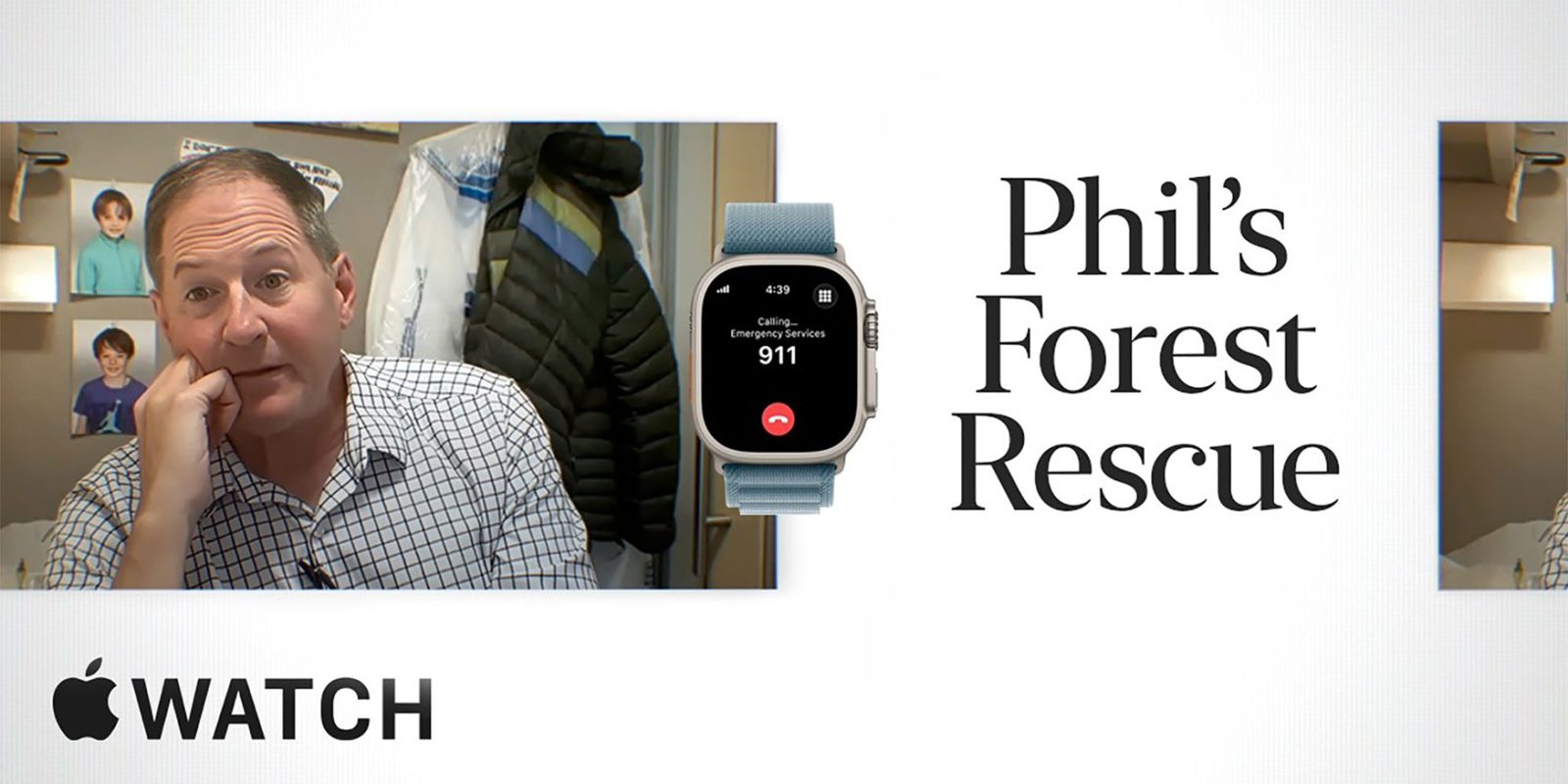
The integration of advanced biometric sensors and automated emergency protocols in consumer wearables has once again been highlighted as a critical factor in life-saving interventions. In a recently released testimonial, Apple showcased the harrowing experience of a mountain biker named Phil, whose Apple Watch served as the primary link between a catastrophic accident and the arrival of emergency medical personnel. The incident, which occurred while Phil was cycling with his children, underscores the increasing reliance on "active safety" features in modern technology to bridge the gap during the "golden hour"—the critical window of time following a traumatic injury where medical intervention is most effective.
During a routine mountain biking excursion, Phil misjudged a takeoff on a trail, resulting in a high-velocity impact that left him with a broken collarbone and seven fractured ribs. The force of the crash was sufficient to render him immediately unconscious, making it impossible for him to manually call for help or attend to his children. However, the Apple Watch’s Fall Detection algorithm, which utilizes high-g accelerometers and gyroscopes to identify the unique signature of a hard fall, triggered an automated response. When the device detected a lack of movement following the impact, it initiated a countdown and subsequently placed an automated call to local emergency services, providing dispatchers with Phil’s precise GPS coordinates.
The Mechanics of Fall Detection and Emergency SOS
To understand the impact of this rescue, it is necessary to examine the technical architecture that allows a wrist-worn device to perform such a complex task. Apple introduced Fall Detection with the Apple Watch Series 4 in 2018, and the feature has since undergone significant refinement through machine learning models trained on real-world data from thousands of fall patterns.
The system operates by analyzing wrist trajectory and impact acceleration. A "hard fall" is characterized by a specific spike in G-force followed by a period of relative stillness. If the user does not dismiss the alert within approximately 60 seconds, the device assumes the individual is incapacitated. At this stage, the Emergency SOS protocol is activated. The watch uses its cellular connection (or a paired iPhone) to contact emergency dispatchers, playing a recorded message that informs the operator that a hard fall has been detected and provides the user’s latitude and longitude.

In Phil’s case, the location data was the deciding factor in the speed of the rescue. Mountain bike trails are often located in dense forests or rugged terrain where traditional landmarks are difficult to describe, even for conscious victims. By transmitting precise coordinates directly to the fire department, the Apple Watch bypassed the potential for human error in navigation, allowing first responders to locate the unconscious cyclist and transport him to a trauma center where he spent a week in recovery.
A Chronology of the Incident and Rescue
The sequence of events leading from the crash to the hospital bed illustrates the seamless handoff between automated technology and human emergency services:
- The Impact: Phil attempts a jump or technical maneuver on a mountain bike trail; a miscalculation leads to a hard crash.
- Loss of Consciousness: Upon hitting the ground, Phil sustains multiple rib fractures and a collarbone break, losing consciousness immediately.
- Sensor Trigger: The Apple Watch’s accelerometer detects a high-impact event followed by a total cessation of movement.
- The Haptic Alert: The watch vibrates and sounds an alarm for one minute, providing the user a chance to cancel the call if they are uninjured.
- Emergency Dispatch: With no response from Phil, the device dials 911 (or the local equivalent). It transmits his location data through the Emergency SOS interface.
- First Responder Activation: Firefighters and EMTs receive the precise coordinates and deploy to the trail system.
- Extraction and Stabilization: Phil is located, stabilized on-site, and evacuated to a nearby hospital for emergency surgery and observation.
- Recovery: After seven days of intensive care and monitoring, Phil is discharged to continue his recovery at home.
The Broader Context of Apple’s Safety Campaigns
The release of Phil’s story is part of a broader, multi-year marketing and public relations strategy by Apple to position the Apple Watch not merely as a fitness tracker or notification hub, but as an essential health and safety tool. This testimonial follows a series of similar narratives shared by the company over the last several years.
In October 2025, during its "Awe Dropping" product event, Apple dedicated a significant portion of its presentation to users who had survived life-threatening events due to their devices. These stories ranged from hikers stranded in remote canyons using Satellite SOS to individuals alerted to undiagnosed heart conditions via the watch’s ECG and heart rate monitoring features.
Furthermore, earlier this year, Apple launched a targeted campaign in China titled "Thankfully, I was wearing it." This initiative featured three distinct accounts: a user who survived a high-speed vehicular accident due to Crash Detection, another who was saved by Fall Detection, and a third whose life was likely extended by timely heart rate alerts. By focusing on real-world outcomes rather than technical specifications, Apple has successfully moved the Apple Watch into the category of "safety equipment," a shift that has significant implications for consumer adoption among older demographics and outdoor enthusiasts.
Analysis of Implications for Public Health and Emergency Services
The proliferation of automated emergency alerts represents a paradigm shift for public health and the logistics of emergency response. Traditionally, the discovery of an unconscious victim in a remote or secluded area relied on the chance passing of a bystander or the delayed reporting of a missing person. Both scenarios often result in a significant delay in treatment, which, in cases of internal bleeding or head trauma, can be fatal.
Data from trauma centers consistently shows that the "Golden Hour" is the most critical period for survival. Automated systems like those found in the Apple Watch effectively compress the time between injury and notification to nearly zero. This provides first responders with a "head start" that can be the difference between a full recovery and permanent disability or death.
However, the rise of these features also presents challenges for emergency dispatch centers. The increase in automated calls—sometimes triggered by false positives during intense physical activity like heavy weightlifting or skiing—can strain resources. Despite this, the consensus among emergency services is that the benefits of rapid, accurate location data for genuine emergencies far outweigh the logistical burden of occasional false alarms. Improvements in sensor sensitivity and the inclusion of user-feedback loops (the 60-second countdown) have helped mitigate these issues over time.
Technological Evolution: From Heart Rates to Satellite Connectivity
The rescue of Phil is a testament to how far wearable technology has evolved in a single decade. The original Apple Watch, launched in 2015, focused primarily on activity tracking and communication. The shift toward "life-saving" technology began in earnest with the introduction of the electrical heart sensor (ECG) and Fall Detection.
Since then, Apple has expanded its safety suite to include:

- Crash Detection: Introduced with the iPhone 14 and Apple Watch Series 8, this feature uses an advanced sensor fusion algorithm to detect severe car crashes.
- Emergency SOS via Satellite: For users outside the range of cellular and Wi-Fi coverage, newer models can connect directly to satellites to send text-based emergency requests.
- Heart Health Monitoring: The ability to detect Irregular Rhythms (AFib) and provide high/low heart rate notifications has turned the watch into a continuous health monitor for millions.
These features have created a competitive environment where other manufacturers, such as Samsung and Garmin, have been forced to implement similar safety protocols to remain relevant in the premium wearable market.
Conclusion: The Consumer Wearable as a Necessity
The story of Phil’s mountain biking accident serves as a powerful case study for the utility of wearable technology in high-risk environments. While the Apple Watch was initially perceived by many as a luxury accessory, its role in documenting and responding to medical emergencies has redefined its value proposition. For outdoor enthusiasts, parents, and the elderly, the device now represents a form of insurance—a silent guardian capable of acting when the wearer cannot.
As Apple continues to refine its algorithms and expand its sensor capabilities, the frequency of such rescue stories is likely to increase. The transition from reactive health monitoring to proactive, automated emergency response marks a significant milestone in the history of personal technology, transforming the gadgets on our wrists into vital links in the global chain of survival. Phil’s week-long recovery and eventual return to his family stand as a tangible result of this technological progress, reinforcing the idea that in the modern era, the best safety gear is often the piece of technology we forget we are even wearing.