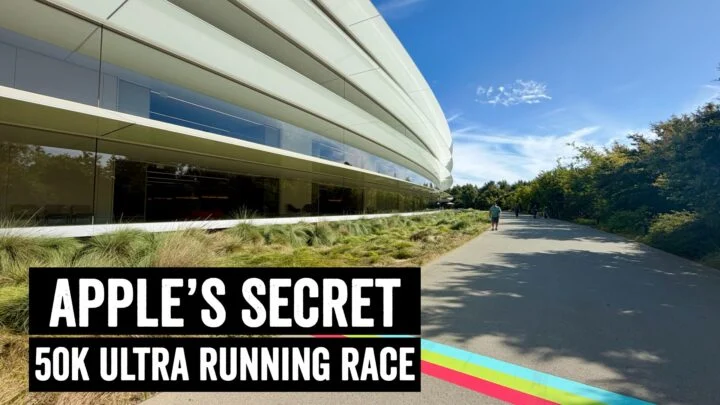
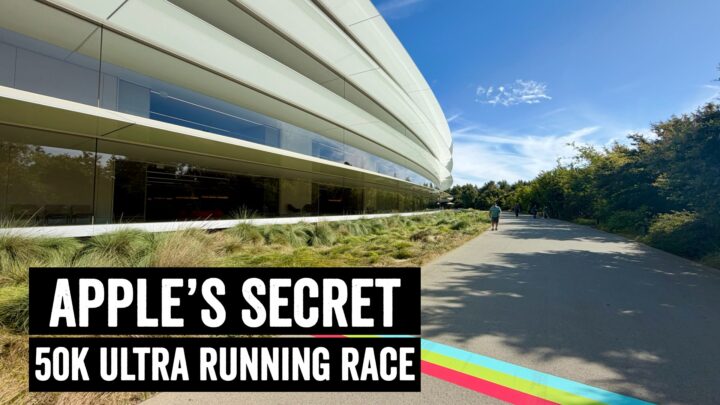
The crisp morning air at Apple Park in Cupertino, California, set a subdued tone for an unusual gathering. Months before any public announcements regarding next-generation wearable technology, a select group of runners assembled at the technology giant’s headquarters for a grueling endurance test. The objective was not a standard corporate team-building exercise or a casual jog, but a full 50-kilometer ultramarathon. Circumnavigating the perimeter of Apple’s iconic ring-shaped headquarters—affectionately and frequently referred to by tech enthusiasts as "The Spaceship"—the participants embarked on a relentless test of human stamina and device capability.
As race organizers reiterated to the participants throughout the day, "This is not a race," a mantra meant to emphasize completion, endurance, and data collection over podium finishes. Yet, the psychological weight of running laps around one of the world’s most secure and technologically advanced corporate campuses added an undeniable layer of intrigue. This secretive event, which took place earlier in the year, has only recently begun to surface in public discussions, shedding light on the rigorous, real-world testing environments Apple utilizes to refine its ecosystem of health and fitness hardware.
The Setting: Apple Park and the Architecture of Endurance
To understand the magnitude of a 50-kilometer event at Apple Park, one must examine the venue itself. Designed by the renowned architectural firm Foster + Partners in collaboration with former Apple CEO Steve Jobs, Apple Park is an architectural marvel. Spanning 175 acres, the main ring building alone covers approximately 2.8 million square feet and boasts a circumference of roughly one mile (1.6 kilometers).
For a runner to complete a 50-kilometer distance (approximately 31 miles) entirely within or immediately surrounding the campus loop, it requires completing dozens of continuous laps. The monotony of a closed loop is notoriously difficult on both the physical body and the mind, forcing athletes to manage repetitive impact stress on asphalt and concrete while navigating subtle elevations and micro-climates across the expansive grounds.
While Apple Park is primarily known as a workplace for over 12,000 employees, featuring orchards, meadows, and a central pond, its vast open spaces and perimeter pathways have occasionally played host to specialized, closed-door corporate events. However, organizing an official or semi-official ultramarathon distance on the property represents a unique intersection of corporate culture, athletic endurance, and stealth product validation.
Chronology of the Event: From Conception to Execution
The timeline of the secret 50KM ultramarathon points to a meticulously planned operation coordinated months in advance of major product launch cycles.
Phase One: Planning and Clandestine Coordination
Long before the runners lined up at the starting point, logistics teams had to secure permissions, map out exact GPS coordinates to ensure accurate tracking metrics, and coordinate with Apple’s notoriously strict security apparatus. Corporate campuses of this scale are heavily monitored, and hosting an endurance event requires careful scheduling to avoid disrupting normal business operations while ensuring privacy for the participants.
Phase Two: The Execution
On the morning of the event, participants gathered under relative secrecy. Unlike commercial marathons that close down city streets and draw thousands of spectators, this gathering was tightly controlled. The atmosphere was collaborative rather than fiercely competitive, aligning with the announcer’s recurring reminder that "this is not a race." Runners were outfitted with advanced biometric tracking devices—presumably prototype or pre-release iterations of Apple Watch hardware and software—designed to measure physiological responses over prolonged periods of extreme exertion.
Phase Three: Data Synthesis and Product Integration
Following the conclusion of the event, the focus shifted entirely from physical endurance to data analysis. In the months following the ultramarathon, engineers and product designers combed through terabytes of telemetry data. Metrics such as heart rate variability (HRV), continuous GPS tracking accuracy under complex architectural shadows, sweat rate estimations, and battery consumption efficiency during extended workouts provided invaluable real-world feedback.
The Intersection of Wearable Technology and Ultramarathon Training
The timing and nature of the Apple Park 50KM event highlight a broader industry trend: the increasing reliance of technology companies on extreme athletes for product validation. Historically, fitness trackers and smartwatches were designed primarily for casual runners, cyclists, and general step-counting. However, as the market matures, consumer demand has shifted heavily toward ultra-endurance sports—triathlons, marathons, and ultramarathons.
To compete effectively in the high-end sports watch sector—traditionally dominated by dedicated brands like Garmin, Wahoo, and Suunto—tech giants must prove that their hardware can survive multi-hour, battery-intensive excursions without failing. A 50-kilometer run serves as an ideal stress test for several critical components:
- Battery Longevity: Running an ultramarathon can take anywhere from three and a half hours for elite athletes to well over seven hours for mid-pack runners. Maintaining active GPS tracking, continuous optical heart rate monitoring, and cellular connectivity for safety features over this duration places a massive strain on lithium-ion batteries.
- GPS Precision: Urban canyons and large corporate structures are notorious for causing "multipath interference," where satellite signals bounce off glass and steel facades, leading to erratic pace and distance tracking. Testing devices around the massive glass panels of Apple Park provides a rigorous benchmark for multi-band GNSS (Global Navigation Satellite System) performance.
- Ergonomics and Comfort: Over the course of 50 kilometers, even the slightest design flaw—such as a rigid strap edge or an overly protruding optical sensor housing—can cause chafing, skin irritation, or inaccurate sensor readings due to device shifting.
Industry Implications and Future Outlook
The revelation of a secretive 50KM event at Apple Park underscores how seriously major technology firms are taking the sports science and endurance market. No longer content with incremental updates to step counters, companies are investing heavily in advanced health metrics, recovery algorithms, and robust training load analytics.
Furthermore, the secretive nature of the event reflects the high-stakes environment of consumer electronics unveiling. By testing devices in controlled, yet highly demanding real-world environments before public disclosure, companies can iron out software bugs and hardware limitations away from the scrutiny of public reviewers and competitors.
As the lines between dedicated sports watches and mainstream smartwatches continue to blur, events like the Apple Park ultramarathon may become increasingly common. They serve as a bridge between elite athletic performance and consumer technology, ensuring that the devices worn by everyday runners have been forged in the crucible of extreme endurance testing. Whether these closed-campus events will ever open up to the broader public or remain strictly within the realm of internal testing and invited guests remains to be seen, but their impact on the evolution of wearable fitness technology is undeniable.