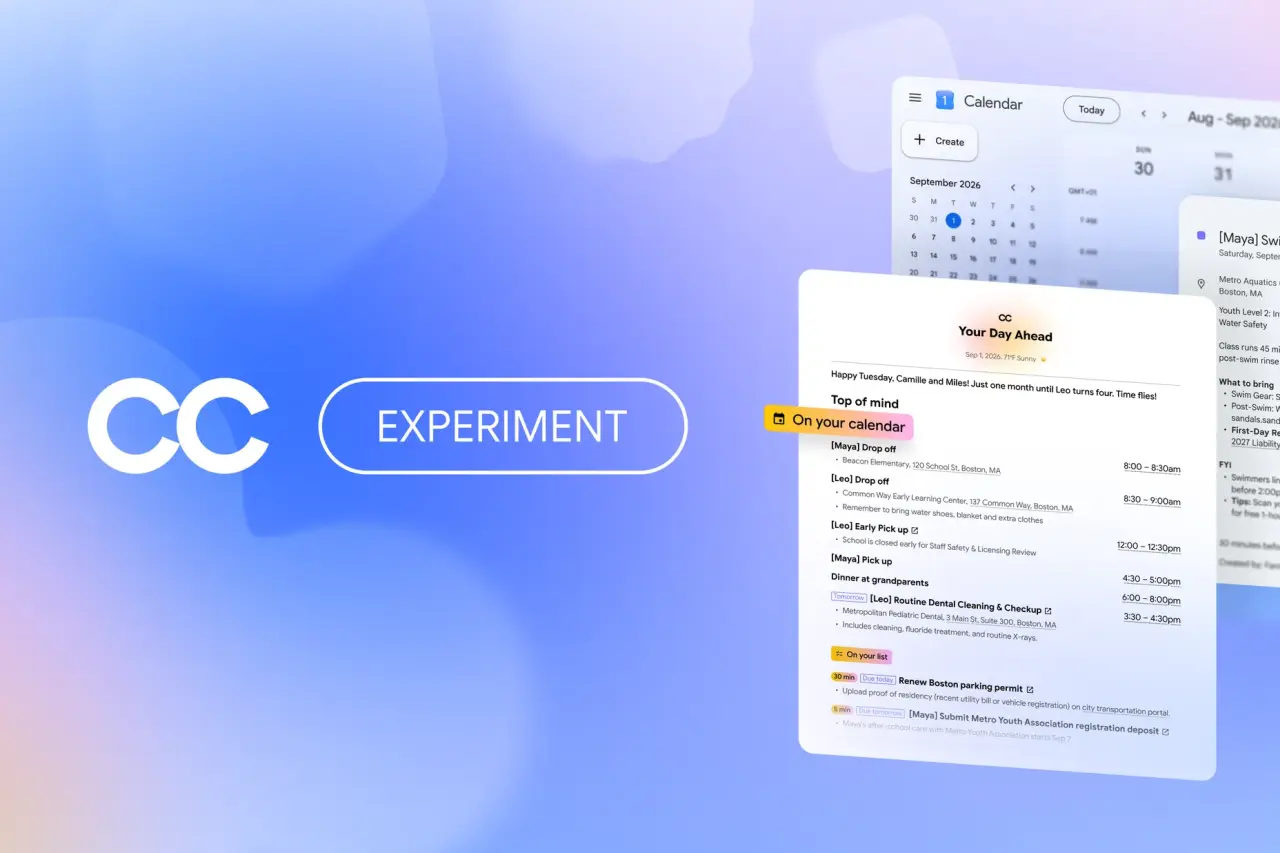
Google continues to accelerate its artificial intelligence roadmap by introducing advanced capabilities across its Workspace ecosystem, anchored by the integration of the Gemini language model into "CC," a comprehensive productivity tool developed under the Google Labs initiative. This strategic expansion represents a fundamental shift in how professionals interact with digital workspaces, moving from passive assistance to proactive, autonomous task execution. As enterprises increasingly demand streamlined workflows that minimize cognitive fatigue, Google’s latest feature rollout aims to unify disparate applications—ranging from Gmail and Google Calendar to Google Chat and Google Drive—into a cohesive, AI-driven command center.
The evolution of Google Labs as an incubator for experimental features has consistently provided early insights into the company’s long-term commercial strategy. By testing high-impact capabilities within controlled environments before widespread deployment, Google can refine user interfaces, stress-test security protocols, and evaluate algorithmic efficiency based on direct user engagement. The integration of Gemini into CC exemplifies this methodology, combining conversational artificial intelligence with deep system-level integrations to handle complex, multi-step tasks that traditionally required manual navigation across multiple software interfaces.
Chronology of the CC Workspace Integration and Gemini Rollout
The development trajectory of the CC project reflects Google’s broader ambition to dominate the generative AI productivity market. Initial testing phases began quietly within specialized internal groups, focusing on core natural language processing tasks and basic document summarization. Over the subsequent months, the scope expanded significantly to incorporate cross-application data synthesis, allowing the AI to pull context from emails, calendar invites, and cloud storage files simultaneously.
By early 2025, the initiative graduated from internal conceptualization to beta-level accessibility via Google Labs, marking the introduction of the "Daily Brief" feature. This milestone served as a critical proof-of-concept for autonomous morning summaries, aggregating scheduled events, urgent communications, and pending task lists into a single, digestible briefing. Following positive reception from early adopters, engineering teams accelerated the integration of advanced multimodal features, including the ability to parse complex PDF documents, interpret visual data via Google Maps APIs, and execute automated responses across communication platforms. The recent introduction of cutting-edge models like Gemini 3.8 Flash further elevated the responsiveness and accuracy of CC, establishing a new benchmark for enterprise-grade productivity software.
Core Features and Capabilities of the CC Ecosystem
At the heart of the CC platform is its sophisticated synthesis engine, which transforms raw data into actionable insights. Among its standout features is "Your Day Ahead," a personalized daily briefing mechanism designed to optimize user scheduling and workload management. Rather than forcing users to manually check multiple applications, CC aggregates information from Gmail, Google Calendar, and Google Tasks, constructing a prioritized itinerary that highlights critical meetings, overdue deliverables, and high-priority communications.
Beyond scheduling, the platform excels in task execution. Users can instruct CC to draft responses, coordinate meeting times, and manage project updates directly within Google Chat. The system’s contextual awareness ensures that tone, urgency, and relational dynamics are preserved across interactions, significantly reducing the administrative friction associated with modern corporate communication. Furthermore, CC’s advanced document processing capabilities enable seamless extraction of key metrics from lengthy reports, financial statements, and technical manuals, empowering users to make data-driven decisions without wading through exhaustive textual analyses.
Technical Architecture and Underlying Models
The operational efficiency of CC relies heavily on Google’s underlying hardware and algorithmic infrastructure. By leveraging optimized iterations of the Gemini model family—including the newly integrated Gemini 3.8 Flash—the platform achieves low-latency processing essential for real-time enterprise applications. This technical foundation allows the system to handle concurrent data streams from various Google Workspace utilities without compromising security or response accuracy.
Security and privacy remain paramount considerations within the CC architecture. Enterprise data processed by Gemini within the Workspace environment adheres to strict compliance standards, ensuring that proprietary corporate information is not utilized for unauthorized model training. The integration of API hooks for external services, such as Google Maps for location-based scheduling and logistics planning, is managed through secure authorization protocols designed to safeguard user credentials and sensitive operational metrics.
Industry Implications and Competitive Landscape
The launch of CC and its deep integration with Gemini arrives at a critical juncture in the global software market, where tech giants are fiercely competing to define the standard for AI-assisted productivity. Competitors such as Microsoft with its Copilot ecosystem and various independent enterprise software providers are racing to offer similar autonomous capabilities. However, Google’s vast ecosystem of interconnected tools—spanning email, document storage, communication platforms, and search infrastructure—provides a distinct advantage in data accessibility and user familiarity.
Industry analysts suggest that the widespread adoption of tools like CC could fundamentally alter the nature of white-collar work. By automating routine administrative burdens, organizing fragmented communications, and providing proactive decision support, platforms of this caliber promise to substantially elevate organizational productivity. Nevertheless, widespread implementation also raises important questions regarding workforce adaptation, data governance, and the psychological impact of relying on autonomous systems for daily workflow management.
Future Outlook and Availability
Google Labs has announced that the CC workspace integration will continue to roll out incrementally to registered users, with expanded availability planned for the coming months. Feedback gathered during this extended preview phase will directly inform the refinement of user controls, customization options, and advanced multi-agent capabilities. As the boundary between operating systems and productivity applications continues to blur, Google’s strategic positioning of Gemini as the central nervous system of its software suite signals a definitive transition toward an AI-first corporate environment.