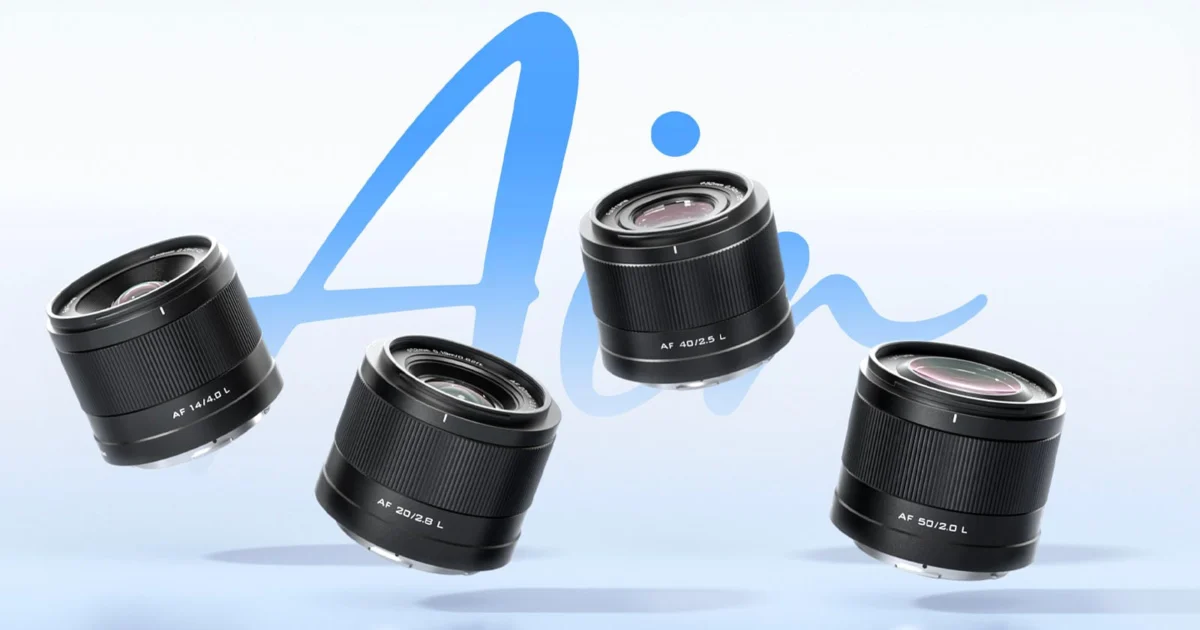
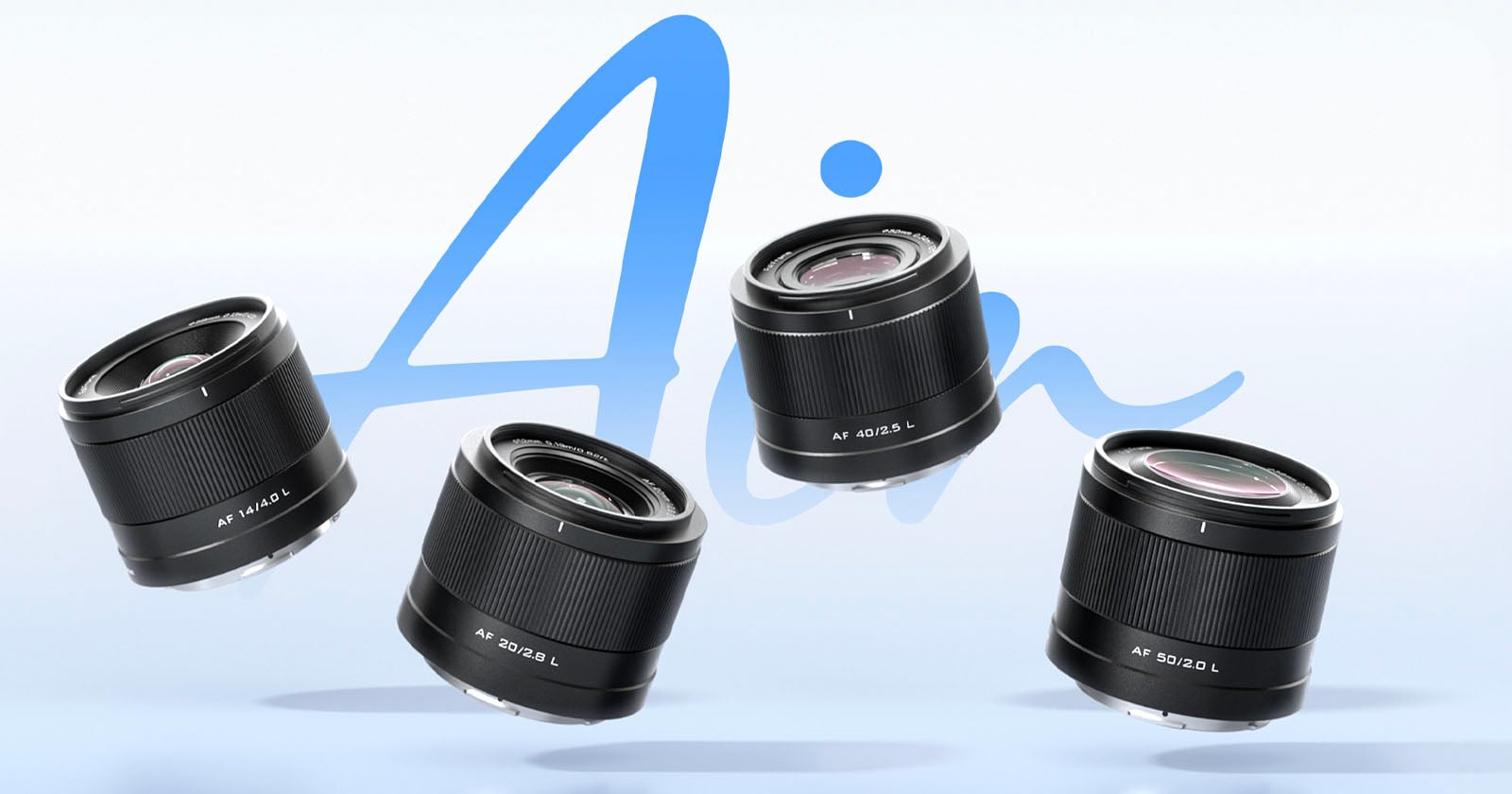
The photography industry is witnessing a significant expansion in lens accessibility as Viltrox officially announces the migration of its popular Air Series prime lenses to the Leica L-mount system. This strategic move brings four distinct, full-frame, autofocus-capable lenses—the 14mm f/4, 20mm f/2.8, 40mm f/2.5, and 50mm f/2—to a broader audience of L-mount users, including photographers utilizing bodies from the Leica, Panasonic, and Sigma alliance. By extending this series, which was previously exclusive to the Sony E-mount ecosystem, Viltrox is positioning itself as a primary provider of high-value, budget-conscious optical solutions for enthusiasts and professional creators alike.
A Strategic Expansion for the L-Mount Alliance
The L-mount ecosystem, established through a partnership between Leica, Panasonic, and Sigma, has long been noted for its robust build quality and professional-grade performance. However, for many users, the barrier to entry has historically been the premium price point of native glass. Viltrox’s introduction of the Air Series addresses this gap by offering a lightweight, portable, and remarkably affordable alternative that does not sacrifice essential features like electronic communication and autofocus.
This release follows a period of rapid development for Viltrox. Over the last three years, the company has transitioned from a manufacturer of manual focus legacy adapters and niche optics to a major player in the mirrorless autofocus lens market. The decision to bring the Air Series to L-mount indicates a recognition of the growing market share held by Panasonic’s Lumix S-series cameras, which have become increasingly popular among hybrid shooters and filmmakers who require compact, travel-friendly prime lenses.
Detailed Specifications of the Air Series
The Air Series is defined by its commitment to portability without compromising on full-frame coverage. Each lens in the lineup has been engineered to provide specific focal utility while maintaining a consistent design philosophy centered on weight reduction and image clarity.
- 14mm f/4.0 Air L: This ultra-wide-angle lens is designed for landscape, architectural, and astrophotography. Featuring a 112.6-degree field of view, it allows photographers to capture expansive environments with minimal distortion. It boasts a minimum focusing distance of 0.13 meters, making it exceptionally versatile for foreground-heavy wide-angle compositions.
- 20mm f/2.8 Air L: As a slightly more conservative wide-angle option, the 20mm f/2.8 offers a brighter aperture, making it a compelling choice for street photography and indoor events where light may be limited. With a minimum focusing distance of 0.19 meters, it offers a blend of intimacy and breadth.
- 40mm f/2.5 Air L: Often described as a "normal-wide" lens, the 40mm focal length is highly prized for its natural, human-eye-like perspective. This lens is marketed as a balanced tool for daily carry, suitable for candid portraiture and environmental storytelling. Its 0.34-meter minimum focusing distance allows for a degree of macro-like detail.
- 50mm f/2.0 Air L: Rounding out the set, the 50mm f/2.0 represents the classic standard prime. As the brightest lens in the current Air collection, it provides the shallowest depth of field, making it the primary choice for portraiture and low-light scenarios. It features a 0.51-meter minimum focusing distance.
A critical feature across the entire series is the full support for in-camera corrections. Because these lenses are native to the L-mount, the electronic communication between the lens and the camera body allows for automatic distortion correction, vignetting control, and chromatic aberration reduction during the raw processing phase within the camera or post-production software.
Market Context and Economic Impact
The pricing structure of the Viltrox Air Series is aggressive, significantly undercutting both first-party manufacturer lenses and many premium third-party alternatives. With the 20mm f/2.8 priced at $168, the 40mm f/2.5 at $176, and both the 14mm f/4 and 50mm f/2 at $199, the entire four-lens kit can be acquired for less than $800. In the current economic climate, where the cost of photography equipment has seen inflationary pressure, this price point is expected to disrupt the entry-level lens market.
This economic positioning serves a specific demographic: young professionals, students, and hobbyists who are invested in the L-mount platform but may be hesitant to commit thousands of dollars to single-focal-length lenses. By providing a low-cost entry point, Viltrox is effectively encouraging the adoption of the L-mount system itself, potentially benefiting camera body manufacturers by making their ecosystems more accessible.
Technical Performance and Build Philosophy
Viltrox has emphasized that the Air Series was designed with a "minimalist" approach. The optics are optimized for sharpness and clarity, utilizing modern glass elements that help reduce ghosting and flare. During their initial tenure on the Sony E-mount, these lenses received praise for their snappy autofocus performance, which is a critical requirement for contemporary mirrorless users.
The move to L-mount ensures that these autofocus algorithms are optimized for the contrast-detect and phase-detect systems found in the latest Panasonic Lumix S-series cameras. While these lenses are lightweight, they maintain a build quality intended to withstand the rigors of travel and field use. The emphasis on "compact" designs is a direct response to the industry trend toward smaller, more portable camera bags. The modern photographer is increasingly looking for a "walk-around" kit, and the Air Series is specifically tailored to meet that demand.
Industry Implications and Future Outlook
The expansion of Viltrox into the L-mount space is part of a broader trend of third-party lens manufacturers challenging the traditional dominance of camera manufacturers in the lens market. For years, the L-mount alliance maintained a relatively closed ecosystem. However, as the user base has grown, the demand for more diverse optical options—particularly at the budget end of the spectrum—has become impossible to ignore.
Analysts suggest that this move could signal a new phase in the "lens wars," where competition is no longer just about who has the sharpest f/1.2 lens, but who can offer the most comprehensive system at the best value. By providing a native, autofocus-capable, and cost-effective set of primes, Viltrox is essentially standardizing the expectation that third-party manufacturers should support the L-mount with the same vigor as they do for Sony E or Fujifilm X mounts.
Furthermore, this development highlights the evolving nature of the L-mount itself. As Panasonic continues to push the boundaries of video technology in its camera bodies, the need for a wide variety of affordable, sharp, and lightweight prime lenses becomes more acute. Filmmakers often require a set of lenses with a consistent look and feel; the Air Series, with its shared design language and weight-conscious profile, is well-suited for gimbal work and run-and-gun cinematography.
Conclusion
The arrival of the Viltrox Air Series for the L-mount is more than just a product release; it is an endorsement of the L-mount’s longevity and market relevance. By lowering the barrier to entry, Viltrox is facilitating a more inclusive environment for creators who value performance but operate on a budget. As these lenses become available to the public, the success of this series will likely be measured not only by sales figures but by how effectively it integrates into the workflows of the L-mount community.
For those currently using Leica or Panasonic systems, the addition of the 14mm, 20mm, 40mm, and 50mm lenses offers a practical, high-value solution to fill gaps in their current kits. Whether for professional travel photography, everyday documentation, or experimental videography, the Air Series represents a significant expansion of choice in a market that has historically favored high-cost, high-performance optics. With immediate availability, the industry will soon see how these compact primes perform in the hands of the wider L-mount user base, potentially setting the stage for even more lens options from Viltrox in the near future.