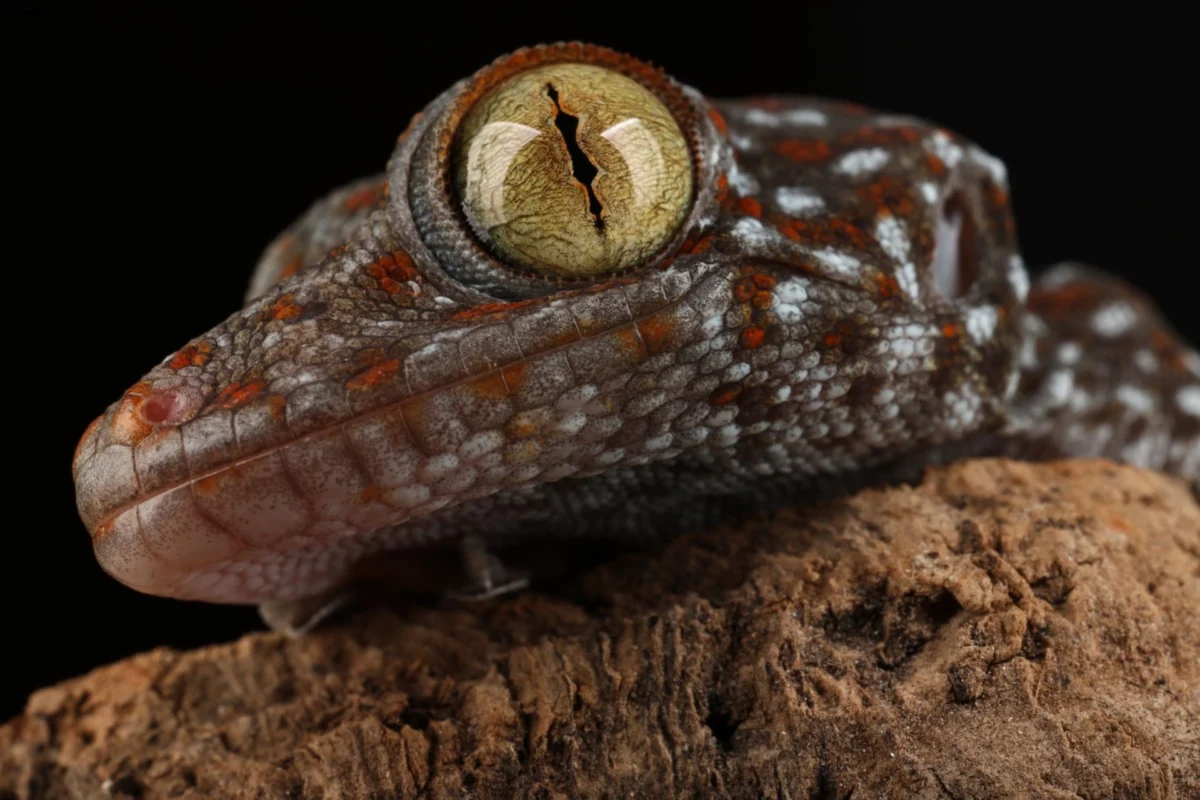
The landscape of macro photography has long been defined by tight focal lengths, isolated subjects, and narrow fields of view. Traditionally, photographers seeking true life-size (1:1) magnification have relied on telephoto macro lenses ranging from 90mm to 180mm. These optics excel at separating a subject from its background, but they inherently compress the scene, hiding the immediate surroundings and environmental context. Venus Optics, known for pushing optical boundaries under its Laowa brand, has fundamentally altered this paradigm with the official announcement of the Laowa Acris 35mm f/2.8 1x Macro Apo lens. Marketed as the world’s first full-frame autofocus 35mm lens featuring true 1:1 magnification, this innovative optic merges the expansive storytelling capabilities of a wide-angle focal length with the microscopic detail of a dedicated macro tool.
A New Chapter in Macro Engineering: Design and Optical Excellence
The core innovation of the Laowa Acris 35mm f/2.8 1x Macro Apo lies in its ability to bridge two seemingly contradictory photographic disciplines: wide-angle environmental storytelling and macro photography. By pairing a 35mm perspective with a 1:1 reproduction ratio, photographers can capture tiny subjects—such as insects, flora, or intricate textures—while retaining significant visual information about the surrounding environment. This allows for images where a subject is not merely floating in a sea of creamy bokeh, but is explicitly anchored in its habitat.
To achieve this optical feat without compromising image quality, Laowa has incorporated a sophisticated apochromatic (APO) optical design. Chromatic aberration, particularly purple fringing and green ghosting, plagues high-contrast macro subjects and wide-angle lenses alike. The apochromatic construction of the Acris 35mm virtually eliminates both longitudinal and lateral chromatic aberrations across both in-focus and out-of-focus areas.
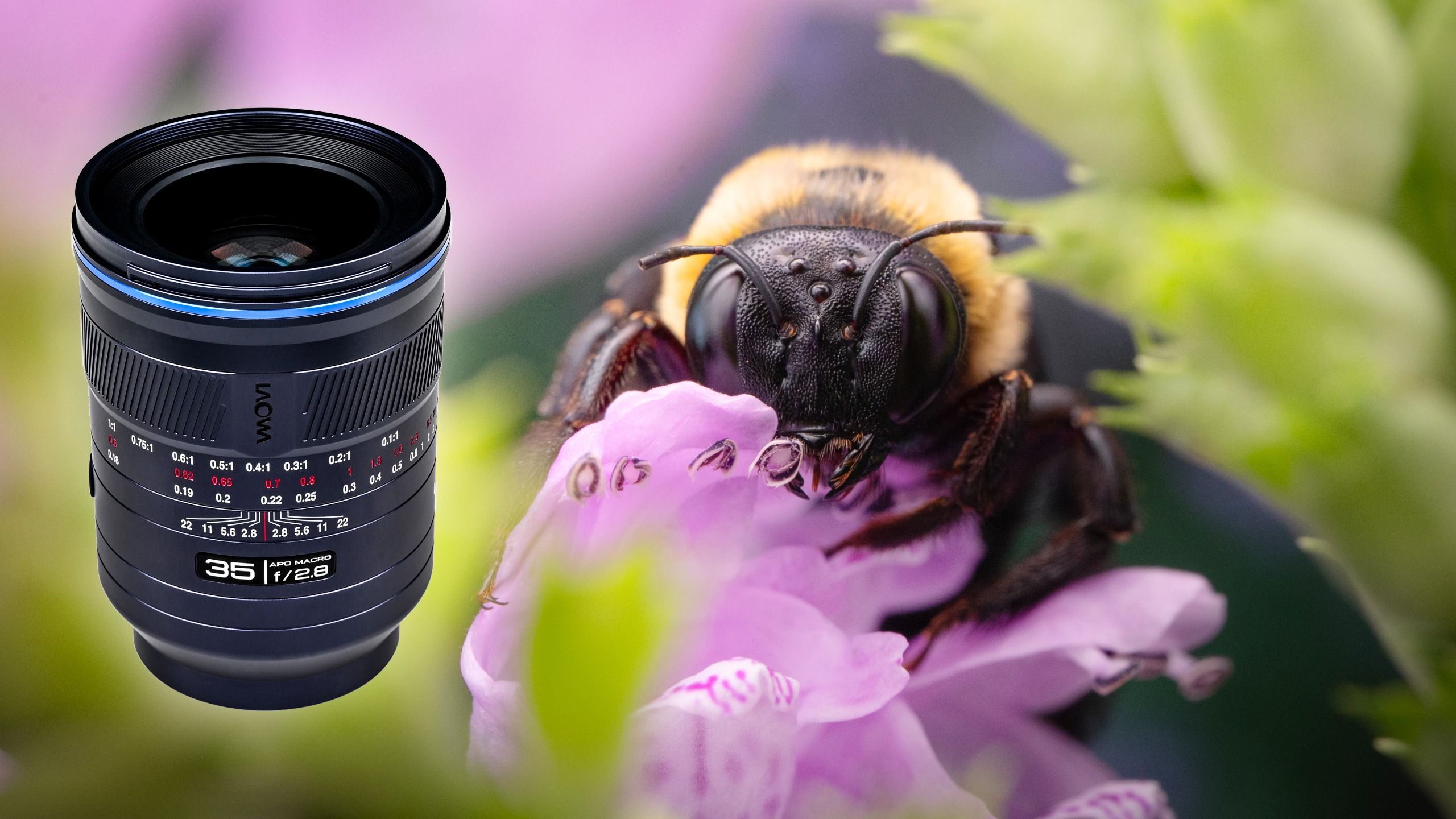
The lens optical formula comprises 13 elements arranged in 10 groups. The aperture construction varies slightly depending on the lens mount version: the autofocus variants feature a 9-blade circular aperture designed to produce smooth out-of-focus highlights, while the manual focus versions utilize a 13-blade diaphragm for even more rounded specular highlights. The lens offers a minimum focus distance of just 180mm, with a minimum working distance of 48.6mm from the front element, giving photographers close proximity to their subjects without sacrificing lighting angles.
Dual-Mode Hybrid Focusing System: Navigating Autofocus and Precision Control
Autofocus implementation in true macro lenses has historically been challenging due to the massive focus throws required to travel from infinity to a 1:1 reproduction ratio. To address this engineering hurdle, Laowa has introduced what it terms a Dual-Mode Hybrid Focusing system in the autofocus variants of the Acris 35mm f/2.8.
The system is split into two distinct operational zones depending on the working distance. The Standard Autofocus mode governs the range from infinity down to 0.5 meters. In this zone, the lens delivers fast, responsive, and accurate subject acquisition, making it well-suited for everyday shooting, street photography, environmental portraits, and documentary-style journalism.
When the focus ring or internal mechanism crosses the 0.5-meter threshold down to the 1:1 macro range, the Macro Focus Assistance mode takes over. This mode shifts the operational profile to provide tactile, micro-step manual precision. According to Laowa, this deliberate shift is designed to integrate seamlessly into focus-bracketing workflows. Whether operating handheld or utilizing a motorized rail on a tripod, this hybrid setup simplifies the execution of high-depth-of-field macro stacks, ensuring extreme accuracy when multiple exposures must be blended together.
Mount Compatibility and Mechanical Specifications
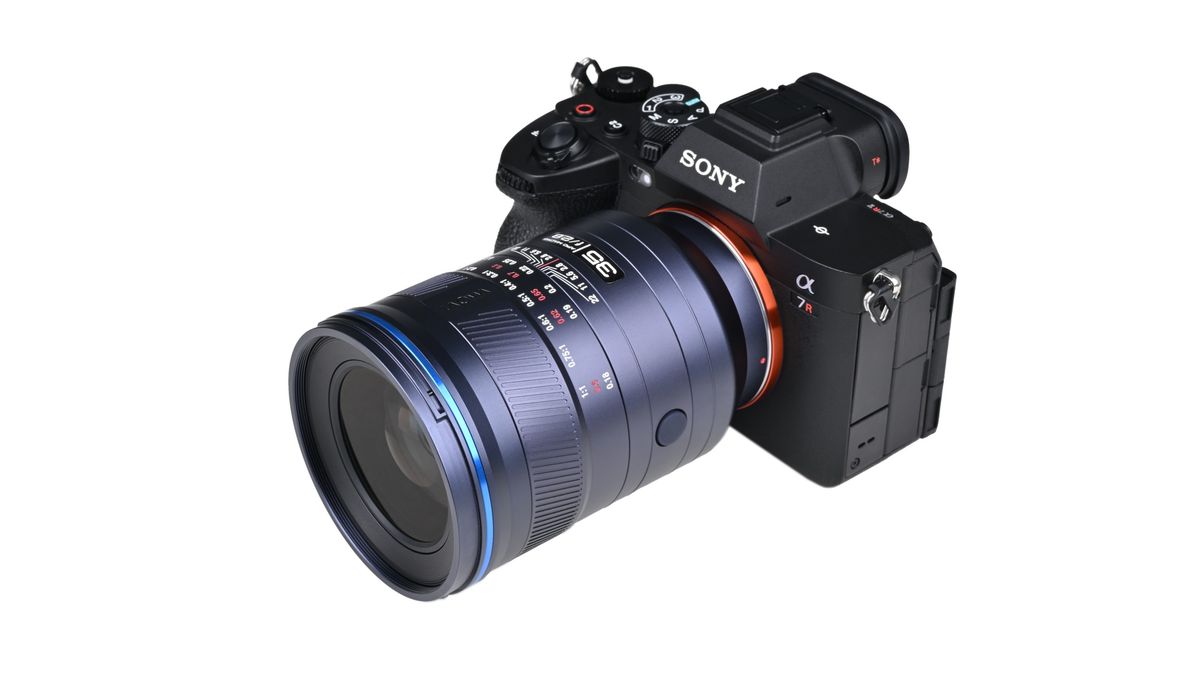
While the lens represents a major engineering milestone, its features vary depending on the camera system it is mounted to. Laowa has rolled out support for several major mirrorless and legacy platforms, though full feature sets are not uniform across all mounts.
The autofocus functionality is fully supported natively on Sony E-mount, Nikon Z-mount, and Canon EF-mount systems. However, users of Canon RF-mount and Leica/Panasonic/Sigma L-mount systems will find that the lens operates exclusively in manual focus mode. This divergence is dictated by the electronic and mechanical protocols of the respective camera ecosystems, a common hurdle for independent lens manufacturers developing advanced autofocus optics outside of first-party lineups.
Physical dimensions and weight also fluctuate across the mounting options, driven by flange focal distances and electronic housing requirements.
- The Sony E-mount version serves as a standard benchmark for the mirrorless lineup, measuring approximately 79mm in diameter by 114mm in length, tipping the scales at 560 grams, and accepting a 72mm front filter thread.
- The Canon DSLR variant (EF mount) measures 79mm by 87.4mm, weighs 530 grams, and utilizes a 67mm filter thread.
Crucially for outdoor and field macro photographers, all versions of the Laowa Acris 35mm f/2.8 1x Macro Apo feature comprehensive weather-sealing. This environmental protection allows creators to work confidently in damp forests, dusty deserts, or unpredictable weather conditions without fear of moisture or particulate ingress damaging the internal glass elements or electronic contacts.
Market Positioning, Pricing, and Availability
The introduction of the Acris 35mm f/2.8 1x Macro Apo arrives at a time when hybrid shooters and specialized macro photographers are increasingly demanding versatile gear that reduces kit weight without sacrificing professional capabilities. By packing a wide-angle macro optic, an apochromatic design, weather-sealing, and hybrid autofocus into a single package, Laowa is directly challenging traditional notions of what a specialized prime lens can achieve.
Priced competitively at $449 (approximately £339 / AU$645), the lens is available for purchase immediately through authorized retailers and the official Laowa storefront. This aggressive pricing strategy positions the optic well within reach of enthusiast photographers and professional creators alike, offering an accessible entry point into high-end environmental macro photography.
Broader Implications for the Photographic Industry
The launch of the Laowa Acris 35mm f/2.8 1x Macro Apo signals a continuing trend of independent lens manufacturers out-innovating traditional legacy brands in niche optical categories. While major camera manufacturers like Canon, Nikon, and Sony focus heavily on standard zoom lenses, fast primes, and telephoto workhorses, third-party brands continue to carve out profitable spaces by delivering unique tools that unlock creative possibilities previously unavailable to the market.
For macro photography, the ability to incorporate contextual storytelling into life-size magnification could spark a broader shift in how documentary and nature photographers approach small-scale subjects. By moving away from sterile, isolated backgrounds and toward richly detailed, wide-angle environments, photographers can convey a stronger sense of place, scale, and narrative depth. As user reviews and field tests emerge in the coming weeks, the industry will closely watch how effectively the hybrid autofocus and apochromatic performance translate to real-world field conditions, potentially setting a new standard for future wide-angle macro lens designs.