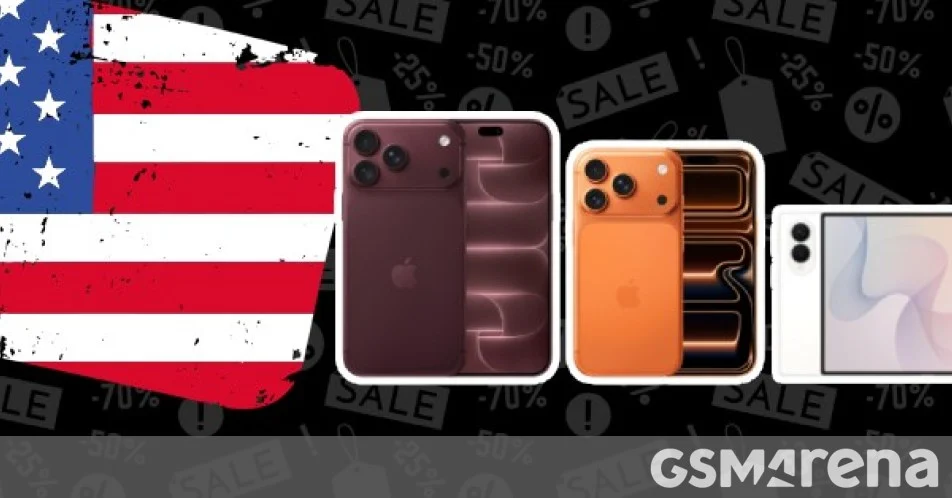
The official retail launch of the iPhone 18 Pro and iPhone 18 Pro Max marks a significant milestone for Apple, with the devices now available in the United States and across 64 additional countries in the initial rollout phase. This launch occurs against a backdrop of shifting pricing strategies and evolving hardware specifications that have prompted industry analysts to re-evaluate the trajectory of the high-end smartphone sector. While the Pro models are now accessible to the public, consumers interested in the company’s forthcoming "iPhone Duo" foldable handset must contend with a waiting period extending into late October.

Pricing Shifts and the End of Traditional Cycles
The launch of the iPhone 18 series signals a departure from Apple’s long-standing post-launch pricing conventions. Historically, the introduction of a new generation of handsets would coincide with the discontinuation of the previous year’s Pro models and a $100 price reduction for the remaining non-Pro legacy inventory. This year, however, the strategy has shifted. Apple has opted not only to delay the release of its standard and "Air" models but also to implement a $100 price increase on existing stock.

Consequently, the cost of entry for the new iPhone 18 Pro, starting at $1,200, reflects a $100 premium over the initial launch price of its predecessor, the iPhone 17 Pro. This adjustment creates a unique pricing parity; had the iPhone 17 Pro remained on the official Apple storefront, its own $100 price hike would have effectively placed it at the same $1,200 price point as the current flagship. This creates a challenging value proposition for consumers, forcing a migration toward the refurbished market for those seeking high-end specifications at a lower cost of ownership.

The Rise of the Refurbished Ecosystem
As new hardware prices climb, retailers and secondary market platforms have seen increased activity. The "Renewed Premium" category on platforms like Amazon has become a focal point for value-conscious consumers. These programs guarantee devices with no visible cosmetic damage from a 12-inch distance, battery health exceeding 90%, and a complete set of essential accessories.

Market data indicates that the iPhone 17 Pro, which debuted at $1,100 for the 256GB model, can now be secured in the refurbished market for just under $1,000. While the new iPhone 18 Pro introduces the A20 Pro chipset—Apple’s inaugural 2nm silicon—and features a refined punch-hole display architecture, the price delta remains a point of contention for many. Furthermore, the 18 Pro introduces enhanced charging capabilities, reaching a 50% charge in 15 minutes compared to the 20-minute requirement of the 17 Pro. Despite these incremental hardware advancements, the market for "previous-generation" flagships remains robust, with the Cosmic Orange colorway of the 17 Pro emerging as a particularly cost-effective option due to high supply volumes.

The Paradox of Static Pricing for Flagship Max Models
A notable observation in the current retail environment is the price stagnation of the iPhone 17 Pro Max. Despite being a year-old device, refurbished units are currently retailing at approximately $1,200—the same price point as its original launch MSRP. Major retailers, including Walmart, have mirrored this trend, suggesting that demand for premium, large-format devices remains inelastic. This phenomenon highlights a broader market trend where, in an era of inflationary pressures and component shortages, the depreciation curve for top-tier mobile electronics has flattened significantly. For users prioritizing the fastest-charging experience, the 18 Pro Max remains the definitive choice, but the value gap between the 17 and 18 series for the Max line is arguably narrower than ever.
Broader Portfolio Adjustments
Apple’s current catalog on its official website retains the iPhone 17, iPhone Air, and iPhone 17e. Following the recent price adjustments, these models are positioned at $900, $1,100, and $700 respectively for the base 256GB configurations. Comparative analysis confirms that, even with the price hikes, purchasing these devices through certified refurbished channels remains the most viable path for cost savings, as these units consistently undercut the new retail prices while offering nearly identical user experiences.
Ecosystem Expansion: Wearables and Accessories
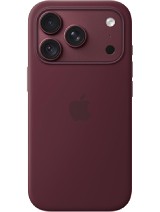
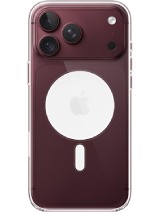
The broader Apple ecosystem has seen simultaneous growth with the retail availability of the AirPods 5, the Apple Watch Series 12, and the high-end Apple Watch Ultra 4. These devices, alongside the launch of the iPhone 18 Pro, underscore Apple’s strategy of deepening integration between the wrist and the handset. Official accessories, such as the TechWoven, Silicone, and Clear MagSafe-compatible cases, have also launched to support the specific dimensions of the 18 Pro series, maintaining the company’s standard for high-margin peripheral revenue.
Competitive Dynamics: The Foldable Frontier
The most anticipated device in Apple’s 2026 lineup, the iPhone Duo, faces a competitive landscape dominated by Samsung’s established foldable presence. Samsung’s Galaxy Z Fold8, released in August, currently serves as the primary benchmark.

The Z Fold8 presents a distinct design philosophy compared to the anticipated Duo. With a thickness of 9.7mm and a weight of 201g, the Z Fold8 is significantly more portable than the Duo, which is expected to weigh 254g and measure 11.3mm. Samsung’s implementation of a 5.5-inch 4:3 cover display and the integration of the Snapdragon 8 Elite Gen 5 for Galaxy provides a powerful alternative for power users.

Industry analysts are particularly focused on the camera specifications and ergonomics of these competing foldables. Samsung’s Z Fold8 employs a 50MP main sensor and a 50MP ultra-wide lens, opting for punch-hole cameras for selfies. In contrast, Apple is expected to utilize under-display camera technology for the inner module of the Duo. While the Duo may offer stylus support—a feature notably absent from the Z Fold8—the market is divided on the necessity of such an input method for foldable devices.

Furthermore, the Samsung Galaxy Z Fold8 Ultra represents a specialized tier within the foldable market. At 215g, it remains lighter than the expected Apple Duo while offering a larger 8-inch internal display and a more usable 6.5-inch, 21:9 cover display for one-handed operation. With a 200MP main camera and a dedicated 3x telephoto lens, the Ultra model targets photography enthusiasts, presenting a direct challenge to the feature set Apple intends to market with the Duo. Finally, the Galaxy Z Flip8 provides a compact alternative for the market, focusing on portability with its 180g "puck" form factor and 4.1-inch cover display.

Market Implications and Future Outlook
The current retail cycle is defined by a transition toward higher price points and a reliance on the secondary, refurbished market to maintain accessibility for consumers. Apple’s decision to increase prices on older inventory while delaying the launch of its mid-range foldable "Duo" indicates a calculated move to prioritize margin protection over market share growth in the short term. As the market awaits the release of the iPhone Duo, the success of the 18 Pro launch will likely serve as a leading indicator of consumer tolerance for these aggressive pricing strategies. The coming quarter will be critical in determining whether the high-end smartphone market can sustain these price levels or if the shift toward refurbished and older-generation hardware will accelerate into a long-term trend.