The allure of the cosmos, captured in stunning nightscape photographs of the Milky Way, hinges on one fundamental challenge: light. The faint glow of distant stars provides minimal ambient illumination, necessitating lenses with exceptional light-gathering capabilities. Astrophotographers universally seek the fastest aperture possible, typically an f/1.4, f/1.8, or f/2.0, to maximize the light captured within a reasonable exposure time. This allows for lower ISO settings, which in turn minimizes digital noise and preserves the delicate detail of celestial objects. Furthermore, the lens must deliver excellent image quality when used wide open, as stopping down to achieve greater sharpness often means sacrificing precious light.
A critical aspect of successful Milky Way photography is achieving precise focus on the stars. Autofocus systems, while convenient for many photographic scenarios, often prove inadequate for the exacting demands of astrophotography. Even minute adjustments on the focus ring of an autofocus lens can result in the difference between pin-sharp stars and hopelessly blurred celestial points. Manual focus, therefore, becomes paramount, requiring a lens with a well-dampened and predictable focus ring. While no single lens reigns supreme for Milky Way photography, a curated selection of lenses consistently emerges as optimal for capturing breathtaking astrophotography compositions. This guide delves into the considerations for selecting these essential tools, empowering photographers to venture into the night with confidence.
Zoom Versus Prime Lenses for Astrophotography
The debate between zoom and prime lenses is a perennial one in photography, and astrophotography is no exception. Both lens types offer distinct advantages and are integral to a well-equipped astrophotographer’s toolkit. The choice between them often boils down to individual shooting style and the desired compositional elements. Modern zoom lenses have achieved remarkable levels of sharpness, often rivaling primes. However, they are typically limited to a maximum aperture of f/2.8. For astrophotography, where every photon counts, the wider apertures of prime lenses (f/1.4, f/1.8, f/2.0) offer a significant advantage. These faster apertures enable shorter shutter speeds and lower ISO settings, directly contributing to sharper stars and cleaner images with less noise.
Lens Recommendations for Crop Sensor Cameras
For photographers utilizing crop sensor cameras, a variety of excellent lenses are available to capture the wonders of the night sky. These lenses, often more affordable and compact than their full-frame counterparts, can still deliver exceptional results.
Recommended Crop Sensor Zoom Lenses:
- Tokina AT-X 11-20mm f/2.8 PRO DX: This lens offers a versatile wide-angle range coupled with a respectable f/2.8 aperture, making it a capable option for capturing expansive night sky scenes. Its construction is robust, and it is known for delivering good sharpness across the frame.
- Tokina AT-X 14-20mm f/2.0 PRO DX: Stepping up the aperture to f/2.0, this Tokina lens provides an even greater advantage in low-light conditions. The slightly longer focal range can be beneficial for framing specific celestial features or landscapes.
- Sigma Art 18-35mm f/1.8 DC HSM: Renowned for its exceptional image quality and groundbreaking f/1.8 constant aperture, this Sigma Art lens is a favorite among crop sensor users. It bridges the gap between a wide-angle and a standard lens, offering remarkable versatility and light-gathering power. Its sharpness and bokeh are highly regarded.
Recommended Crop Sensor Prime Lenses:
- Rokinon 10mm f/2.8 ED AS NCS CS: This ultra-wide prime lens provides an expansive field of view, ideal for capturing grand celestial panoramas. The f/2.8 aperture is respectable, and its manual focus design allows for precise adjustments.
- Rokinon 12mm f/2.0 NCS CS (Mirrorless Only): Specifically designed for mirrorless systems, this Rokinon lens offers a slightly wider perspective than the 10mm and an even faster f/2.0 aperture. Its compact size and excellent image quality make it a compelling choice for mirrorless astrophotographers.
- Rokinon 16mm f/2.0: Another strong contender for crop sensor systems, this Rokinon prime lens delivers a bright f/2.0 aperture and sharp optics. Its focal length is well-suited for framing both the Milky Way and terrestrial elements.
Lens Recommendations for Full-Frame Cameras
Full-frame cameras, with their larger sensors, inherently perform better in low light. When paired with high-quality wide-angle lenses, they become powerful tools for astrophotography.
Recommended Full-Frame Zoom Lenses:
- Nikon AF-S Zoom Nikkor 14-24mm f/2.8G ED: A legendary lens in the world of landscape and astrophotography, this Nikon zoom offers an incredibly wide field of view and a fast f/2.8 aperture. Its optical performance is exceptional, producing sharp images with minimal distortion, even at its widest settings.
- Canon EF 16-35mm f/2.8 III L USM: Canon’s L-series lenses are known for their superior build quality and optical performance. This 16-35mm f/2.8 lens is a workhorse for astrophotographers, delivering excellent sharpness, contrast, and color rendition across its zoom range.
- Tamron SP 15-30mm f/2.8 Di VC USD: Tamron has consistently produced impressive lenses, and this 15-30mm f/2.8 is no exception. It offers a wide field of view, a fast f/2.8 aperture, and built-in vibration compensation (VC), which can be beneficial for handheld shots or in challenging shooting conditions. Its sharpness is highly commendable.
- Sigma 14-24mm f/2.8 DG HSM Art: The Sigma Art series continues to impress, and this 14-24mm f/2.8 lens is a standout for astrophotography. It provides an exceptionally wide perspective and a fast aperture, combined with the signature sharpness and build quality that Sigma Art lenses are known for.
Recommended Full-Frame Prime Lenses:
- Sigma Art 14mm f/1.8 DG HSM: This lens is a game-changer for astrophotography, offering an ultra-wide 14mm focal length with a blazing fast f/1.8 aperture. This combination allows for unprecedented light gathering and the ability to capture vast swathes of the night sky with remarkable detail. Its sharpness is exceptional, especially for such a wide and fast lens.
- Rokinon 14mm f/2.4 SP: The Special Performance (SP) series from Rokinon offers enhanced optical quality. This 14mm f/2.4 prime lens provides an extremely wide perspective and a fast aperture, making it a compelling option for those seeking to capture expansive celestial vistas.
- Rokinon 20mm f/1.8 ED UMC: A more moderate wide-angle option, the Rokinon 20mm f/1.8 offers a bright aperture for excellent low-light performance. Its focal length can be ideal for compositions where a slightly tighter view of the Milky Way is desired, or for incorporating more foreground elements.
- Tokina FiRin 20mm f/2 FE (Mirrorless Only): Designed for Sony E-mount mirrorless cameras, this Tokina lens offers a fast f/2.0 aperture and excellent optical performance. Its compact size and quality make it a strong choice for mirrorless astrophotographers.
- Rokinon 24mm f/1.4 ED AS UMC: A classic focal length for astrophotography, the Rokinon 24mm f/1.4 provides a balance between wide-angle perspective and the ability to isolate specific celestial features. The f/1.4 aperture is a significant advantage in low-light conditions.
- Sigma Art 35mm f/1.4 DG HSM: While not an ultra-wide lens, the 35mm f/1.4 from Sigma’s Art line is incredibly versatile. It excels at capturing the Milky Way when foreground elements are a significant part of the composition, offering a more intimate perspective of the night sky. Its sharpness and bokeh are superb.
Strategic Lens Selection and Compositional Harmony
Understanding the specific capabilities of different focal lengths is crucial for composing compelling Milky Way photographs. Each focal length offers a unique perspective on the night sky, influencing how the Milky Way is integrated with the terrestrial landscape.
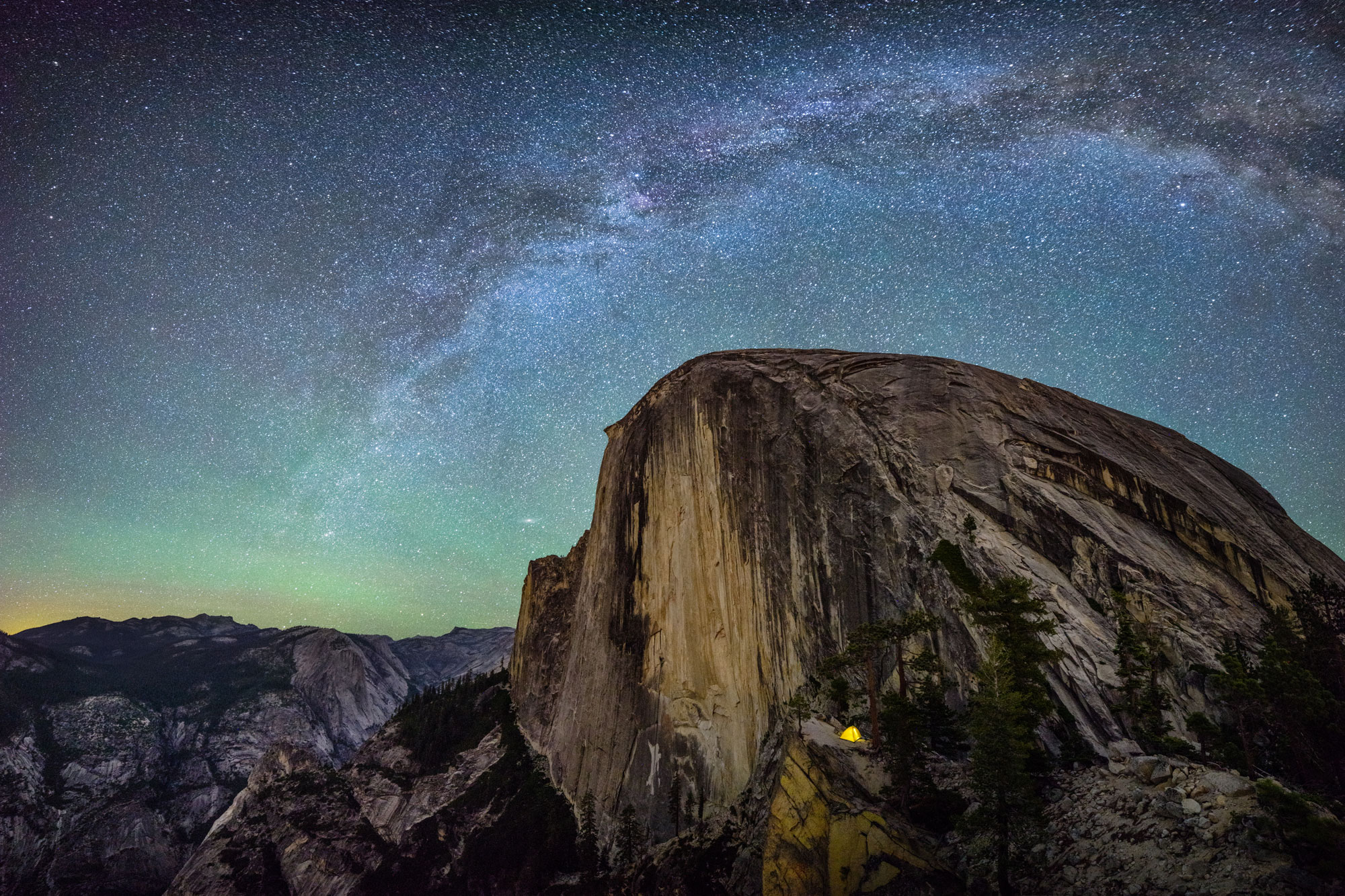
An ultra-wide lens, such as a 14mm or 16mm, captures an expansive view of the night sky, allowing the Milky Way to dominate the frame and emphasizing its grand scale. This is ideal for showcasing the vastness of space above a significant landscape feature. Conversely, a wider focal length like 35mm, while still capable of capturing the Milky Way, tends to emphasize foreground elements more prominently. In this scenario, the Milky Way might appear as a beautiful arc or band across the sky, complementing a well-chosen foreground subject.

The choice of focal length is a subjective and creative decision. Generally, astrophotography favors wide and ultra-wide lenses to encompass the grandeur of the Milky Way and its surrounding celestial phenomena. An infographic illustrating the field of view at different focal lengths can be an invaluable tool for photographers planning their shots. For instance, a 14mm lens might be perfect for capturing the entire core of the Milky Way arching over a mountain range, while a 35mm lens might be better suited for framing a single ancient tree silhouetted against the star-strewn sky.
Consider an image captured with a Sigma Art 35mm f/1.4. The foreground is intentionally incorporated, creating a strong sense of place. However, this choice means that less of the night sky is visible. If the same scene were captured at 14mm, the ground would likely occupy too much of the frame, diminishing the impact of the Milky Way. The optimal focal length, therefore, depends on the photographer’s intention: how much of the Milky Way’s core they wish to showcase and how foreground elements will contribute to the overall narrative of the image.
The Pragmatic Approach: Beyond the "Best" Lens
In the pursuit of capturing the Milky Way, photographers often grapple with the notion of the "best" lens. It is essential to distinguish between the objectively "best" and the subjectively "right" lens for individual needs. The fear of choosing an "inferior" option can lead some photographers to overspend on lenses that are heavier and more expensive than necessary, particularly if they rarely utilize the full capabilities of such lenses.
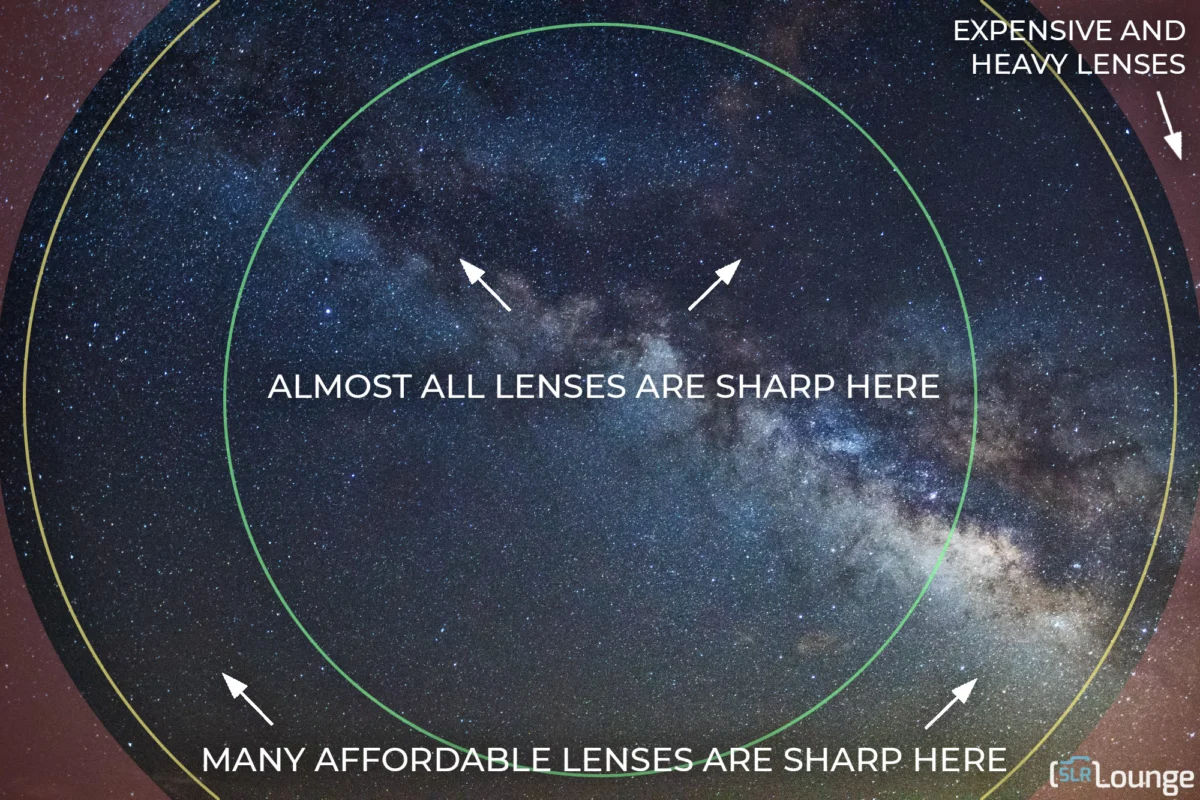
A crucial realization for many is that modern wide-angle lenses, released in recent years, perform exceptionally well in the central area of the image circle. If the photographer’s primary concern is sharp stars in the central portion of the frame, then selecting a lens based on desired focal length and aperture, prioritizing lightweight and affordability, is a perfectly sound strategy. This pragmatic approach allows for greater accessibility to astrophotography.

For photographers who demand exceptional sharpness across the entire image circle, including the extreme corners, the investment in more specialized and often more expensive lenses becomes justifiable. However, even within these high-performance lenses, there is a spectrum of options. The significant advantage of truly "exotic" fast-aperture lenses is often most noticeable in the extreme edges of the frame, where less expensive or lighter alternatives might exhibit some fall-off in sharpness or exhibit more chromatic aberration.
The ultimate decision hinges on a photographer’s personal priorities. These can include aperture speed, weight, cost, portability, and the critical factor of corner sharpness. It is entirely acceptable to prioritize certain aspects over others. For an adventure photographer undertaking multi-day treks, a lightweight lens like the Rokinon 14mm f/2.8 or the Nikon 20mm f/1.8 might be the ideal choice, even if it means a slight compromise in corner sharpness compared to a heavier, more expensive lens. Conversely, a studio-based astrophotographer might opt for a larger, heavier lens that offers unparalleled sharpness across the entire frame.
The market offers a diverse range of lenses that balance these factors. Some ultra-sharp, expensive lenses are relatively lightweight due to more modest apertures, while other lenses, though more affordable, can be substantial in size and weight. The key is to align lens selection with personal shooting style, budget, and intended use.
Ultimately, the most effective strategy for astrophotographers is to identify their priorities, make an informed decision based on their needs, and then venture out to capture the breathtaking beauty of the night sky. The journey of photographic exploration is as rewarding as the final image.