The quest for automotive longevity has become a focal point for consumers navigating an increasingly expensive new-car market. With average vehicle prices hovering at record highs and interest rates placing significant strain on monthly household budgets, the decision to invest in a vehicle capable of lasting a quarter-million miles is no longer just a preference—it is a critical financial strategy. A comprehensive new study from the automotive research firm iSeeCars has provided a definitive breakdown of which specific models possess the highest probability of hitting this 250,000-mile milestone, revealing a market landscape heavily dominated by Japanese engineering.
The Methodology Behind the Milestone
To arrive at these findings, analysts at iSeeCars examined over 402 million vehicles sold in the United States over the past several years. By calculating the percentage of each model that has successfully crossed the 250,000-mile threshold, the researchers have effectively created a "durability index" for the modern automotive fleet. This study excludes heavy-duty trucks from the primary passenger-vehicle rankings, focusing instead on sedans, SUVs, and light-duty trucks that serve as the daily drivers for the average American household.
The data suggests that while the overall industry average for a vehicle reaching 250,000 miles sits at a modest 5.4 percent, certain models drastically outperform this benchmark. The findings serve as a stark reminder that mechanical endurance is a byproduct of corporate engineering philosophy, material selection, and rigorous manufacturing standards.
The Dominance of Toyota and Lexus
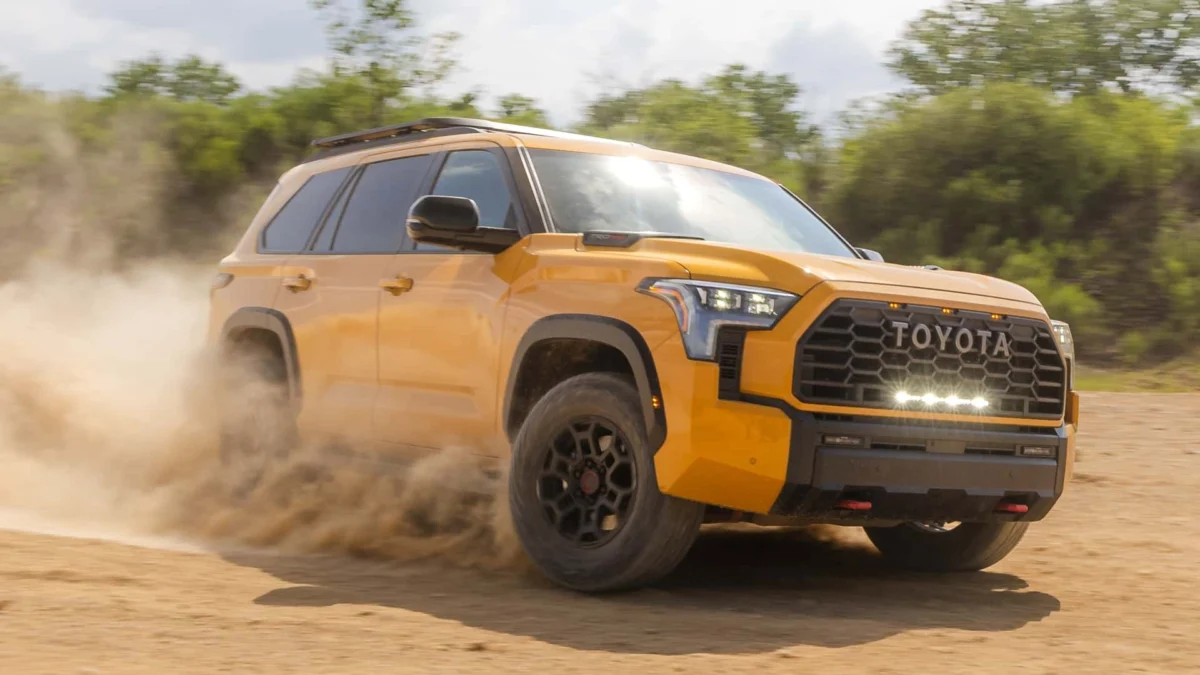
The list of the top ten most durable vehicles is a testament to the long-standing reputation of Toyota Motor Corporation. Six Toyota models and three Lexus models occupy the upper echelon of the rankings. Leading the pack is the Toyota Sequoia, a full-size SUV that boasts an impressive 42.3 percent probability of reaching the quarter-million-mile mark. This is followed closely by the Lexus LS, a luxury sedan that proves high-end sophistication does not necessarily come at the cost of reliability, with a 38.8 percent success rate. The Toyota 4Runner, long celebrated for its rugged body-on-frame construction, secures the third spot with a 33.1 percent chance.
The consistency of these results is not accidental. Historically, Toyota has prioritized a "kaizen" approach to manufacturing—a philosophy of continuous improvement that emphasizes incremental changes to established, reliable platforms rather than risky, rapid overhauls. By utilizing proven powertrain architectures and high-quality components across multiple vehicle lines, the manufacturer has effectively minimized the frequency of catastrophic mechanical failures that typically send older vehicles to the scrap heap.
The Role of Honda and Non-Asian Competitors
While Toyota dominates the top ten, Honda remains the primary challenger to this hegemony. The Honda Accord Hybrid stands out as the only non-Toyota vehicle to crack the top ten, securing the 10th position with an 18.5 percent chance of reaching 250,000 miles. Further down the list, the Honda HR-V (17.6%) and the Honda Civic (17.3%) continue to demonstrate the brand’s commitment to engine longevity and transmission durability.
The entry of the Mercedes-Benz G-Class into the top 15—ranking 14th with a 17.4 percent probability—is a noteworthy anomaly. Unlike the mass-produced commuters from Toyota or Honda, the G-Class is a niche, high-performance, and high-cost luxury vehicle. Its inclusion on this list is largely attributed to its military-grade origins and a robust design ethos that prioritizes structural integrity over lightweight efficiency.
The American Perspective: Heavy-Duty Trucks
When the scope is expanded to include heavy-duty trucks, the narrative shifts toward the American automotive industry. Domestic manufacturers such as Ram, GMC, and Ford have carved out a significant lead in this category. The Ram 3500 stands as the undisputed leader among trucks, with a 31.9 percent probability of hitting 250,000 miles. If it were included in the general passenger vehicle list, it would rank fourth overall, underscoring the extreme durability of diesel-powered, commercial-grade platforms.
GMC also shows strong performance, with the Sierra 3500 HD (26.2%) and the Sierra 2500 HD (17.2%) proving that the brand’s focus on work-ready components pays dividends in the long run. Ford’s Super Duty lineup—specifically the F-350 and F-450—also maintains a respectable presence, consistently outperforming the industry-wide truck average of 11.1 percent.
Expert Analysis and Market Implications
Karl Brauer, an Executive Analyst at iSeeCars, notes that the distinction between these top-tier performers and the rest of the market comes down to design intent. "It’s clear Toyota and Honda have a corporate philosophy focused on durability and a long vehicle lifespan," Brauer stated. "But the military background of the Mercedes-Benz G-Class, and the robust design and wide range of capabilities of Chevrolet’s Suburban, allow them to break into the top 27 rankings."
The implications of this data for the average consumer are profound. As new car prices continue to rise, the "cost per mile" of a vehicle becomes the most important metric for long-term ownership. A vehicle that is 8 times more likely to reach 250,000 miles than the industry average represents a massive reduction in the total cost of ownership. This shift in consumer behavior is already being reflected in the secondary market, where models with high-mileage reputations command significantly higher resale values, even with odometers showing figures that would typically deter buyers from other brands.
A Timeline of Durability
The evolution of vehicle longevity has been steady over the last three decades. In the 1990s, reaching 100,000 miles was considered a significant achievement for any automobile. By the mid-2000s, with the advent of more sophisticated electronic fuel injection, improved synthetic lubricants, and better rust-prevention coatings, the 200,000-mile barrier became the new standard for a "reliable" vehicle. Today, the 250,000-mile mark is increasingly viewed as the standard for high-quality engineering.
This trajectory is expected to continue as hybrid technology becomes ubiquitous. Although some critics previously feared that battery degradation would shorten the lifespan of electrified vehicles, the latest data from the Toyota Prius and the Honda Accord Hybrid suggest that these systems are remarkably resilient. While the Prius ranks lower on the 250,000-mile list (11.5%) than the gas-only Sequoia, it still manages to double the industry average, suggesting that hybrid components do not necessarily represent an "expiration date" for the vehicle.
Conclusion: Investing in Longevity
The data provided by iSeeCars offers a roadmap for prospective buyers who intend to keep their vehicles for the long haul. For those prioritizing absolute reliability, the Toyota and Lexus ecosystems remain the gold standard. For those who require the towing capacity and sheer mechanical mass of a heavy-duty truck, the American offerings from Ram and GMC provide a viable, high-durability path.
As the automotive industry pivots toward electrification and software-defined vehicles, the challenge for manufacturers will be maintaining this level of long-term reliability. The mechanical longevity of a 2024 Toyota Sequoia is proven; the long-term viability of modern, heavily computerized platforms remains to be seen. For now, however, the message is clear: if you are looking for a vehicle to serve as a companion for the next quarter-million miles, look toward those brands that have built their reputations on the silent, consistent, and durable performance of their engines and chassis. By choosing a model with a high probability of reaching 250,000 miles, consumers can effectively insulate themselves from the volatility of the current new-car market, saving thousands of dollars in replacement costs and securing reliable transportation for years to come.