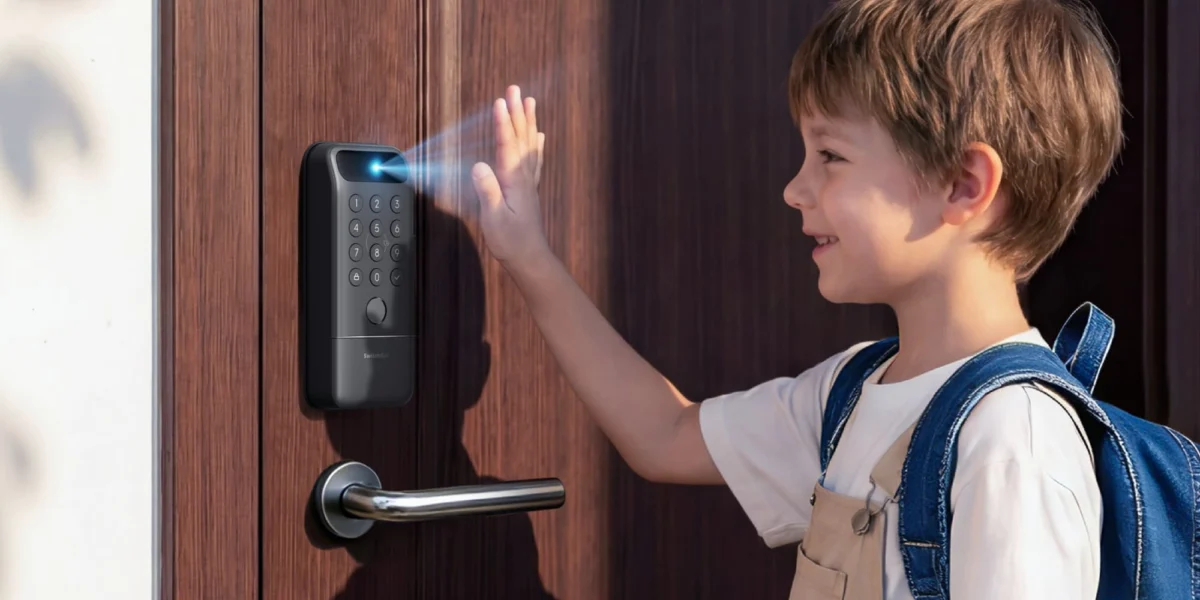
The smart home security landscape has witnessed a significant technological leap today as SwitchBot officially announced the global release of its latest flagship security products: the SwitchBot Lock Vision and the SwitchBot Lock Vision Pro. Representing a departure from the brand’s previous focus on retrofit accessories, these new smart locks integrate high-end biometric authentication with the latest industry standards in connectivity. Specifically designed to cater to the Apple Home ecosystem and the burgeoning Matter standard, these devices aim to simplify the user experience while providing a multi-layered approach to home access.
The Lock Vision series enters a competitive market currently dominated by established players like Schlage, August, and Aqara. However, SwitchBot seeks to differentiate itself by offering a comprehensive "all-in-one" biometric suite that includes 3D facial recognition—a feature typically reserved for high-end security installations—alongside native Matter over Wi-Fi support. This connectivity choice is particularly noteworthy for Apple Home users, as it removes the historical requirement for a proprietary SwitchBot hub, allowing the lock to communicate directly with an Apple TV or HomePod.
Advanced 3D Facial Recognition and Biometric Security
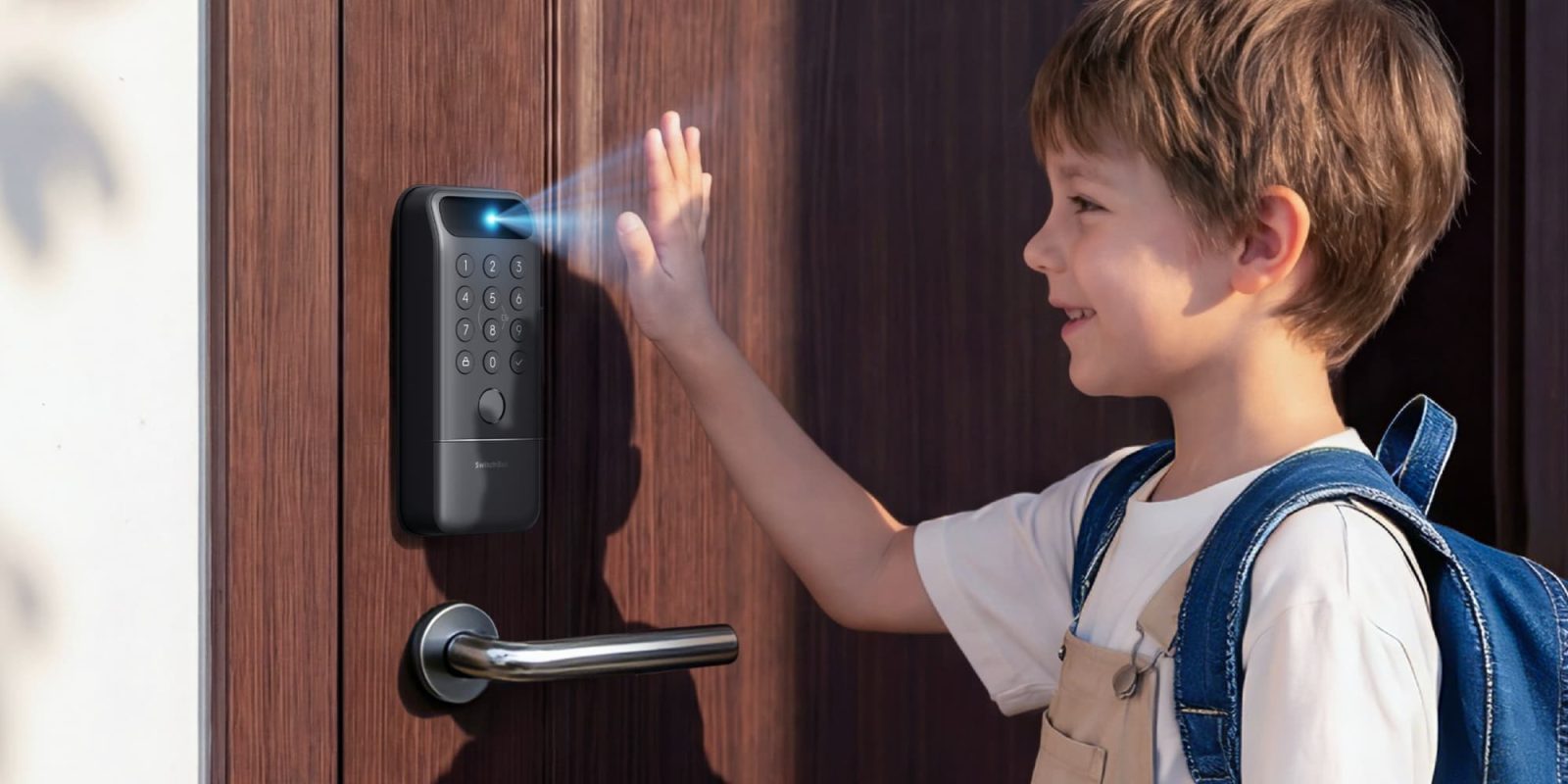
At the core of the Lock Vision series is a sophisticated 3D facial recognition system designed to provide both speed and security. Unlike traditional 2D camera-based systems that can often be deceived by a high-resolution photograph or a digital screen, the SwitchBot Lock Vision utilizes an infrared projector to cast over 20,000 invisible dots onto the user’s face. This creates a precise 3D depth map, ensuring that only a physical, living person can trigger the unlocking mechanism.
The technical specifications of the facial recognition system are robust. SwitchBot claims an unlock speed of less than one second, positioning it as one of the fastest biometric locks on the market. Furthermore, the system is engineered to adapt to changes in a user’s appearance. Through advanced algorithmic processing, the lock can accurately identify users even if they are wearing hats, glasses, or wigs, or if they have applied heavy makeup. This level of versatility is essential for daily use, where environmental and personal variables often hinder the performance of lesser biometric sensors.

For users seeking the absolute maximum in authentication options, the Lock Vision Pro model introduces two additional biometric layers: semiconductor fingerprint recognition and contactless palm vein scanning. The palm vein scanner is a particularly innovative addition, utilizing near-infrared light to detect the unique vascular patterns beneath the skin of the hand. Because palm vein patterns are internal and highly complex, they are nearly impossible to forge, providing a level of security that exceeds standard fingerprint sensors. This feature also offers a hygienic, "touchless" alternative for users who may have dirty hands or are concerned about surface contact.
Privacy remains a paramount concern in the era of biometric data. SwitchBot has addressed this by ensuring that all biometric templates—whether facial, fingerprint, or palm—are stored locally on the device’s hardware. The data is encrypted using the AES-128 standard, and no biometric information is uploaded to the cloud. This local-first approach mitigates the risk of large-scale data breaches and ensures that the user’s identity remains within the confines of their own home.
Power Management and mmWave Radar Integration
A common pain point for smart lock owners is the frequency of battery replacements and the anxiety associated with a lock dying while the user is away. SwitchBot has introduced a "dual-power, dual-pack" system to combat this. The primary power source is a 10,000mAh rechargeable lithium battery pack, which SwitchBot estimates will last up to 12 months under typical usage conditions (defined as approximately 10 unlocks per day).
In the event that the primary battery is exhausted, the lock features an internal secondary power source consisting of standard CR123A batteries. This backup system is designed to provide an additional 500 emergency unlocks, giving the homeowner ample time to recharge the main unit. If both power systems fail, the exterior of the lock includes a USB-C port, allowing users to provide temporary power via a portable power bank to gain entry.
To maximize the longevity of the 10,000mAh battery, SwitchBot has integrated mmWave (millimeter-wave) radar technology. Traditional smart locks often use PIR (Passive Infrared) sensors to detect motion, which can be prone to "false positives" from swaying trees or passing cars, leading to unnecessary power drain as the camera or biometric sensors activate. In contrast, mmWave radar allows for high-precision presence detection. The Lock Vision only activates its biometric scanning sequence when it detects a person physically approaching and standing in front of the door, significantly reducing idle power consumption and extending the intervals between charges.
Matter over Wi-Fi and the Apple Home Ecosystem
One of the most significant strategic shifts for SwitchBot with this release is the native integration of Matter over Wi-Fi. Matter, the industry-unifying protocol backed by Apple, Google, Amazon, and Samsung, aims to ensure that smart home devices work seamlessly across different platforms.
Historically, SwitchBot products required a "SwitchBot Hub" to bridge their Bluetooth-based devices to the internet or to Apple Home. The Lock Vision series bypasses this requirement. By supporting Matter over Wi-Fi out of the box, the locks can be added directly to the Apple Home app as long as the user has a compatible Matter controller, such as an Apple TV 4K or a HomePod mini.
This integration provides Apple Home users with several native benefits:
- Remote Access: Lock or unlock the door from anywhere using the Home app.
- Automations: Include the lock in "Good Night" or "Leaving Home" scenes.
- Siri Voice Control: Use voice commands to check the status of the lock or secure the home.
- Unified Management: Manage the lock alongside lights, thermostats, and cameras from other manufacturers within a single interface.
Beyond Matter and biometrics, the Lock Vision series supports a wide array of alternative entry methods. These include traditional physical keys, PIN codes via a built-in keypad, NFC cards, and auto-unlocking via geofencing (which detects the user’s smartphone as they approach the driveway). This redundancy ensures that residents have multiple ways to enter their homes regardless of the circumstances.
Market Context and Competitive Implications
The release of the Lock Vision series marks a transition for SwitchBot from a manufacturer of "niche" smart home gadgets to a serious contender in the high-end home security market. For years, the company was best known for its "SwitchBot Bot," a small mechanical arm designed to press physical buttons. However, recent releases like the Lock Pro and now the Lock Vision series demonstrate an ambition to compete with premium brands like Schlage and Yale.
Industry analysts note that while the Lock Vision series is feature-rich, it faces stiff competition. One notable absence in the SwitchBot offering is support for Apple Home Key. Home Key allows users to unlock their doors by simply tapping their iPhone or Apple Watch against the lock, using the same NFC technology found in Apple Pay. While the Lock Vision Pro offers palm and facial recognition as alternatives, the convenience of Home Key remains a highly sought-after feature for the Apple faithful.
However, SwitchBot’s pricing strategy may give it an edge. The standard Lock Vision is priced at $169.99, while the feature-packed Lock Vision Pro retails for $229.99. When compared to the Schlage Encode Plus or the Aqara U200, SwitchBot is offering a broader range of biometric sensors at a similar or lower price point.
Chronology of Development and Availability
The journey to the Lock Vision series began following the success of the original SwitchBot Lock, which was a retrofit solution that fit over existing deadbolts. Feedback from the user community indicated a strong desire for a more integrated, permanent solution that didn’t rely on the original hardware’s aesthetic or mechanical limitations.
- Late 2023: SwitchBot began teasing a move toward Matter-native hardware during major tech trade shows.
- Early 2024: The company refined its mmWave radar integration, a technology it had already successfully deployed in its ceiling lights and motion sensors.
- Today: The official global launch of the Lock Vision and Lock Vision Pro on major retail platforms including Amazon.
The products are available immediately in North American markets, with European and Asian rollouts expected to follow in the coming months. Launch day promotions on Amazon have been introduced to incentivize early adopters, reflecting SwitchBot’s aggressive push to capture market share in the smart lock category.
Conclusion and Future Outlook
The SwitchBot Lock Vision and Lock Vision Pro represent a robust intersection of biometric innovation and smart home interoperability. By combining 3D facial recognition with the Matter standard, SwitchBot has addressed two of the most significant demands of modern consumers: high-level security and ease of integration.

As the smart home market continues to mature, the focus is shifting away from "gadgets" and toward reliable, infrastructure-grade hardware. The inclusion of secondary backup batteries and local encrypted storage suggests that SwitchBot is prioritizing the "reliability" and "privacy" pillars of home security. While the lack of Apple Home Key may be a deterrent for some, the addition of 3D facial recognition and palm vein scanning provides a futuristic alternative that few other consumer-grade locks can match.
The success of the Lock Vision series will likely depend on its real-world performance—specifically the accuracy of its facial recognition in varied lighting and the actual battery life of the Wi-Fi-connected radio. If SwitchBot delivers on its promises, the Lock Vision Pro could become the new benchmark for biometric home entry in 2024 and beyond.