Published July 14, 2026 08:05 AM
The pursuit of shared experiences in the wilderness has long been a cornerstone of romantic partnerships for outdoor enthusiasts. For many, the quintessential backpacking date night involves the serene beauty of an alpine lake, the ethereal glow of alpenglow illuminating surrounding peaks, and the simple pleasure of a freeze-dried meal shared with a loved one. Beyond the emotional enrichment of these shared adventures, a practical benefit emerges: the strategic division of gear. By pooling resources, couples can significantly lighten their individual loads, carrying communal items like stoves, fuel, water filters, and tents collectively. This efficiency naturally sparks curiosity about further optimizing shared gear, leading to the exploration of double sleeping systems. While common in car camping, their application in the realm of ultralight backpacking presents a compelling, albeit complex, proposition for those seeking to maximize gear efficiency and shared comfort.
The Evolution of Shared Backpacking Gear
The concept of sharing gear on backpacking trips is not new, but its evolution mirrors the broader advancements in outdoor equipment. Historically, couples might have shared a larger, heavier tent or a single, bulkier sleeping bag designed for stationary camping. However, with the rise of lightweight materials and innovative designs, the focus has shifted towards optimizing weight and packability for multi-day excursions. The advent of specialized double sleeping bags and pads specifically engineered for backpacking represents a significant stride in this direction, catering to the growing number of couples who prioritize shared adventures without compromising on the demands of the trail.
Navigating the Terrain of Double Sleep Systems: Potential Challenges
Before embarking on field tests, a critical assessment of potential drawbacks associated with double sleep systems is essential. The fundamental challenge lies in the inherent confinement of two individuals within a single sleeping enclosure. While the intimacy of cuddling on a queen-sized bed at home is a familiar comfort, translating this to the confined and often temperature-regulated environment of a tent presents a different dynamic. Personal sleeping preferences, such as sleeping on one’s stomach versus back or side, can create friction. Furthermore, disparate body temperatures, a common phenomenon among individuals, can lead to imbalances in warmth and comfort within a shared bag.
Another significant consideration is the impact on weight distribution. While the idea is to consolidate gear, uneven distribution of a single, larger item can complicate the careful balance backpackers strive for. In scenarios where one partner hikes at a significantly faster pace, the heavier double sleeping system might be disproportionately allocated to their pack, potentially exacerbating pace disparities rather than evening them out. The envisioned outcome is a cozy, bed-like experience, but the potential for a restless night, characterized by overheating, unintended physical contact, and the unavoidable realities of trail-induced odors, looms as a distinct possibility.
The Weight Question: Do Double Sleep Systems Deliver Efficiency?
A primary motivation for exploring double sleep systems is the assumption of increased weight efficiency compared to carrying two individual sleeping bags. However, the reality on the market is nuanced. Many double sleeping bags are designed for car camping, prioritizing space and comfort over ultralight principles, and thus tend to be heavier. Nevertheless, a growing number of manufacturers are producing backpacking-specific double options.
For instance, the Big Agnes King Solomon 20° Doublewide, while offering ample space, weighs in at 3 pounds 15 ounces. For comparison, a comparable single bag from Big Agnes might weigh around 2 pounds 5 ounces. This indicates a weight penalty for the double configuration. Recognizing this, the Sea to Summit Spark Double emerges as a noteworthy contender in the backpacking category. Weighing 3 pounds 6 ounces, it remains lighter than some budget-oriented or cold-weather single bags, and is among the lightest double bags available. However, it still carries a slight weight premium of a few ounces over two individual Spark bags from the same product line.
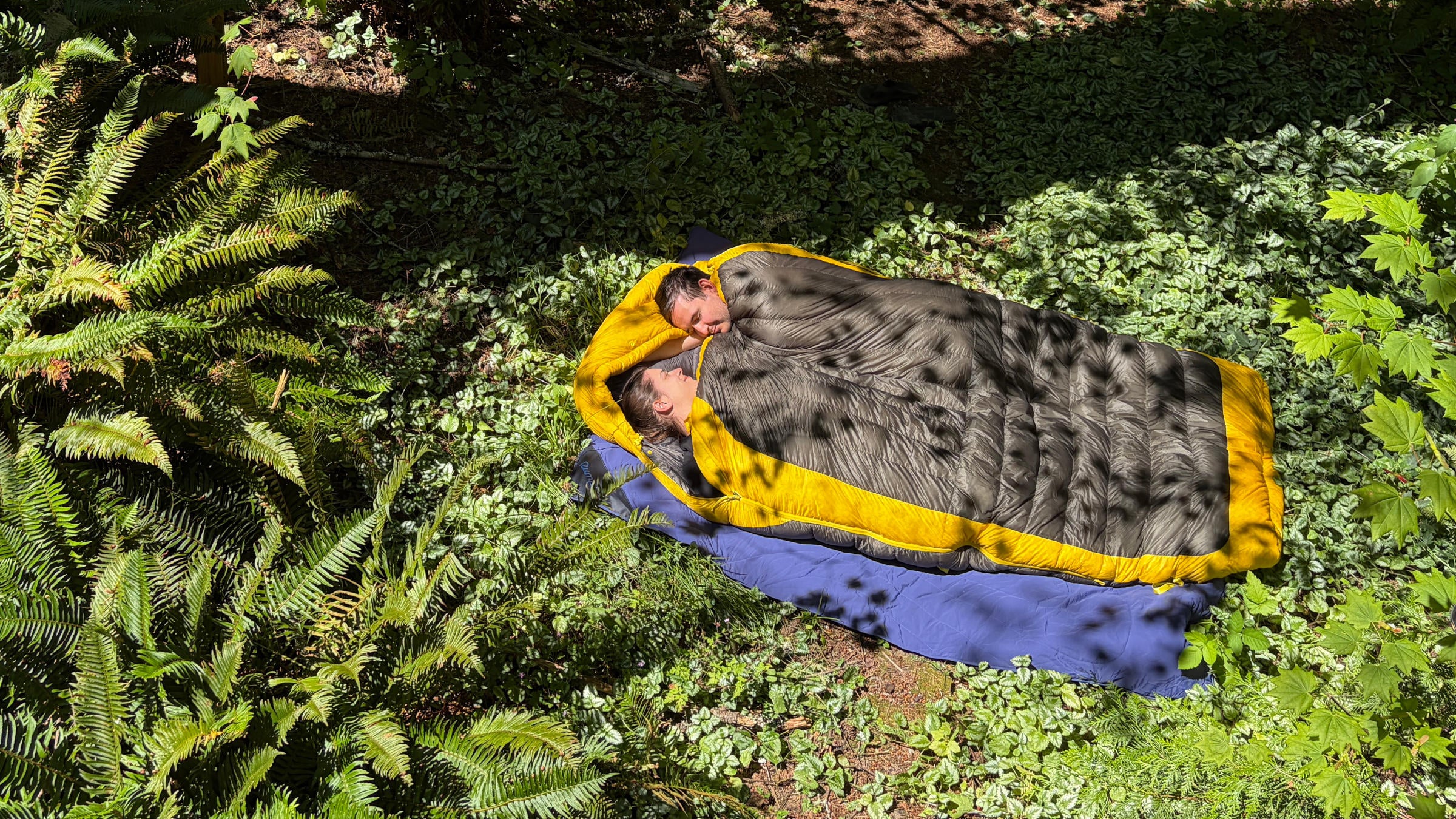
The selection of the Sea to Summit Spark Double for testing was deliberate. The author and their partner were already satisfied users of the Spark single bags, allowing for a direct comparison without introducing entirely new sleeping bag technologies. Additionally, the Spark Double boasts a generous maximum user height of 6 feet 6 inches, accommodating taller individuals where other models, like the King Solomon (recommending up to 6 feet), might fall short. The bag’s 850+ fillpower down insulation also contributes to excellent compressibility, reducing its packed volume to that of a standard bear canister, a significant advantage for a double sleeping system.
Complementary Gear: The Double Sleeping Pad
Complementing the double sleeping bag, the Exped Ultra 1R Duo inflatable pad was chosen for the trial. This pad is designed to function as a single, integrated unit, mirroring the concept of the double sleeping bag. In its medium size, it weighs 1 pound 10 ounces, a slight reduction compared to two individual single pads of the same design. Its tapered footbox, characteristic of many ultralight inflatable pads, enhances packability. When compressed, it occupies a volume slightly larger than a one-liter Nalgene bottle. While the option exists to strap individual pads together, differences in height and design between personal pads can create uncomfortable gaps. The integrated double pad, therefore, offered a more seamless solution for couples seeking unified sleeping surfaces.
Field Performance: The Verdict on Double Sleep Systems
The double sleep system was subjected to rigorous testing over two separate long weekend trips. The initial phase involved using the double pad in conjunction with individual sleeping bags and quilts to assess its standalone benefits. Subsequently, the complete double sleep system, including the Sea to Summit Spark Double bag, was deployed on a 30-mile excursion where nighttime temperatures hovered in the mid-50s Fahrenheit.
The initial impression of the double sleeping bag was one of surprising spaciousness. The inclusion of two zippers, allowing for independent entry and exit, proved particularly convenient for nocturnal bathroom breaks. The ability to comfortably read a book together, engage in shared activities on a phone, or simply cuddle without the intrusion of a gap between sleeping surfaces was a significant enhancement. Despite the Spark Double’s slight taper in the footbox, the overall perceived roominess far surpassed that of many mummy bags the author had previously used, even with two occupants. This increased space facilitated a more comfortable sleeping position, akin to the familiarity of sleeping in a home bed.
However, the experience for the author’s partner, Connor, was not uniformly positive. While the author, a self-proclaimed restless sleeper, appreciated the freedom of movement, Connor found the constant shifting disruptive. Though he acknowledged the enjoyment of pre-sleep intimacy, prolonged periods of restless movement reportedly led him to favor the prospect of separate sleeping bags. While differing sleeping positions were manageable, the system’s suitability appeared to lean towards calmer sleepers and those prioritizing close physical contact.
A common misconception is that a double sleeping bag inherently generates more warmth than two single bags due to shared body heat. However, the trial revealed a different outcome. The author found herself feeling colder in the Spark Double than in her usual Spark 15°F single bag under similar conditions. While snuggling close to Connor provided ample warmth, the increased space between them when separated allowed cold air to infiltrate. The bag does feature a snap closure within the draft collar, designed to bridge this gap and trap heat, but its use would have introduced a degree of restriction. The couple reportedly fell asleep before experimenting with this feature.
Furthermore, the practical consideration of shared odors cannot be overlooked. The prospect of increased "trail stink," whether from days without showering or post-meal digestive processes, is an unavoidable consequence of sharing a sleeping space, tempering any romanticized notions of shared sleeping bag intimacy.
In stark contrast, the double sleeping pad garnered universal praise. The author found no discernible downsides, highlighting it as an excellent compromise for couples not yet ready to commit to a full double sleep system. It allows partners to position their individual sleeping bags in close proximity, fostering closeness without the discomfort of gaps, while retaining the flexibility of separate sleeping bags.
Cost and Versatility: A Strategic Investment?
The financial aspect of acquiring a double sleep system is a significant consideration. The Sea to Summit Spark Double carries a price tag of $999, a substantial investment compared to two individual Spark 15°F single bags, which retail at $549 each. While the double bag is slightly less expensive than purchasing two singles, its cost is considerable. The justification for such an expense hinges on its frequent use. If a couple plans to utilize a double system on every backpacking trip, the benefits of its light weight, packability, and "snugglability" might offset the cost, especially when shared. However, its versatility is inherently limited compared to individual sleeping bags, making the price tag harder to swallow for those who only occasionally backpack with their partner. For comparison, the Big Agnes King Solomon, priced at $500, represents a more budget-friendly option, costing $240 less than two comparable ultralight Big Agnes bags, though its performance was not evaluated in this review.
Future Implications and Broader Impact
Despite the noted drawbacks, the author expresses an intention to incorporate the double sleeping bag and pad into future couple backpacking trips. The ability to delegate some of the gear weight to a stronger partner without the perceived inequity of carrying one’s own equipment was a significant psychological benefit. The enhanced intimacy within the tent was appreciated, and an unexpected bonus was the increased floor space, allowing their dog to comfortably sprawl out. With further adaptation to the system, the potential for improved sleep comfort is high. Ultimately, a double sleeping bag is positioned more as a luxury item for enhanced shared experience rather than a purely efficiency-driven gear choice. For couples who prioritize close proximity, romantic "date night" backpacking trips, or simply enjoy a shared embrace under the stars, a double sleep system presents an appealing, albeit specialized, gear option. The continued development of such systems suggests a growing market catering to the evolving needs and desires of outdoor-oriented couples.