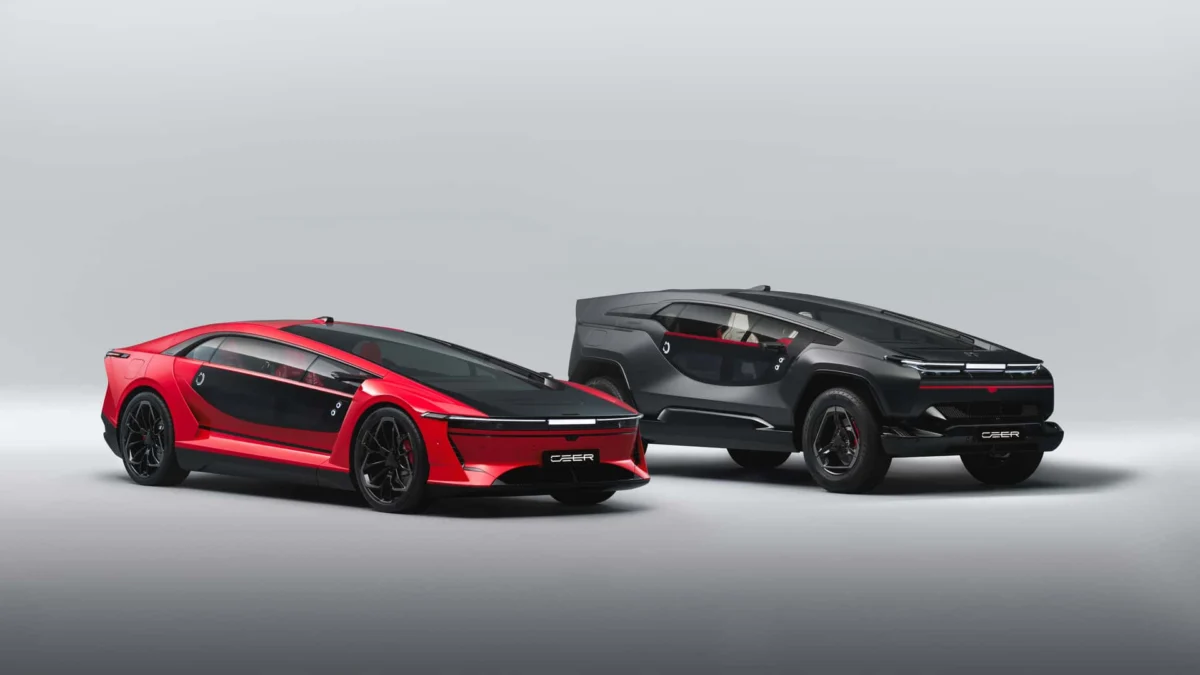
Saudi Arabia’s inaugural national electric vehicle brand, Ceer, has officially unveiled the fruits of its multi-year development cycle, marking a definitive milestone in the Kingdom’s aggressive push toward economic diversification. Established in 2022 as a joint venture between the Saudi Public Investment Fund (PIF) and Taiwanese electronics manufacturing giant Foxconn, Ceer serves as a cornerstone of the Vision 2030 initiative. By pivoting away from a historical reliance on fossil fuel exports, the Kingdom is attempting to foster a high-tech industrial base capable of sustaining long-term growth in a decarbonizing global economy. The debut of the "Exobot" platform, which underpins both a sleek sedan and a rugged, futuristic SUV, signals the brand’s intent to challenge established automotive players with radical design language and high-performance electric architecture.
A Chronology of Strategic Industrial Development
The genesis of Ceer dates back to November 2022, when the Public Investment Fund announced the launch of the brand, signaling the Kingdom’s ambition to become a regional hub for automotive manufacturing. The partnership with Foxconn was calculated, leveraging the Taiwanese firm’s expertise in consumer electronics and advanced contract manufacturing—an approach that mirrors Foxconn’s "MIH" open platform strategy.
Following the initial announcement, the company spent the better part of two years building its operational framework. While the automotive industry is notorious for high barriers to entry, the financial backing of the PIF provided Ceer with the necessary liquidity to bypass traditional scaling hurdles. By 2023, the company began recruiting senior talent, most notably securing Rob Melville, the former design director at McLaren, to lead its aesthetic identity. The recent reveal of the Exobot series serves as the first tangible proof of concept for a brand that has largely operated behind closed doors, navigating the complex intersection of supply chain logistics and design validation.
Technical Specifications and Performance Metrics
The Exobot platform is defined by its versatility and high-voltage performance. Engineered as a modular architecture, the platform utilizes an 800-volt system, which is currently considered the industry standard for high-performance electric vehicles due to its ability to support faster charging and higher efficiency.
Both the sedan and the SUV are equipped with a high-density 112 kilowatt-hour battery pack, enabling significant range figures. According to data provided by the manufacturer, the sedan offers an estimated range of 416 miles, while the SUV is rated for 348 miles. These figures, while based on the NEDC (New European Driving Cycle) testing standard, underscore the platform’s capacity to handle the grueling demands of regional climates.
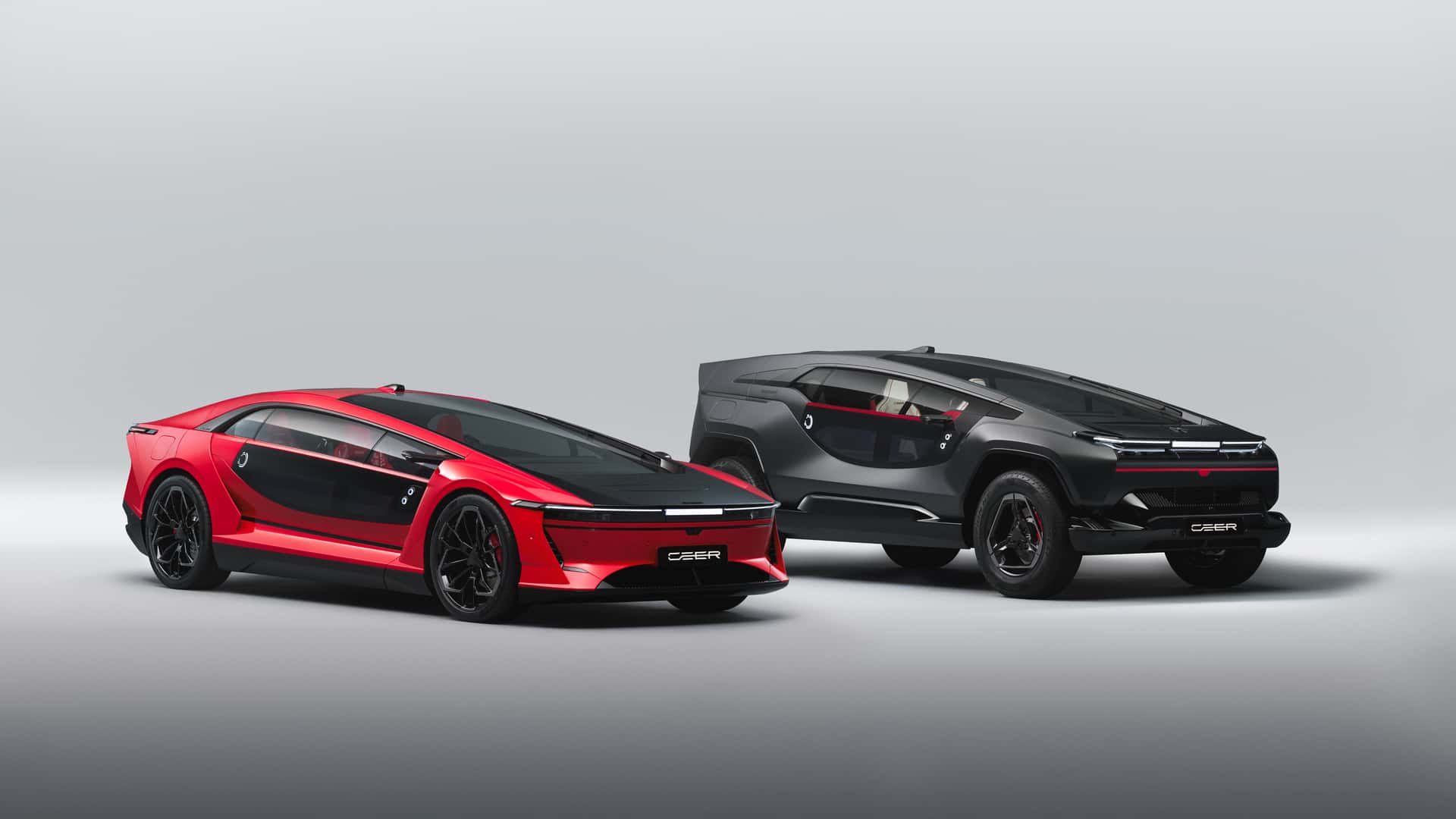
Acceleration metrics are equally competitive. The sedan, prioritized for aerodynamic efficiency and weight distribution, is capable of reaching 62 mph in 2.6 seconds. The SUV, despite its increased mass, maintains a brisk 2.9-second sprint time. These vehicles are powered by a three-motor drivetrain, with electric drive components supplied by the Croatian automotive technology firm Rimac, a strategic partnership that ensures the inclusion of world-class powertrain components. Charging speeds peak at 250 kW, allowing for a 10-to-80 percent charge in approximately 30 minutes, keeping the brand in line with current market expectations for premium EVs.
Design Philosophy and Aesthetic Intent
The visual language of the Exobot series represents a departure from conservative automotive styling. Drawing inspiration from the wedge-shaped designs of the 1970s, the vehicles feature low-profile front ends, elongated rooflines, and aggressive, angular bodywork. The inclusion of gullwing doors and expansive glass surfaces lends the vehicles an aesthetic reminiscent of concept cars, moving away from the more traditional silhouettes seen in the current mass-market EV space.
The lighting signature is of particular note, utilizing 32 distinct LED elements integrated into the front and rear light bars. This is a deliberate nod to the year 1932, marking the unification of Saudi Arabia. James DeLuca, the CEO of Ceer, noted in recent interviews that the design process was subject to direct, high-level oversight. The mandate from the board—and specifically the vision articulated by Crown Prince Mohammed bin Salman—was to reject the "me-too" design approach common in the industry and instead create a unique, forward-looking aesthetic that defines the Kingdom’s identity on the global stage.
The interior continues this futuristic theme, characterized by an 8K panoramic display spanning the width of the dashboard and a vertical, secondary touchscreen. The cabin architecture emphasizes minimalism, utilizing hexagonal patterns that reflect a modern, geometric design ethos. Notably, the sedan features small windows located below the traditional belt line near the front passenger footwells—a design quirk that enhances visibility and reinforces the vehicle’s "tech-first" interior atmosphere.
Economic Implications and Market Strategy
The emergence of Ceer is not merely an automotive story; it is an economic imperative. Saudi Arabia’s Vision 2030 aims to increase the non-oil contribution to the Kingdom’s GDP. The automotive sector provides a high-multiplier effect, creating jobs in engineering, manufacturing, and supply chain logistics. By partnering with Foxconn and utilizing established suppliers like Rimac, Ceer is attempting to leapfrog the multi-decade learning curve typically required for domestic automakers to reach global manufacturing standards.
However, the brand is entering a crowded market. With Lucid Motors already operating a manufacturing facility in Saudi Arabia, the region is becoming a focal point for EV production. Unlike Lucid, which operates on a global scale, Ceer has stated that its vehicles are currently "tailor-made" for the Saudi Arabian market and select neighboring nations. This regional focus allows the brand to optimize its software and hardware for extreme heat and specific infrastructure conditions, potentially giving it an edge in customer satisfaction within the Middle East.

The strategy of releasing seven models over the next five years suggests that Ceer intends to capture a broad demographic, moving beyond these initial "halo" products. The portfolio will likely expand to include more accessible, mass-market vehicles as the manufacturing infrastructure matures.
Industry Reaction and Future Outlook
Industry analysts have pointed to the risks associated with such an ambitious launch timeline. Establishing a new car brand requires not just design and production, but a massive investment in service networks, charging infrastructure, and brand equity. While the PIF’s capital provides a buffer, the success of Ceer will ultimately depend on its ability to transition from these highly stylized prototypes to reliable, mass-produced vehicles that meet rigorous international safety and quality standards.
The reaction from the automotive community has been one of curiosity. While the design is polarizing, the technical specifications—particularly the partnership with Rimac and the integration of 800-volt architecture—suggest that Ceer is serious about performance. The company’s ability to execute its production schedule over the next five years will be the definitive test of whether the Kingdom can successfully transition from a resource-based economy to a high-tech manufacturing power.
For now, the Exobot series stands as a bold statement of intent. By combining the manufacturing prowess of Foxconn with the design influence of industry veterans like Rob Melville, Saudi Arabia is signaling that it is not content to simply observe the electric revolution—it intends to shape it. As the company moves toward the next phase of its lifecycle, the global automotive industry will be watching to see if these "otherworldly" designs can successfully navigate the transition from the show floor to the open road.