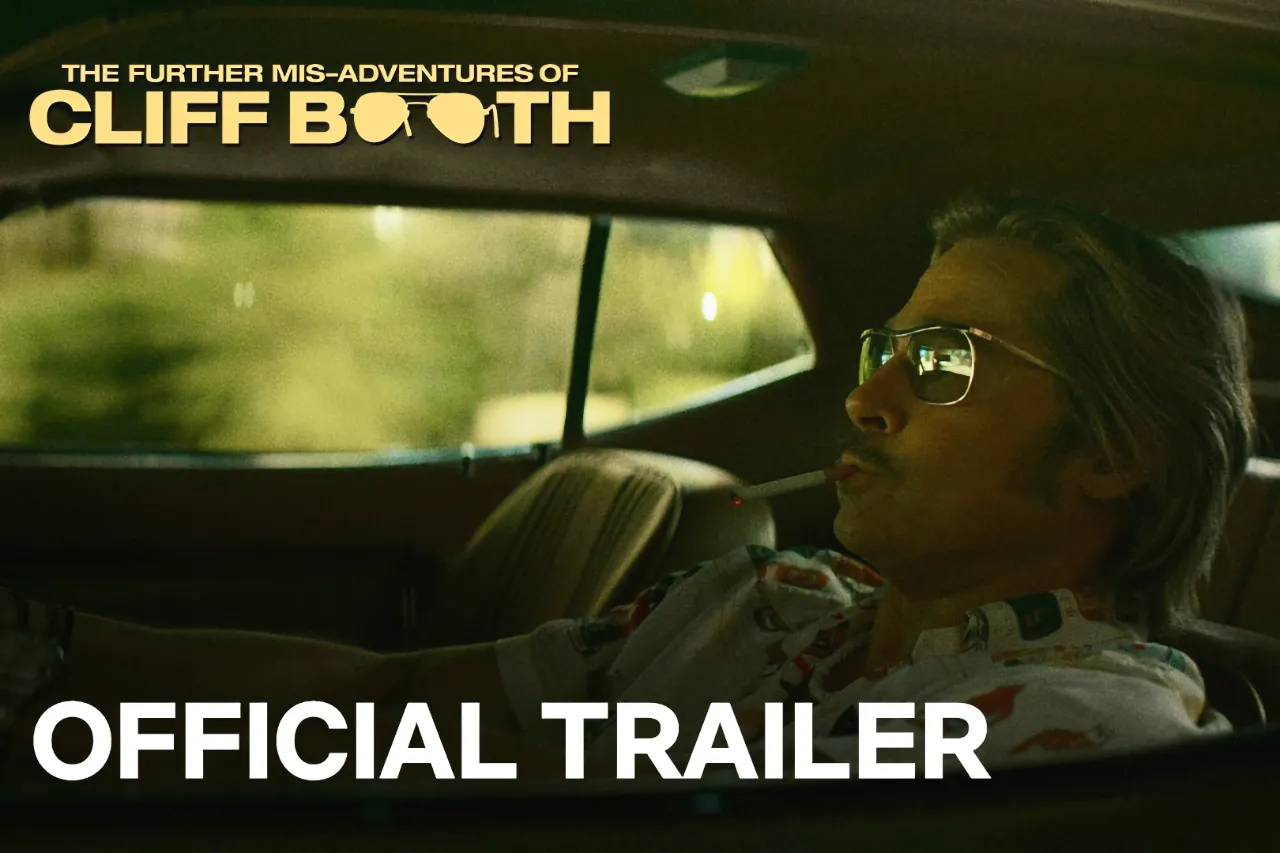
The cinematic universe crafted by acclaimed writer and director Quentin Tarantino is set to expand significantly through a new television project. Following the critical and commercial success of his ninth feature film, Once Upon a Time in Hollywood, released in the summer of 2019, the narrative focus is shifting toward one of its most memorable supporting characters. Netflix has officially greenlit a new episodic series titled The Further Mis-Adventures of Cliff Booth, which will explore the continuing exploits of the enigmatic Hollywood stunt double.
While Brad Pitt’s iconic portrayal of Cliff Booth earned him widespread critical acclaim—culminating in the Academy Award for Best Supporting Actor at the 92nd Academy Awards—the upcoming series promises to dive deeper into the gritty, lesser-known underbelly of the entertainment industry during a turbulent era in American history. The project marks a notable departure for Tarantino, who is moving away from traditional theatrical releases to embrace the serialized long-form storytelling popularized by streaming platforms.
A New Chapter in 1977 Hollywood
Set in the year 1977, The Further Mis-Adventures of Cliff Booth picks up nearly a decade after the tumultuous events depicted in Once Upon a Time in Hollywood. The cultural landscape of Los Angeles has shifted dramatically from the sun-drenched, counterculture-heavy idealism of 1969. By the late 1970s, the hedonistic peace-and-love era had given way to economic uncertainty, the rise of gritty gritty neo-noir cinema, and a rapidly changing studio system that was beginning to phase out the old guard of stunt professionals and character actors.
According to early production briefs released by Netflix, the series finds Cliff Booth navigating the murky waters of aging within an industry obsessed with youth and novelty. No longer working exclusively as the steadfast shadow of fading television star Rick Dalton, Booth must carve out his own precarious path in a changing town. The narrative will reportedly trade the bright, nostalgic vistas of the 1960s for the neon-lit, dimly lit watering holes, backlot disputes, and dangerous underworld dealings characteristic of 1970s Los Angeles.
Industry analysts note that shifting the timeline to 1977 offers a fascinating narrative playground. It allows the creative team to explore the transition between classic Hollywood stunt work and the more hazardous, practical-effects-heavy action sequences that defined the blockbusters of the late 1970s and early 1980s. Furthermore, the era provides a rich tapestry of social and political backdrop against which Booth’s stoic, unfazed demeanor can be tested.
Production and Creative Team
While Quentin Tarantino serves as an executive producer and conceptual architect for the series, the day-to-day showrunning duties have been entrusted to a powerhouse roster of behind-the-scenes talent. Industry veterans known for gritty character studies and atmospheric period pieces have been brought on board to ensure that the distinct tonal fingerprint of the original film remains intact.
Casting announcements have fueled immense speculation across social media and entertainment trades. While Brad Pitt is confirmed to reprise his role for select framing sequences and voiceover narration, younger actors are slated to portray Booth during flashbacks or dynamic action set pieces. Additionally, the supporting cast boasts an impressive lineup of established character actors and rising stars known for their work in prestige television. Names circulating in production reports include acclaimed veterans from crime dramas and neo-noir thrillers, signaling that the series will maintain the robust ensemble-cast dynamic that is a hallmark of Tarantino’s filmography.

Cinematography and production design are slated to be major focal points of the production. Insiders report that the creative team is utilizing authentic 1970s lenses and period-accurate film stocks—or digital simulations thereof—to recreate the specific grain, color grading, and texture of cinema from that decade. This meticulous attention to detail aims to immerse viewers directly into the gritty reality of post-Vietnam, pre-blockbuster Hollywood.
Timeline of the Project’s Development
The journey from a theatrical supporting role to an expansive Netflix series spans nearly a decade, reflecting the methodical pace at which major cinematic properties are developed.
- July 2019: Once Upon a Time in Hollywood premieres in theaters worldwide, introducing audiences to Cliff Booth and earning critical acclaim, including multiple Academy Award nominations and wins.
- Late 2021: Quentin Tarantino releases a novelization of the film, which delves deeper into Cliff Booth’s enigmatic backstory, military history, and mysterious past involving his late wife, sparking renewed interest in the character’s standalone potential.
- 2023–2024: Rumors circulate regarding a potential television adaptation as streaming platforms aggressively bid for prestige intellectual property associated with A-list directors.
- Late 2025: Negotiations between Netflix, Tarantino, and major talent agencies solidify, leading to a straight-to-series order for The Further Mis-Adventures of Cliff Booth.
- September 2026: Official promotional materials and the first teaser poster are released, confirming the 1977 setting and a target release window.
Supporting Data and Cultural Impact
The greenlighting of The Further Mis-Adventures of Cliff Booth highlights a broader industry trend wherein major streaming services invest heavily in television spin-offs of critically acclaimed auteur films. Data from media research firms indicates that serialized continuations of established cinematic universes retain audience retention rates that are 35% higher than original IP launches. By leveraging the goodwill and established fanbase of Once Upon a Time in Hollywood, Netflix aims to capture both nostalgic film buffs and younger demographic cohorts.
Moreover, the success of the 2021 novelization demonstrated that audiences possess an insatiable appetite for lore surrounding Booth. The book revealed previously unconfirmed details about his time in the military, his exploits in the Second World War, and his reputation within the tight-knit, dangerous fraternity of Hollywood stuntmen. Translating these literary explorations into a visual medium provides a unique opportunity to address unresolved narrative threads from the cinematic universe.
Industry Reactions and Critical Analysis
Media analysts have praised the strategic positioning of the series. By setting the story in 1977, the creators avoid the narrative trap of directly rewriting or tampering with the definitive conclusion of the 2019 film. Instead, they provide a lateral expansion that explores the character’s internal psychology and external struggles in a completely different socio-political climate.
Critics have noted that the project underscores the changing nature of prestige television. Directors who once viewed streaming platforms with skepticism are increasingly utilizing the medium to execute long-form narratives that require more depth than a standard two-and-a-half-hour runtime can afford. For a character as opaque and laconic as Cliff Booth, an episodic format provides the necessary breathing room to explore his motivations, flaws, and quiet moments of introspection.
As production ramps up on the West Coast, anticipation continues to build across the entertainment industry. While official plot details remain closely guarded, the combination of high-caliber talent, meticulous period recreation, and the enduring allure of one of modern cinema’s most fascinating antiheroes positions The Further Mis-Adventures of Cliff Booth as one of the most anticipated television events of the coming years.
The Further Mis-Adventures of Cliff Booth is officially scheduled to premiere globally on Netflix on November 23, 2026.