
Navigating Immobility: Eye Tracking VR for Pediatric MRI Scanning
The challenge of keeping young children still during Magnetic Resonance Imaging (MRI) scans is a significant hurdle in pediatric healthcare. MRI, a non-invasive diagnostic imaging technique, relies on precise positioning and a lack of movement to generate clear, diagnostic-quality images. For adults, this stillness can be difficult; for children, who often struggle with fear, anxiety, and an inability to remain stationary for extended periods, it presents a profound obstacle. Sedation or general anesthesia, while effective in ensuring immobility, carries inherent risks and adds considerable cost and complexity to the imaging process. This has driven the development of innovative solutions aimed at improving the patient experience and image quality without resorting to pharmacological interventions. One such promising technology is the integration of eye-tracking systems within Virtual Reality (VR) environments designed specifically for pediatric MRI. This article explores the mechanics, benefits, challenges, and future potential of eye tracking VR in this critical application.
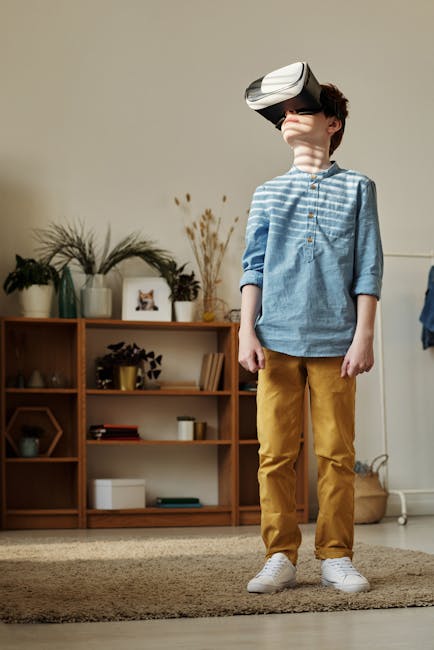
Eye tracking technology, at its core, monitors the movement and focus of a person’s eyes. By analyzing the pupil’s position and movement patterns, sophisticated algorithms can determine where a user is looking, how long they are looking, and their gaze patterns. In the context of VR for pediatric MRI, this technology serves a dual purpose. Firstly, it allows for a highly immersive and engaging experience that can distract children from the intimidating MRI environment and the discomfort of lying still. By offering interactive VR content that responds to their gaze, children are motivated to maintain focus and, consequently, stillness. The VR headset, typically worn by the child, creates a controlled visual environment that can transform the sterile, noisy MRI scanner into a captivating digital world. The child’s engagement with this virtual world, directly influenced by their eye movements, is the primary mechanism for achieving stillness.
The interactive nature of eye-tracking VR is crucial. Instead of passively watching a video, children can actively participate in games or explore virtual environments by simply looking at objects. For instance, a game might require the child to "catch" virtual butterflies by focusing their gaze on them, or explore a fantastical landscape where looking at different elements triggers specific animations or sounds. This level of interaction transforms a potentially frightening experience into an engaging activity. The child’s desire to continue interacting with the VR content, driven by their own visual engagement, becomes a powerful incentive to remain as still as possible. The feedback loop is direct: the more they move, the less effective their interaction becomes, naturally encouraging stillness. This intrinsic motivation is far more effective and less intrusive than external commands or behavioral management techniques.
The benefits of implementing eye tracking VR in pediatric MRI are multifaceted. Primary among these is the potential reduction or elimination of the need for sedation. This directly translates to improved patient safety by avoiding the risks associated with anesthetic agents, such as respiratory depression, allergic reactions, and post-operative nausea and vomiting. Furthermore, avoiding sedation significantly streamlines the MRI workflow. It eliminates the need for pre-operative assessment by anesthesiologists, the time spent administering and monitoring sedation, and the recovery period post-scan. This allows for faster patient throughput, increasing the availability of MRI scanners for other patients and reducing waiting times. The financial implications are also substantial, as sedation and anesthesia services represent a significant cost component in pediatric imaging.
Beyond safety and efficiency, eye tracking VR can also enhance the diagnostic quality of MRI scans. Motion artifacts are a primary cause of image degradation in MRI, making it difficult for radiologists to interpret the scans accurately. When a child moves, even subtly, during the scan, it can blur or distort the images, potentially leading to misdiagnosis or the need for repeat scans. By keeping children engaged and focused through interactive VR, their ability to maintain stillness is significantly improved. This, in turn, leads to clearer, sharper images with fewer artifacts, thereby increasing the confidence in diagnostic interpretation and potentially reducing the need for rescans. This improved image quality is paramount for accurate diagnosis and effective treatment planning for pediatric conditions.
The integration of eye tracking technology within VR for MRI requires careful consideration of several technical and practical aspects. The VR headset itself must be MRI-compatible. This means it cannot contain any ferromagnetic materials that would interfere with the strong magnetic fields of the MRI scanner or pose a safety risk. Specialized MRI-compatible VR headsets have been developed, often utilizing non-magnetic components and carefully shielded electronics. The eye-tracking cameras within the headset must also be able to function reliably within the MRI environment, which presents challenges due to the magnetic field and radiofrequency pulses. Advanced eye-tracking algorithms are employed to filter out noise and accurately track eye movements even under these demanding conditions.
The software interface for the VR experience is another critical component. It needs to be intuitively designed for children, visually appealing, and offer engaging content that effectively captures and maintains their attention. The content must be age-appropriate, varying from simpler games for younger children to more complex interactive stories or simulations for older ones. The responsiveness of the VR environment to eye movements needs to be near instantaneous to maintain the illusion of control and engagement. Delayed responses can break the immersion and lead to frustration, which could then lead to increased movement. Therefore, low latency in both eye-tracking data processing and VR rendering is essential.
Data from the eye tracker can also provide valuable insights beyond just facilitating stillness. For example, analyzing gaze patterns can reveal a child’s level of engagement, anxiety, or even their cognitive state. In the future, this data could potentially be used to assess a child’s stress levels during the scan, allowing for real-time adjustments to the VR experience to further mitigate anxiety. It might also provide objective measures of attention and cooperation, which could be used for research purposes or to refine the VR content for optimal effectiveness. The integration of biofeedback sensors, such as heart rate monitors, in conjunction with eye tracking could offer an even more comprehensive understanding of a child’s physiological and psychological response to the MRI environment.
Despite the promising advancements, several challenges remain in the widespread adoption of eye tracking VR for pediatric MRI. One significant hurdle is the cost of implementing such systems. MRI-compatible VR hardware, specialized software, and the necessary technical infrastructure can represent a substantial initial investment for healthcare institutions. Furthermore, training for radiology technologists and medical staff on how to operate and manage these systems effectively is crucial. Ensuring consistent and high-quality content creation for a diverse range of age groups and interests also requires ongoing effort and resources.
Another consideration is the variability in children’s responses. While eye tracking VR can be highly effective for many children, some may still struggle with the experience due to extreme anxiety, sensory sensitivities, or developmental differences. The VR environment might not be universally appealing or effective for all children, and a "one-size-fits-all" approach may not suffice. Continued research and development are needed to personalize VR experiences and adapt them to individual needs. The potential for motion sickness or discomfort from prolonged VR headset use also needs to be addressed, though advancements in VR technology are continuously mitigating these issues.
The regulatory landscape for medical devices incorporating VR and AI technologies is also evolving. Ensuring that these systems meet rigorous safety and efficacy standards is paramount before widespread clinical implementation. Collaboration between technology developers, healthcare providers, regulatory bodies, and child psychology experts is vital to navigate these complexities. The ethical implications of using immersive technologies with vulnerable pediatric populations also warrant careful consideration, including data privacy and the potential for over-reliance on technology.
Looking ahead, the future of eye tracking VR in pediatric MRI is bright. As VR technology becomes more sophisticated and affordable, and as MRI-compatible hardware continues to improve, these systems are likely to become an integral part of pediatric imaging departments worldwide. Further research will focus on developing more advanced interactive VR content, integrating AI for personalized experiences, and exploring the use of VR for other pediatric medical procedures. The ability to not only obtain high-quality diagnostic images but also to provide a more positive and less traumatic experience for young patients undergoing necessary medical procedures represents a significant advancement in child healthcare. The synergy between eye tracking and VR offers a powerful, non-invasive approach to overcome the persistent challenge of immobility in pediatric MRI, paving the way for better patient care and improved diagnostic outcomes. The ultimate goal is to transform the MRI experience from one of fear and apprehension to one of engagement and even enjoyment, thereby improving the overall health and well-being of pediatric patients.
