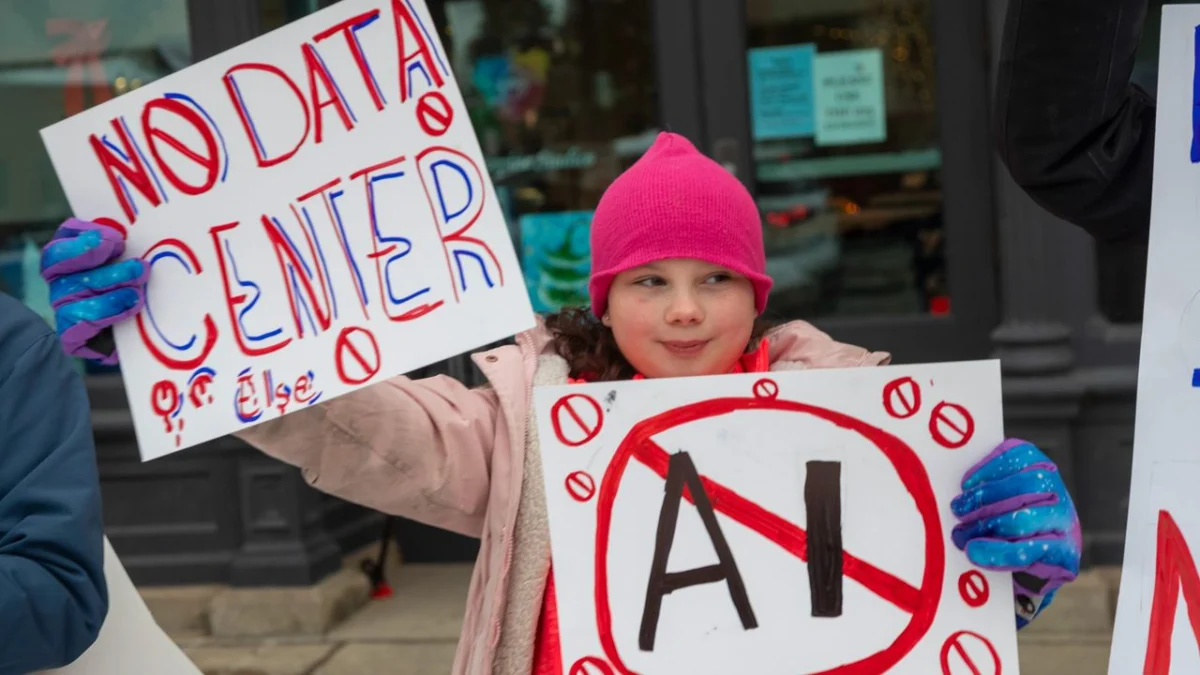
The burgeoning demand for artificial intelligence capabilities is driving an unprecedented surge in data center construction across the United States, yet these ambitious infrastructure projects are increasingly encountering formidable resistance from local communities, transforming what was once seen as inevitable growth into a contentious battleground. As AI usage proliferates among American working adults, the need for immense computing power has escalated, making compute resources a critical commodity for hyperscale technology companies. This demand has triggered a global explosion in planned data center developments, but these efforts are now frequently stymied by significant local roadblocks and community pushback.
Escalating Tensions and Local Repercussions
Recent months have seen a dramatic escalation in local opposition, often leading to tangible political and legal consequences. Just this week, a small town in Missouri witnessed the ousting of half its city council, following accusations that they failed in their due diligence to protect residents from the potential harms of a proposed $6 billion AI data center. The community’s frustration is so profound that a petition is now circulating to remove the remaining council members, including the mayor, underscoring a deep-seated discontent with perceived political acquiescence to large tech interests.
This incident is not isolated. In February, a resident of Claremore, Oklahoma, was arrested and jailed for trespassing during a town hall meeting concerning a new data center project. His offense: exceeding his allotted speaking time by a mere few seconds while attempting to hand paperwork to city counselors, highlighting the intense emotions and rigid controls surrounding these discussions. Meanwhile, in Virginia, a state that has historically been a hub for data centers, public sentiment has shifted dramatically. Voter support for new data centers plummeted from 69% in 2023 to a mere 35%, effectively halting efforts to construct what would have been one of the nation’s largest data center complexes. These examples paint a clear picture: communities are no longer passively accepting these developments.
The Unprecedented Demand for AI Infrastructure
The current wave of data center expansion is largely fueled by the explosive growth of generative AI and large language models. Companies like OpenAI, Google, Amazon, and Microsoft are locked in an intense race to build out the computational infrastructure necessary to train and run these sophisticated AI systems. This isn’t just about more servers; it’s about a new scale of demand. OpenAI, for instance, has announced investments totaling hundreds of billions of dollars in compute power, including a staggering $300 billion contract with Oracle over five years. Such projects require colossal amounts of electricity, with some estimates suggesting a single large AI data center could consume as much power as a small city. Nvidia’s advanced GPUs, the backbone of modern AI, are known for their high power draw, contributing significantly to the tens of gigawatts of power anticipated to be consumed globally by AI infrastructure.
While proponents often tout "circular investments" and technological advancement, the sheer scale of these projects means they will proceed, with or without full local buy-in. Politicians, often dazzled by the promise of massive investments and temporary construction jobs, have frequently fast-tracked approvals, overlooking or downplaying potential long-term community impacts.
Environmental and Social Costs: A Growing Concern
The benefits of temporary construction jobs and local investment are increasingly being weighed against a litany of potential negative externalities. One of the most pressing concerns is water consumption. Data centers require vast quantities of water for cooling, particularly in warmer climates, raising fears of depleted local aquifers and potential water contamination. Studies have shown that a single large data center can consume millions of gallons of water annually, straining resources in areas already facing water scarcity.
Energy prices are another major flashpoint. The immense electricity demands of these facilities can overwhelm existing grids, leading to higher energy costs for residents and businesses. In some extreme cases, companies have resorted to deploying ‘illegal’ gas turbines to power their supercomputers, as allegedly seen with Elon Musk’s xAI facility, contributing to air pollution and raising environmental compliance concerns. The noise pollution generated by powerful cooling systems and generators also significantly impacts the quality of life for nearby residents, disrupting tranquility in what were often rural or semi-rural areas. Furthermore, the sheer physical footprint of these enormous facilities consumes valuable land, sometimes encroaching on agricultural areas or natural habitats.
Legislative and Local Action: Moratoriums and Rejections
Faced with these growing concerns, local communities have leveraged their collective voice to push back in meaningful ways. Where local politicians have been responsive, these efforts have successfully halted projects or prompted policy changes. In a landmark move, the Maine legislature recently approved a bill that imposes a moratorium on new data centers exceeding 20 megawatts in power until October 2027. This pause is intended to allow time for comprehensive analyses of the construction process and its potential effects on local communities and utility infrastructure, demonstrating a proactive approach to understanding long-term impacts.
Similarly, the Tulsa City Council responded to community concerns by issuing a temporary moratorium on data center construction through the end of the year. In San Marcos, Texas, the city council voted in February to reject a critical rezoning effort that would have paved the way for a 200-megawatt data center adjacent to a local power station, prioritizing community interests over industrial expansion. These legislative and administrative actions reflect a growing trend of local governments acknowledging and acting upon resident anxieties.

The Developers’ Perspective and Counterarguments
Developers and tech companies, however, present a different narrative. They argue that these projects are vital for economic growth, promising tens of millions of dollars in local tax revenue that could fund much-needed public services and infrastructure projects. Labor unions often support these large-scale developments due to the guaranteed long-term work for their members in construction and maintenance.
Regarding environmental concerns, developers frequently assert that fears of water contamination are unfounded, citing advanced closed-loop cooling systems or efficient water recycling technologies. They also claim that noise pollution can be mitigated through design and acoustic barriers. Some companies, like Meta, have even initiated community outreach programs, offering small-scale grants for local projects near their data centers, attempting to foster goodwill and demonstrate corporate responsibility. These efforts aim to assuage fears and highlight the perceived benefits, but they often fall short in convincing skeptical residents.
Grassroots Resistance: A Force to Be Reckoned With
Despite these assurances and incentives, grassroots opposition remains robust and increasingly sophisticated. In a rural village in Brown County, Wisconsin, residents were offered lucrative sums—up to $120,000 per acre—to sell their land to a Delaware-based LLC linked to Cloverleaf Infrastructure, a company also involved in a controversial data center project in Port Washington. However, the residents steadfastly refused to sell, demonstrating a powerful commitment to their land and community values. This collective defiance ultimately led Cloverleaf to abandon the project entirely, proving the efficacy of united local resistance.
Another compelling example comes from New Brunswick, New Jersey, where a 22-acre site was initially slated for a data center. Following fierce local pushback and extensive community engagement, the town council dramatically altered the proposal, mandating that a public park be constructed on the site instead. This pivot from industrial development to community green space highlights the profound impact that determined local advocacy can have.
Political Accountability and Voter Retribution
The intensity of public sentiment has translated into significant political ramifications. Opposition to data centers is often coordinated, with sizable portions of local communities actively participating in town halls and public events to voice their concerns. Even when initial efforts to halt projects are unsuccessful, the opposition often remains fierce and ongoing, with residents demonstrating a real willingness to continue fighting, sometimes even after construction has commenced.
A major component of this resistance is the promise of political retribution. Local political figures and town councils who approve unpopular data center projects are facing an increasingly empowered electorate. In Calvert County, Maryland, residents expressed their intent to unseat commissioners who did not vote for a moratorium on data center construction. As one resident famously told them from the microphone, prompting cheers, "You’re not going to be here anymore. You’re out. You’re gone." With primary elections for many local positions often just around the corner, such as in June, the political consequences of ignoring public sentiment are becoming acutely clear.
Beyond Infrastructure: The Broader AI Backlash
The public’s ire surrounding AI data centers is not solely about land use, water, or energy. It is increasingly intertwined with a broader societal anxiety about Artificial Intelligence itself, which is fast becoming a scapegoat for job losses and economic disruption. OpenAI CEO Sam Altman himself warned earlier this month about "AI washing," where companies use AI as an excuse to mask layoffs that might be due to other factors. This warning comes amidst a concerning trend: the tech industry laid off nearly 80,000 workers in the first quarter of 2026, with almost half of these positions reportedly cut due to the perceived impact of AI. This perception of AI as a job destroyer fuels a deeper resentment towards the physical infrastructure that supports it.
In the most extreme and concerning instances of anti-AI pushback, the backlash has turned violent. OpenAI CEO Sam Altman’s home was reportedly firebombed, and a council member in Indianapolis received a threatening note accompanied by bullet holes in his home after voting to approve a data center project. These acts of violence, while isolated, underscore the intense and sometimes dangerous passions ignited by the rapid, often unchecked, expansion of AI technology and its physical footprint.
Looking Ahead: Navigating the Future of AI Development
The growing wave of community resistance presents a significant challenge for hyperscalers and AI developers. While some lawmakers are beginning to work more collaboratively with local communities, ensuring their views are genuinely considered during planning stages, the overall picture remains precarious. If governments and corporations continue to ignore public feedback and push through projects with insufficient consultation or mitigation, the public response could indeed plunge future hyperscaler development plans into serious jeopardy. The future of AI infrastructure development hinges on finding a delicate balance between technological progress and respecting local environmental, social, and political concerns, a balance that has yet to be consistently achieved.