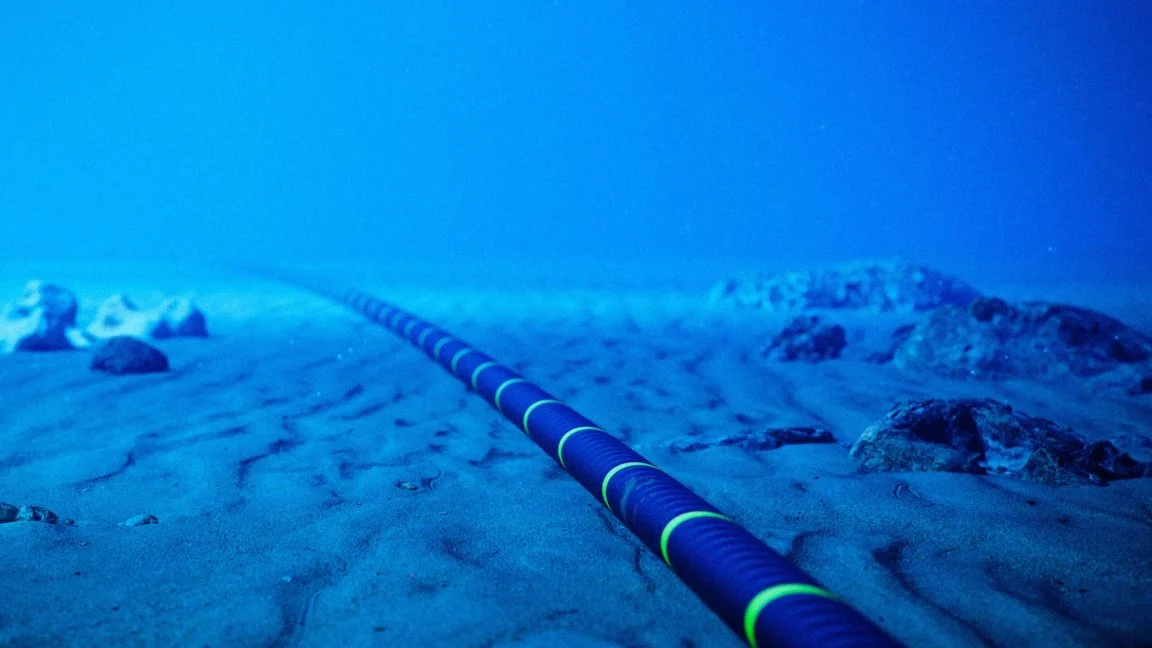
The revelation in 2025 of China’s advanced deep-sea cable-cutting technology has sent ripples of concern across international strategic circles, with analysts describing it as a potent "show of strength" by Beijing. Wendy Chang, a prominent analyst at the Mercator Institute for China Studies (MERICS) in Germany, articulated the prevailing sentiment, stating that China is "sending mixed messages about its role in global submarine infrastructure." This dichotomy, according to Chang, stems from China’s simultaneous pursuit of leadership in the construction and operation of critical undersea networks, while also overtly demonstrating the capability to disrupt them "if necessary." This dual-faceted approach, she noted, is particularly unsettling given previous allegations of Chinese involvement in "shadowy operations involving doctored anchors" that have allegedly damaged sensitive infrastructure.
The Strategic Imperative of Undersea Cables
Undersea cables form the invisible backbone of the modern global economy and communication system. Carrying over 99% of intercontinental data traffic, these fiber-optic arteries transmit everything from financial transactions worth trillions of dollars daily to sensitive government communications and military intelligence. Without them, the internet as we know it would cease to function across continents, crippling global trade, finance, and social interaction. There are more than 500 active submarine cables spanning over 1.5 million kilometers across the world’s oceans, according to Telegeography, a leading research firm specializing in global telecommunications. Their critical nature makes them prime targets in an era of heightened geopolitical competition and hybrid warfare. Their vulnerability is further underscored by the fact that despite their robust design, they are exposed to a myriad of threats, ranging from natural disasters like earthquakes to human activities, both accidental and deliberate.
China’s Ambiguous Stance and Growing Capabilities
China’s emergence as a significant player in the deep-sea cable sector is well-documented. Companies like Huawei Marine Networks (now HMN Technologies), despite facing Western sanctions and scrutiny, have become global leaders in laying new cables, particularly under the umbrella of China’s ambitious Belt and Road Initiative (BRI) and its "Digital Silk Road" component. This expansion grants China unparalleled access and influence over future global communication pathways. However, this constructive role is increasingly overshadowed by a growing apprehension about China’s intentions regarding its deep-sea capabilities. The unveiled cable-cutting technology, while presented by Chinese researchers as intended for benign "marine resource development," immediately triggered suspicions due to its obvious military implications. This ambiguity aligns with a broader pattern of China’s dual-use technology development, where civilian research often has direct military applications, blurring the lines between peaceful advancement and strategic leverage.
A History of Deep-Sea Espionage and Sabotage
The concept of accessing or disrupting undersea cables for strategic advantage is not novel. During the Cold War, the United States Navy undertook Operation Ivy Bells, a highly secretive mission involving a specially modified submarine and divers to tap Soviet naval communications through an undersea cable in the Sea of Okhotsk. This historical precedent highlights that major powers have long recognized the strategic value of controlling or monitoring these critical conduits. Today, both the US and Russia continue to operate sophisticated nuclear submarines and specialized survey ships equipped with robotic submersibles (ROVs) that possess the capability to access, monitor, or potentially damage undersea cables. While these capabilities are often framed within intelligence gathering or defensive postures, the existence of such technologies by multiple state actors underscores the perpetual cat-and-mouse game beneath the waves. However, the explicit public "display" of cable-cutting technology by China introduces a new, more overt dimension to this long-standing strategic competition. Even more mundane methods, such as ships dragging their anchors, have been implicated in accidental or suspected sabotage incidents, revealing the sheer fragility of these vital links.
The Dual-Use Dilemma: Civilian Claims vs. Military Potential
The official Chinese narrative for the deep-sea cable-cutting technology centers on civilian applications, specifically "marine resource development." This could theoretically encompass activities such as clearing abandoned cables, managing underwater infrastructure for energy projects, or facilitating scientific research. However, the South China Morning Post, a Hong Kong-based newspaper known for its insights into Chinese affairs, quickly speculated on the tool’s potential military applications. Their analysis suggested a direct threat to fiber-optic cables linking to Pacific islands, notably Guam, a strategically vital US overseas territory that hosts several significant military bases. Disrupting connectivity to Guam could severely hamper US military operations and communication in the Indo-Pacific, demonstrating a significant projection of power. The inherent nature of "dual-use" technologies means that capabilities developed for ostensibly peaceful purposes can be readily adapted for military objectives, making the distinction often moot in strategic assessments.
Taiwan: A Forefront of Vulnerability
Nowhere are the implications of such technology more acutely felt than in Taiwan, a self-governing democracy that relies on 24 major undersea cables for its global connectivity. Taiwan has been experiencing a series of "suspected undersea cable sabotage incidents" involving Chinese-owned ships, as reported by the Global Taiwan Institute in 2025. These incidents are perceived as part of a broader "grey zone" pressure campaign by Beijing, employing Chinese military and maritime militia vessels to conduct multiple exercises and provocations in the waters surrounding the island. The ability to disrupt Taiwan’s internet and communication infrastructure would be a critical component of any potential blockade or invasion scenario, isolating the island and crippling its ability to communicate with the outside world or coordinate defense. Such a capability would significantly exacerbate the already immense military pressure Taiwan faces, adding a new dimension to Beijing’s coercive toolkit. The psychological and economic impact of such disruptions, even if temporary, would be profound, underscoring the deep strategic anxiety surrounding China’s deep-sea capabilities.
Incidents in the Baltic Sea: A Precedent of Suspicion
Further fueling international alarm are documented incidents in the Baltic Sea involving Chinese-flagged cargo ships. In October 2023, and again in November 2024, Chinese vessels were implicated in damaging undersea data cables and gas pipelines in the Baltic. These incidents affected critical infrastructure serving European nations including Germany, Finland, Lithuania, Estonia, and Sweden. While Chinese officials consistently described these events as "accidents," the pattern and the strategic location of the damage have led many European and NATO officials to view them with profound suspicion. The Carnegie Endowment for International Peace highlighted these events as critical security concerns for Europe and NATO. These incidents serve as a stark reminder of the vulnerability of undersea infrastructure and the potential for seemingly innocuous maritime activity to have significant geopolitical repercussions. They underscore the challenges of attributing intent in the complex and often ambiguous environment of the deep sea, further solidifying the concerns surrounding any new, explicit cable-cutting technology.
Global Reactions and Concerns
The unveiling of China’s deep-sea cable-cutting technology has elicited a range of reactions from global stakeholders, even if not always explicitly stated. Western intelligence agencies and defense establishments are undoubtedly on heightened alert, re-evaluating their own critical infrastructure vulnerabilities and surveillance capabilities. There’s an inferred call for increased vigilance and potentially for the development of counter-measures or more robust protective protocols for existing cables. Regional allies in the Indo-Pacific, such as Japan, South Korea, and Australia, who are heavily reliant on undersea cables and wary of China’s expanding influence, likely share similar concerns. Officials from NATO and the European Union have, following the Baltic Sea incidents, emphasized the need for greater protection of critical undersea infrastructure and a unified response to such threats. While no formal international bodies have issued direct condemnations of the technology itself (given China’s civilian claims), there’s a growing undercurrent in diplomatic circles for establishing clearer international norms and potentially even arms control discussions related to deep-sea capabilities to prevent escalation and ensure the stability of global communications.
The Broader Implications for Global Connectivity
The implications of China’s deep-sea cable-cutting technology extend far beyond military strategy. Economically, any significant disruption to undersea cables could trigger global financial crises, halt international trade, and severely impact supply chains. A coordinated attack could bring large parts of the global economy to a standstill. From a cybersecurity perspective, physical disruption of cables could be used in conjunction with cyberattacks, isolating regions or nations from the global internet and making them more susceptible to information warfare or targeted digital assaults. Geopolitically, the technology introduces a potent new tool for hybrid warfare and "grey zone" tactics, allowing states to exert pressure or inflict damage below the threshold of traditional armed conflict, making attribution and response challenging. It also raises profound questions about the future of internet governance and the "open internet" concept, pushing it further into a contested domain where physical control of infrastructure becomes a critical strategic asset.
Mitigation and Resilience Strategies
In response to the growing recognition of undersea cable vulnerabilities, nations and telecommunications consortiums are increasingly investing in mitigation and resilience strategies. This includes diversifying cable routes to avoid single points of failure, laying new cables through less politically sensitive waters, and developing faster repair capabilities. Cable protection measures, such as burying cables in shallow waters or armoring them with steel, are also being enhanced. Investment in alternative communication methods, such as satellite internet constellations (e.g., Starlink, OneWeb), is also seen as a potential, albeit currently less robust, backup for terrestrial cables. International cooperation on intelligence sharing regarding suspicious maritime activity and joint patrols to monitor critical undersea infrastructure are also becoming more commonplace, particularly among NATO allies. The development of international legal frameworks and norms governing deep-sea infrastructure protection is also a critical, albeit slow-moving, area of focus, aiming to prevent unchecked aggression in this vital domain.
The Future Landscape of Deep-Sea Geopolitics
The unveiling of China’s deep-sea cable-cutting technology marks a significant juncture in the evolving landscape of maritime security and deep-sea geopolitics. It underscores the critical importance of undersea infrastructure in the ongoing great power competition and the increasing potential for this hidden domain to become a flashpoint. As nations continue to invest in advanced deep-sea capabilities, the need for transparency, international cooperation, and a clear understanding of red lines becomes paramount. Without these, the risk of miscalculation or deliberate disruption to the very arteries of global communication could lead to unforeseen and potentially catastrophic consequences for the interconnected world. The challenge for the international community is to navigate this complex environment, balancing national security imperatives with the shared global interest in maintaining the integrity and accessibility of the internet’s physical backbone.