WhatsApp is significantly enhancing the capabilities of its dedicated Apple Watch application by introducing comprehensive support for the full range of system emojis, moving beyond the limited set of six preset reactions that previously constrained user expression. This update represents a major step forward for the messaging platform’s integration with the watchOS ecosystem, bridging the functional gap between the wearable interface and the primary mobile application. By providing access to the entire emoji library, organized by category, Meta—the parent company of WhatsApp—is signaling a renewed commitment to improving the standalone utility of its watchOS client.
A Chronology of WhatsApp’s Apple Watch Evolution
The journey of WhatsApp on the Apple Watch has been historically characterized by utility-focused, albeit restrictive, design choices. For years, WhatsApp users on watchOS were relegated to receiving notification-based alerts, which allowed for basic interaction such as reading messages and dictating replies. These system-level notifications lacked the depth of a true native application, often frustrating users who required more robust management of their conversations directly from their wrists.
The shift toward a more sophisticated experience began in late 2025, when WhatsApp launched a full-featured, native application for the Apple Watch. This release marked a paradigm shift in the platform’s mobile strategy, finally granting users the ability to access their full chat history, engage in voice messaging, and manage call notifications without the constant need to retrieve their iPhones. Despite these advancements, the initial version of the app launched with a notable constraint regarding interactive elements: emoji reactions. Users were limited to a pre-selected set of six icons, a design choice intended to optimize for the small screen real estate of the Apple Watch but which fell short of the expressive capabilities found on the iOS and desktop versions of the service.
The recent announcement, first reported by WABetaInfo, indicates that the platform is now rectifying this limitation. By integrating the full watchOS emoji library, users are no longer forced to pivot to their mobile devices to find the appropriate reaction for a message. This transition from a restricted "quick-reaction" system to a comprehensive picker indicates that Meta’s engineering team has successfully optimized the UI for the smaller, touch-sensitive displays of current Apple Watch models.
Technical Implementation and User Experience
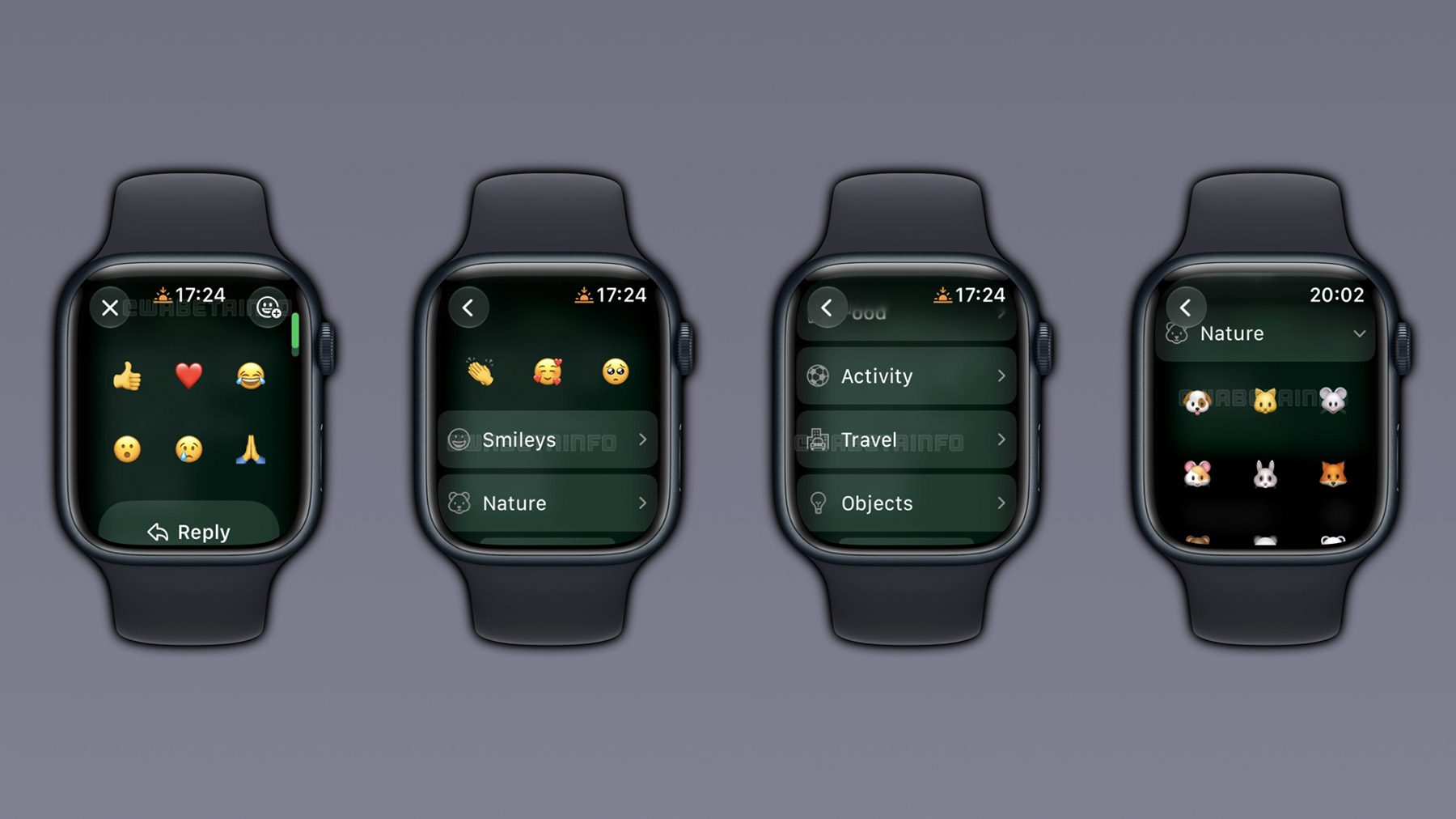
The updated functionality does not replace the familiar interaction pattern but rather expands upon it. Users continue to initiate the reaction process by tapping and holding a specific message within the WhatsApp watchOS interface. While the traditional six-emoji default remains present for rapid selection, the interface now offers a transition to an expanded picker view.
The expanded picker is organized with a focus on accessibility and efficiency, mirroring the structure of the iOS emoji keyboard. It categorizes the library into eight distinct groups: Smileys, Nature, Food, Activity, Travel, Objects, Symbols, and Flags. Additionally, the interface includes a "recently used" section at the top of the picker, allowing for faster access to frequently deployed emojis—a critical feature for wearable devices where minimizing interaction time is essential for battery longevity and user convenience.
From a design perspective, this implementation suggests that WhatsApp has utilized native watchOS components to ensure smooth scrolling and responsive input. By allowing users to tap into specific categories to filter the massive library of emojis, the developers have mitigated the potential for "interface clutter" that often plagues small-screen applications.
Broader Context and Industry Implications
The expansion of WhatsApp’s emoji functionality on the Apple Watch is part of a broader industry trend toward "device independence." As users increasingly rely on wearables for real-time communication, developers are under pressure to provide feature parity across all form factors.
Data from recent market analyses suggest that the wearable technology sector continues to grow at a compound annual growth rate (CAGR) of approximately 10–12%. For platforms like WhatsApp, which boasts over two billion monthly active users globally, the Apple Watch represents a critical touchpoint. The decision to invest development resources into the watchOS app suggests that Meta views the wearable as a primary, rather than secondary, communication device.
Furthermore, this update addresses a common feedback loop among power users. Since the 2025 launch of the full-featured app, user sentiment consistently highlighted the emoji limitation as a primary point of friction. By addressing this, Meta is not only improving the user experience but also increasing the "stickiness" of its platform within the Apple ecosystem. This is a strategic move to ensure that users do not switch to competing messaging services that might offer more robust watch-based features, such as Apple’s own iMessage, which has long enjoyed deep integration with watchOS.
Strategic Considerations for Meta
While this update may seem incremental, it reflects the complex engineering challenges inherent in cross-platform development. Designing a functional emoji picker for a 40mm or 45mm display requires careful consideration of touch targets, gesture recognition, and memory management. If an app consumes too much memory or creates a sluggish user interface on a wearable, the operating system may force-close the process to preserve battery life.

The gradual rollout strategy currently employed by WhatsApp is standard practice for the company. By pushing updates to segments of the user base in waves, developers can monitor server-side telemetry and crash reports in real-time, ensuring that the new feature does not adversely impact the performance of the watchOS app. This conservative approach is particularly important for watchOS, where performance overhead is much lower than on mobile or desktop environments.
The Future of Wearable Communication
Looking forward, the integration of the full emoji library serves as a precursor to more advanced features. As watchOS continues to evolve, we can expect to see further enhancements to the WhatsApp experience, potentially including support for rich media previews, more complex group chat management, and perhaps even improved keyboard input methods.
The current update serves as a reminder that the "app gap" between smartphones and wearables is steadily closing. As the processing power of the Apple Watch increases with each hardware iteration—specifically with the S-series chips—the limitations that once prevented full-featured messaging apps from running effectively are vanishing. For the average user, this means that the Apple Watch is evolving from a mere notification mirror into a legitimate communication terminal.
As of the latest reports, the update is being distributed to users globally. Given WhatsApp’s deployment methodology, users who do not see the full emoji picker immediately are advised to ensure their app is updated to the latest version via the App Store on their paired iPhone and to verify that their Apple Watch is running the most recent compatible version of watchOS. While the rollout may take several weeks to reach total saturation, it marks a definitive milestone in the maturity of the WhatsApp Apple Watch application.

Summary of Impact
The expansion of emoji reactions on the Apple Watch is a clear example of the importance of feature parity in modern software development. By listening to user feedback and investing in the refinement of the watchOS interface, Meta is reinforcing its position as a dominant messaging platform. While it may appear to be a simple addition, the capability to access the full library of emojis signifies a shift in how we interact with our digital communications, moving closer to a future where the smartphone is no longer the sole gateway to complex digital interaction. As the industry watches, the success of this update will likely inform how other major platforms handle their own wearable iterations in the coming year.