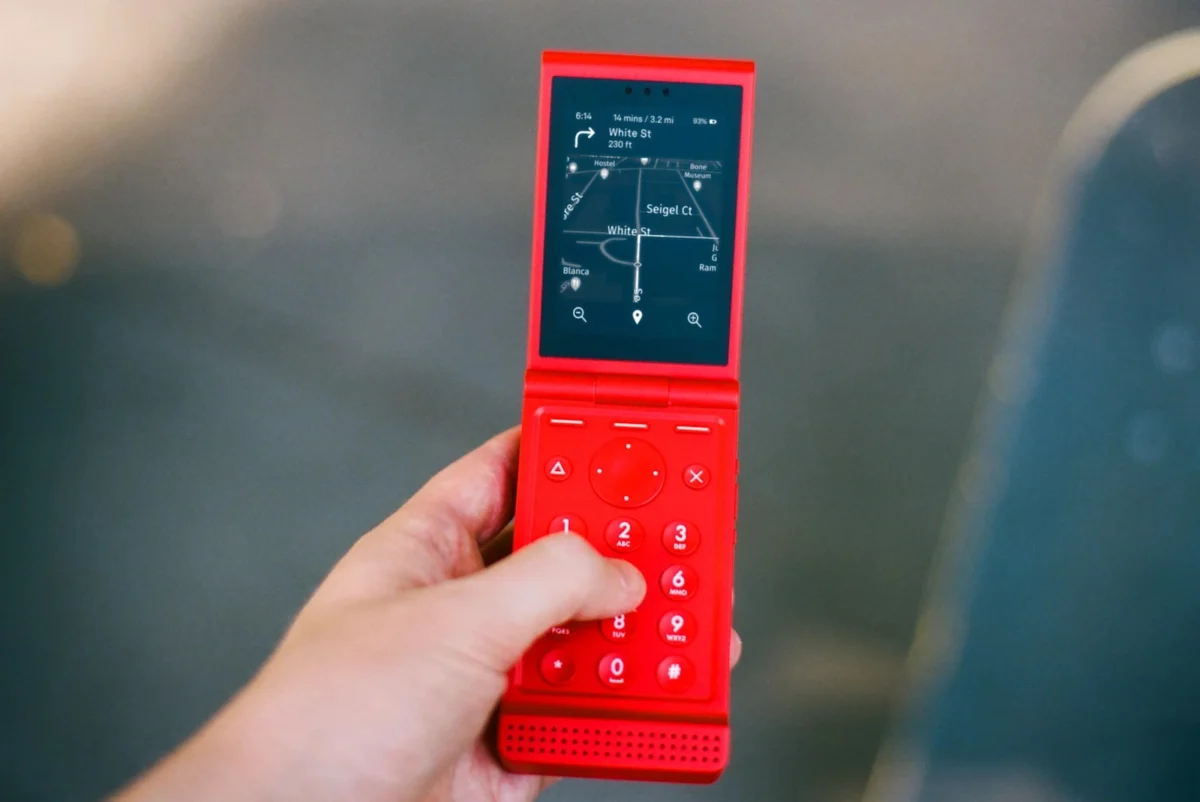
Light, the Brooklyn-based technology company known for its dedication to "intentional" hardware, has officially announced its latest device, the Light Flip. Designed to combat the pervasive nature of digital distraction and the psychological toll of social media, the Light Flip adopts a classic clamshell form factor while integrating modern connectivity and essential utility. Priced at $299 and scheduled for a release in April 2027, the device represents a significant evolution in the company’s mission to provide "phones for humans" rather than "phones for consumers." By stripping away the addictive algorithms of modern smartphones, the Light Flip aims to return the mobile device to its original purpose: a tool for communication and utility that can be put away once the task is complete.
The Return of the Clamshell: Light’s Strategy for Digital Minimalism
The decision to move toward a flip phone design marks a stylistic and functional shift for Light. The company’s previous flagship, the Light Phone II, utilized a minimalist candy-bar design with an E-ink display. The Light Flip, however, leans into the tactile satisfaction and physical "closing" of a device, a gesture that many digital minimalists find symbolic of ending a digital interaction. This form factor also provides physical protection for the screen and prevents accidental pocket-dialing, while maintaining a compact footprint that fits easily into a pocket or bag.
Unlike the high-gloss, glass-heavy designs of mainstream flagships from Apple or Samsung, the Light Flip is built with durability and simplicity in mind. The design is intended to be unobtrusive, moving away from the "attention economy" where devices are designed to be looked at as often as possible. By adopting the flip mechanism, Light provides a clear boundary between being "on" the phone and being present in the physical world.
Technical Specifications and Hardware Innovation
While the Light Flip is marketed as a "dumbphone," its internal specifications are surprisingly robust for a device intended for minimal use. The move from E-ink to a 2.8-inch OLED display is one of the most notable changes. While E-ink was praised for its paper-like quality and low power consumption, it suffered from slow refresh rates that made navigation and texting cumbersome for some users. The OLED screen on the Light Flip promises a more responsive user interface while maintaining a high-contrast, black-and-white aesthetic that discourages prolonged visual engagement.
Key hardware features include:
- Connectivity: A 5G/4G LTE antenna ensures the device remains compatible with modern network infrastructures as carriers continue to phase out older 2G and 3G bands.
- Imaging: For the first time in the company’s history, the device includes a 12MP camera. This is a response to long-standing feedback from the Light community, where users expressed a desire to capture spontaneous memories without needing a separate camera or a distracting smartphone.
- Storage: The device comes with 128GB of internal storage, an unusually high amount for a minimalist phone, likely intended to support offline music libraries and high-resolution photos.
- Audio: In a nod to traditionalists and audiophiles, the Light Flip retains a 3.5mm headphone jack, alongside Bluetooth capabilities for wireless peripherals.
- Battery and Sustainability: The device offers approximately 1.5 days of battery life. Critically, the battery is user-replaceable, a feature that aligns with growing global "Right to Repair" movements and ensures the device can be maintained for years rather than being discarded when the lithium-ion cell degrades.
A History of Intentionality: The Evolution of Light Devices
To understand the Light Flip, one must look at the chronology of the Light brand. Founded by Joe Hollier and Kaiwei Tang, Light launched its first product via a Kickstarter campaign in 2015. The original Light Phone was a credit-card-sized device that could only make and receive calls. It was designed to be a "companion" to your primary smartphone, used during weekends or evenings away from work.
In 2018, the company introduced the Light Phone II, which added messaging, an alarm, and a few "tools" like a calculator and a simple music player. It moved away from being a mere companion and toward being a primary device for those willing to commit to a minimalist lifestyle. The Light Phone II utilized an E-ink screen, which became the brand’s signature but also its primary limitation for users who found the lag frustrating.
The Light Flip, arriving nearly a decade after the original concept, represents the "Goldilocks" of the minimalist phone world. It provides enough modern convenience—such as a camera and 5G—to be a viable daily driver, without the "infinite scroll" of Instagram, TikTok, or mobile web browsers.
The Software Experience: Tools Over Distractions
The Light Flip runs on LightOS, a proprietary, custom-built operating system. The philosophy of LightOS is built around the concept of "Tools." Unlike an App Store, which encourages the download of third-party software designed to capture user attention, LightOS provides a curated list of utilities that the user can choose to enable or disable via a web-based dashboard.
Current and planned tools for the Light Flip include:

- Navigation: A simplified GPS tool for directions without the clutter of business advertisements or reviews.
- Music/Podcasts: A player that allows users to upload their own files or sync specific playlists.
- Voice Memo: For quick notes on the go.
- Calendar and Alarm: Basic productivity essentials.
- Weather: A simple forecast tool.
The company has noted that support for third-party services like ridesharing (Uber/Lyft) and music streaming (Spotify/Apple Music) is a work in progress. Because these services often require complex APIs and frequently updated software, integrating them into a minimalist OS without compromising privacy or simplicity remains a technical challenge.
The Growing Market for Digital Detoxification
The announcement of the Light Flip comes at a time of increasing scrutiny regarding the impact of smartphones on mental health. Recent studies have linked excessive social media use and "doomscrolling" to increased rates of anxiety, depression, and sleep deprivation, particularly among younger generations. This has sparked a "Digital Detox" movement, where consumers are actively seeking ways to reduce their screen time.
Market data suggests a burgeoning niche for "feature phones" or "dumbphones." While the broader smartphone market has reached saturation, the segment for minimalist devices has seen steady growth. Competitors like Punkt and Mudita have also entered the space, but Light has maintained a loyal following due to its design-forward approach and its refusal to sell user data. The $299 price point positions the Light Flip as a premium tool, targeting professionals and creatives who view their time and attention as valuable commodities worth protecting.
Sustainability and Longevity: The User-Replaceable Battery
One of the most significant logistical features of the Light Flip is its user-replaceable battery. In an era of "planned obsolescence," where most smartphones are sealed with industrial adhesives to prevent repair, Light’s decision to allow users to swap their own batteries is a bold statement.
This move is likely influenced by new European Union regulations that will require all handheld devices to have replaceable batteries by 2027. By integrating this now, Light ensures that the Flip is future-proof and environmentally conscious. A phone that lasts five to seven years because its battery can be easily refreshed is significantly more sustainable than a flagship that is traded in every 24 months.
Timeline to Launch and Market Positioning
The Light Flip is currently available for pre-order, but customers will have a significant wait ahead of them. The projected shipping date of April 2027 suggests that the device is still in the final stages of hardware refinement and software optimization. For a small independent firm like Light, long lead times are often necessary to secure supply chains and ensure that the custom OS is bug-free upon arrival.
The 2027 release date also places the Light Flip in a future landscape where 6G may be on the horizon and 5G will be the absolute standard. By including 5G capabilities now, Light is ensuring that the device will not become a "brick" shortly after it reaches consumers’ hands.
Broader Implications and Industry Outlook
The Light Flip is more than just a piece of consumer electronics; it is a critique of the current state of the tech industry. As mainstream manufacturers race to integrate Generative AI and even more immersive displays into their devices, Light is moving in the opposite direction. The company is betting on the idea that there is a "point of diminishing returns" for smartphone features, where more technology actually leads to a lower quality of life.
Industry analysts suggest that the success of the Light Flip could influence larger manufacturers to offer "minimalist modes" that go beyond current "Do Not Disturb" settings. However, as long as the business models of tech giants are built on advertising revenue and data collection, a truly minimalist experience is unlikely to come from the mainstream.
For the "Light" community, the Flip represents a path back to a world where the phone is a servant rather than a master. By offering a 12MP camera and 5G in a nostalgic flip form factor, Light may have finally found the balance required to move minimalist phones from a niche hobby to a practical reality for the modern professional. As the April 2027 launch approaches, the tech world will be watching to see if the "less is more" philosophy can truly sustain a long-term presence in a world addicted to "more."