The intersection of academic metallurgy and the practical craft of bladesmithing has historically been a site of both friction and profound discovery. While metallurgists utilize controlled laboratory environments, advanced computer modeling, and standardized testing to understand the behavior of iron and carbon, knifemakers operate in the realm of empirical application, often discovering nuances that escape theoretical models. Dr. Larrin Thomas, a PhD metallurgist and author of "The Story of Knife Steel," has frequently highlighted that while scientific control is vital, the "practical experience of the smith" has, on several key occasions, identified material properties and behaviors that the scientific community initially overlooked or misunderstood.
The Evolution of Toughness Testing: From "Damned Good Stuff" to the Izod Test
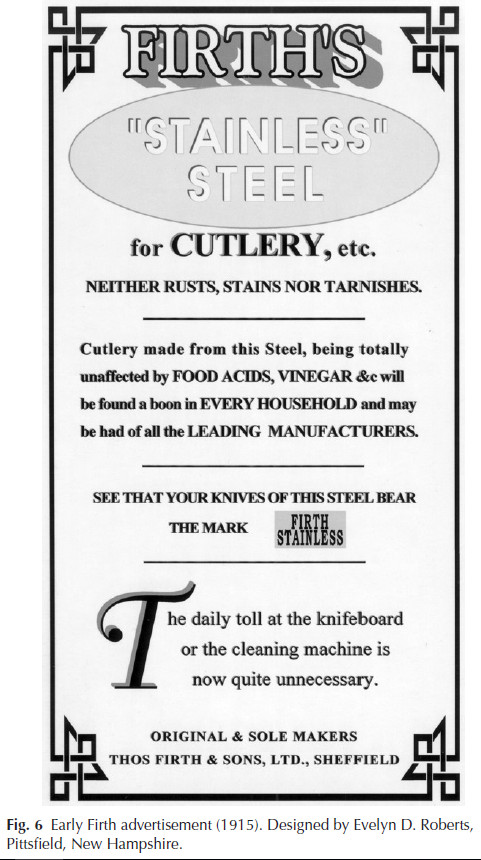
In the early 20th century, the divide between the laboratory and the forge was stark. Harry Brearley, the researcher credited with inventing stainless steel between 1912 and 1914, was a rare bridge between these worlds. Having grown up the son of a steelworker before becoming a professional chemist, Brearley often noted that the "snobbish intellectual pride" of scientists frequently smothered aspects of metallurgy they did not fully grasp.
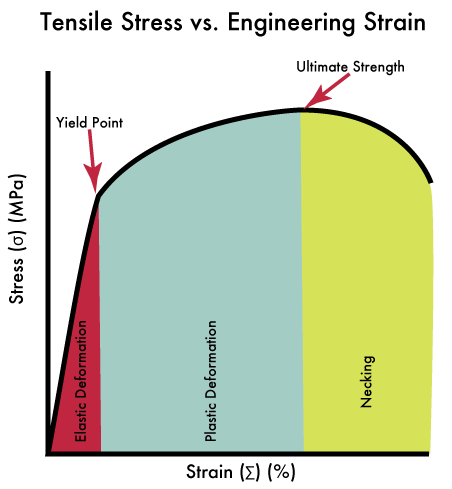
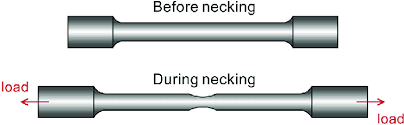
One of the most significant contributions knifemakers and blacksmiths made to the field was the conceptualization of impact toughness. For decades, the primary method for metallurgists to test steel was the tensile test. This involved slowly pulling a steel specimen until it elongated and eventually snapped, providing data on yield strength (the point of permanent deformation) and ultimate tensile strength. However, this slow-loading test failed to explain why certain steels that appeared "strong" in the lab would shatter instantly when struck with a hammer or dropped on a hard surface.
Blacksmiths had long employed a primitive but effective "nick-and-break" test. A smith would notch a bar of steel and break it with a heavy blow. Based on the resistance felt in their muscles and the appearance of the fractured grain, they categorized the steel into two informal but vital categories: "rotten" or "damned good stuff" (D.G.S.).
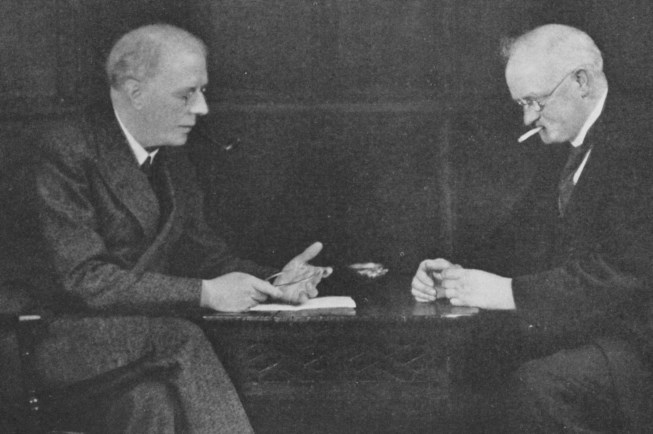
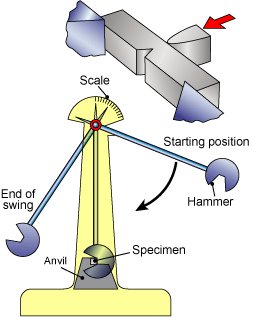
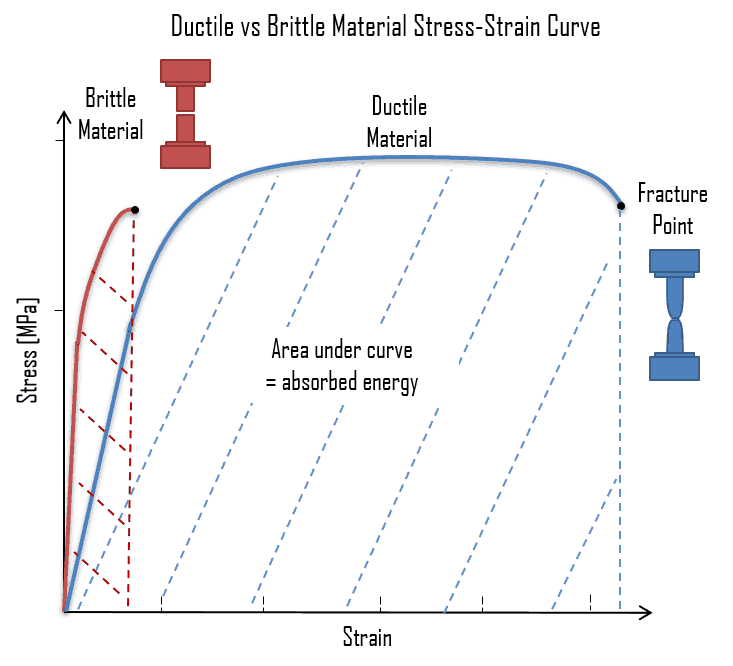
It was not until Edwin Izod, an engineer in Rugby, England, sought to quantify this phenomenon that the scientific community caught up. In 1903, Izod observed that two pieces of steel with identical chemical compositions and tensile test results performed radically differently in the field. Recalling the blacksmith’s method, he developed a pendulum hammer to measure the energy absorbed during a high-speed impact. This led to the Izod impact test (and later the Charpy test), which remains a global standard. This discovery proved that "strain rate"—the speed at which stress is applied—changes the fundamental behavior of steel. A knife edge might flex during a slow bend (ductility) but chip during a chop (brittleness), a reality smiths knew by "feel" long before it was plotted on a graph.
The Mystery of Frank J. Richtig: Showmanship and the Science of "Bamboozlement"
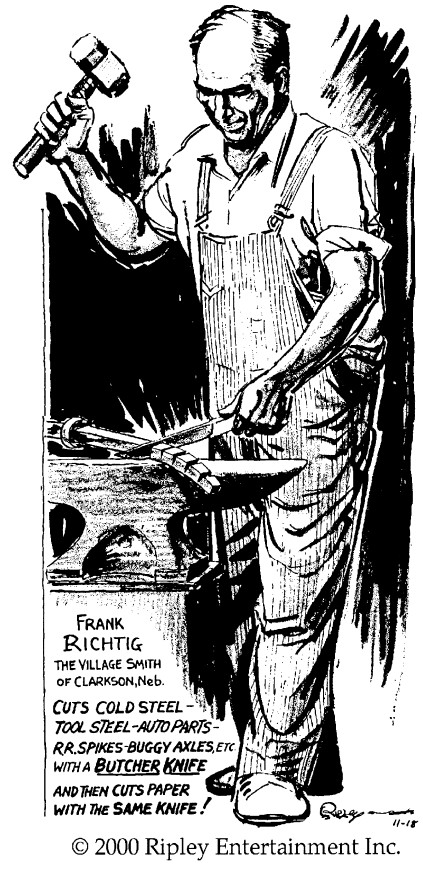
In the 1930s, a Nebraska blacksmith named Frank J. Richtig became a national sensation for his "Believe It or Not" demonstrations. Richtig would take one of his hand-forged knives and hammer it through a cold railroad spike or a steel axle. After the blade had successfully cleaved the industrial steel, he would use the same knife to shave hair or slice through thin newspaper, showing no damage to the edge.
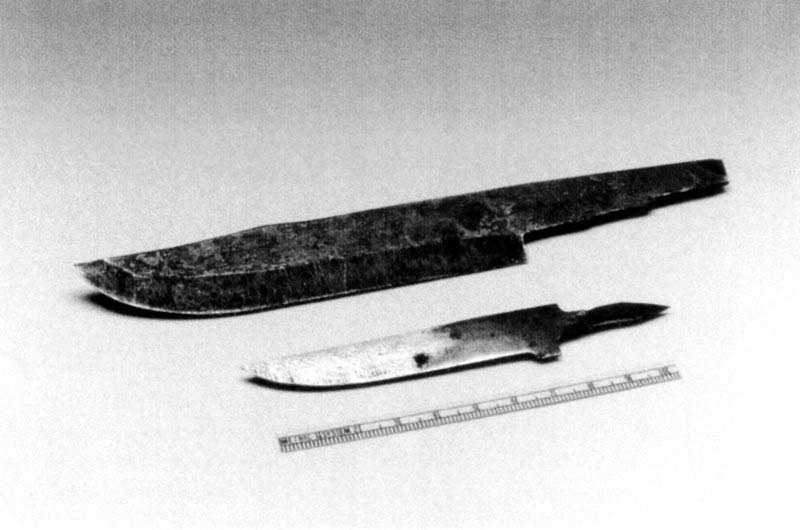
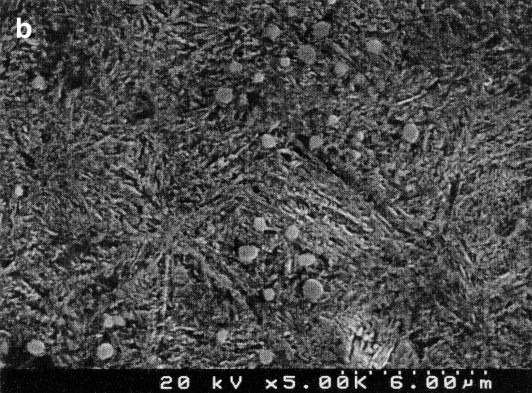
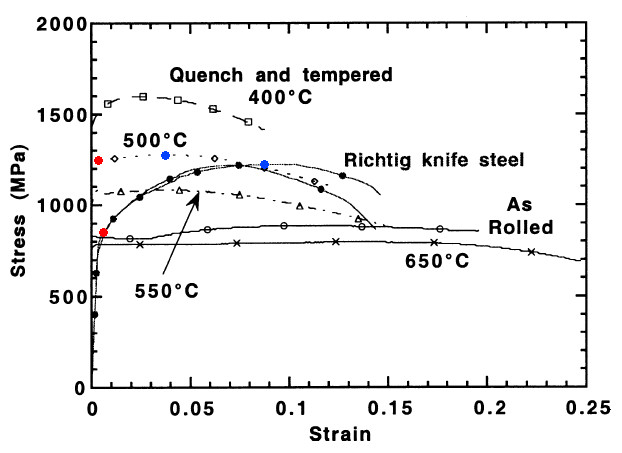
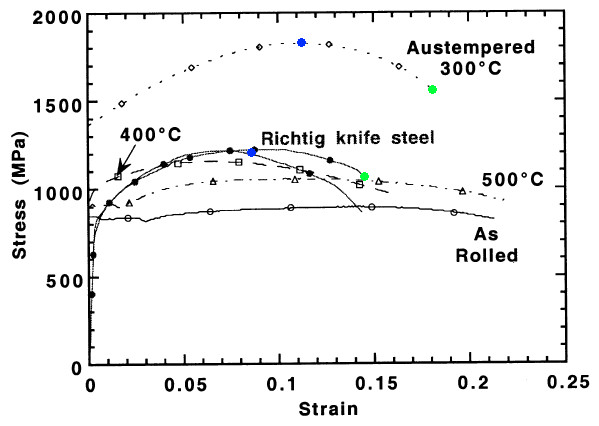
For decades, this feat was considered a metallurgical miracle. Richtig claimed to have a "secret tempering process" that he refused to share. In 2000, a research paper by Jeffrey Wadsworth and Donald R. Lesuer attempted to analyze Richtig’s knives using modern equipment. They hypothesized that Richtig had pioneered "austempering," a process that creates a bainite microstructure—a tough, needle-like structure in steel—well before the process was commercially understood.
However, a follow-up study in 2015 and subsequent analysis by Dr. Thomas revealed a more complex truth. Richtig’s knives were made of common 1095 or W1 high-carbon steel, and their performance varied wildly in hardness testing, ranging from 39 to 57 HRC (Rockwell Hardness Scale). The 2000 study had been "bamboozled" by two factors:

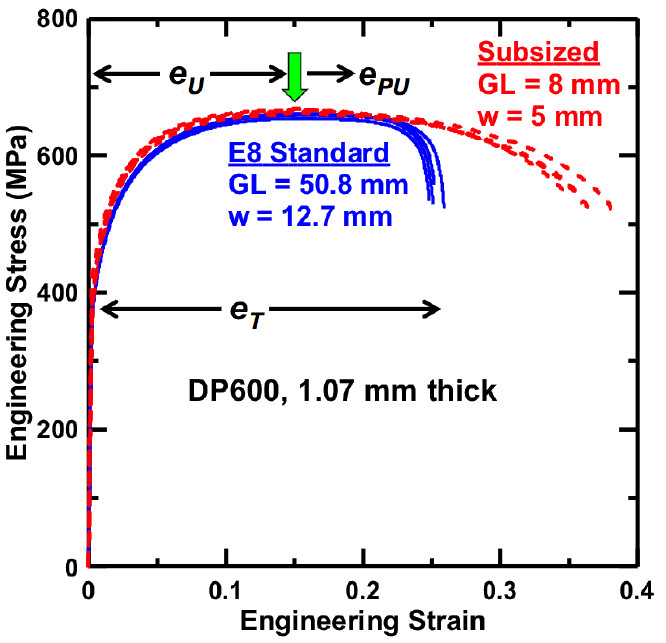
- Specimen Size Discrepancies: The researchers used sub-size tensile specimens, which can artificially inflate ductility measurements compared to standard samples.
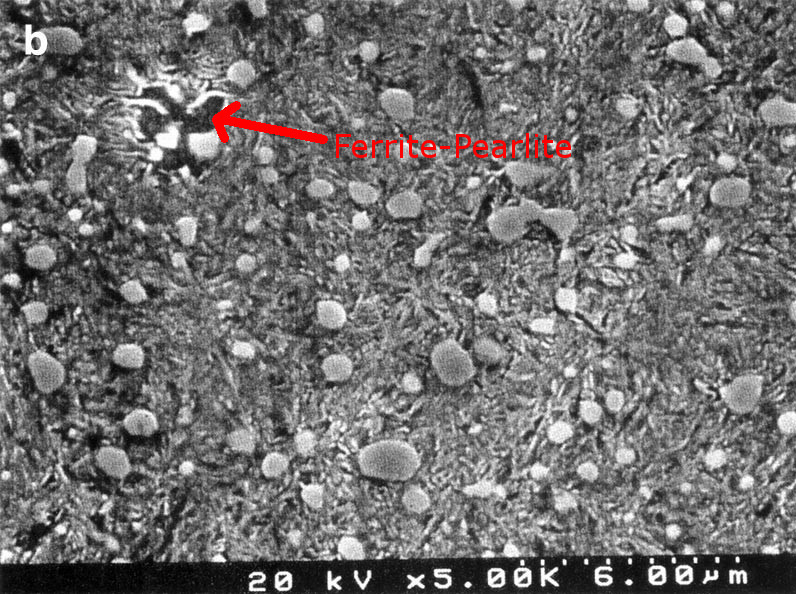
- Under-Hardening: The knife that showed the most "miraculous" properties was actually under-hardened, containing large amounts of soft pearlite and ferrite. This made the steel extremely ductile and difficult to break, but it would have lacked the edge retention required for a high-performance kitchen knife.
Ultimately, Richtig’s "secret" was not a revolutionary microstructure, but a combination of geometry and skill. He ground the edges of his demonstration knives thicker to withstand the impact of the hammer and had mastered the specific angle of attack needed to cleave steel without lateral torque. While he did not "beat" metallurgy with a new discovery, he successfully challenged the scientific community’s ability to distinguish between material properties and clever engineering, proving that a craftsman’s understanding of his tools can often outpace a scientist’s interpretation of data.
Questek M60S: When Computer Models Fail the Field Test
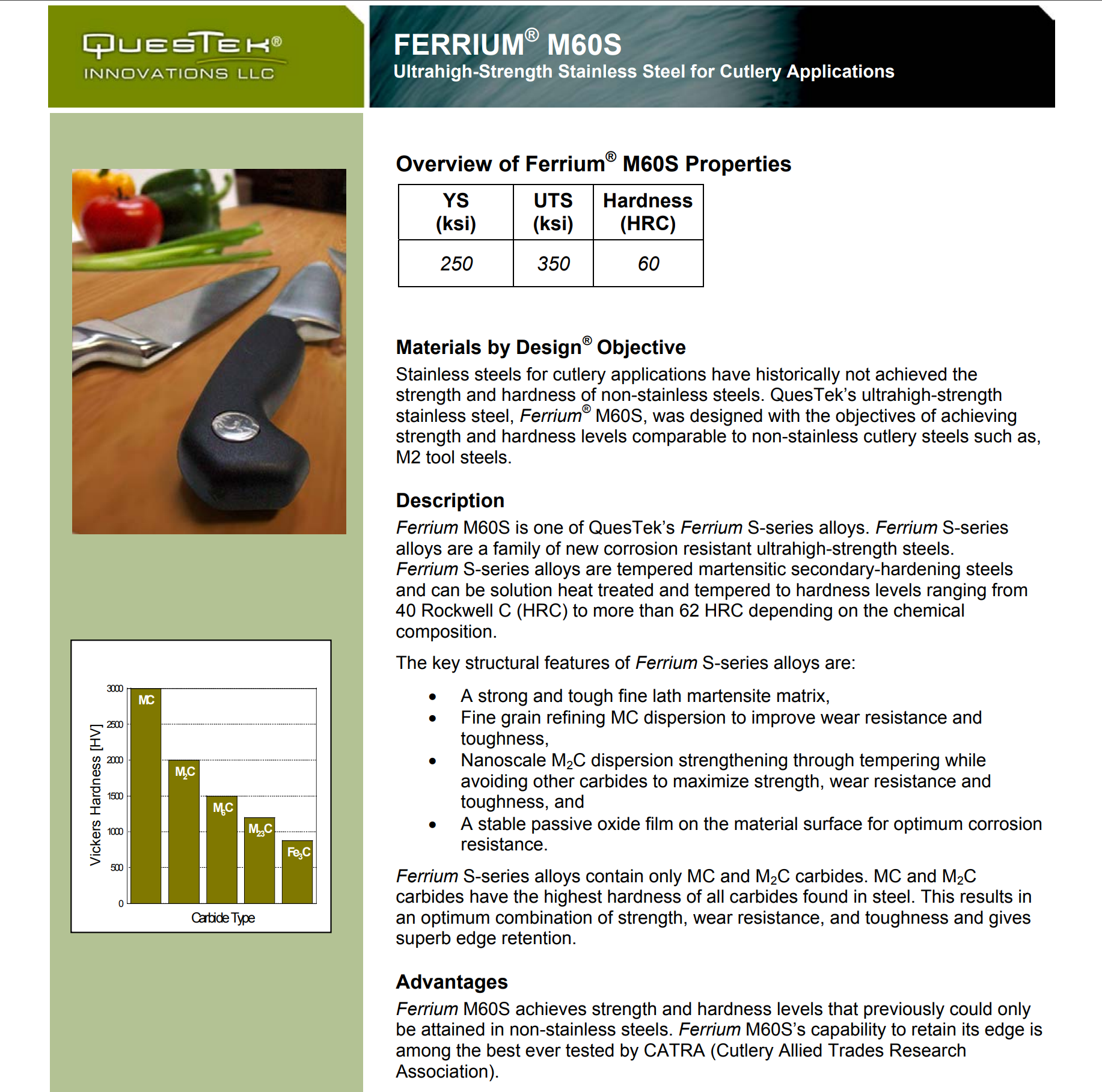
By the early 21st century, metallurgy had entered the age of "Integrated Computational Materials Engineering" (ICME). In 2003, a company called Questek announced Ferrium M60S, a steel designed entirely by computer simulations to be the "ultimate" knife material. It promised high hardness (60+ HRC), stainless properties, and extreme toughness.
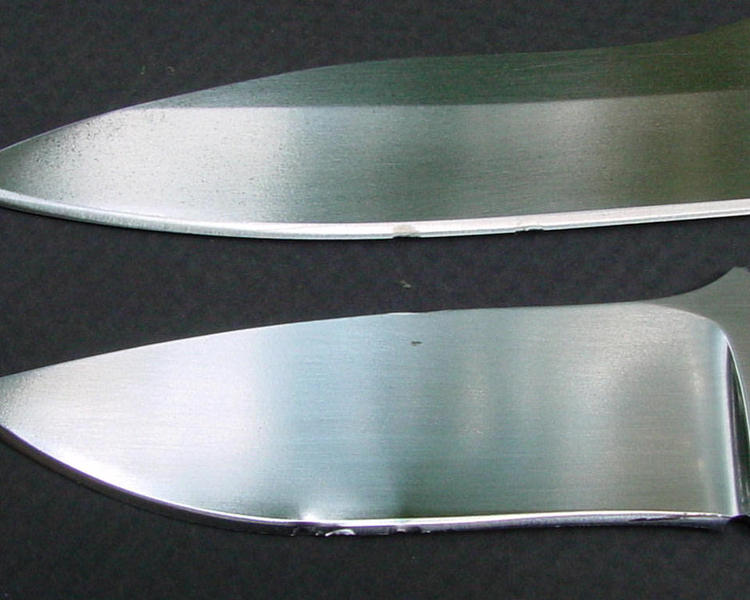
On paper, M60S was a triumph. However, when the steel was placed in the hands of veteran knifemakers like Jerry Hossom, the theoretical model collapsed. During field testing, Hossom found that M60S edges deformed and dented with ease, even when compared to older, less "advanced" steels like 154CM or S30V.
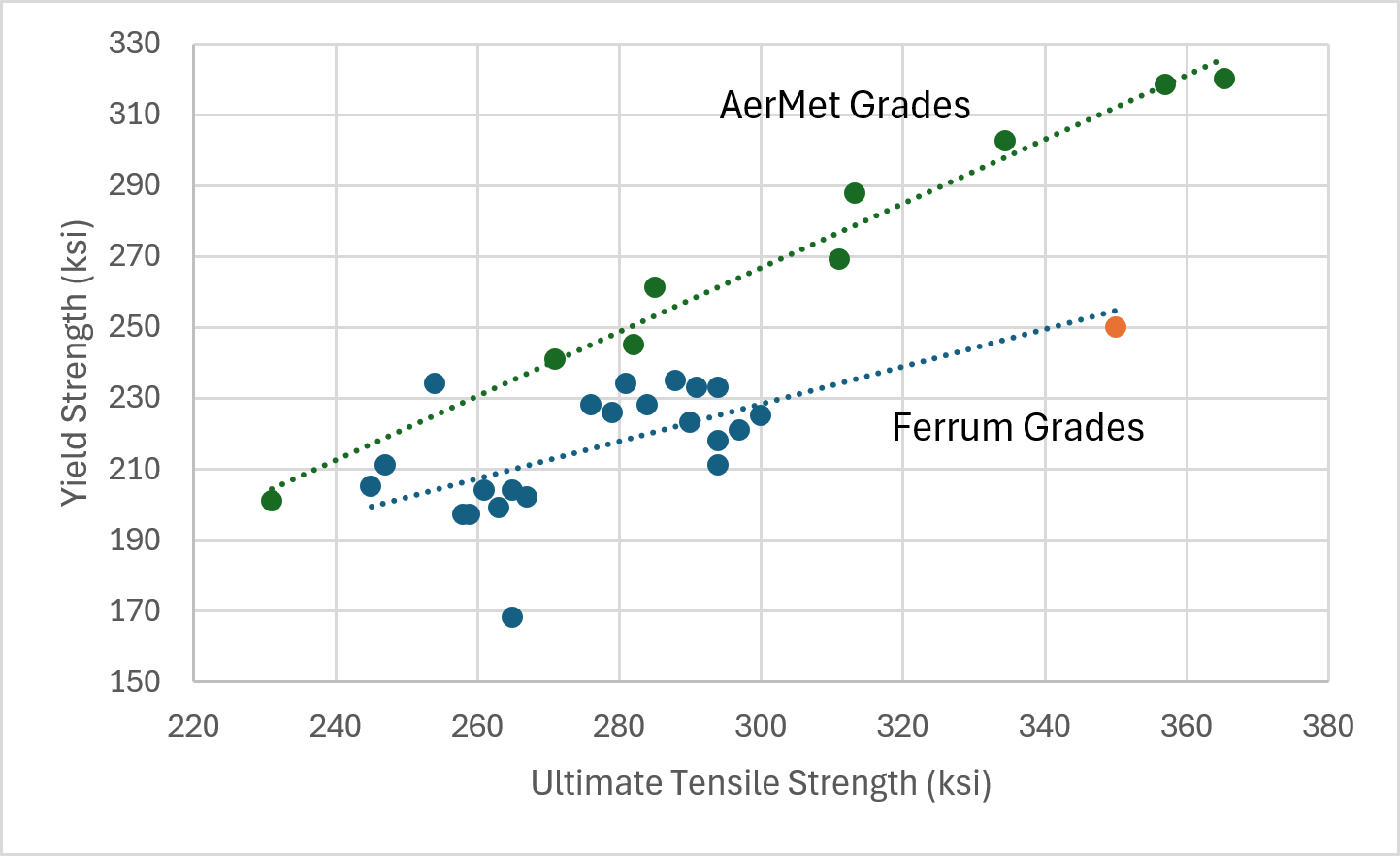
The failure was traced to a phenomenon known as "retained austenite." When steel is quenched, the high-temperature phase (austenite) is supposed to transform into the hard phase (martensite). Questek’s computer models had not fully accounted for the stability of austenite in this specific alloy. While the steel measured 60 HRC on a hardness tester, it had a very low "yield ratio." This meant that the steel would begin to permanently deform (yield) at much lower stress levels than expected.
Professor Greg Olson, one of the inventors, later admitted that the "denting of cutting edges" was a result of this early yielding. In this instance, the knifemaker’s practical "chopping test" served as a corrective to the world’s most advanced computer simulations. It proved that hardness (resistance to penetration) is not a perfect proxy for yield strength (resistance to deformation), a distinction that is now more carefully considered in modern knife steel design.
The Power of Collaboration: Wootz and Damascus Steel
The most productive relationship between these two disciplines occurred between bladesmith Al Pendray and metallurgist John Verhoeven. For centuries, the secret of "Wootz" (true Damascus steel), known for its distinct watery patterns and legendary sharpness, had been lost to history.
Scientists had tried for years to replicate the pattern by focusing on chemical composition alone, but they failed to achieve the specific carbide banding seen in ancient artifacts. Al Pendray, working in his Florida shop, discovered that the pattern was not just about what was in the steel, but how it was heated and forged. He found that specific "micro-segregation" of impurities like vanadium or molybdenum was required to act as a template for the carbon.
Verhoeven provided the laboratory analysis to explain why Pendray’s methods worked, while Pendray provided the "hand-feel" and forging cycles that the lab couldn’t replicate. Together, they proved that the ancient smiths were performing a sophisticated form of thermomechanical processing that modern science had dismissed as myth.
Implications for Modern Metallurgy
These historical intersections demonstrate that metallurgy is not a solved science. The practical testing conducted by knifemakers—chopping wood, slicing abrasive ropes, and performing lateral flex tests—often reveals "edge cases" (both literal and figurative) that standard industrial tests miss.
The contemporary study of pattern-welded Damascus is a prime example. While many metallurgists previously dismissed Damascus as purely decorative, recent studies (supported by knifemakers like Devin Thomas) have explored the "Damascus cutting effect." Testing has shown that combinations of hard and soft steels (such as 1095 and nickel) can create a micro-serration effect as the softer layers wear away, allowing the blade to out-cut homogenous steels in specific slicing tasks.
The broader impact of these findings is a move toward more holistic material science. Modern steel development now increasingly incorporates "field-use" simulation earlier in the design process. The lesson from Brearley, Richtig, and Questek remains clear: the most advanced laboratory calipers are only as good as the craftsman’s ability to prove the material in the real world. For the field of metallurgy to advance, it must remain humble enough to learn from those who spend their lives at the forge.