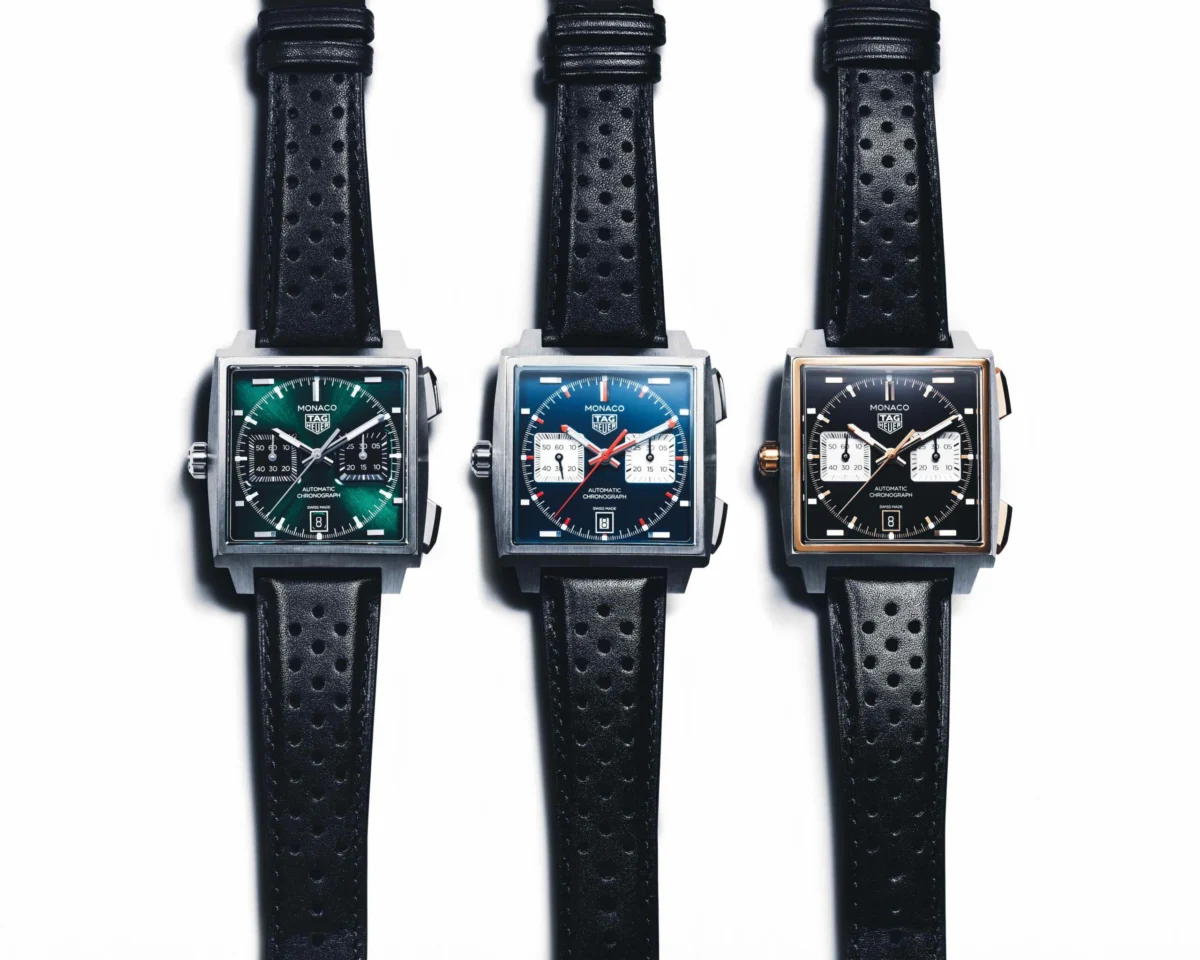
The TAG Heuer Monaco, a timepiece that has long stood as a pillar of avant-garde horology and motorsport heritage, is undergoing a significant evolution this year. In a move that balances historical reverence with contemporary engineering, the Swiss watchmaker has introduced a series of refinements to its flagship square-cased chronograph. The latest iteration of the Monaco emphasizes a transition toward high-tech materials and ergonomic optimization, ensuring that the watch remains as functional on the wrist as it is striking in a display case. By moving to a 39mm titanium construction and integrating the in-house Calibre TH20-11, TAG Heuer is signaling a new era for a model that first disrupted the industry in 1969.
The Shift to Grade 2 Titanium and Enhanced Ergonomics
The most immediate departure from tradition in the new Monaco is the material composition of its case. While the Monaco has historically been associated with the weight and luster of stainless steel, the new models utilize Grade 2 titanium. This choice is not merely aesthetic; titanium offers a superior strength-to-weight ratio, making the 39mm case significantly lighter and more comfortable for daily wear. Grade 2 titanium is also known for its hypoallergenic properties and its ability to resist corrosion, qualities that align with the Monaco’s identity as a high-performance tool watch.
Beyond the material, TAG Heuer’s design team has focused heavily on the ergonomics of the case. The Monaco has often been described by collectors as "slab-sided" due to its uncompromising square geometry. To address this, the new design features a smaller, round central section that subtly curves toward the edges. This curvature allows the watch to sit closer to the wrist, lowering the center of gravity and improving the overall fit. Furthermore, the edges of the case have been reinforced, providing a sharper, more defined silhouette that catches the light while maintaining the ruggedness required of a racing chronograph.
The sapphire crystal has also seen a redesign. Moving toward a "squarer" shape that mimics the high-domed acrylic crystals of the late 1960s, the new sapphire glass provides better protection while enhancing the three-dimensional view of the dial. This "Glassbox" style, which TAG Heuer has successfully implemented in its recent Carrera releases, brings a vintage warmth to a modern, technical package.
Precision Engineering: The Calibre TH20-11 Movement
At the heart of the new Monaco is the Calibre TH20-11, an automatic in-house movement that represents the pinnacle of TAG Heuer’s current mechanical expertise. This movement is an evolution of the Heuer 02, refined under the direction of Carole Kasapi, TAG Heuer’s Movements Director. One of the most notable technical achievements of the TH20-11 is its 80-hour power reserve, a "weekend-proof" specification that allows the wearer to set the watch down on a Friday evening and find it still running accurately on Monday morning.
The movement features a bi-directional winding system, which increases the efficiency of the oscillating weight, ensuring the mainspring is energized more quickly during regular movement. Architecturally, the Calibre TH20-11 adopts a bi-compax layout. This configuration places the subsidiary counters at the three and nine o’clock positions, with a date window neatly integrated at six o’clock. This specific layout is a deliberate nod to the original Calibre 11 movement found in the 1969 Monaco, which famously placed the crown on the left side of the case to signal that the watch did not need manual winding. While the new version retains the modern right-side crown for ease of use, the dial symmetry honors its predecessor’s DNA.
Aesthetic Refinements and Dial Variations
TAG Heuer has introduced the updated Monaco in three distinct colorways, each catering to a different facet of the model’s personality. The "Monaco Blue" remains the flagship option, serving as a direct link to the original 1133B model worn by Steve McQueen. The second option is a deep, dark green, reflecting contemporary trends in luxury horology where forest and olive tones have become staples of modern collections. The third option is a classic black dial, which offers a stealthier, more monochromatic appearance, particularly when paired with the matte finish of the titanium case.
Legibility has been a primary focus of these updates. The typography on the dial has been subtly adjusted, and the contrast between the sub-dials and the main dial plate has been sharpened. The use of Super-LumiNova on the indices and hands ensures that the watch remains readable in low-light conditions, a necessity for a watch born out of the 24-hour endurance racing culture of Le Mans.

A Chronology of the TAG Heuer Monaco
To understand the significance of these updates, one must look at the timeline of the Monaco’s development, which is characterized by periods of radical innovation followed by careful preservation.
- 1969: Jack Heuer launches the Monaco 1133B. It is the world’s first waterproof square-cased automatic chronograph, powered by the legendary Calibre 11.
- 1971: The watch achieves global fame when Steve McQueen insists on wearing it during the filming of the movie Le Mans. The blue dial and white sub-dials become an instant icon of "cool."
- 1970s-1980s: The Monaco faces challenges during the "Quartz Crisis." Production is eventually halted as the industry shifts toward battery-powered movements.
- 1998: Under new leadership, TAG Heuer re-launches the Monaco as part of a heritage series. The move is a massive success, proving that there is a deep market for vintage-inspired designs.
- 2004: The Monaco V4 is introduced as a concept, featuring a belt-driven movement and linear mass, showcasing TAG Heuer’s ability to innovate beyond traditional gears.
- 2019: The 50th Anniversary of the Monaco is celebrated with five limited-edition models, each representing a different decade of the watch’s history.
- 2023-2024: TAG Heuer begins integrating the TH20 series movements and experimenting with titanium and skeletonized dials, leading to the current refined 39mm collection.
Market Analysis and Industry Implications
The luxury watch market has seen a distinct shift toward "wearability" and "material science" over the last three years. Collectors are increasingly moving away from oversized, heavy steel watches in favor of pieces that offer high-tech materials like titanium, ceramic, and carbon fiber. By updating the Monaco with a Grade 2 titanium case and improved ergonomics, TAG Heuer is positioning the model to compete with other high-end sports chronographs like the Omega Speedmaster and the Zenith El Primero.
The pricing of the new Monaco, ranging from $9,350 to $10,050, places it firmly in the "accessible luxury" high-end bracket. This pricing strategy reflects the added value of an in-house movement with an 80-hour power reserve and the use of premium materials. Industry analysts suggest that these refinements are part of a broader strategy by TAG Heuer CEO Frédéric Arnault and his successors to elevate the brand’s horological prestige, moving it closer to the "haute horlogerie" space while maintaining its racing roots.
Furthermore, the decision to maintain the 39mm diameter is a strategic move. While many brands have fluctuated between 41mm and 44mm for chronographs, the 39mm square case of the Monaco wears larger than a round watch of the same diameter. By keeping the size consistent but improving the way the case interacts with the wrist, TAG Heuer appeals to both traditionalists who value the original proportions and modern buyers who demand comfort.
Official Responses and Collector Reception
While official statements from TAG Heuer emphasize the "balance of heritage and innovation," early feedback from the watch-collecting community has focused heavily on the improved ergonomics. Many long-time enthusiasts of the brand had previously found the Monaco difficult to wear under a shirt cuff due to its height and sharp corners. The new "curved central section" is seen as a direct response to these consumer insights.
Movement experts have also praised the transition to the TH20-11. The 80-hour power reserve is now considered the industry standard for high-end chronographs, and TAG Heuer’s inclusion of a five-year warranty on these in-house calibres provides a level of security that modern consumers expect when investing five-figure sums in a timepiece.
The Future of the Avant-Garde
The release of the new TAG Heuer Monaco in titanium is more than just a seasonal update; it is a statement of intent. It demonstrates that a design from 1969 can still be relevant in the 2020s if it is allowed to evolve. By focusing on the tactile experience—how the watch feels, how it sits, and how it survives the rigors of daily use—TAG Heuer is ensuring that the Monaco remains a staple of the racing world.
As the brand continues to push the boundaries of materials and movement manufacturing, the Monaco stands as a testament to the vision of Jack Heuer. It remains a watch for those who are unafraid to be different, echoing the original marketing campaign that described the Monaco as a watch for "the bold and the brave." With its new titanium armor and a heart of high-precision Swiss engineering, the Monaco is well-prepared for its next fifty years on the track and on the wrist.
The new TAG Heuer Monaco collection is currently available through authorized boutiques and the brand’s official website, marking a significant milestone in the ongoing legacy of one of horology’s most recognizable silhouettes.