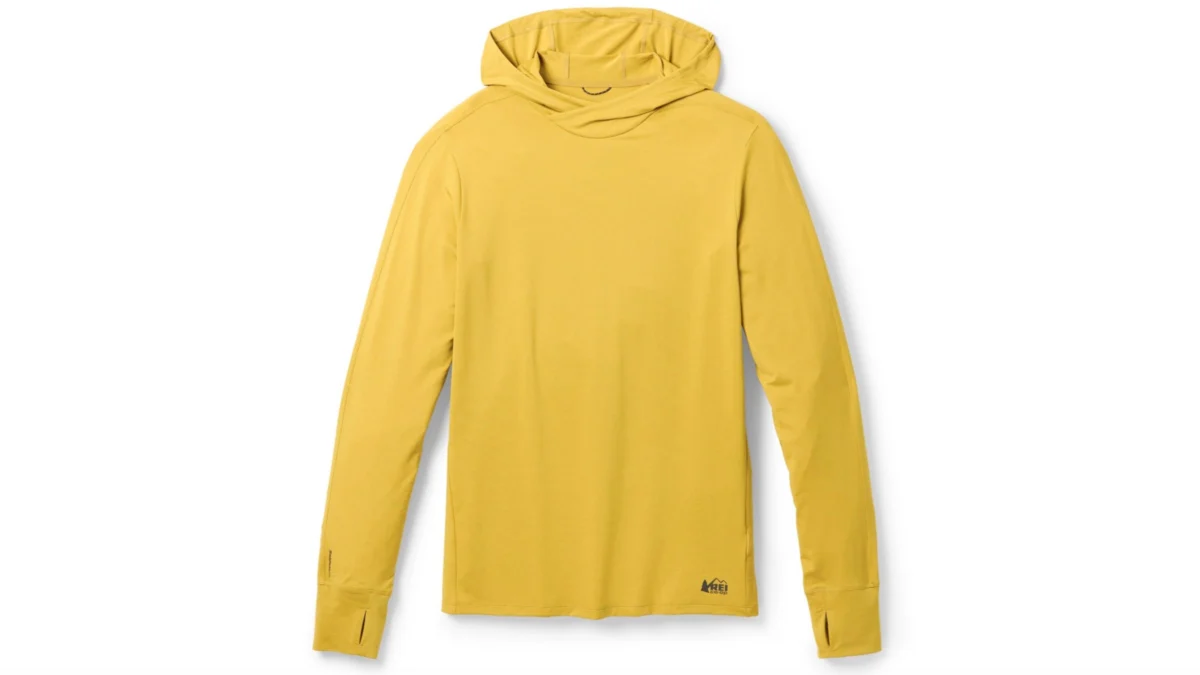
The retail landscape for technical outdoor apparel shifted significantly this week as outdoor giant REI Co-op implemented a steep 50 percent markdown on one of its flagship sun-protection garments, the Sahara Shade Hoodie. Originally retailing at standard market rates for high-performance sun hoodies, the men’s and women’s variants of the apparel are now available to consumers at the promotional price of $30. This notable price reduction arrives precisely at the close of the peak summer trekking season and on the eve of autumn wilderness excursions, prompting heightened interest from backpackers, thru-hikers, and environmental conservationists who rely heavily on ultraviolet (UV) protection during transitional weather periods.
The timing of the discount aligns with a broader industry push to clear seasonal inventory while catering to a specialized demographic of shoulder-season adventurers. Industry observers note that technical sun hoodies have transformed over the last decade from niche desert-hiking gear into ubiquitous foundational layers utilized across diverse biomes, ranging from alpine ridges to humid swamplands. By discounting the Sahara Shade Hoodie to $30, REI Co-op has positioned the garment to compete aggressively against fast-fashion outdoor alternatives while maintaining the technical specifications demanded by serious backcountry travelers.
Main Facts and Technical Specifications
At the core of the REI Co-op Sahara Shade Hoodie’s market longevity is its engineering, designed specifically to balance thermal regulation, moisture management, and comprehensive UV defense. Constructed from a specialized, stretchy polyester-spandex blend, the garment incorporates a certified Ultraviolet Protection Factor (UPF) of 50+, ensuring that the fabric blocks at least 98 percent of harmful ultraviolet radiation. This metric complies with stringent testing standards established by the American Association of Textile Chemists and Colorists (AATCC) and the American Society for Testing and Materials (ASTM).
The architectural design of the hoodie features raglan sleeves, which eliminate traditional shoulder seams to prevent chafing and pressure points caused by heavily loaded backpack shoulder straps. Furthermore, the incorporation of elastane into the fabric matrix provides four-way stretch capabilities, allowing for unrestricted range of motion during high-tempo activities such as scrambling, trekking, and paddling.
Additional technical features integrated into the garment include a generous three-panel hood designed to accommodate climbing or hiking helmets while providing comprehensive facial and neck coverage. Unlike conventional drawstrings that can catch on brush or alpine vegetation, the Sahara Shade utilizes a hidden internal drawstring mechanism for customized hood retention in high winds. Cuffs equipped with integrated thumbholes extend hand protection to the dorsal aspects—an area frequently vulnerable to solar radiation during prolonged exposure at high elevations.
Chronology and Evolution of the Sahara Line
The introduction and refinement of the Sahara product line represent a multi-decade trajectory by REI Co-op to optimize technical sun protection for everyday outdoor consumers. Originating as a series of button-down desert trekking shirts in the late 1990s, the Sahara collection has undergone iterative updates driven by advances in synthetic textile engineering and shifting consumer preferences toward hooded garments.
In the early 2010s, dermatological research linking cumulative solar exposure to skin malignancies accelerated the demand for continuous upper-body UV defense, prompting outdoor brands to pivot away from reliance solely on chemical sunscreens. By 2018, the rise of long-distance thru-hiking—particularly along the Pacific Crest Trail and the Appalachian Trail—popularized the lightweight sun hoodie as the premier garment for weight-conscious backpackers seeking to minimize chemical sunscreen reapplication.
The specific iteration of the Sahara Shade Hoodie currently on promotion at REI was subjected to extensive field-testing protocols across varied geographic terrains prior to its widespread commercial release. Field testers evaluated the garment’s performance across extreme environments, including arid desert sections of the Colorado Trail, high-humidity paddling environments in the Florida Everglades, and variable sub-alpine conditions along Wisconsin’s Ice Age Trail. These longitudinal trials informed the moisture-wicking and quick-drying metrics that define the product’s current specifications, ensuring that the fabric transitions seamlessly from heavy perspiration during ascents to rapid evaporation during rest periods.
Supporting Data and Market Context
The market for sun-protective outdoor apparel has experienced robust, double-digit compound annual growth rates over the past five years, according to retail analytics compiled by the Outdoor Industry Association (OIA). Driven by heightened consumer awareness regarding dermatological health and the increasing frequency of extreme heat events globally, technical sun hoodies have emerged as one of the fastest-growing sub-categories within outdoor softgoods.
Data from textile testing laboratories indicate that synthetic fabrics treated with mechanical UV-blocking weaves—such as those utilized in the Sahara Shade Hoodie—maintain their protective qualities significantly better over time than fabrics reliant strictly on topical chemical UV treatments, which can degrade after repeated industrial laundering and exposure to body oils and saltwater. The polyester-spandex composition of the REI garment specifically addresses the industry-wide challenge of maintaining breathability while achieving a tight structural weave necessary for high UPF ratings.
Financially, the decision to reduce the price of the Sahara Shade Hoodie to $30 reflects standard retail inventory lifecycles within the outdoor cooperative sector. Retailers frequently utilize mid-autumn and late-spring markdown windows to optimize warehouse fulfillment metrics, reduce carrying costs, and prepare retail floors for incoming winter snowsports equipment and cold-weather layering systems. For price-sensitive consumers, these promotional intervals represent strategic opportunities to acquire technical gear at a substantial discount from manufacturer’s suggested retail prices (MSRP).
Official Responses and Industry Implications
While major outdoor retailers rarely comment publicly on individual promotional pricing strategies outside of official press releases, supply chain analysts and retail consultants have noted the broader implications of aggressive discounting on staple gear. Cooperative retail models, such as REI, often leverage high-volume baseline products like the Sahara line to drive brand loyalty and encourage cross-purchasing of complementary backcountry equipment, including hydration packs, trekking poles, and navigational technology.
From an environmental standpoint, the longevity and durability of technical apparel remain critical focus areas for both manufacturers and consumers. The Outdoor Industry Association’s Sustainability Working Group has increasingly emphasized that high-durability synthetic garments—those designed to withstand hundreds of miles of abrasive trail use without structural failure—play a vital role in reducing the lifecycle carbon footprint of consumer textiles. By producing a garment that spans multiple temperature ranges and seasonal activities, manufacturers decrease the consumer’s propensity to purchase single-use or highly specialized single-season garments.
Broader Impact on Outdoor Recreation and Safety
The widespread adoption of high-UPF technical apparel has also altered safety protocols within organized outdoor recreation, guiding practices among wilderness guides, search and rescue personnel, and outdoor educators. Public health organizations, including the Skin Cancer Foundation, frequently endorse the utilization of tightly woven, certified UPF garments as a primary line of defense against solar erythema and long-term dermatological degradation.
As outdoor recreation participation rates continue to stabilize at elevated post-pandemic levels, the accessibility of affordable, high-performance safety gear remains a key metric for equitable access to public lands. The reduction of technical sun-protection equipment to lower price points removes economic barriers for novice hikers and weekend campers who might otherwise hesitate to invest in specialized multi-sport garments.
The promotion surrounding the REI Co-op Sahara Shade Hoodie underscores a mature marketplace where technical performance, ergonomic design, and economic accessibility increasingly intersect. As the outdoor apparel sector looks toward future manufacturing innovations—including bio-synthetic fibers and advanced thermal-mapping weaves—staple garments like the Sahara Shade continue to serve as the baseline benchmark for functional, reliable wilderness equipment.