Samsung is reportedly preparing to refresh its ecosystem of tracking accessories with the upcoming launch of the Galaxy SmartTag 3. Following a three-year hiatus since the release of the popular Galaxy SmartTag 2 in October 2023, recent industry leaks and retailer listings point toward a redesigned device that borrows design language from Samsung’s latest wearable technology while introducing a controversial structural change.
According to leaked renderings and supply chain reports circulating across the tech industry, the forthcoming smart tracker is expected to adopt a "squircle" aesthetic. This shape closely mirrors the geometric styling found on Samsung’s Galaxy Watch lineup. However, early indications suggest that this visual overhaul may come at the expense of practical functionality, specifically concerning how users attach the device to personal belongings.
A New Aesthetic: The Squircle Design and Color Palette
The leaked design specifications indicate that the Galaxy SmartTag 3 will feature a rounded-square or "squircle" chassis, moving away from the elongated, oval-like loop design that defined its predecessor. The device is expected to be manufactured with a thicker, color-accented outer ring encasing a contrasting metallic center.
Retailer listings and industry tipsters suggest that the tracker will launch in at least two foundational colorways: white and black. The black variant is rumored to swap the traditional silver metallic center for a stealthier, brushed-metal dark finish.

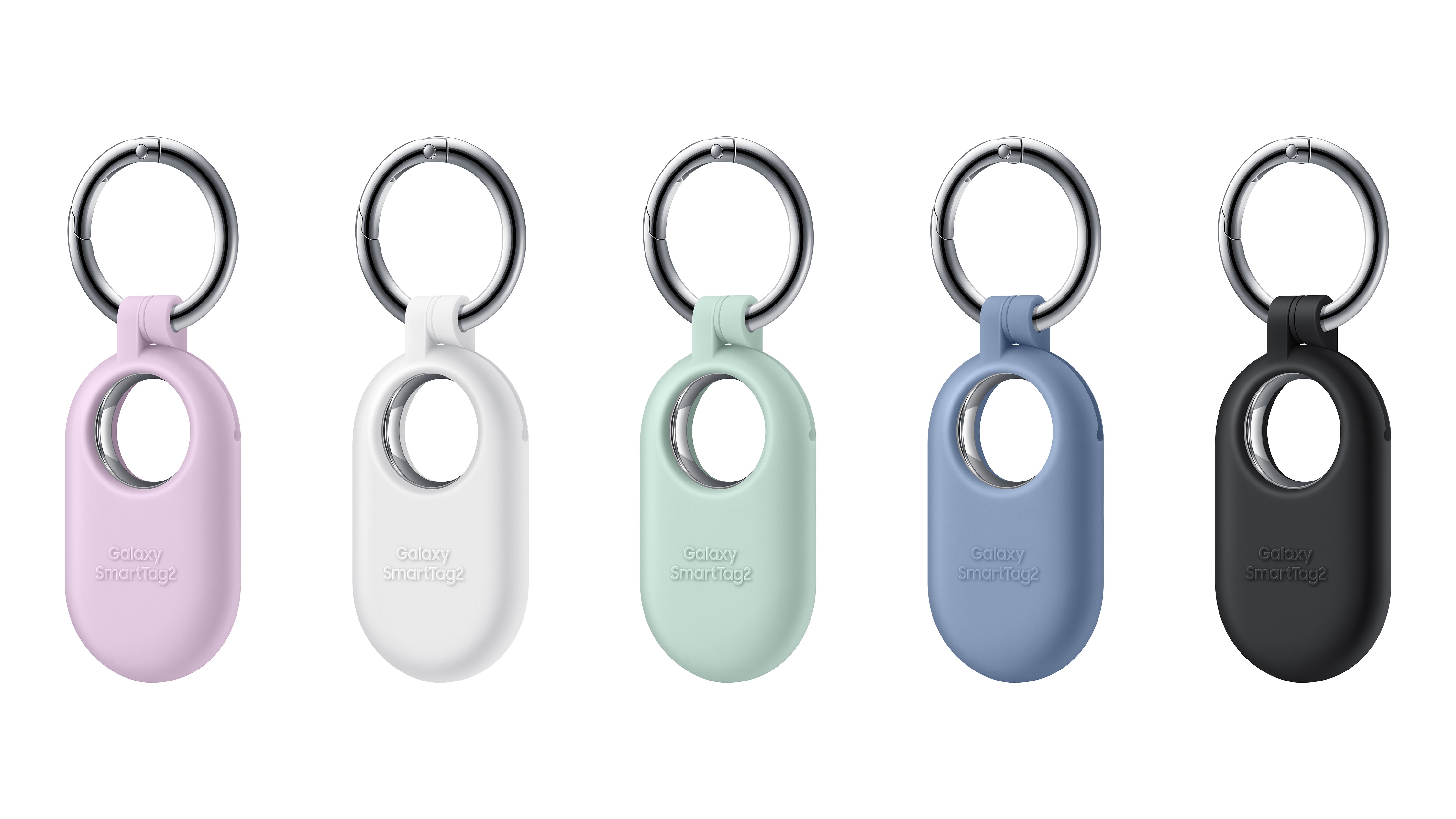
Despite the stylistic modernization, the most notable takeaway from the leaked imagery is the apparent absence of a built-in attachment loop. The Galaxy SmartTag 2 was widely praised for its wide, integrated keyring hole, which allowed users to thread straps or attach keys directly to the tracker without requiring a third-party accessory. If the leaked renderings prove accurate, the SmartTag 3 will lack this native mounting solution. Consumers may be forced to purchase a separate protective case or holder featuring an attachment loop—a design choice that draws direct comparisons to Apple’s AirTag, which similarly requires secondary accessories for standard key-ring or luggage mounting.
Under-the-Hood Improvements: Connectivity and Feature Retention
While the exterior undergoes a significant geometric shift, the internal technology is expected to build upon the robust foundation established by the SmartTag 2. Industry insiders anticipate that Samsung will retain and refine key wireless protocols, including upgraded Bluetooth capabilities and Ultra-Wideband (UWB) technology.
UWB connectivity remains a critical component for precision finding, allowing compatible Galaxy smartphones to pinpoint the exact direction and distance of the tracker within a localized space. Furthermore, the NFC-based Lost Mode is expected to make a return. This feature enables individuals who find a lost SmartTag to scan it using any Near Field Communication-enabled smartphone, pulling up contact information provided by the owner to facilitate recovery.
Battery specifications remain unconfirmed, leaving open questions regarding whether the new form factor will impact the device’s operational longevity. The Galaxy SmartTag 2 achieved widespread acclaim for its impressive battery life, which often spanned upwards of 500 days under normal usage conditions in Power Saving Mode. Maintaining or exceeding this standard will be a critical benchmark for consumer adoption.
Chronology of the SmartTag Lineup
To understand the trajectory of Samsung’s tracking hardware, it is helpful to examine the timeline of the product category:
- January 2021: Samsung launches the original Galaxy SmartTag alongside the Galaxy S21 series, utilizing Bluetooth Low Energy (BLE) technology.
- April 2021: The company releases the Galaxy SmartTag+, introducing Ultra-Wideband (UWB) technology for augmented reality (AR) finding.
- October 2023: Samsung debuts the Galaxy SmartTag 2. The device features a redesigned oval shape with a large integrated metal-lined loop, improved battery efficiency, and an upgraded Lost Mode.
- Late 2023 to Mid 2025: A prolonged product cycle ensues, with no hardware updates introduced to the lineup for nearly three years, leading to increased speculation regarding a third-generation device.
- September 2026: Leaks emerge via industry publications such as SammyGuru and 9to5Google, detailing the purported squircle design, pricing metrics, and the omission of an integrated attachment loop.
Pricing and Market Expectations
Pricing details extracted from early European retailer listings indicate that Samsung aims to maintain competitive positioning within the smart tracker market. In the United States, the Galaxy SmartTag 3 is projected to retail for approximately $30, matching the launch price of its predecessor. However, consumers in European markets may face a modest price adjustment upwards of a few euros, reflecting localized economic shifts, regional taxation, and supply chain adjustments.
The launch window remains a subject of ongoing speculation. Initial rumors pointed toward a late-summer debut alongside the Galaxy S26 FE. However, with the smartphone having launched ahead of schedule, industry observers now suggest that the SmartTag 3 could see a standalone release or arrive alongside upcoming tablet hardware, such as the rumored Galaxy Tab S12 series later in the year.
Industry Implications and Consumer Response
The decision to eliminate the built-in lanyard hole has already sparked debate among technology analysts and consumers. Integrated attachment loops are frequently cited by users as a primary functional advantage of the SmartTag 2 over competitors like the Apple AirTag and Tile trackers, which generally require dedicated sleeves or keychains to secure them to luggage, pet collars, or keys.
By aligning the SmartTag 3 more closely with the minimalist aesthetic of competing products, Samsung risks alienating users who valued the utilitarian nature of the previous generation. Conversely, a sleeker, more compact form factor may appeal to consumers seeking a discreet tracker that fits easily into wallets or specialized minimalist mounts.
As official announcements from Samsung are anticipated in the coming weeks, final confirmation regarding battery specifications, mounting solutions, and exact release dates will clarify whether the company intends to adjust these preliminary design choices based on early consumer feedback.