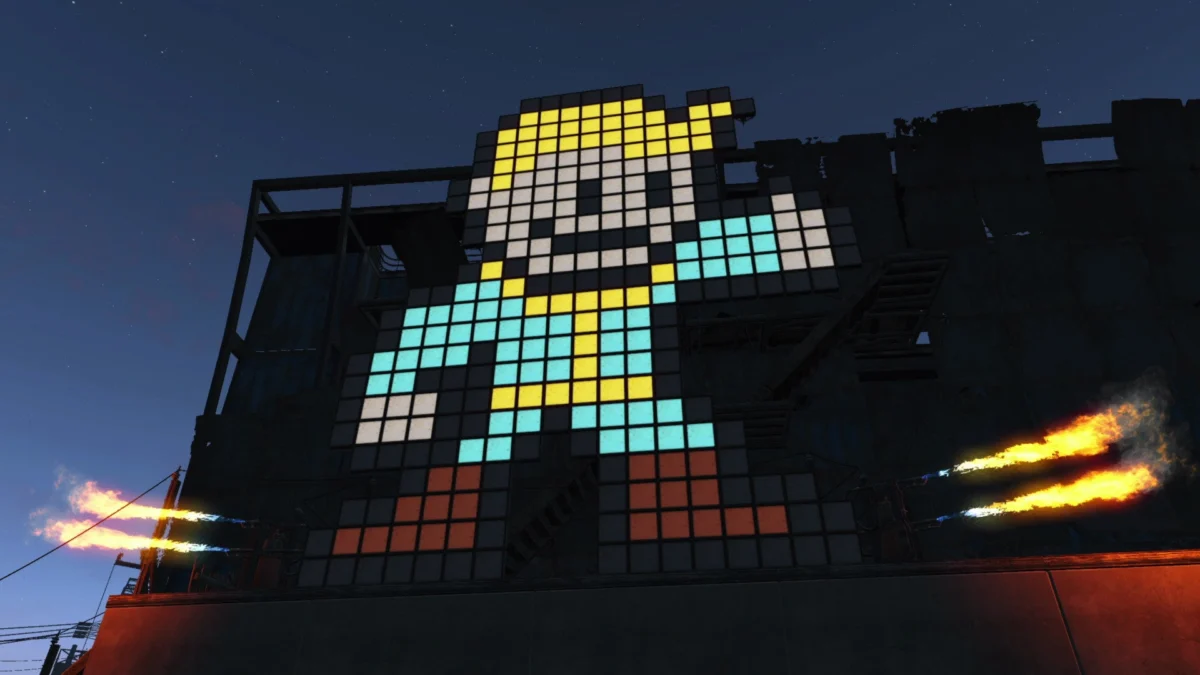
Bethesda Game Studios has issued a comprehensive outline of its future development pipeline, confirming that Fallout 5 has entered pre-production while The Elder Scrolls VI remains the studio’s primary development focus. This significant announcement also revealed plans for remasters of Fallout 3 and Fallout: New Vegas, alongside continued updates for Starfield and a major expansion for Fallout 76. The studio’s communication comes in the wake of recent widespread layoffs across Microsoft’s gaming divisions, including ZeniMax Media, sparking speculation about a strategic push to affirm future content delivery and investor confidence. The forthcoming titles and updates are set to leverage Creation Engine 3, an advanced iteration of Bethesda’s proprietary game engine developed since the launch of Starfield.
A New Era for Bethesda’s Flagship Franchises
The core of Bethesda’s announcement centers on the concurrent development of its two most celebrated role-playing game franchises. The Elder Scrolls VI, first teased in 2018, is explicitly stated as the studio’s "primary development focus," with the majority of its team dedicated to crafting the next chapter in the venerable fantasy series. Concurrently, Fallout 5 has officially entered pre-production, marking the initial conceptual and planning phase for the next mainline installment in the post-apocalyptic RPG saga. This dual-track approach to its tentpole intellectual properties signals an ambitious long-term strategy, reflecting a commitment to expanding both universes.
The studio’s blog post, titled "A Note from Bethesda Game Studios," elaborated on its technological advancements, stating, "Our teams are now developing The Elder Scrolls VI and Fallout 5 on Creation Engine 3, a shared technology platform we’ve been building since Starfield’s launch. It allows our teams to support multiple projects simultaneously with new tools, rendering, and systems that define our games." This emphasis on a unified, evolved engine is critical, suggesting a foundational improvement aimed at streamlining development across diverse projects and potentially reducing the lengthy gaps between major releases that have historically characterized Bethesda’s production cycles.
Strategic Context: Microsoft’s Influence and Recent Layoffs
This detailed roadmap emerges against a backdrop of significant shifts within the broader gaming industry, particularly following Microsoft’s acquisition of ZeniMax Media (Bethesda’s parent company) in 2021 for an estimated $7.5 billion. The acquisition integrated Bethesda’s revered studios and IPs into the Xbox ecosystem, promising enhanced resources and broader reach. However, recent months have seen a wave of industry-wide layoffs, with Microsoft itself announcing the elimination of 1,900 positions across its Xbox, Activision Blizzard, and ZeniMax divisions in January 2024. These workforce reductions, impacting approximately 8% of the company’s gaming unit, have raised concerns about job security and project stability within affected studios.
Industry analysts suggest that Bethesda’s comprehensive update serves multiple strategic purposes. Firstly, it aims to reassure fans and investors about the long-term health and productivity of the studio following the layoffs, demonstrating a clear vision and active development across its key franchises. Secondly, it could be a directive from Microsoft to provide transparency and bolster confidence in its content pipeline, especially as the company navigates integration challenges post-acquisition and faces increasing scrutiny over its return on investment in gaming. The blog post’s tone, which underscores deep investment in existing worlds and bringing games to players "sooner," can be interpreted as a direct response to these pressures.
The Creation Engine’s Evolution and Technical Ambitions
The announcement of Creation Engine 3 as the foundation for The Elder Scrolls VI and Fallout 5 is a pivotal detail. Bethesda’s Creation Engine has been the backbone of its major RPGs for over a decade, first debuting with The Elder Scrolls V: Skyrim in 2011, followed by Fallout 4 in 2015, and most recently, Starfield in 2023. While renowned for enabling vast, open worlds and deep player agency, previous iterations of the engine have also drawn criticism for technical limitations, particularly regarding animations, physics, and general performance stability compared to more modern engines.
The development of Creation Engine 3 "since Starfield’s launch" implies a significant overhaul, moving beyond incremental updates. Starfield itself introduced several advancements, including a more robust lighting system, enhanced planetary generation, and improved physics, albeit not without its own set of technical challenges at launch. Creation Engine 3’s promise of "new tools, rendering, and systems" suggests a concerted effort to address prior criticisms and meet the demands of next-generation hardware and player expectations. A shared technology platform across multiple projects could foster efficiency, allowing improvements and innovations made for one game to benefit others, potentially leading to a more consistent and polished experience across Bethesda’s portfolio. This also aligns with industry trends where major publishers invest heavily in proprietary engines to maintain creative control and optimize for their specific game designs.
Fallout Franchise: Remasters and New Collaborations
Beyond Fallout 5, the post-apocalyptic series is set to receive substantial attention. Bethesda officially confirmed that remasters of Fallout 3 (2008) and Fallout: New Vegas (2010) are underway. The existence of a Fallout 3 remaster had been previously hinted at through leaked documents during Microsoft’s FTC court battle over the Activision Blizzard acquisition. These remasters are highly anticipated, as both titles are considered seminal entries in the franchise, particularly Fallout: New Vegas, developed by Obsidian Entertainment, which is celebrated for its deep role-playing mechanics and branching narratives. The remasters will likely aim to update graphics, improve performance, and potentially streamline user interfaces for modern platforms, allowing a new generation of players to experience these classics.
Adding further excitement for Fallout enthusiasts, Bethesda confirmed a "new Fallout project" in collaboration with Obsidian Entertainment. This partnership is particularly significant given Obsidian’s critical acclaim for Fallout: New Vegas, a game many fans consider a high watermark for the series’ narrative depth and player choice. The nature of this new collaboration remains undisclosed, but it fuels speculation about a potential spiritual successor or a new spin-off that captures the essence of Obsidian’s previous work within the Fallout universe. This collaboration signifies a willingness by Bethesda to leverage external talent for its key IPs, potentially enriching the franchise with diverse creative perspectives.
Live-service fans also have cause for anticipation, as Fallout 76 is slated to receive a major expansion next year titled "Raven Rock." This expansion promises to deliver "a prequel story to Fallout 3," connecting the ongoing multiplayer experience to the lore of one of the series’ most beloved single-player titles. Such cross-pollination of narratives can enhance the appeal of Fallout 76 by drawing in players nostalgic for older games while providing deeper context for its existing player base.
The Elder Scrolls Online and Starfield’s Continued Journey
While The Elder Scrolls VI remains a distant prospect for many, The Elder Scrolls Online (ESO), developed by ZeniMax Online Studios (ZOS), continues to be a vibrant part of the franchise. The blog post reaffirms that ZOS "will partner closely with Bethesda Game Studios on The Elder Scrolls franchise, while continuing to deliver incredible new experiences for The Elder Scrolls Online." This indicates a strengthened collaborative relationship, potentially aligning lore and world-building more closely between the single-player and multiplayer iterations of Tamriel. ESO has maintained a robust content schedule for years, with annual expansions and updates, and this partnership suggests continued long-term support and growth for the MMO.
Starfield, Bethesda’s newest IP and first new universe in 25 years, is also a focal point for ongoing development. The studio pledged "new stories, targeted gameplay improvements, and additional updates," including "new Starborn-focused stuff next year." This commitment to post-launch support is crucial for Starfield, which, despite its commercial success, received mixed critical reception regarding its pacing, quest design, and technical polish. Continued updates, new content, and quality-of-life improvements are essential for sustaining player engagement and fulfilling the game’s ambitious vision as a sprawling space epic. The mention of "Starborn-focused stuff" suggests an expansion of Starfield‘s unique New Game+ mechanics and overarching narrative.
Broader Impact and Implications
Bethesda’s comprehensive announcement carries several implications for the industry and its fan base. The sheer volume of projects, from two mainline RPGs in concurrent development to multiple remasters, expansions, and ongoing support, highlights an aggressive content strategy. This could be a direct result of Microsoft’s desire to populate its Xbox Game Pass subscription service with a steady stream of high-profile, exclusive titles. By providing a clear future roadmap, Microsoft aims to enhance the value proposition of Game Pass and attract new subscribers.
However, such an ambitious slate also raises questions about resource allocation, developer bandwidth, and potential crunch culture, especially in the wake of recent layoffs. While the studio emphasizes the efficiency of Creation Engine 3 and the ability to "support multiple projects simultaneously," the intricate nature and immense scope of Bethesda’s RPGs typically demand extensive development cycles. The Elder Scrolls VI, for instance, is anticipated to be many years away from release, following Starfield‘s nine-year development. Juggling multiple large-scale projects, alongside live-service content and remasters, will require meticulous planning and execution to avoid compromising quality or overstretching development teams.
The move also attempts to manage fan expectations. By announcing Fallout 5 is in pre-production, Bethesda gives fans a concrete, albeit distant, target. This might temper immediate demand for Fallout 5 while reinforcing that The Elder Scrolls VI remains the immediate priority after Starfield. The studio’s decision to forgo a traditional "Fallout Day broadcast" this year, instead planning a significant celebration for the franchise’s 30th anniversary in 2027 in Washington, D.C., further underscores a long-term outlook and strategic pacing of announcements.
In summary, Bethesda Game Studios’ recent blog post paints a picture of a company aggressively expanding its creative horizons, driven by technological advancements and strategic imperatives within the Microsoft ecosystem. The detailed roadmap, while exciting for fans, also signals a period of intense development and strategic maneuvering as the studio seeks to deliver on its ambitious promises in a dynamic and challenging industry landscape.