
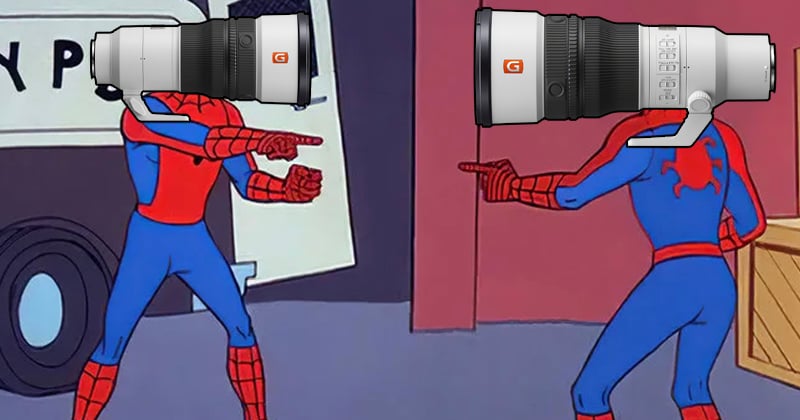
The recent launch of the Sony FE 400mm f/4.5 GM OSS and the FE 600mm f/6.3 GM OSS represents a fascinating case study in modern optical engineering efficiency. While these two high-end telephoto prime lenses are marketed as distinct professional tools, a deeper technical analysis reveals an unprecedented level of shared DNA. By leveraging a common optical foundation, Sony has managed to produce two highly specialized instruments that share nearly identical physical footprints, weight profiles, and performance characteristics, marking a strategic pivot in how flagship glass is conceptualized and manufactured.
The Chronology of Development
The introduction of these lenses follows a period of rapid innovation in Sony’s G Master (GM) lineup. For years, the professional telephoto segment was dominated by heavy, complex optics that prioritized aperture speed above all else. In early 2026, industry rumors began to circulate regarding a "lightweight revolution" in Sony’s super-telephoto department.
On September 15, 2026, Sony officially unveiled the duo. The 400mm f/4.5 GM OSS was positioned as a versatile, handheld-friendly option for sports and wildlife photographers, while the 600mm f/6.3 GM OSS was designed to offer the reach of a super-telephoto without the prohibitive bulk traditionally associated with such focal lengths. The launch was preceded by a series of quiet beta testing cycles with professional wildlife photographers, whose feedback focused on the necessity of reducing equipment weight for long-term field use.
Technical Parallels and Shared Architecture
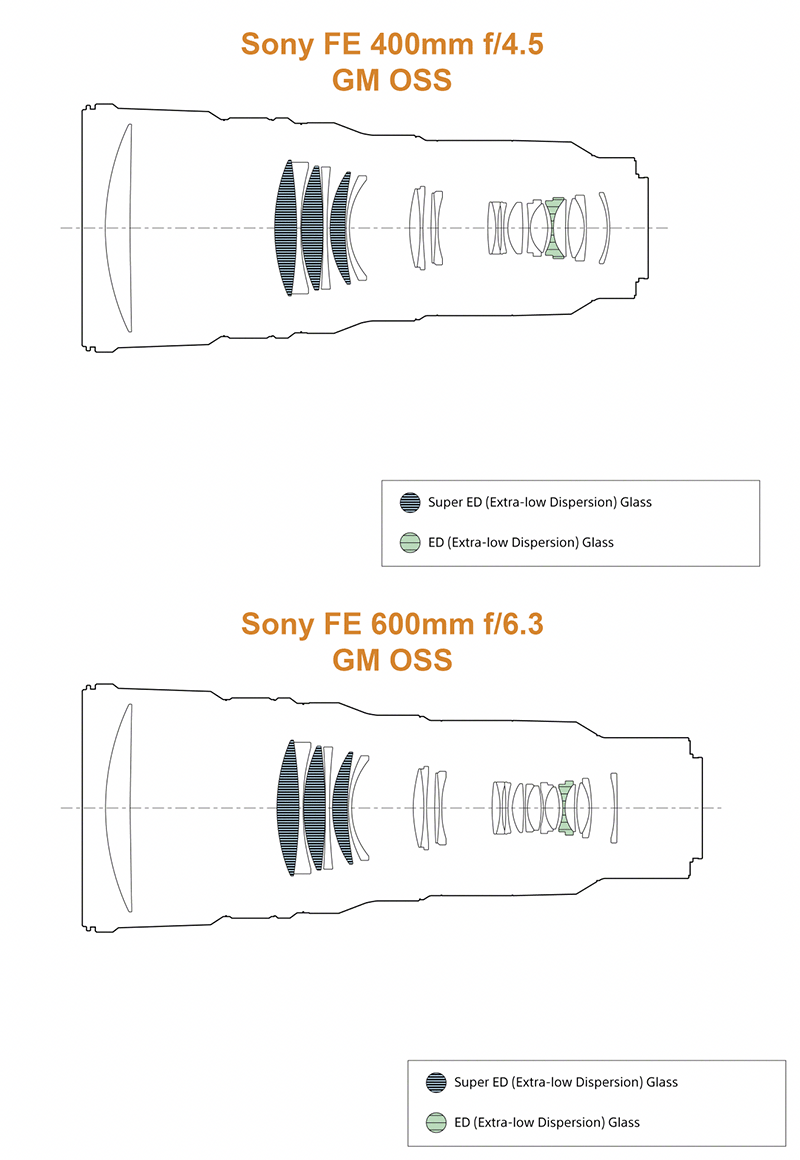
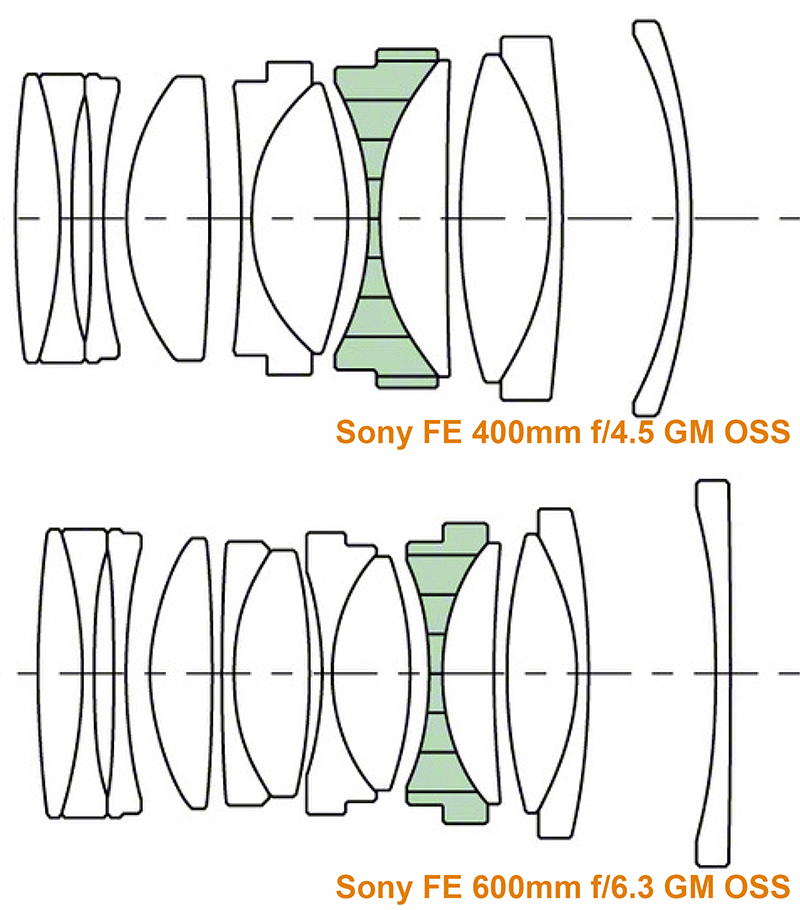
The most striking aspect of these two lenses is not their performance—which remains stellar by all objective metrics—but their structural commonality. A technical teardown and cross-sectional analysis provided by Sony indicate that the front-half optical group of both lenses is essentially identical. From the large front-most element to the central focusing group, the lenses share the same proprietary optical layout.
This shared architecture includes the sophisticated Super ED (Extra-low Dispersion) glass elements. By standardizing this front-end design, Sony has effectively minimized the necessity for two separate research and development pipelines for the most costly and complex parts of the optical assembly.

The primary divergence occurs toward the rear of the lens, near the camera mount. To achieve the additional magnification required for the 600mm focal length, Sony introduced a secondary group of two elements, bringing the 600mm lens to a total of 24 elements in 17 groups. The f/6.3 aperture of the longer lens is a byproduct of this design—a mathematical reality where the entrance pupil size remains consistent across both models, but the focal length increase necessitates a higher f-stop value.
Comparative Data and Physical Specifications
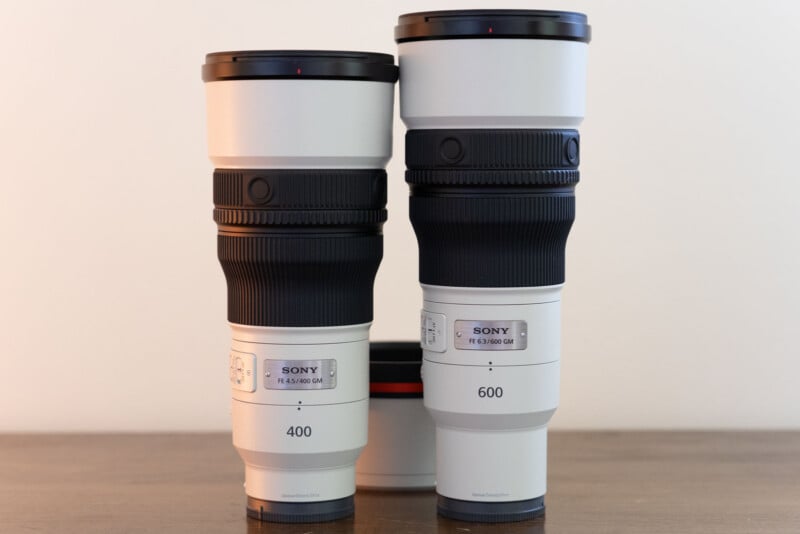
The physical similarities between the two lenses are, for many observers, the most surprising takeaway from the release. The weight disparity between the 400mm f/4.5 and the 600mm f/6.3 is nearly negligible—a difference of only one gram. To put this in perspective, that weight is equivalent to a single standard paper clip or a small pinch of salt.

| Feature | FE 400mm f/4.5 GM OSS | FE 600mm f/6.3 GM OSS |
|---|---|---|
| Total Elements | 22 | 24 |
| Total Groups | 16 | 17 |
| Weight Difference | Baseline | +1 Gram |
| Length Difference | Baseline | < 1 Inch |
| Focusing System | Identical XD Linear | Identical XD Linear |
Beyond the internal glass, the exterior design philosophy is uniform. Both lenses feature the same on-barrel controls, including customizable function buttons, focus range limiters, and Optical SteadyShot (OSS) switches. The weather-sealing protocols are identical, ensuring that both lenses perform with equal reliability in harsh, high-moisture, or dusty environments.
Industry Context and Strategic Efficiency
This "shared-platform" approach is not entirely unprecedented in the photography industry, though it is rare to see it executed with such surgical precision at the professional level. A notable precedent occurred in 2024, when Fujifilm developed the Fujinon GF 500mm f/5.6 lens for its medium-format GFX system and subsequently adapted the design for the X Series APS-C mount. However, Sony’s implementation is arguably more complex, as it involved creating two distinct product identities that satisfy different professional use cases while remaining part of the same E-mount ecosystem.
From a manufacturing standpoint, this strategy is highly efficient. By standardizing components such as the lens barrels, focus motors, and electronic communication boards, Sony has significantly lowered the overhead associated with assembly-line calibration and quality assurance. For the consumer, the implications are largely positive. The "shared" design ensures that users of both lenses benefit from the same autofocus speed, accuracy, and image sharpness.
Implications for the Professional Market
The decision to market these as separate entities while maintaining a shared core raises interesting questions about product differentiation. The 400mm f/4.5 offers a slightly faster aperture, which is generally preferred for indoor sports and low-light scenarios, whereas the 600mm f/6.3 provides the reach necessary for avian photography and distant wildlife.
Industry analysts suggest that this strategy allows Sony to occupy two distinct price points and use cases while effectively streamlining their supply chain. The $1,000 price difference between the two models—driven by the inclusion of the additional optical elements and the specific market positioning—is a reflection of the added value of the 600mm reach rather than a radical difference in manufacturing complexity.
Conclusion
The release of the Sony FE 400mm f/4.5 GM OSS and the FE 600mm f/6.3 GM OSS underscores a shift toward modularity in optical engineering. For the professional photographer, the technical "overlap" is a non-issue; it ensures that the handling experience remains consistent whether they are swapping between a medium-telephoto and a super-telephoto prime in the heat of a shoot.

While some may point to the shared internal design as a cost-saving measure, the performance data confirms that there has been no compromise in image quality or durability. Instead, Sony has demonstrated that through advanced computational design and shared optical blocks, they can deliver high-performance tools that are lighter, more reliable, and more accessible. As technology continues to evolve, this methodology of platform-based lens development is likely to become the new benchmark for manufacturers looking to balance the high costs of innovation with the diverse needs of the global photography community. The lenses stand as a testament to the fact that, in the world of high-end optics, sometimes the most efficient path is the one that allows two distinct focal lengths to share the same DNA.