










The fundamental challenge of modern digital photography lies in the transition from raw image capture to a finished, high-impact final product. While digital sensors have achieved unprecedented dynamic range, the ability to manipulate tonal values—specifically the black and shadow points—remains a defining skill for professional photographers. Mastering the distinction between the "shadows" and "blacks" sliders in software such as Adobe Lightroom is essential for photographers aiming to move beyond amateur aesthetics and achieve a professional, balanced tonal composition.
The Historical Foundation of Tonal Range
The concept of defining an image’s tonal boundaries is not a contemporary digital invention but is rooted in the early 20th-century work of Ansel Adams and Fred Archer. The Zone System, developed in the late 1930s, provided a rigorous methodology for photographers to visualize the final print before even clicking the shutter. Adams advocated for the placement of a "true black" and "true white" point in every image to ensure a full range of tones.
Historically, darkroom practitioners had to rely on chemical development times, paper contrast grades, and localized exposure adjustments (dodging and burning) to achieve these extremes. In the analog era, the process was iterative and physically demanding, often requiring multiple test prints to calibrate the image’s dynamic range accurately. Today, the digital darkroom offers real-time, non-destructive feedback through histogram analysis and clipping warnings, yet the core principle remains identical to the one established by the pioneers of fine art photography: an image without a defined black and white point often appears flat, lacking depth and visual impact.

Defining the Digital Sliders: Shadows vs. Blacks
In software like Adobe Lightroom or Adobe Camera Raw (ACR), the distinction between shadow and black adjustment tools is often misunderstood by intermediate users. These tools function on different parts of the image’s histogram—the graphical representation of tonal distribution.
Shadows typically encompass the mid-to-dark range of an image where detail remains present. Adjusting the "Shadows" slider allows a photographer to recover detail in underexposed areas or to deepen specific darker zones without sacrificing the absolute anchor point of the image. It is an adjustment of tonal range that preserves texture.
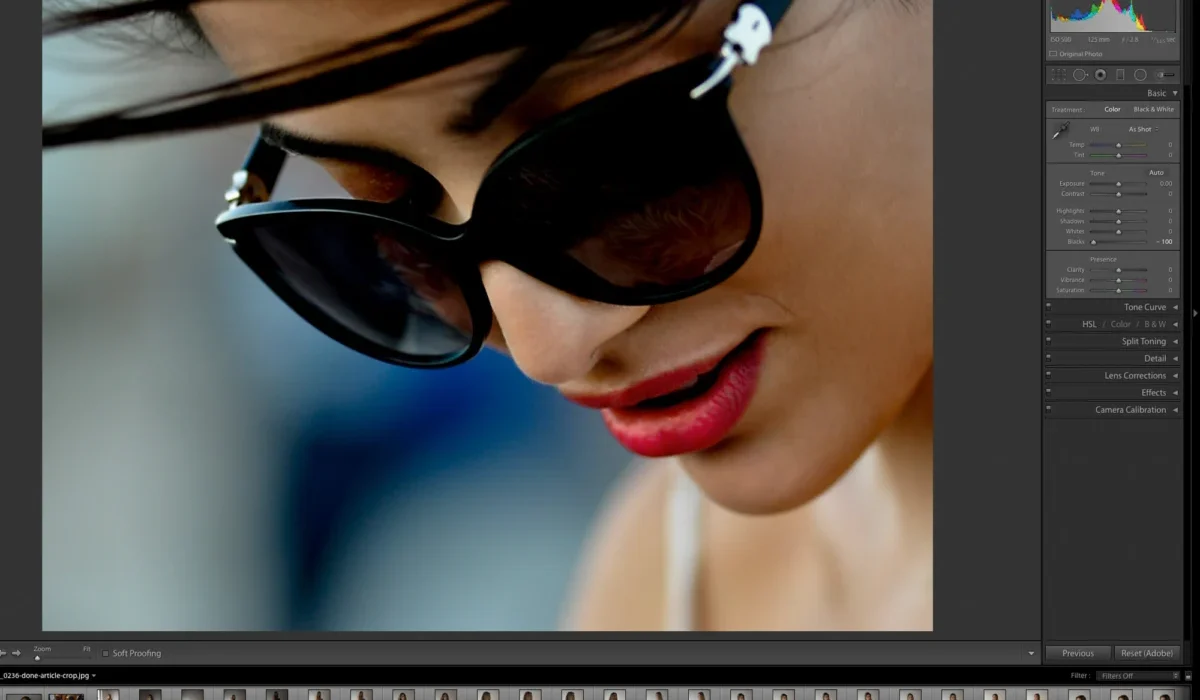
Conversely, the "Blacks" slider defines the absolute floor of the image’s dynamic range. When a photographer moves the blacks slider, they are shifting the point at which the image pixels turn to absolute black (zero luminosity). Once this point is crossed, all detail in those specific areas is lost, effectively creating a "clipped" zone. In professional post-processing, the blacks slider acts as an anchor for the entire composition.
Chronology of Digital Editing Evolution
The introduction of non-destructive editing software in the early 2000s fundamentally altered the photographer’s workflow. Prior to the widespread adoption of RAW processing engines, adjustments were often destructive, meaning that once an image was saved, the original data was permanently altered.

- Pre-2000s: The era of analog darkroom work, where tonal range was dictated by chemical exposure and manual masking.
- 2006–2010: The rise of Adobe Lightroom. Initial versions provided basic exposure and contrast controls, but lacked the nuanced, localized slider separation seen today.
- 2012–Present: The introduction of the "Process 2012" engine in Lightroom marked a significant shift in how highlights, shadows, whites, and blacks were handled. This update allowed for more surgical manipulation of specific tonal zones, empowering photographers to push the limits of digital dynamic range while minimizing unwanted artifacts.
Analytical Implications and Best Practices
Expert analysis of digital workflows suggests a specific order of operations to maintain image integrity. The current industry standard is to establish the "White Point" and "Black Point" first. By identifying the extreme ends of the spectrum, a photographer defines the container for all other tonal adjustments.
Research indicates that failing to set these points correctly often leads to "graying out" the image, where the lack of pure black and pure white causes a loss of contrast. However, excessive use of the blacks slider carries significant risks. Because the blacks slider affects the darkest end of the spectrum, it can aggressively degrade skin tones and subtle texture in shadows if overused. Professionals recommend using the "Alt/Option + Click" method on the black slider to observe the exact moment of clipping, ensuring that only the deepest, detail-less areas of the frame are being transformed into true black.
Furthermore, the design principle of "shadows are not black" remains highly relevant. In color theory, a shadow is essentially a darker, desaturated version of the base color it covers. Using the blacks slider to crush these areas can strip an image of its color depth and nuance. Therefore, the blacks slider should be treated as an anchor, while the shadows slider should be treated as a brush for refinement.
Broader Impact on Visual Communication
The technical mastery of tonal range has profound implications for visual storytelling. High-contrast, "punchy" images often rely on deep blacks to draw the viewer’s eye, whereas soft, ethereal portraits require a more subtle management of shadows to maintain a sense of openness.

The professional consensus among image-editing instructors is that the misuse of these tools is a primary differentiator between novice and seasoned professionals. A common mistake is using the shadows slider to recover detail in a way that creates "halo" artifacts around high-contrast edges or introduces digital noise (grain) in the under-exposed regions of an image. As sensors continue to improve, the latitude for these adjustments expands, but the requirement for artistic judgment remains constant.
Expert Perspectives and Educational Trends
While technology continues to automate many aspects of photography, leading industry educators emphasize that software is a tool, not a substitute for vision. According to recent surveys within photography training programs, the most common "potholes" in student portfolios are inconsistent black points and the indiscriminate use of automated contrast settings.
The recommendation for practitioners is to perform a "sanity check" on their work by periodically viewing their images in black and white to assess the tonal distribution without the distraction of color. If the image lacks structure in monochrome, the shadow and black adjustments have likely failed to provide the necessary anchor.
Ultimately, the goal of post-processing is to align the digital output with the photographer’s initial vision. By understanding the functional, physical differences between the shadow and black sliders, photographers can exercise greater control over the mood, depth, and clarity of their final images. This technical foundation not only improves the immediate quality of the work but also ensures a consistent and repeatable process across all professional assignments, from commercial portraiture to landscape photography. As the digital medium evolves, the ability to interpret and manipulate these fundamental tones remains one of the most critical, enduring skills for any serious visual artist.