










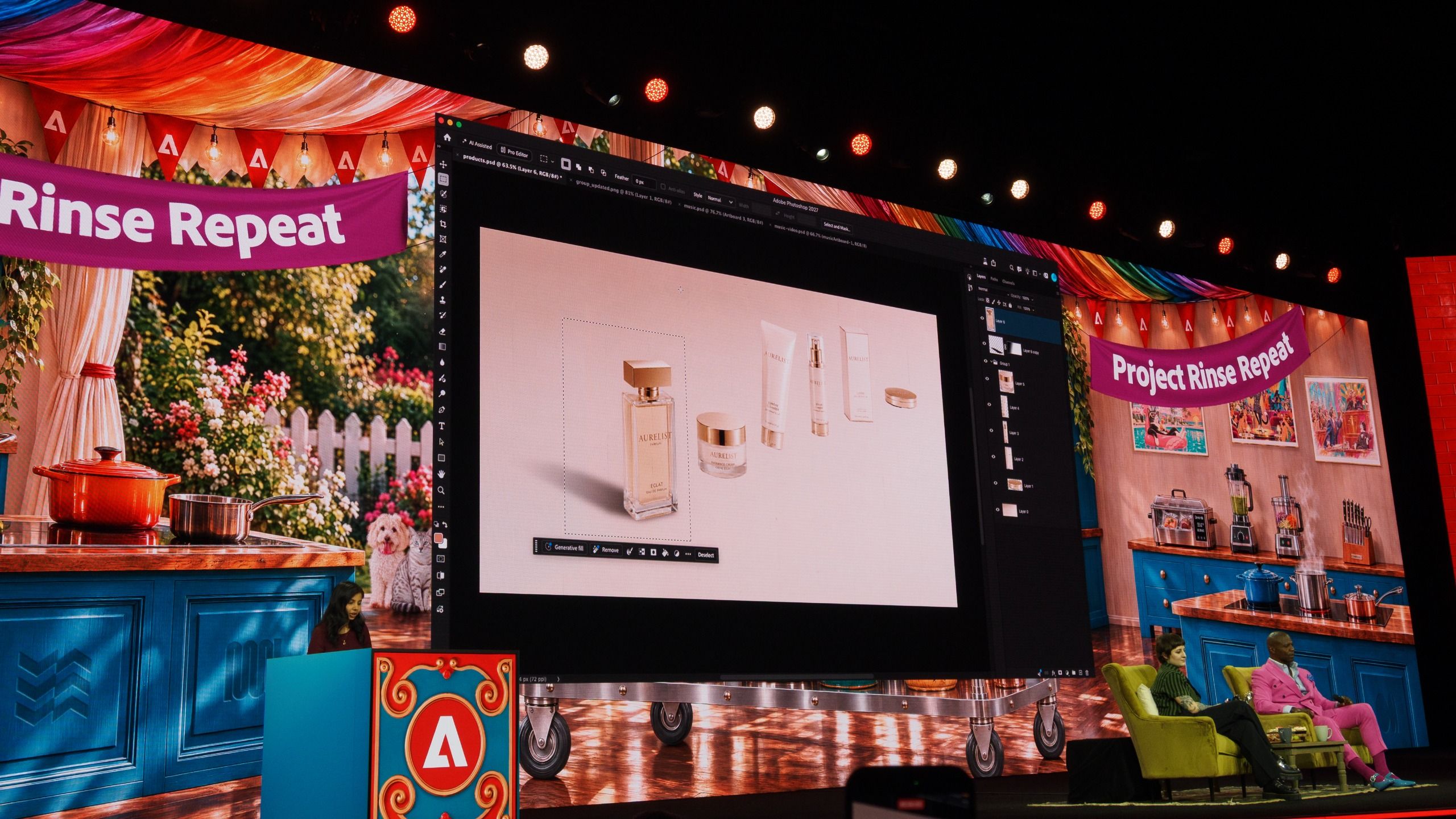
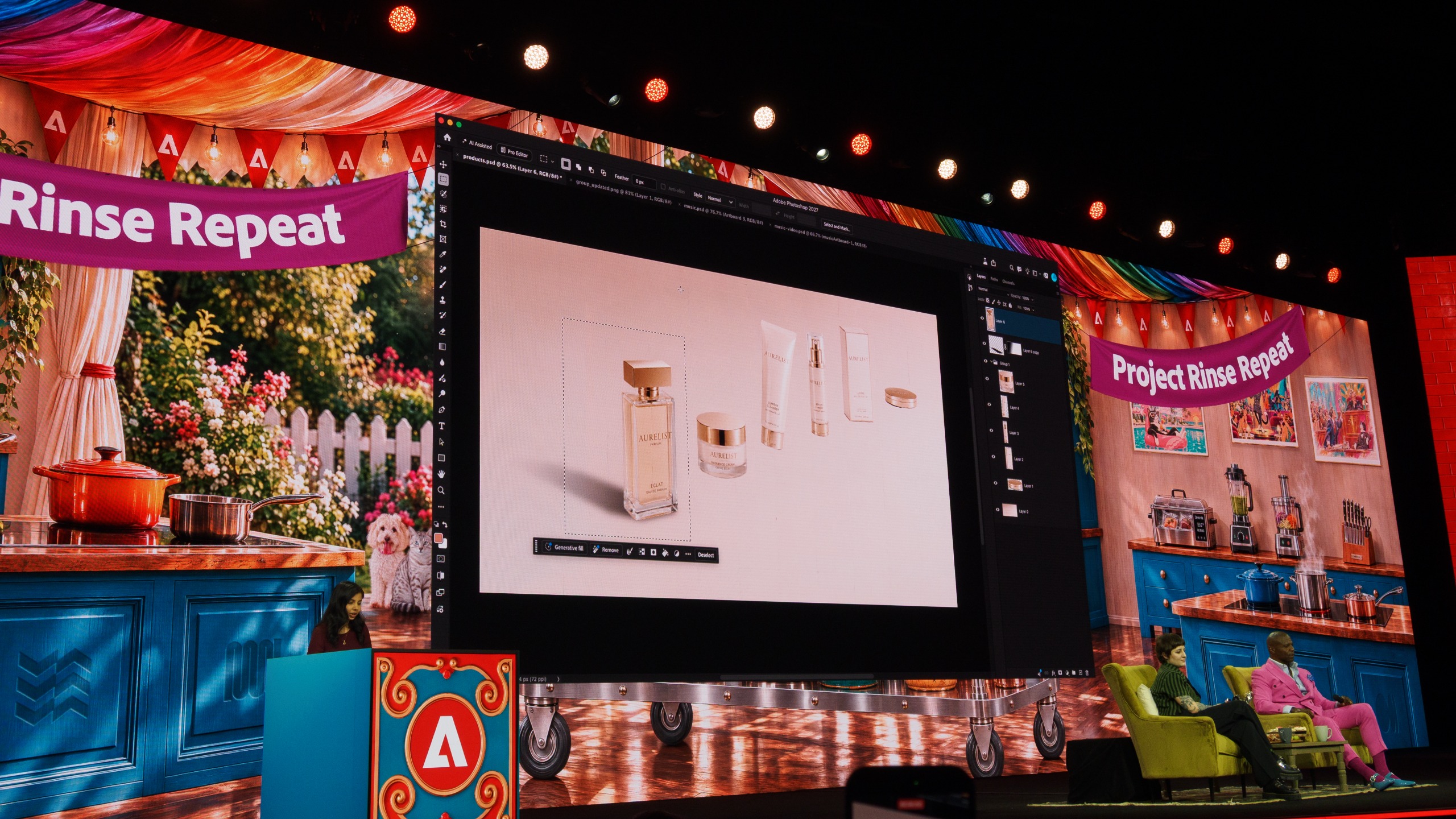
At the Adobe Max 2027 conference in Miami, Florida, the annual "Sneaks" showcase offered a glimpse into experimental tools currently in development across Creative Cloud and Firefly. Among a lineup dominated by generative artificial intelligence, a non-generative prototype designed to streamline repetitive editing tasks earned the most enthusiastic response from the creator community. Presented by Katelyn Chedraoui, the experimental tool—dubbed Project Rinse Repeat—highlights a growing industry appetite for practical, workflow-enhancing automation that respects original pixels rather than generating synthetic alternatives.
The annual Adobe Max event traditionally serves as a barometer for the software giant’s upcoming technology pipeline. While official software releases often lean heavily into major consumer features, the Sneaks presentation provides a behind-the-scenes look at proof-of-concept technologies. Audience engagement during these demonstrations frequently determines which experimental projects are fast-tracked into mainstream applications like Photoshop and Lightroom.
The Mechanics of Project Rinse Repeat
Project Rinse Repeat introduces a sophisticated approach to batch and repetitive editing without relying on generative AI. Rather than creating synthetic pixels or inventing new visual elements from text prompts, the tool observes a creator’s initial manual edits—utilizing standard layers, masks, and the healing brush—and intelligently applies the contextual logic of those edits across the remainder of an image or a series of assets.
During the live demonstration in Miami, Chedraoui showcased the tool’s versatility in two distinct scenarios. First, in a complex composite image featuring multiple products, Project Rinse Repeat automatically generated matching drop shadows tailored to the specific lighting angles and placement of each individual object. Second, in a group portrait, the software registered a manual blemish correction on one individual’s face and seamlessly replicated that specific retouching logic to correct blemishes across every other subject in the photograph.
This contextual awareness distinguishes Project Rinse Repeat from traditional Photoshop Actions. While legacy Actions allow users to record and replay exact sequences of steps, they lack spatial and contextual intelligence, rendering them ineffective for variable tasks like targeted blemish removal in group photos. By combining traditional non-destructive editing layers with contextual automation, Adobe has engineered a bridge between legacy control and modern efficiency.
Generative AI Versus Workflow Automation
The overwhelming positive reception of Project Rinse Repeat at Adobe Max 2027 underscores a nuanced debate within the digital creative community. Out of ten experimental technologies teased during the Sneaks presentation, Project Rinse Repeat was the sole project that did not incorporate generative AI. The standing ovation it received signals a distinct preference among professional photographers and retouchers for tools that accelerate mechanical execution without altering the foundational authenticity of an original photograph.
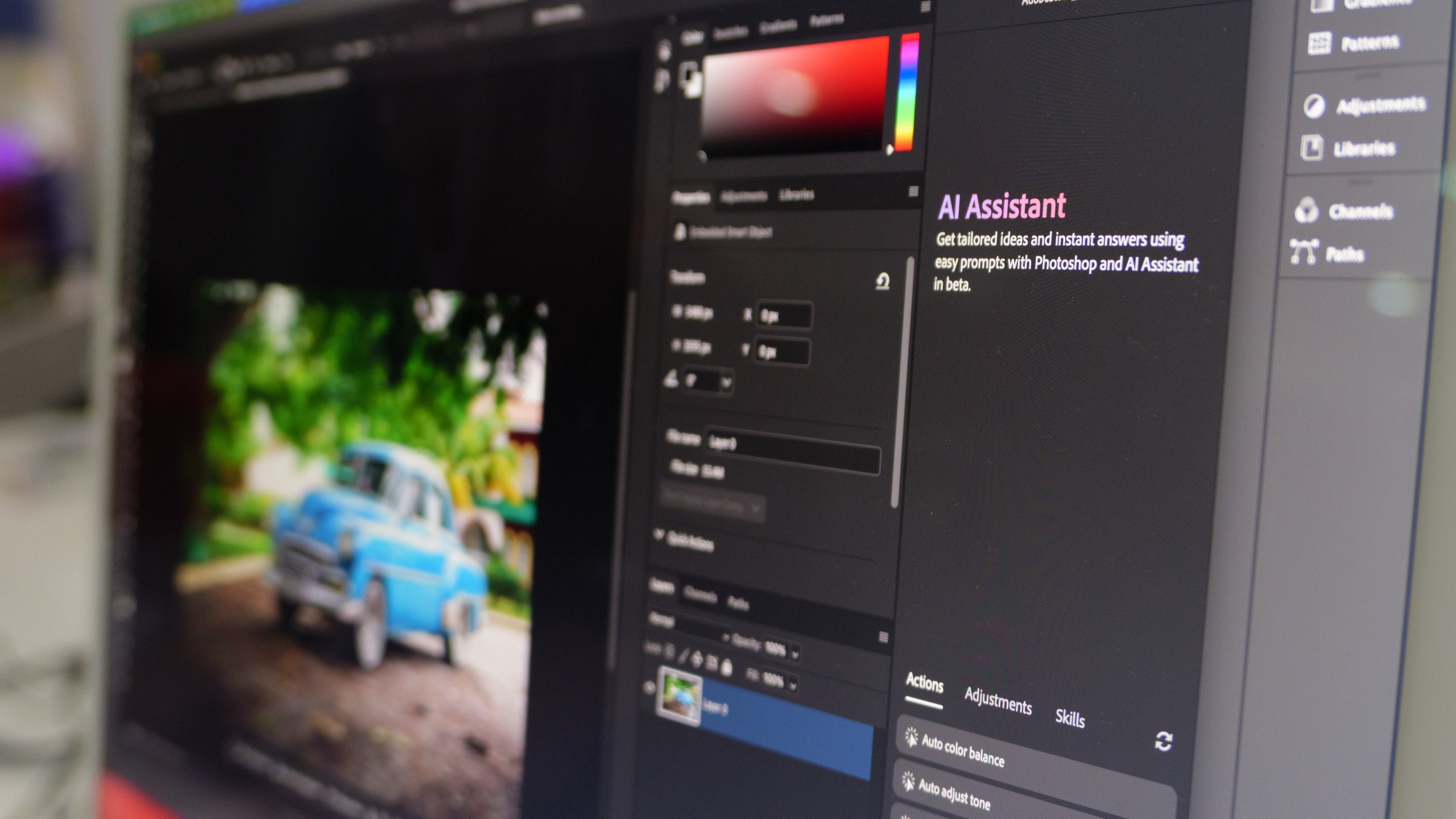
This tension between generative and non-generative capabilities has played out across recent software iterations. In the latest public beta version of Photoshop, Adobe introduced a conversational AI Assistant designed to help users navigate and execute routine editing commands. Concurrently, official releases for Photoshop and Lightroom have increasingly integrated features powered by Adobe Firefly, such as advanced relighting tools, generative fill, and automated cinematic glow effects.
While many professionals readily embrace standard artificial intelligence applications—such as precise subject isolation, automated masking, and contextual horizon leveling—a significant segment of the creative workforce remains cautious regarding generative AI that introduces non-existent pixels into documentary or commercial photography. Project Rinse Repeat bridges this divide by deploying machine learning strictly to interpret user intent rather than fabricating visual reality.

Exploring Additional Adobe Max 2027 Sneaks
In addition to Project Rinse Repeat, the Adobe Max 2027 Sneaks presentation highlighted several other experimental projects poised to influence future versions of Creative Cloud applications.
One prominent demonstration was Project Deep Brush, presented as an adaptive digital brush capable of analyzing a photograph’s underlying geometry, surface textures, and ambient lighting. The tool enables creators to paint digital artwork onto uneven surfaces—such as applying a hyper-realistic tattoo to a portrait or projecting a graphic onto a textured brick wall—with automatic perspective and lighting alignment. For digital artists and compositing specialists, the technology addresses a persistent challenge in matching synthetic brushstrokes to complex photographic surfaces.
Another notable teaser was Project Sight Span, introduced by researcher Yiwei Hu. This experimental feature is designed to analyze a standard two-dimensional JPEG image, automatically construct a functional three-dimensional scene representation, and empower artificial intelligence to generate new perspectives or alternative camera angles from a single flat file.
Broader Industry Implications and Outlook
Adobe has not yet confirmed formal release dates for any of the prototypes showcased during the Adobe Max 2027 Sneaks program. However, historical precedent indicates that concepts receiving the loudest audience validation frequently transition from experimental research projects into public beta environments within a year.
The enthusiastic reception of Project Rinse Repeat offers a clear directive for software developers and product managers across the technology sector. As artificial intelligence integration matures, user demand is increasingly shifting away from flashy, headline-grabbing generation toward dependable, transparent tools that eliminate tedious friction in professional workflows.
For commercial retouchers, portrait photographers, and graphic designers handling high-volume projects, the potential arrival of Project Rinse Repeat in future Photoshop updates represents a significant leap forward in productivity. By honoring the creator’s original craftsmanship and automating the repetitive mechanics of digital asset production, Adobe appears well-positioned to deliver the next evolution of professional editing tools without compromising artistic integrity.