The smart home industry is currently navigating a pivotal transition period defined by leadership changes at major technology firms, the maturation of voice-assistant ecosystems, and a significant shift toward standardized security protocols. Amazon, a primary architect of the modern smart home through its Echo line of products, is facing a notable exodus of executive talent, most recently marked by the announced retirement of David Limp, the Senior Vice President of Devices and Services. Limp’s departure comes at a critical juncture as Alexa approaches its tenth anniversary in 2024, prompting industry analysts to question whether the voice-assistant model can sustain itself as a standalone business or if it must evolve into a more integrated, invisible layer of the domestic environment.
The End of an Era for Amazon Devices
David Limp has been a cornerstone of Amazon’s hardware strategy for over 13 years, overseeing the development of the Kindle, Fire TV, and the entire Echo ecosystem. His retirement follows a broader trend of high-level departures at the Seattle-based e-commerce giant, occurring amidst a period of rigorous cost-cutting and organizational restructuring under CEO Andy Jassy. In late 2022 and early 2023, Amazon’s Worldwide Digital division, which encompasses Alexa and Echo hardware, was reportedly under intense scrutiny due to operating losses exceeding $10 billion annually.
As Alexa nears its decennial, the platform finds itself in a paradoxical position. While the software is integrated into hundreds of millions of devices and has become a household name, the "voice-first" commerce revolution Amazon initially envisioned has largely failed to materialize. Consumers primarily use smart speakers for low-value tasks—such as setting timers, playing music, or checking the weather—rather than for significant e-commerce transactions. This reality has forced a strategic pivot, with the company now looking toward generative AI and more sophisticated automation to prove the long-term value of its hardware investments.
High-End Innovation and the Cost of Entry
The current state of the smart home is further illustrated by a trend toward highly specialized, premium hardware that attempts to solve niche household problems. Two recent product launches highlight the tension between technological advancement and consumer affordability. The Mill kitchen system, a high-tech composting bin created by Nest co-founder Matt Rodgers, represents an ambitious attempt to apply the "Nest philosophy" to waste management. The system dries and grinds food scraps, which are then shipped back to the company to be turned into chicken feed. However, with a subscription-based model and a significant upfront cost, the product raises questions about the scalability of "smart" solutions for environmental sustainability.
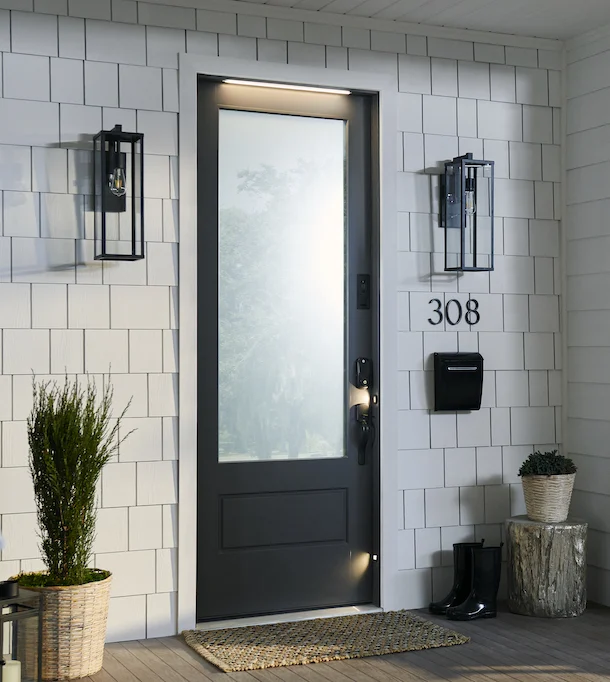
Simultaneously, the entry of the Masonite M-Pwr Smart Door into retail channels like Home Depot signals a shift toward integrating smart technology directly into the structural components of the home. Unlike "bolt-on" smart locks, the Masonite door is a fully integrated system featuring a built-in Ring Video Doorbell, a Yale smart lock, and internal LED lighting, all powered by a hardwired connection to the home’s electrical system. While this eliminates the need for battery replacements and provides a seamless aesthetic, the high price point—often exceeding $3,500—limits its market to luxury new constructions or high-end renovations. These products suggest that while the smart home is becoming more capable, it is also becoming increasingly bifurcated between inexpensive, mass-market gadgets and expensive, professional-grade infrastructure.
Federal Regulation and the Rise of Cybersecurity Labeling
As the number of connected devices in the average household continues to grow, the federal government is taking proactive steps to address the inherent security risks of the Internet of Things (IoT). The Federal Communications Commission (FCC) recently released its Notice of Proposed Rule Making (NPRM) for a voluntary IoT cybersecurity labeling program. This initiative, often referred to as the "U.S. Cyber Trust Mark," is designed to provide consumers with a clear, visual indicator of a device’s security posture, similar to the Energy Star rating for appliance efficiency.
The proposed program would involve a shield-shaped logo and a QR code that consumers can scan to access up-to-date information regarding the device’s security features, such as its encryption standards, data collection policies, and the duration of guaranteed software support. The FCC has opened a 30-day window for public and industry comment, a critical period during which stakeholders will debate the technical criteria for the label and the logistics of certification. This move reflects a growing recognition that consumer trust is a prerequisite for the continued growth of the smart home market, especially as vulnerabilities in connected devices become more sophisticated.
Critical Infrastructure and Industrial Vulnerabilities
The importance of robust cybersecurity is not limited to consumer gadgets. A recent discovery by Microsoft’s security research team has highlighted the risks posed by vulnerabilities in industrial equipment. Researchers identified a set of flaws in widely used industrial control systems that could potentially be exploited by malicious actors to disrupt or shut down critical infrastructure, including power plants and water treatment facilities.

These vulnerabilities underscore the "trickle-down" nature of IoT security. Many of the protocols and communication standards used in smart home devices are simplified versions of those found in industrial settings. As hackers refine their techniques against high-value industrial targets, those same methods often find their way into the consumer sector. The Microsoft report serves as a stark reminder that as the physical and digital worlds become more entwined, the consequences of a security breach extend far beyond a compromised smart speaker or a hacked camera; they can threaten national security and public safety.
The Z-Wave Ecosystem and the Role of Trident IoT
In the realm of connectivity standards, the Z-Wave protocol is undergoing a significant evolution to maintain its relevance in an era increasingly dominated by the Matter standard. For years, the Z-Wave market was characterized by a single-source supply chain for its silicon, which created bottlenecks and limited competition. This changed recently with the emergence of Trident IoT, a new company positioned to become a secondary source for Z-Wave chips.
Led by founder and CTO Mariusz Malkowski, Trident IoT aims to bolster the Z-Wave ecosystem by providing developers with more choices and better support for implementation. During a recent industry briefing, Malkowski emphasized the importance of bridging Z-Wave with Matter, the new unifying standard backed by Apple, Google, and Amazon. While Matter utilizes Wi-Fi and Thread for communication, Z-Wave operates on a different sub-GHz frequency, offering superior range and less interference with 2.4 GHz signals.
Trident IoT is focusing on the development of Z-Wave Long Range (ZWLR) chips, which can communicate over distances of up to a mile, making them ideal for large properties and outdoor applications. By acting as a Z-Wave certification house and a chip provider, Trident IoT seeks to lower the barrier to entry for manufacturers who want to utilize Z-Wave’s proven reliability and low power consumption while ensuring compatibility with the broader smart home ecosystem through bridging technology.
Local Control and the Power User Market
While major tech giants push for cloud-integrated solutions, a subset of the smart home community is advocating for local control—the ability for devices to function without an active internet connection. The Homey Pro, a premium smart home hub, has recently gained attention for its ability to aggregate multiple protocols, including Z-Wave, Zigbee, Matter, and Infrared, while processing automation locally.
The appeal of local control lies in its speed, privacy, and reliability. When a motion sensor triggers a light bulb via a local hub, the command does not need to travel to a remote server and back, resulting in near-instantaneous response times. Furthermore, local control ensures that the smart home remains functional even during internet outages. However, the complexity of managing these systems often requires a higher level of technical expertise and a larger financial investment, as seen with the Homey Pro’s premium pricing. This highlights the ongoing struggle in the industry to balance user-friendly cloud features with the robustness of local-first architectures.
Analysis of Implications and Future Outlook
The convergence of these events—leadership changes at Amazon, the push for federal security labels, and the diversification of hardware standards—suggests that the smart home industry is moving out of its "early adopter" phase and into a more mature, regulated period. The departure of executives like David Limp marks the end of the experimental era where companies prioritized market share and device proliferation over profitability and long-term sustainability.
The future of the smart home will likely be defined by three key pillars:
- Infrastructure Integration: Technology will move away from standalone gadgets and toward "invisible" integration into the home’s fabric, as evidenced by the Masonite smart door.
- Standardization and Interoperability: Standards like Matter and the efforts of companies like Trident IoT to bridge legacy protocols will reduce the "walled garden" effect, allowing consumers to mix and match brands with greater ease.
- Security as a Standard Feature: With the FCC’s labeling program and increased awareness of industrial vulnerabilities, cybersecurity will transition from an afterthought to a core selling point and a regulatory requirement.
As Alexa enters its second decade, its success will no longer be measured by the number of Echo dots sold, but by how effectively it can serve as a reliable, secure interface for this increasingly complex and integrated environment. The smart home is no longer just a collection of toys for tech enthusiasts; it is becoming a fundamental component of modern residential infrastructure, necessitating the same level of reliability and security as the electrical and plumbing systems it now inhabits.