The Federal Communications Commission (FCC) has officially granted Asus conditional approval for its comprehensive line of wireless networking hardware, providing the major tech manufacturer a vital lifeline within the United States market. This regulatory development arrives during a deeply challenging fiscal and operational period for the consumer networking industry in 2026, marked by strict federal oversight, import restrictions, and sweeping bans targeting foreign-manufactured telecommunications infrastructure over perceived national security vulnerabilities.
According to an official regulatory notice issued by the commission, the conditional clearance encompasses Asus’s entire portfolio of consumer and enterprise-grade networking products. This decision ensures that the Taiwanese multinational technology company can continue importing, distributing, and selling its wireless equipment to U.S. consumers without immediate disruption. The exemption, coordinated through rigorous national security evaluations by the Department of War, has been granted for an 18-month duration, offering temporary stability as the broader hardware sector navigates an increasingly complex geopolitical landscape.
Background Context and Regulatory Environment
The tightening regulatory framework governing telecommunications equipment in the United States has intensified significantly over recent years. Driven by mounting concerns regarding foreign state-sponsored espionage, data interception, and vulnerabilities within the supply chain, federal agencies have heightened scrutiny on consumer-facing network hardware. Routers, switches, and access points—acting as the primary gatekeepers of domestic and enterprise data traffic—have found themselves at the focal point of these national security deliberations.
In response to executive directives and updated statutory definitions, the FCC maintains a "Covered List" identifying communications equipment and services that pose an unacceptable risk to national security. Companies whose manufacturing origins trace back to regions deemed high-risk have faced stringent hurdles. To circumvent outright import bans, hardware vendors have been forced to subject their supply chains, source code practices, and corporate governance structures to exhaustive third-party audits and defense agency reviews.
For Asus, securing this conditional approval represents a critical diplomatic and regulatory success. As an established industry leader renowned for high-performance gaming routers and mesh network systems, facing a total ban in the lucrative U.S. market would have severely impacted its global market share. Instead, the company has successfully demonstrated to federal authorities that its current manufacturing and software integration pipelines do not threaten American security interests, at least under the parameters of the current 18-month conditional framework.
The Strategic Importance of the Wi-Fi 8 Transition
The timing of the FCC’s clearance could not be more critical for Asus. The consumer networking industry is currently on the precipice of a monumental technological generational shift: the transition from Wi-Fi 7 to the upcoming Wi-Fi 8 standard. Promising dramatic enhancements in real-world throughput, lower latency, enhanced signal range, and superior stability in congested device environments, Wi-Fi 8 is anticipated to redefine the baseline for smart homes, remote work infrastructure, and competitive gaming.
Asus has positioned itself at the vanguard of this evolution. Earlier this year at the Consumer Electronics Show (CES), the company debuted its conceptual ROG NeoCore Wi-Fi 8 router, designed specifically to address the demanding low-latency requirements of modern digital households and esports enthusiasts. Furthermore, in June, Asus officially unveiled its premier consumer-ready Wi-Fi 8 hardware, the ROG Rapture GT-BN98 Pro. Industry benchmarks and manufacturer specifications indicate that the GT-BN98 Pro is capable of delivering up to a twofold real-world throughput uplift over its predecessor Wi-Fi 7 devices.
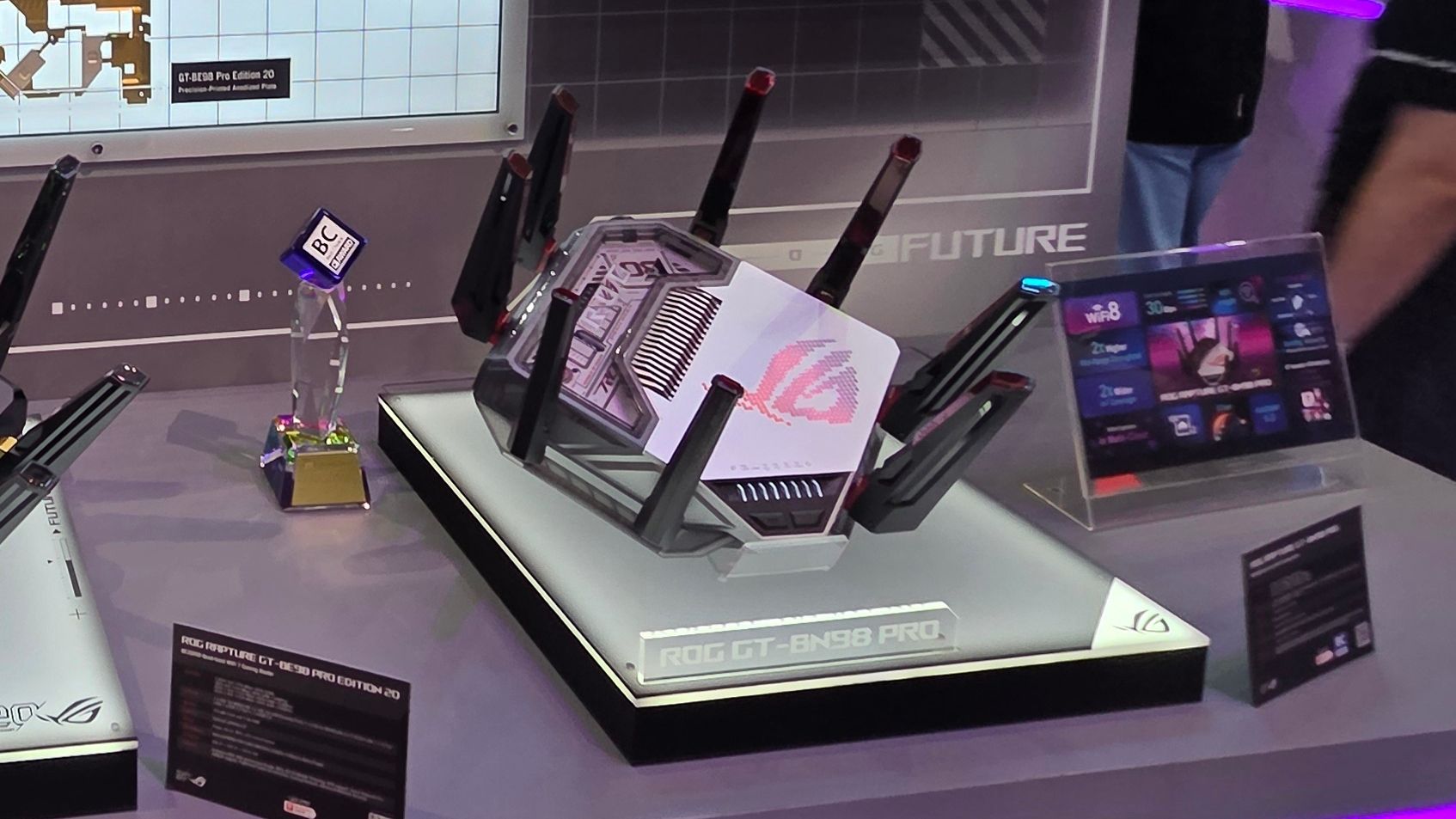
Had the FCC denied or delayed Asus’s petitions, the company would have been effectively barred from launching these next-generation products in the world’s largest consumer market. Such a exclusion would have handed an unearned competitive advantage to domestic rivals and permitted foreign competitors who managed to secure prior clearances to capture uncontested market share during a crucial upgrade cycle. With the regulatory hurdle cleared, Asus can now proceed with its scheduled rollout of Wi-Fi 8 infrastructure without the cloud of an impending sales ban overhead.
Industry Landscape: Competitors and Divergent Fates
Asus is not alone in navigating this turbulent regulatory environment. The landscape of major router manufacturers currently reveals a sharply divided market, where regulatory compliance dictates commercial viability.
Netgear, another industry titan, previously secured conditional approval from the FCC, allowing the company to maintain the import of its foreign-manufactured routers through late 2027. Similarly, Amazon’s Eero division and allied hardware lines successfully negotiated similar 18-month exemptions, insulating their smart home ecosystem products from immediate disruption.
However, not all market participants have fared as well. TP-Link, which commands the largest share of the U.S. consumer wireless router market by volume, remains noticeably absent from the FCC’s list of approved vendors. The federal government’s persistent hesitation to clear TP-Link stems from ongoing opacity and unverified assertions regarding the company’s corporate autonomy and its alleged ties to foreign state entities. Consequently, TP-Link has found itself unable to establish a firm U.S. release schedule for its newly announced Wi-Fi 8 "Ultra" product line. This regulatory stalemate threatens to erode TP-Link’s market dominance, opening doors for competitors like Asus, Netgear, and Google to absorb displaced consumers.
Fact-Based Analysis of Market Implications
The ongoing regulatory interventions by the FCC and defense departments are fundamentally reshaping the global consumer electronics supply chain. While the primary stated objective is safeguarding national critical infrastructure against foreign interference, the secondary economic effects are profound.
- Supply Chain Diversification: To minimize future regulatory exposure, hardware manufacturers are accelerating efforts to diversify their manufacturing footprints. Moving production lines away from geopolitical flashpoints to allied nations is becoming an industry standard strategy rather than an optional safeguard.
- Consolidation of Market Share: Stringent federal oversight naturally favors companies with the legal, financial, and administrative resources required to navigate complex compliance audits. Smaller networking startups may find the cost of regulatory compliance prohibitively high, potentially leading to increased market concentration among a handful of enterprise giants.
- Pacing of Technological Innovation: While regulatory compliance ensures security, the friction of government approval processes risks delaying the adoption of consumer-facing technological leaps. As seen with the simultaneous arrival of Wi-Fi 8 standards and strict FCC reviews, the speed at which consumers gain access to next-generation connectivity is increasingly dictated by geopolitical diplomacy as much as engineering prowess.
Chronology of Recent Regulatory Events
- Early January 2026: Asus unveils its conceptual ROG NeoCore Wi-Fi 8 router at CES, signaling the industry’s readiness for the next generation of wireless standards.
- Spring 2026: The FCC implements intensified import restrictions on consumer routers not manufactured domestically or lacking explicit security waivers, creating widespread market uncertainty.
- June 2026: Asus officially announces the ROG Rapture GT-BN98 Pro, its flagship consumer Wi-Fi 8 router boasting a 2x throughput increase over Wi-Fi 7.
- Mid-2026: Competitors such as Netgear and Amazon Eero successfully secure conditional approvals from the FCC, extending their operational lifelines in the U.S. market.
- This Week: The FCC officially issues a formal notice confirming that Asus has been granted conditional approval for its entire wireless networking product catalog, protecting its market access for the next 18 months.
Conclusion and Future Outlook
The conditional approval granted to Asus marks a pivotal turning point for the company’s North American operations. By satisfying federal security criteria, Asus has insulated its upcoming hardware launches—most notably its pioneering Wi-Fi 8 ecosystem—from the regulatory turbulence affecting less-prepared competitors.
As the industry looks toward the remainder of the decade, the intersection of cybersecurity policy and consumer technology will remain tightly coupled. Manufacturers will need to prioritize absolute transparency and supply chain resilience if they hope to maintain uninterrupted access to Western markets. For Asus, this recent federal green light provides the breathing room necessary to innovate, compete, and deliver cutting-edge wireless performance to millions of consumers eagerly awaiting the next leap in digital connectivity.