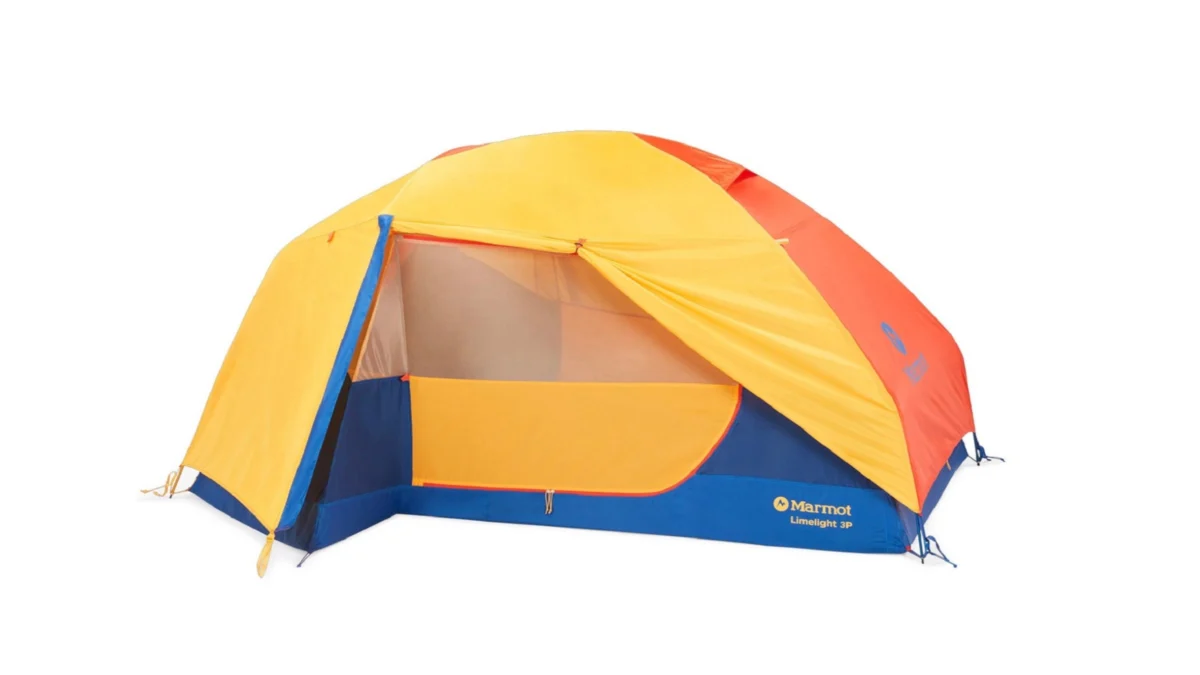
When the outdoor gear market frequently prioritizes ultra-lightweight setups where every single ounce is scrutinized, the modern backpacking community often finds itself divided between minimalist efficiency and absolute campsite comfort. For excursions involving minimal mileage or extended stays at a fixed basecamp, the prevailing paradigm of shaving grams at the expense of livable space often falls short of practical needs. Addressing this specific niche in the outdoor equipment sector, the Marmot Limelight 3-person tent has long established itself as a reliable sanctuary for wilderness enthusiasts who prefer room to maneuver over cramped ultralight designs. Recent market updates and retail pricing adjustments, including a notable promotional offering at major outdoor retailers reducing the model to $200 at a 50 percent discount, have brought renewed attention to this established shelter. Analyzing the intersection of interior ergonomics, structural engineering, and weight management reveals why the Limelight remains a benchmark for comfort-driven backpackers.
Evolution and Background of the Limelight Series
The developmental trajectory of Marmot’s Limelight series reflects a broader consumer shift within the outdoor recreation industry over the past two decades. As backpacking transitioned from a specialized, hardcore pursuit to a widely accessible recreational activity embraced by diverse demographics, equipment manufacturers recognized that comfort could not be entirely subjugated to weight reduction. Early tent designs often forced campers into restricted postures, limiting interior mobility and creating psychological friction during inclement weather lock-ins.
Marmot engineered the Limelight line to counteract these constraints by optimizing vertical wall architectures and expanding footprint geometries. Over successive iterations, design teams refined the pole structure—utilizing pre-bend configurations that allow the walls to rise nearly vertically from the floor. This structural choice fundamentally alters the interior volume, preventing the sloping walls common in traditional dome tents from encroaching upon sleeping pads and occupants. Historical testing by outdoor journalism outfits consistently highlighted the Limelight’s vestibule capacity and organizational cubbies, establishing a design language focused on livability. The 2026 iteration continues this lineage, maintaining the core architectural principles that have made the model a staple for weekend warriors and car-camping enthusiasts who occasionally transition to trail-based camping.
Structural Specifications and Interior Ergonomics
At the core of the Marmot Limelight 3-person tent’s appeal is its spatial efficiency. The shelter provides 45.2 square feet of primary floor space, complemented by a peak height of 45.3 inches. While these numeric metrics are standard for three-person classifications, the near-vertical wall geometry maximizes the utility of that square footage. In practical terms, this structural approach accommodates three full-sized sleeping pads side-by-side without overlapping, providing adequate shoulder and head clearance even for taller individuals who typically struggle with standard tent tapering.
Beyond the primary sleeping area, the Limelight incorporates dual vestibules, each offering 5.4 square feet of exterior covered storage. These protected entry zones are engineered to accommodate oversized backpacks, muddy boots, and cooking equipment during adverse weather conditions. Internal storage solutions further enhance the tent’s organizational capacity, featuring integrated gear cubbies positioned at strategic heights to keep headlamps, multi-tools, and electronic devices secure and accessible. An innovative internal laundry line strung across the upper canopy allows occupants to dry damp socks, gloves, and baselayers protected from the elements, addressing a persistent logistical challenge during multi-day wet-weather itineraries.
Weight Management Versus Livability
Evaluating the Marmot Limelight requires a nuanced understanding of the trade-offs inherent in backpacking shelter design. Weighing in at a little under two pounds per person when distributed among three occupants, the tent occupies a middle ground in the modern equipment spectrum. It is demonstrably heavier than specialized ultralight trekking-pole shelters or minimalist single-wall tents crafted from advanced high-molecular-weight polyethylene materials.
However, industry analysts note that this weight profile is entirely manageable for group excursions where the load is shared. The compromise yields tangible dividends in durability and climate resilience. The Limelight utilizes robust fabrics—typically durable polyester taffeta for the fly and floor with a substantial waterproof polyurethane coating—that resist abrasion and degradation far better than gossamer-thin ultralight alternatives. For users navigating abrasive granite soils, dense pine forests, or sustained wind and rain, the structural integrity provided by traditional aluminum pole sets and heavier fabrics offers peace of mind that outweighs the penalty of carrying a few extra ounces.
Market Positioning and Pricing Dynamics
The recent retail landscape for the Marmot Limelight has shifted significantly, driven by broader retail promotions across specialty outdoor equipment suppliers. With promotional pricing reaching the $200 threshold—representing a 50 percent reduction from its standard retail baseline—the tent occupies a highly competitive price-to-performance tier.
Market researchers observe that mid-tier shelters experiencing aggressive discounting often capture a surge in consumer acquisition among entry-level to intermediate backpackers. These demographics frequently find high-end ultralight tents—which routinely exceed $500 to $800—financially prohibitive. By offering a spacious, durable, and feature-rich shelter at a more accessible price point, manufacturers can secure market share among campers prioritizing value and comfort over hyper-specialized weight reduction. Furthermore, the inclusion of a custom footprint in many retail packages adds immediate financial value, eliminating an ancillary purchase typically required by consumers buying standalone shelters.
Industry Implications and Future Outlook
The enduring relevance of designs like the Marmot Limelight underscores a foundational truth of the outdoor equipment sector: weight is not the sole metric by which shelter quality is judged. While technological advancements in fabrics and carbon-composite poles will continue to push the boundaries of ultralight backpacking, the demand for high-comfort, durable, and logically organized basecamp shelters remains robust.
As outdoor participation continues to evolve, manufacturers are challenged to balance ecological sustainability, material durability, and consumer economics. The Limelight model serves as a case study in iterative refinement—proving that thoughtful interior architecture, reliable weather protection, and practical storage solutions can maintain a product’s competitive edge across multiple generations of gear development. For the segment of the backpacking community that values spatial sanity, structural resilience, and financial pragmatism over shaving every possible gram, shelters of this configuration will continue to play an indispensable role in outdoor exploration.