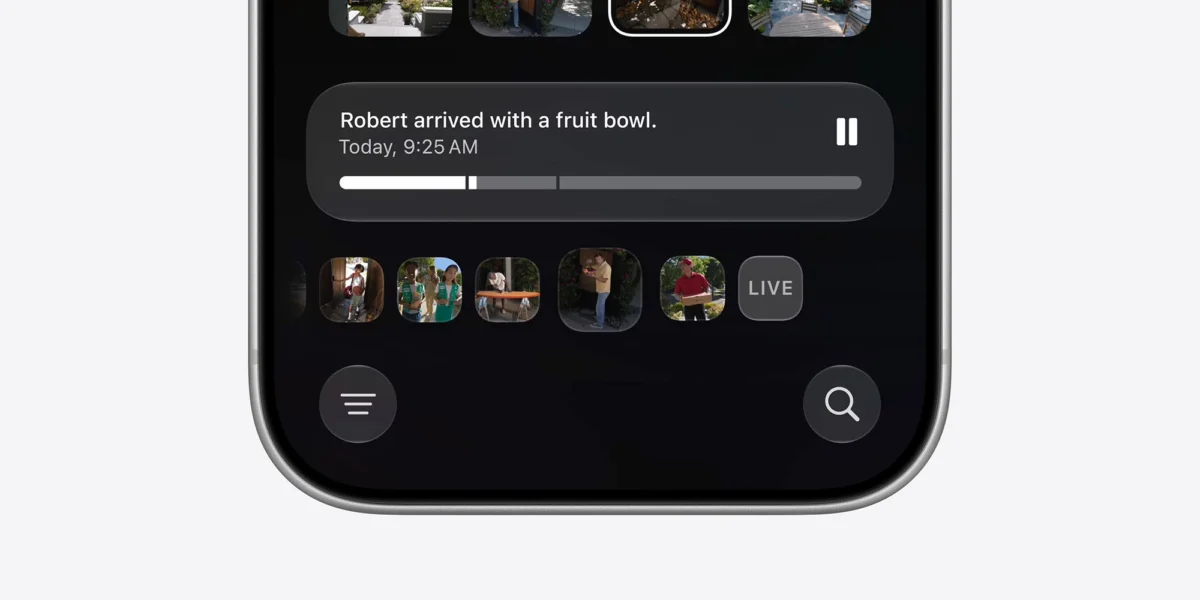
New technical documentation discovered within the third developer beta of macOS 27 has revealed that Apple intends to gate its upcoming artificial intelligence-enhanced home security features behind its premium 2TB iCloud+ storage tier. This requirement, which was not explicitly detailed during the initial keynote at the World Wide Developers Conference (WWDC), marks a significant shift in the company’s monetization strategy for its HomeKit Secure Video (HKSV) platform. While the Home app has long offered basic cloud recording for security cameras, the integration of advanced generative AI and high-definition 4K video support will now be reserved for users paying for the $9.99 per month subscription plan.
The discovery, first noted in the release notes for macOS 27 beta 3, indicates that the restriction will apply across the entire Apple ecosystem, including iOS 27 and iPadOS 27. According to the documentation, users who wish to enable Apple Intelligence capabilities for their home security systems must maintain a 2TB iCloud+ plan or higher. This move places the most advanced features of the Apple Home ecosystem into a specific pricing bracket that was previously reserved primarily for users with high storage needs or a large number of cameras.
Advanced Features of the AI-Enhanced Home App
The upcoming software update introduces several transformative features designed to reduce notification fatigue and improve the utility of recorded footage. At the center of these upgrades is the transition from individual, event-based notifications to intelligent summaries. Under the current system, a single event—such as a resident returning home—can trigger a cascade of alerts: a motion sensor detecting a car in the driveway, a camera spotting a person at the garage, the garage door opening, and the front door unlocking.
In the new iteration of the Home app, Apple Intelligence will synthesize these data points into a single, cohesive notification. For example, instead of six separate alerts, a user will receive a single message stating that a specific family member has arrived home. This summarization is powered by on-device and cloud-based processing that understands the context of multiple sensor triggers over a short period.
Beyond notification management, the update introduces three primary AI-driven capabilities for video analysis:

- Generated Video Descriptions: The Home app will use large language models to provide text-based summaries of what occurred in a video clip. This allows users to understand the context of an event without having to manually playback the footage.
- Natural Language Search: Users will be able to search through their library of recorded clips using specific queries, such as "Find the clip where the UPS driver delivered a package" or "When did the dog go into the backyard?"
- Noteworthy Clip Highlights: The app will automatically curate and elevate important moments to the top of the Search page, ensuring that users do not miss significant events among hours of mundane footage.
Additionally, the update finally brings support for 4K resolution to HomeKit Secure Video. Since its inception, HKSV has been limited to 1080p resolution, a point of contention for users who have invested in high-end 4K security hardware but were forced to view downscaled footage within the Apple Home app.
Chronology of HomeKit Secure Video Evolution
To understand the context of this new subscription requirement, it is necessary to examine the timeline of Apple’s smart home video offerings. HomeKit Secure Video was first introduced in 2019 at WWDC as a privacy-focused alternative to third-party cloud storage services.
- June 2019: Apple announces HKSV, promising end-to-end encryption for security footage and free storage (not counting against iCloud limits) for users with a paid iCloud plan.
- September 2021: Apple rebrands paid storage as iCloud+ and removes the limit on the number of cameras for the 2TB plan. Previously, users were limited to five cameras even on the highest tier.
- June 2024 (WWDC): Apple announces the integration of Apple Intelligence into the Home app, alongside 4K support and enhanced notification summaries.
- July 2024: Release notes for the third developer beta of macOS 27 reveal the mandatory 2TB iCloud+ requirement for these specific AI features.
The evolution shows a steady progression toward higher-quality video and more sophisticated analysis, alongside a tightening of the subscription tiers required to access these premium functions.
The Financial Implications of the 2TB Requirement
The decision to mandate the 2TB tier—priced at $9.99 per month in the United States—represents a notable increase in the entry price for advanced smart home features. Currently, iCloud+ offers three primary consumer tiers:
- 50GB ($0.99/mo): Supports a single HomeKit Secure Video camera.
- 200GB ($2.99/mo): Supports up to five HomeKit Secure Video cameras.
- 2TB ($9.99/mo): Supports an unlimited number of HomeKit Secure Video cameras.
By requiring the 2TB plan for AI features, Apple is effectively tripling the monthly cost for users who currently operate one to five cameras on the 200GB plan but wish to utilize the new intelligence tools. For a user with a single doorbell camera who currently pays $0.99 per month, the jump to $9.99 represents a tenfold increase in the cost of service to access AI summarization and search.
Market analysts suggest this move is part of Apple’s broader strategy to grow its Services division, which has become a primary driver of the company’s revenue growth. In the most recent fiscal quarters, Apple’s Services sector—which includes iCloud, the App Store, Apple Music, and Apple Pay—has consistently outperformed hardware growth, generating over $85 billion in annual revenue.
Technical Demands and Infrastructure Costs
While the subscription requirement has been met with criticism from some consumer advocates, there are technical justifications for the 2TB mandate. Analyzing 4K video streams using artificial intelligence requires significant computational power and storage bandwidth.
Apple Intelligence utilizes a hybrid processing model. While many tasks are handled on-device (requiring an iPhone 15 Pro or later, or an M-series chip in a Mac or iPad), video analysis often requires "Private Cloud Compute." This system uses dedicated Apple silicon servers to process complex data while maintaining user privacy through end-to-end encryption. The cost of maintaining these server clusters and the massive amounts of data generated by 4K video clips likely influenced the decision to restrict the feature to the highest-paying subscribers.
Furthermore, 4K video files are substantially larger than 1080p files. Although HKSV footage does not technically count against a user’s iCloud storage quota, Apple must still provide the backend infrastructure to host 10 days of rolling 4K footage. By tying these features to the 2TB plan, Apple ensures that the users utilizing the most bandwidth are also those contributing the most to the service’s upkeep.
Competitive Landscape and Industry Reactions
Apple’s pricing strategy for AI security features places it in direct competition with other major players in the smart home market. Most major security camera manufacturers have moved toward a "hardware + subscription" model over the last decade.
- Google Nest: The Nest Aware subscription starts at $8 per month for 30 days of event video history across all cameras, while Nest Aware Plus costs $15 per month for 60 days of history and 10 days of 24/7 continuous recording.
- Amazon Ring: The Ring Protect Basic plan costs $4.99 per month for one device, while the Plus plan costs $10 per month for all devices at a single location.
- Arlo: Arlo Secure plans range from $7.99 for a single camera to $17.99 per month for unlimited cameras with 4K support and professional monitoring features.
Historically, Apple’s HKSV was seen as a value-add for those already paying for iCloud storage for photos and device backups. By requiring the $9.99 tier, Apple is now aligning its pricing more closely with the premium tiers of its competitors, potentially losing its edge as the "affordable" alternative for users with only one or two cameras.
While Apple has not officially commented on the beta release notes, industry reactions have been mixed. Privacy advocates have generally praised Apple for maintaining end-to-end encryption for AI-processed video, a feat that many competitors do not match. However, consumer groups have expressed concern over "subscription creep," where features that were previously standard or expected are moved behind higher-priced paywalls.

Broader Impact on the Smart Home Market
The requirement for a high-tier subscription may influence the purchasing decisions of consumers looking to build or expand their smart homes. Users who prefer local storage solutions—such as those offered by Ubiquiti’s UniFi Protect or Eufy’s local HomeBase—may find the Apple ecosystem less appealing as the cost of cloud-dependent features rises.
However, for users already deeply integrated into the Apple ecosystem, the 2TB iCloud+ plan is often shared among family members via Family Sharing. For a household of four or five people sharing storage for photos, videos, and backups, the $9.99 per month cost is often already a sunk cost. For these users, the addition of AI-powered security features and 4K support serves as a significant upgrade to their existing subscription.
As the public release of macOS 27 and iOS 27 approaches this fall, it remains to be seen if Apple will offer any middle-ground options or if the 2TB requirement will remain a firm barrier. For now, the discovery in the developer beta serves as a clear indication of Apple’s intent to leverage its advanced AI capabilities to drive users toward its most profitable service tiers. The move underscores a growing trend in the technology industry where hardware functionality is increasingly tied to ongoing service revenue, fundamentally changing the relationship between the consumer and their smart home devices.