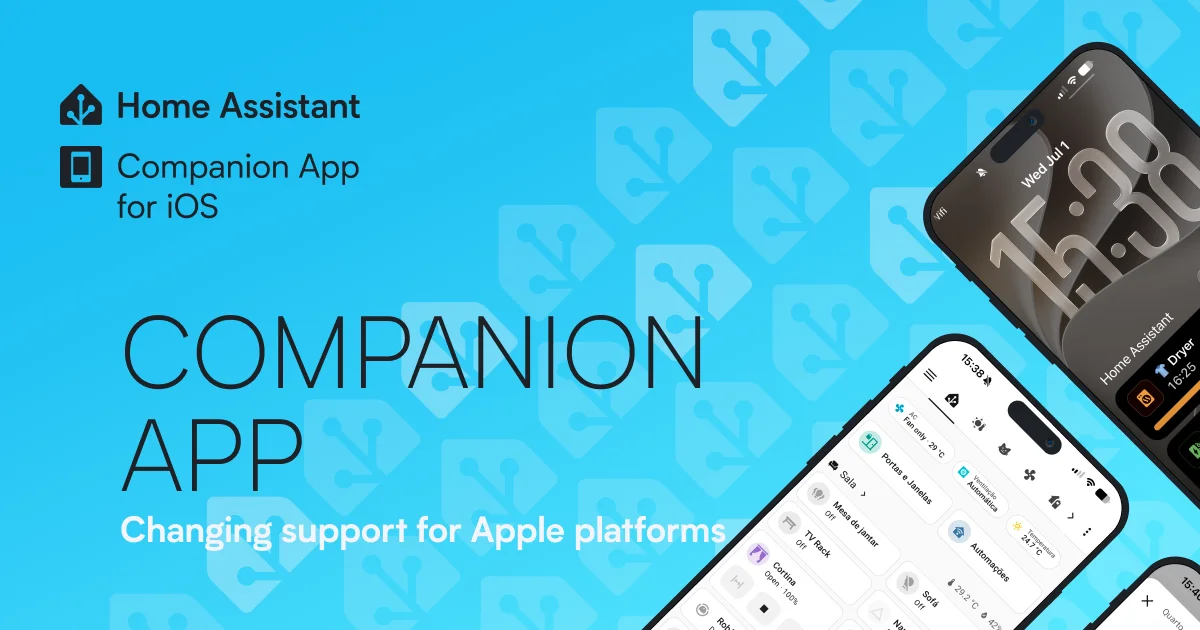
Home Assistant, the prominent open-source smart home automation platform, has officially announced a significant shift in its mobile application ecosystem strategy. Beginning with the release of version 2026.8.0, the Home Assistant Companion app will officially discontinue support for several older Apple operating systems, specifically iOS 15, watchOS 8, and macOS 11. This strategic adjustment marks a definitive transition for the developer community, prioritizing modern application architecture, long-term codebase maintainability, and advanced user interface features over backward compatibility with aging hardware.
The announcement highlights a growing trend within the software development industry, where third-party developers must weigh the longevity of consumer hardware against the rapid evolution of developer tooling, security standards, and platform-specific capabilities. For Home Assistant, the decision comes after careful internal analysis of user metrics, developer overhead, and upcoming changes to Apple’s foundational software development kits (SDKs).
Main Facts Surrounding the Transition
The core operational details of the impending software deprecation are straightforward yet impactful for a small segment of the user base. Version 2026.7.1 of the Home Assistant Companion app will serve as the final release compatible with iOS 15, watchOS 8, and macOS 11. Once version 2026.8.0 rolls out to the public, users running these legacy operating systems will no longer receive functional updates, bug fixes, or security patches through the standard Apple App Store update pipeline.
Despite the cessation of native application updates for these specific versions, Home Assistant representatives have clarified that older devices will not be rendered entirely obsolete or cut off from the broader automation ecosystem. Users operating devices stuck on iOS 15 or macOS 11 retain full, unimpeded access to their smart home dashboards through standard web browsers. The Home Assistant frontend remains fully optimized for mobile and desktop web environments, ensuring that core automation control, dashboard management, and device monitoring continue functioning without interruption.
Furthermore, the Home Assistant development team has committed to maintaining accessibility for the legacy app versions. Version 2026.7.1 will remain downloadable through the App Store’s legacy app management protocols where applicable, and the complete source code will remain publicly available on GitHub. This open-source transparency allows technically proficient users to manually compile and sideload the application if they possess the requisite developer tools and wish to maintain the native app interface on older hardware.
Chronology and Development Roadmap
The timeline leading up to this platform deprecation is closely tied to the lifecycle of Apple’s operating systems and developer infrastructure. Historically, Home Assistant has maintained a generous support window for older Apple software, aligning with its core philosophy of sustainable technology usage and electronic waste reduction. However, software support cannot outlast the tools used to build it.
Apple’s upcoming developer tool updates, scheduled for release in September, mark a hard technical boundary. Specifically, Xcode and associated Apple developer frameworks are officially dropping support for building applications targeting watchOS 8 and macOS 11. Consequently, maintaining native compatibility for these operating systems would become technically prohibitive, requiring complex, custom-built workarounds that divert engineering resources away from modern feature development.
The transition schedule is structured as follows:
- Present through July 2026: Version 2026.7.x acts as the final standard build supporting iOS 15, watchOS 8, and macOS 11.
- August 2026: Final testing phases for the infrastructure upgrade and communication campaigns targeting affected users.
- August/September 2026: Official deployment of version 2026.8.0, marking the permanent conclusion of native updates for the deprecated operating systems.
- September 2026 and beyond: Apple implements developer tool restrictions, while Home Assistant pivots its native iOS, watchOS, and macOS engineering entirely toward current-generation frameworks.
Supporting Data and User Metrics
In the fast-moving landscape of consumer technology, supporting legacy operating systems often involves significant engineering costs offset by minimal active utilization. According to internal telemetry and analytics shared by the Home Assistant development team, the user base operating on iOS 15, watchOS 8, or macOS 11 accounts for less than 1% of total active Companion app installations.
While every individual user matters within the open-source community, maintaining dual code paths to support a fractional percentage of users creates measurable technical debt. In software engineering, technical debt accumulates when developers must write conditional code paths, test against deprecated APIs, and bypass modern security or user interface frameworks to accommodate older software environments. By sunsetting these platforms, the engineering team reclaims valuable development hours that can be redirected toward feature requests demanded by the remaining 99% of the community.
Additionally, industry-wide data from Apple’s official App Store distribution metrics consistently demonstrates rapid adoption rates for newer iOS iterations. The vast majority of active Apple device owners update their software within the first year of release, driven by security updates, application compatibility requirements, and hardware longevity. Consequently, deprecating operating systems that are multiple generations behind current standards aligns with broader mobile application industry practices.
Official Context and Engineering Rationale
The primary driver behind this transition is not merely the cessation of Apple’s developer tool support, but the functional limitations that older operating systems impose on modern smart home interactions. In their public statements regarding the update, Home Assistant developers emphasized that older OS architectures actively restricted their ability to innovate and refine the user experience.
For instance, modern smart home dashboards increasingly rely on sophisticated, low-latency UI components, advanced home screen widgets, and interactive Apple Watch complications. Developing these features requires deep integration with modern Apple APIs—such as WidgetKit enhancements, Live Activities, and advanced watchOS interface frameworks—which simply do not exist or are severely constrained in iOS 15, watchOS 8, and macOS 11.
By cutting ties with legacy systems, the development team can streamline their codebase, reduce application bloat, and accelerate the deployment of high-demand features. This architectural cleanup directly benefits the stability, battery efficiency, and responsiveness of the Companion app across supported devices.
Broader Impact and Industry Implications
The decision by Home Assistant mirrors a wider operational reality across the smart home and Internet of Things (IoT) software sectors. As platforms mature, the tension between supporting vintage hardware and adopting cutting-edge software paradigms becomes acute. Open-source platforms face a unique challenge in this regard: their user base often includes enthusiasts who deliberately repurpose older tablets, phones, and computers as dedicated wall-mounted dashboards or secondary control nodes.
When a platform like Home Assistant adjusts its minimum system requirements, it prompts a broader conversation within the smart home community regarding hardware refresh cycles. While web-based fallback options mitigate the immediate impact, users who rely heavily on native notifications, background location tracking, and specialized watch complications on older devices will eventually need to weigh the cost of upgrading their hardware against the benefits of modern app features.
From an industry analysis perspective, this move underscores the vital importance of open-source adaptability. Proprietary smart home ecosystems frequently abandon older hardware abruptly and without offering alternative access methods like web frontends or source-code repositories. Home Assistant’s transparent communication, provision of legacy app versions, and preservation of browser-based control serve as a model for managing end-of-life transitions responsibly in consumer technology.
Looking Ahead: The Future of the Companion App
As Home Assistant moves past the limitations of iOS 15, watchOS 8, and macOS 11, the development roadmap opens up new possibilities for the platform’s Apple ecosystem integration. Freed from the technical constraints of legacy frameworks, the engineering team can focus on refining performance, enhancing encryption and local connection protocols, and delivering richer interactive capabilities across iPhones, iPads, Apple Watches, and Mac computers.
The transition marks a mature milestone for the Home Assistant project. By balancing the practical realities of software development with a commitment to user transparency, the platform ensures that its ecosystem remains robust, secure, and technologically competitive for years to come. Community members seeking further technical details, git repository access, or support documentation can reference the official Home Assistant developer blog and GitHub repository channels.