The specialized knife steel industry is preparing for a significant transition as Niagara Specialty Metals (NSM) officially announced the wide release date for MagnaMax, a high-performance stainless steel designed to push the boundaries of edge retention and toughness. Scheduled for launch on May 1, 2026, at 9:00 AM EDT, the material will be available through the NSM online store, marking a pivotal moment for independent bladesmiths and small-scale manufacturers who have sought a stainless alternative to high-wear tool steels. This release follows months of rigorous metallurgical testing and community anticipation, positioning MagnaMax as the technological successor to the widely acclaimed MagnaCut steel.

The Evolution of High-Performance Knife Steel
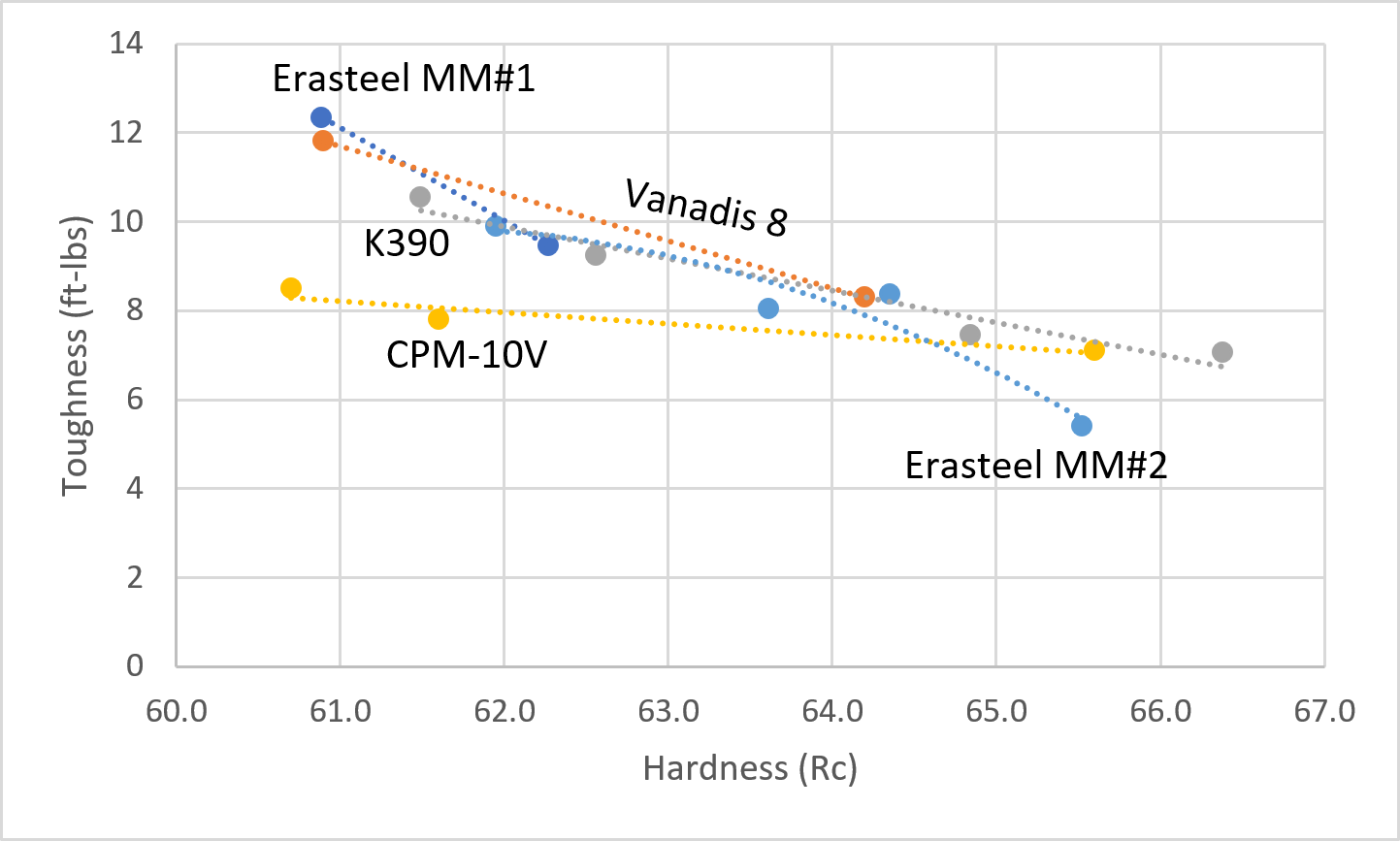
The development of MagnaMax represents a targeted effort to resolve one of the most persistent trade-offs in metallurgy: the balance between wear resistance and toughness. Traditionally, steels that offer extreme edge retention, such as the non-stainless K390 or Vanadis 8, suffer from a lack of corrosion resistance. Conversely, stainless steels like M390 or 20CV, while popular in the premium folding knife market, often struggle to match the impact toughness found in high-vanadium tool steels.
MagnaMax was engineered specifically to bridge this gap. According to technical data released by Dr. Larrin Thomas, the metallurgist behind the steel’s design, MagnaMax provides enhanced wear resistance and edge retention compared to its predecessor, MagnaCut, while maintaining a similar level of corrosion resistance and high hardness potential. The steel utilizes powder metallurgy (PM) technology to ensure a fine, uniform carbide structure, which is essential for both the stability of the edge and the ease of finishing for the knifemaker.
Chronology of Development and Testing
The path to the May 2026 release has been defined by a methodical testing phase designed to ensure that the material meets the specific needs of the custom knife community. In early 2026, initial reports regarding MagnaMax properties began to circulate, though specific heat treatment recommendations were withheld pending the analysis of the final production material.
The initial "heat" or batch of the steel exhibited carbon levels at the lower end of the metallurgical specification. While this provided a baseline for performance, it did not fully represent the average properties expected in the commercial release. Consequently, a more comprehensive set of tests was conducted on material closer to the specification’s midpoint. This secondary phase of testing was supported by veteran knifemaker Matthew Gregory, who assisted in the production of toughness coupons used for Charpy impact testing.
The resulting data allowed for the refinement of heat treatment protocols, ensuring that when the steel reaches the hands of small-scale makers on May 1, they will have access to proven parameters for maximizing the material’s potential.
Comprehensive Heat Treatment Protocols
A critical component of the MagnaMax release is the dissemination of precise heat treatment data, which varies significantly depending on the equipment available to the maker. The goal of these protocols is to achieve a balance where the steel reaches its peak hardness without becoming overly brittle or losing its stainless properties.
Optimized Cryogenic Processing
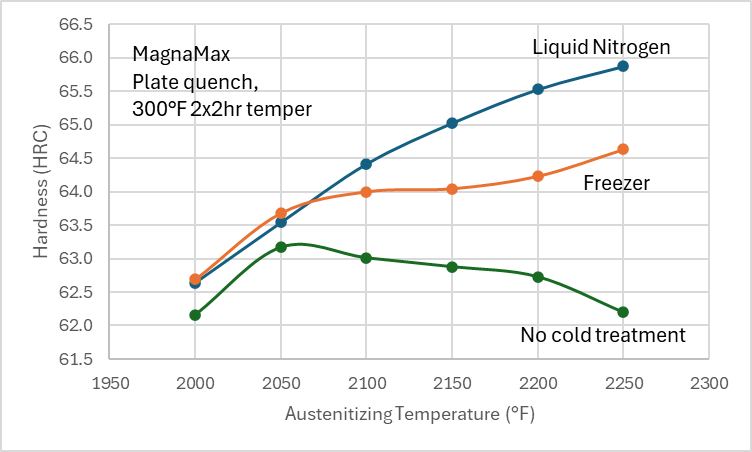
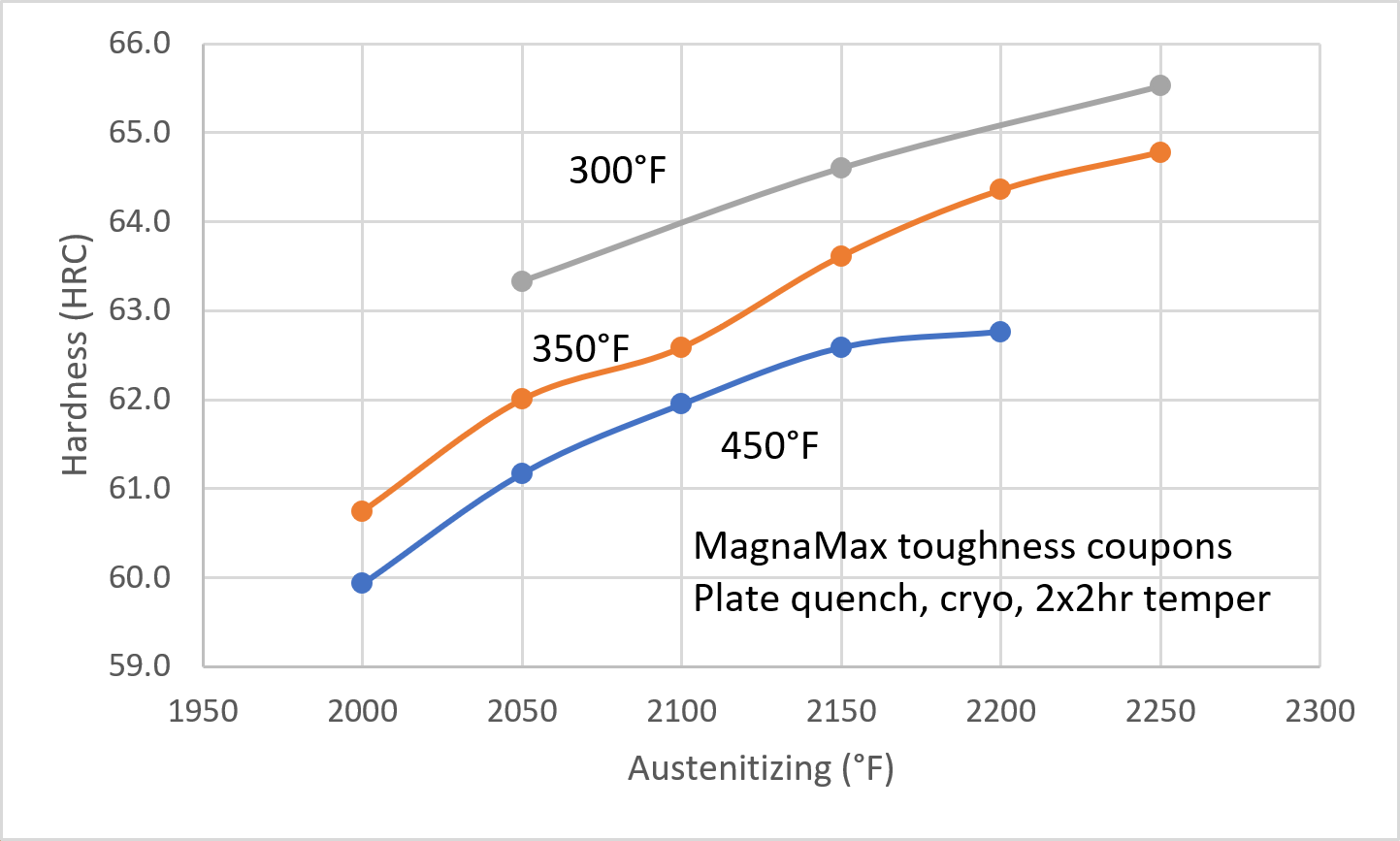
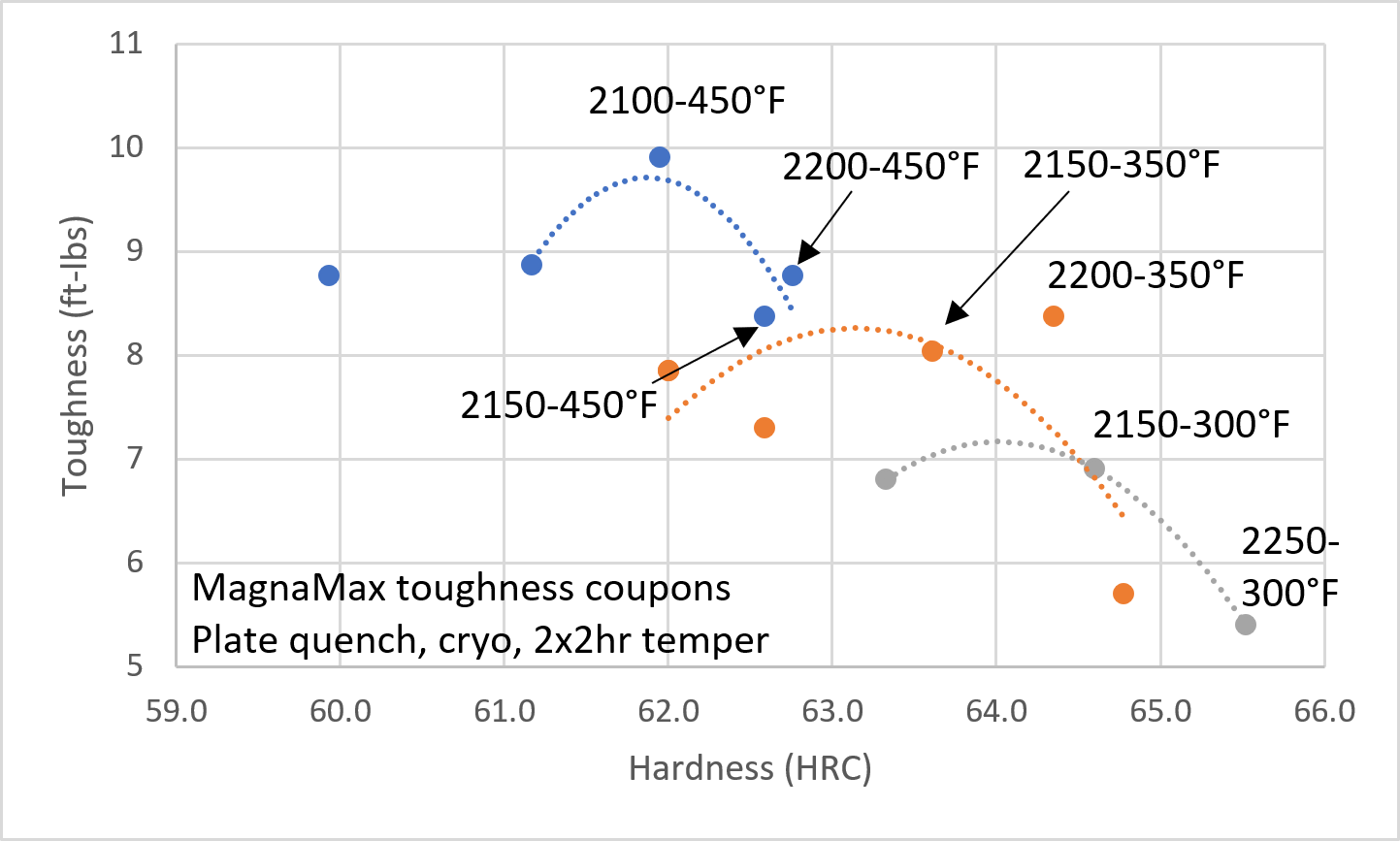
For makers equipped with liquid nitrogen, the baseline recommendation for austenitizing—the process of heating the steel to change its crystal structure—is 2150°F (1175°C). The recommended range spans from 2100°F to 2250°F. Following a plate quench to ensure rapid cooling and higher hardness, the material must be placed immediately in liquid nitrogen.
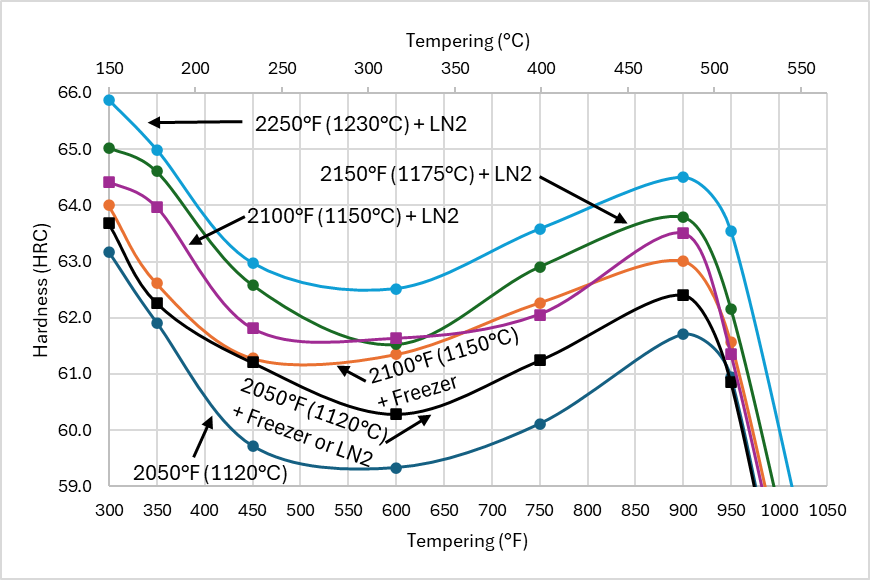
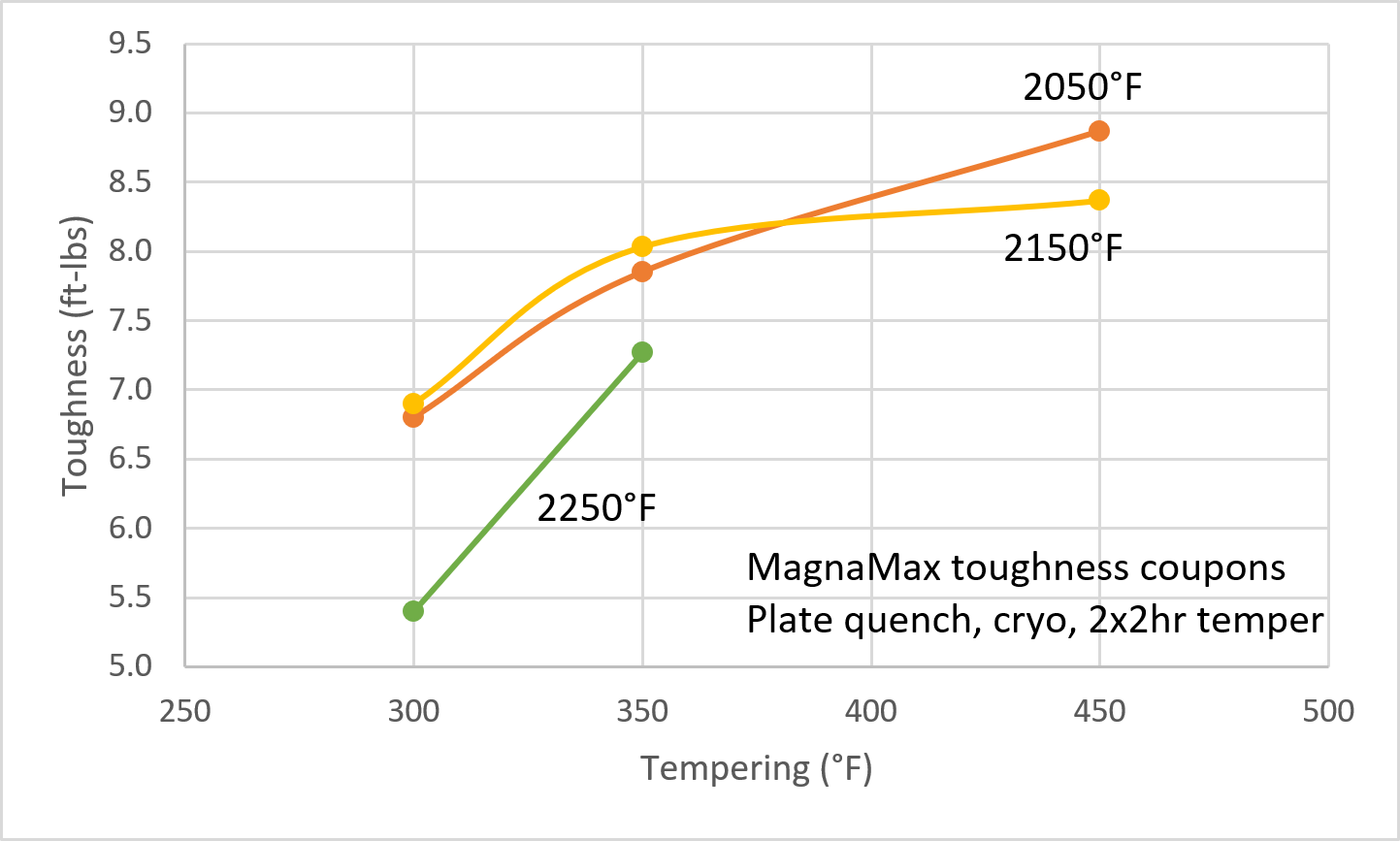
Metallurgical analysis confirms that the duration of the cryogenic soak is less critical than the speed at which the steel reaches the temperature. A one-hour soak is generally sufficient. Tempering should be conducted twice for two hours each at temperatures between 300°F and 450°F, with 350°F (175°C) serving as the standard baseline for optimal properties.
Cold Treatment for Smaller Workshops
Recognizing that not all small knifemakers have access to liquid nitrogen, the release documentation includes a verified "freezer" protocol. Contrary to common myths within the knife community that household freezers provide no benefit, testing indicates that even a standard freezer or dry ice treatment significantly improves the hardening response compared to no cold treatment at all.
For those using a freezer or dry ice, the recommended austenitizing temperature is slightly lower, between 2050°F and 2100°F. The lower ceiling is intended to prevent the formation of excess retained austenite, which can lead to difficulties during the sharpening and deburring process.
Analysis of Hardness and Toughness Balance
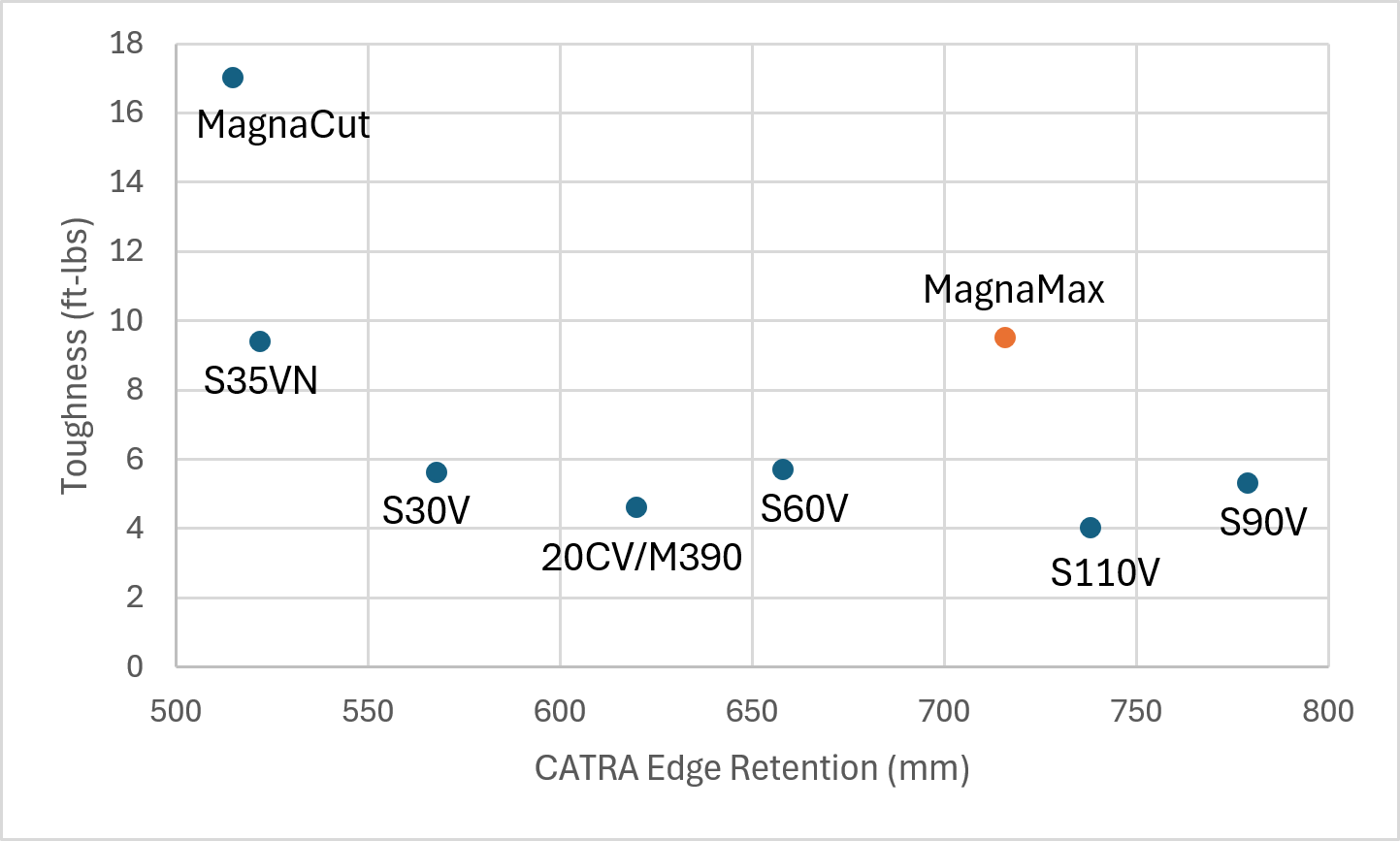
The core appeal of MagnaMax lies in its performance metrics relative to established "super steels." In Charpy C-notch testing, which measures the energy required to break a sample, MagnaMax demonstrated a hardness-toughness balance that rivals high-end non-stainless tool steels like K390 and Vanadis 8.
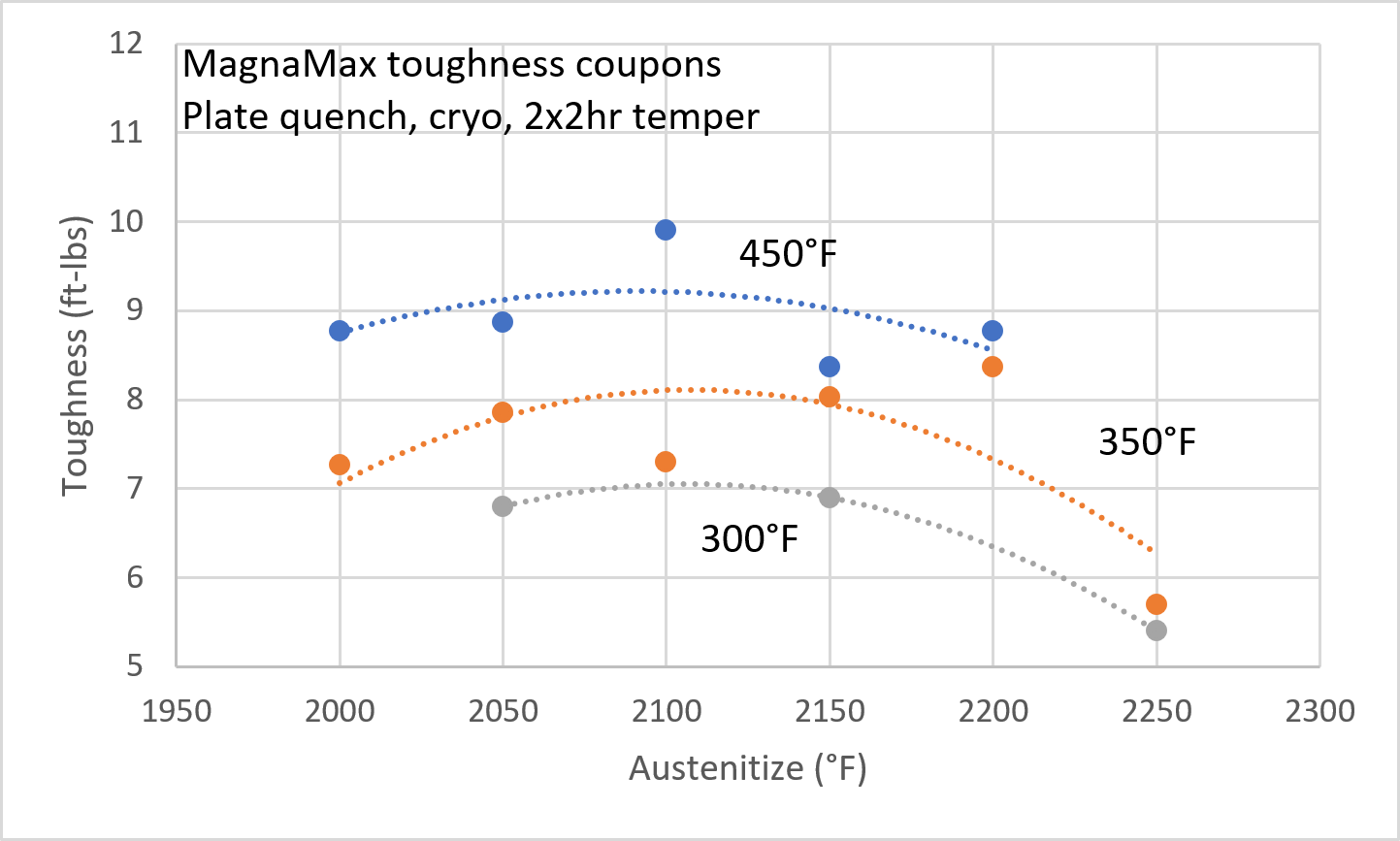
Testing showed that toughness remains relatively flat up to an austenitizing temperature of 2200°F, after which it begins to drop. The data suggests that the peak combination of hardness and toughness is achieved at the 2150°F to 2200°F range. When compared to other powder metallurgy stainless steels, MagnaMax displays superior toughness to S35VN, CPM-154, and Vanax, while offering a substantial leap in edge retention over those grades.
A significant finding in the tempering data involves "secondary hardening." While MagnaMax can reach a secondary hardness peak around 900°F (480°C), experts strongly advise against tempering in this range. Doing so precipitates chromium carbides, which depletes the surrounding steel of the chromium necessary for corrosion resistance. For a knife intended to remain stainless, low-temperature tempering (300°F-450°F) is mandatory.
Edge Retention and Corrosion Resistance Performance
In CATRA (Cutlery and Allied Trades Research Association) testing, which provides a standardized measurement of edge life, MagnaMax has shown results that place it in the upper echelon of modern steels. The primary drivers for this performance are the steel’s high carbide volume and the specific hardness of those carbides. Because MagnaMax is designed to dissolve its chromium carbides at approximately 2050°F, the resulting corrosion resistance remains stable even as austenitizing temperatures are increased to boost hardness.
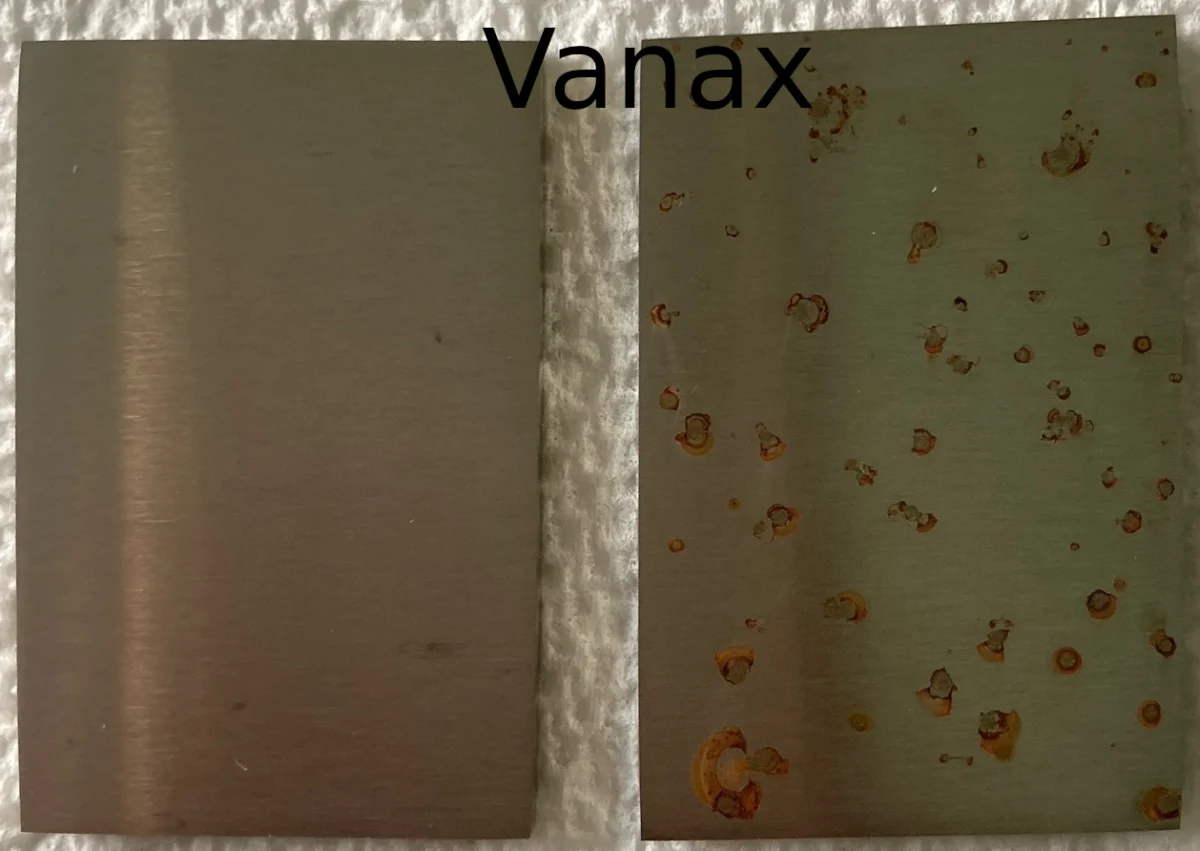
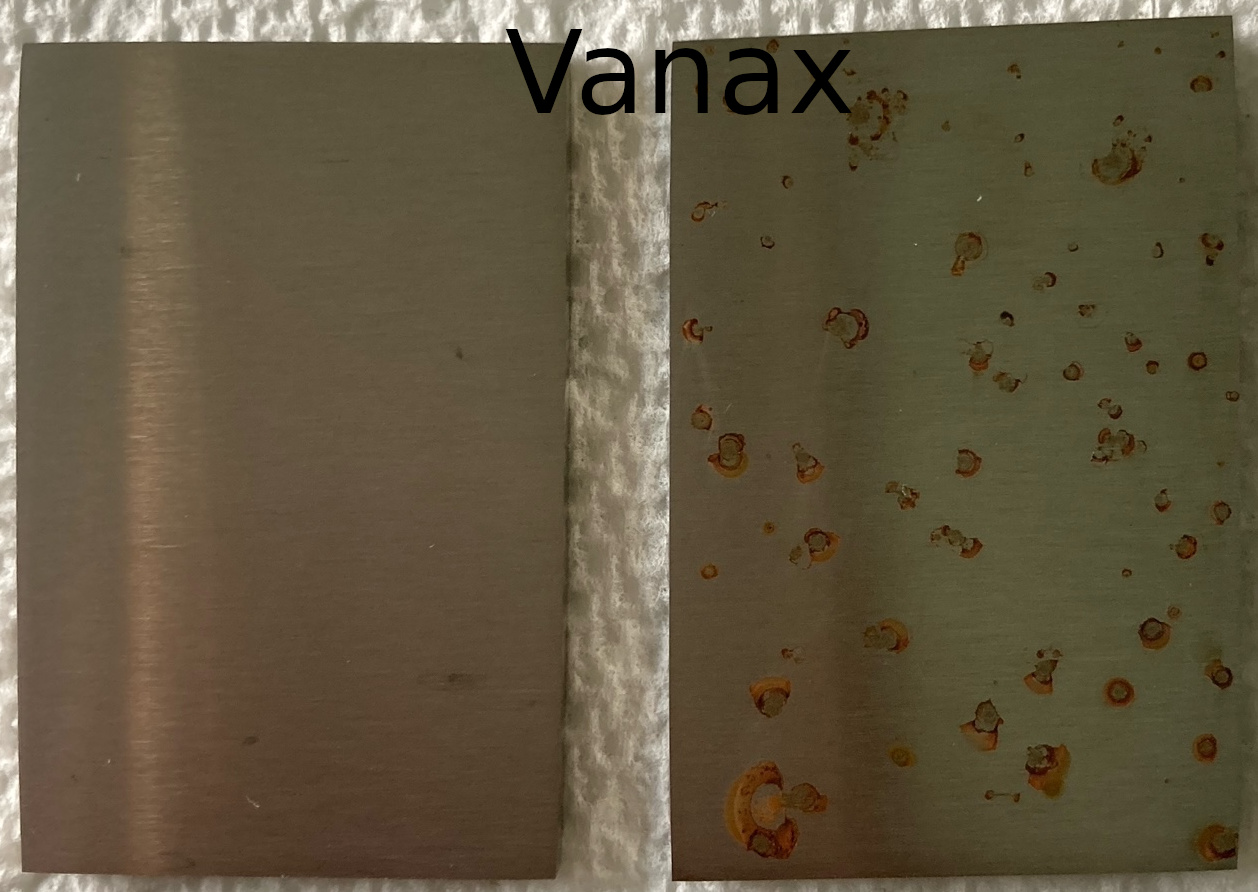
Corrosion resistance was verified through 1% saltwater spray tests. Samples of MagnaMax passed these tests with no signs of pitting or oxidation, confirming that it maintains the "stainless" designation despite its high wear resistance. This makes it an ideal candidate for outdoor, hunting, and culinary knives where the user requires long-lasting sharpness without the maintenance burden of carbon steel.
Broader Impact on the Custom Knife Market
The wide release of MagnaMax is expected to shift the competitive landscape for custom knifemakers. Previously, makers had to choose between the "toughness and stainlessness" of MagnaCut or the "extreme edge retention" of steels like S110V or Maxamet. MagnaMax occupies a middle ground that provides a significant upgrade in edge life over MagnaCut without the extreme brittleness often associated with high-carbide stainless steels.
Industry analysts suggest that the availability of MagnaMax through Niagara Specialty Metals will empower small makers to compete more effectively with large-scale manufacturers. By offering a material that is difficult to process but yields exceptional results, custom makers can differentiate their products through superior heat treatment and geometry.
Furthermore, the involvement of Niagara Specialty Metals as the primary distributor ensures a stable supply chain for North American makers. NSM has a long-standing reputation for providing precision-ground air-hardening steels, and their online infrastructure is expected to handle the high volume of orders anticipated for the May 1st launch.
Preparation for the Launch
As the May 1, 2026, release date approaches, knifemakers are being encouraged to create accounts on the Niagara Specialty Metals website in advance. Given the historical demand for new PM steels, the initial stock is expected to sell quickly. The launch will specifically cater to "small" makers, offering the steel in dimensions suitable for custom builds rather than large industrial sheets.
The introduction of MagnaMax is not merely the release of a new product but the culmination of several years of data-driven metallurgical research. By providing a stainless steel that does not compromise on the mechanical properties traditionally reserved for tool steels, the project sets a new benchmark for what is possible in the field of high-performance cutlery. As the knife community moves toward the May release, the focus remains on the practical application of this data, allowing makers to turn a sophisticated raw material into tools of unparalleled utility.