The landscape of professional digital photography is currently undergoing a significant paradigm shift as artificial intelligence transitions from a novelty feature to a foundational element of the raw processing workflow. DxO, a company with a long-standing reputation for precision-engineered optics and sensor analysis, has officially launched its latest iteration of industry-standard software, DxO PhotoLab 10. This release arrives at a critical juncture in the market, where photographers are increasingly demanding tools that balance high-fidelity image quality with the time-saving benefits of machine learning.
For decades, the core challenge of raw conversion has been the reconciliation of computational efficiency with uncompromising image integrity. DxO has historically positioned itself as a "purist’s choice," focusing on lab-tested lens correction modules and sophisticated demosaicing algorithms. With the release of version 10, the company is attempting to bridge the gap between its heritage of technical precision and the modern requirement for automated, AI-driven asset management and localized editing.

The Evolution of Computational Editing
The development of DxO PhotoLab has followed a distinct trajectory since its inception. Initially recognized for its proprietary "Prime" and later "DeepPRIME" noise reduction technologies, the software established a benchmark for managing high-ISO imagery. In recent years, the integration of AI masking in versions 8 and 9 marked a shift in strategy.
The timeline of DxO’s recent software maturation reveals a deliberate, iterative process. By 2024, the focus shifted toward "subject awareness," where the software moved beyond simple global adjustments to understanding the semantic content of a photograph. PhotoLab 10 represents the logical conclusion of this trajectory, introducing depth-based awareness that functions independently of camera metadata. This allows the software to generate complex masks on legacy raw files—images taken on hardware that predates current computational photography standards—effectively extending the useful life of older digital archives.
Breakthrough Features in Version 10
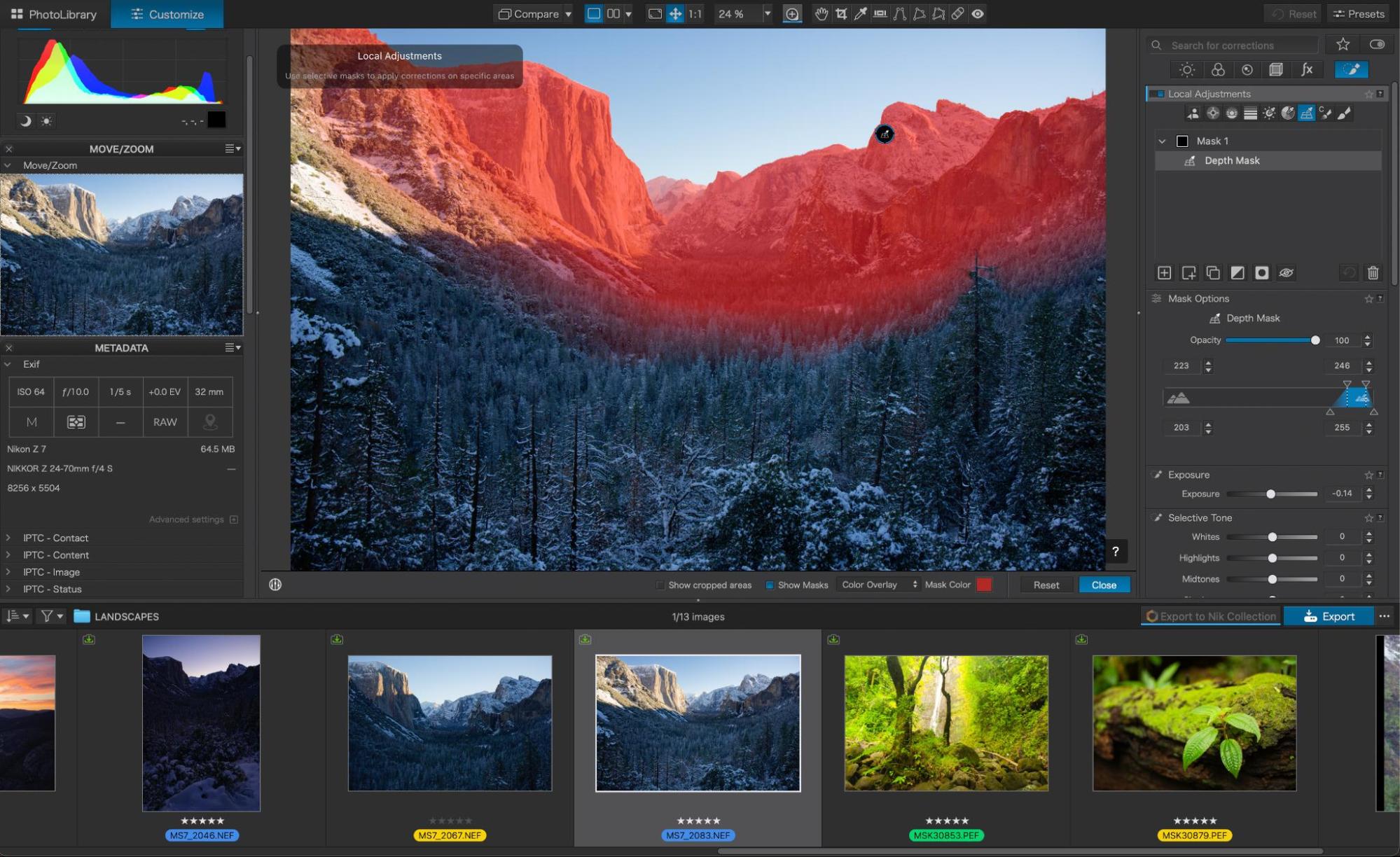
The most significant technical advancement in the current release is the introduction of depth masking. Unlike traditional tools that rely on contrast-based edge detection or user-defined gradients, the new engine analyzes the entire scene to construct a three-dimensional map. This allows for precise adjustments based on the distance of subjects from the sensor. For landscape photographers, this means the ability to apply atmospheric haze or color grading to distant ridgelines without affecting the foreground, a task that previously required tedious manual rotoscoping or complex layer masking in external applications like Adobe Photoshop.

Complementing this is a refined approach to portraiture. The software now automates the detection of specific facial features—including irises, sclera, teeth, and skin texture—allowing for targeted retouching that maintains a high degree of naturalism. By automating the identification and isolation of these components, DxO is addressing a major pain point for high-volume portrait and wedding photographers who often face significant post-production backlogs.
Lab-Calibrated Precision
A cornerstone of the DxO ecosystem remains its reliance on empirical data. While competitors often rely on generalized lens profiles or metadata-derived corrections, DxO continues to utilize its dedicated laboratory to calibrate thousands of camera and lens combinations. The software’s ability to recognize a specific optic—even when multiple variations of the same focal length exist—remains an industry benchmark.
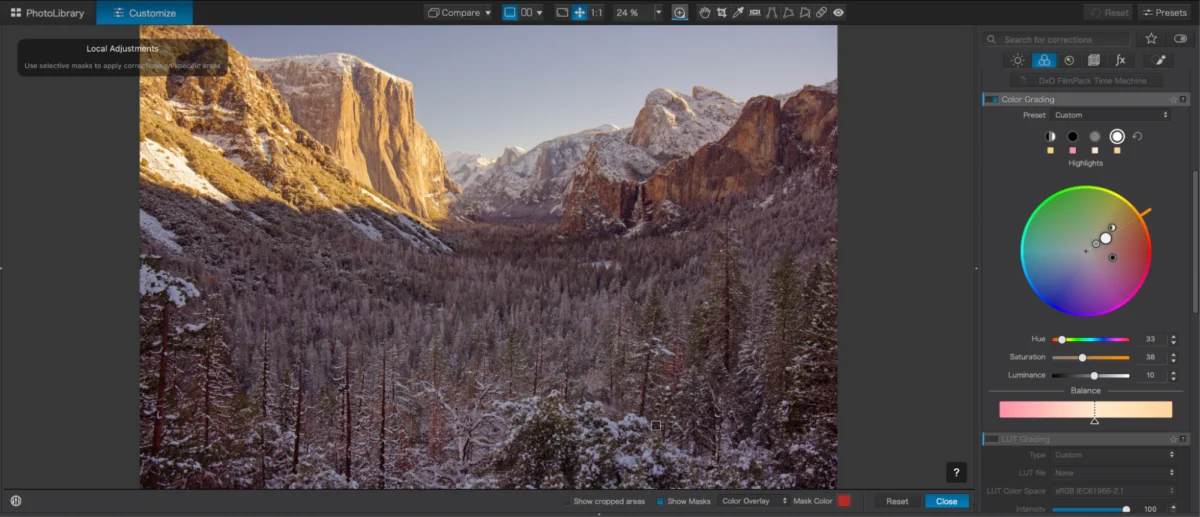
According to internal technical documentation from the manufacturer, the software now supports a database of over 600 cameras, each calibrated for specific distortion signatures, vignetting, and chromatic aberration profiles. This granular approach ensures that the "base" look of an image—the starting point before any artistic editing occurs—is as optically perfect as the hardware allows. This rigorous adherence to objective image quality is why many professionals in the commercial and architectural sectors remain tethered to the DxO workflow despite the proliferation of more generalized, cloud-centric editing platforms.
Market Context and Economic Implications
The release of PhotoLab 10 occurs within a broader industry movement toward subscription-based software models. In contrast, DxO has maintained its commitment to the perpetual license model. This decision serves as a significant differentiator in a market currently dominated by monthly service agreements. By allowing users to purchase the software outright, DxO addresses the concerns of photographers who prioritize long-term accessibility and cost predictability.
The introduction of the Labor Day promotional period—running from September 4 through September 7, 2026—highlights the company’s aggressive strategy to capture market share among new users. By offering a 20% discount via the code SLRLoungeLD2026, the company is positioning itself as a high-value alternative to the standard subscription ecosystem. This financial structure is particularly attractive to independent contractors and small studio owners who require professional-grade tools without the ongoing overhead of cloud-based subscriptions.
Technical Performance and Workflow Integration
In real-world application, the performance of the software depends heavily on hardware acceleration. The integration of AI-heavy tasks, particularly the DeepPRIME XD2 noise reduction and the new depth-aware masking, is computationally demanding. Users with modern GPU-accelerated systems will see significant time savings; however, those operating on legacy hardware may experience slower export times when applying complex masks across high-resolution, full-frame files.
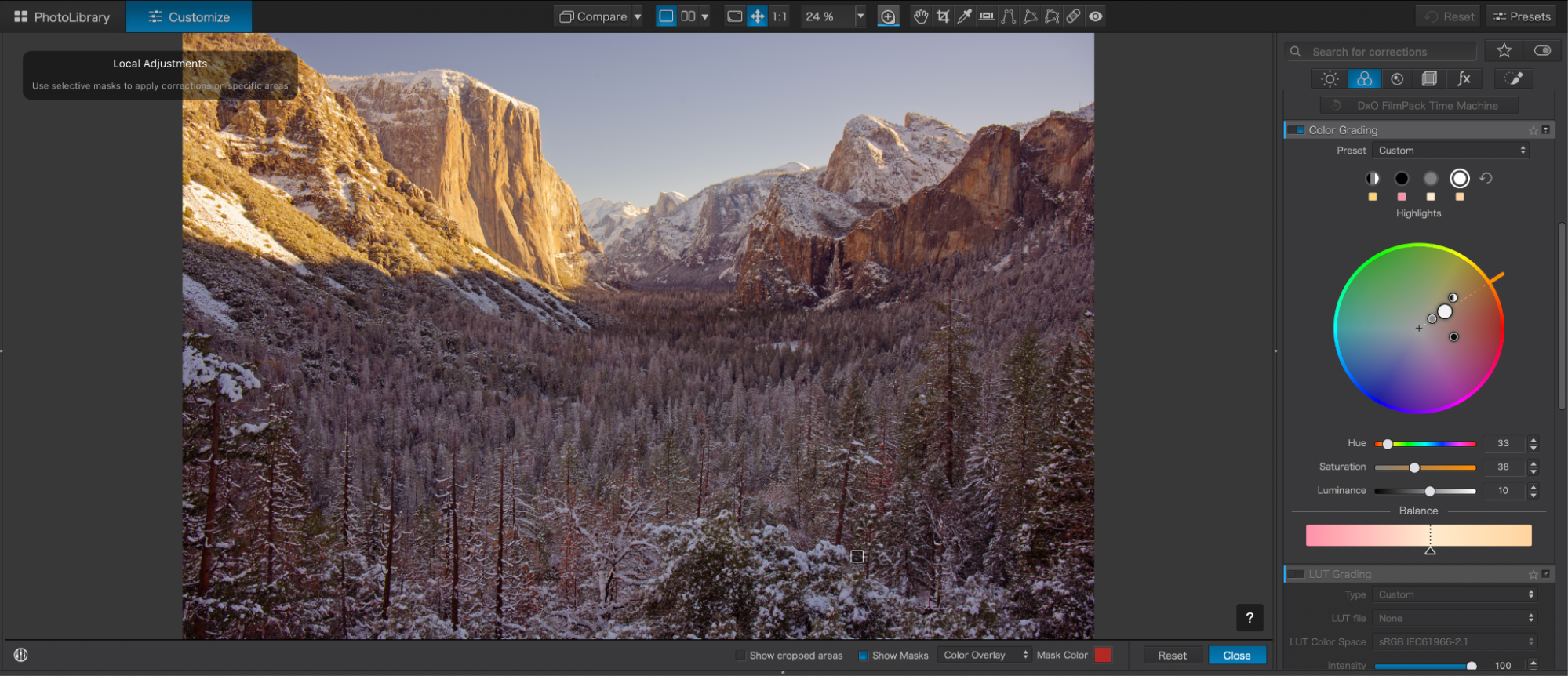
DxO has also addressed workflow stability. The software’s interface remains divided into the "PhotoLibrary" and "Customize" modules, a structure that has been praised for its logical progression from ingestion to final delivery. The addition of a direct, one-click hand-off to Affinity Photo (scheduled for a post-launch update in late September) signifies an effort to integrate more fluidly into the modern multi-app creative workflow.
Broader Impact on Digital Photography
The implication of these developments is clear: the divide between "raw processing" and "image manipulation" is vanishing. By embedding sophisticated AI tools directly into the raw conversion stage, DxO is empowering photographers to perform advanced retouching while maintaining the non-destructive nature of raw data.
For the industry at large, the success of PhotoLab 10 suggests that there is still a significant segment of the market that prioritizes "image-first" editing. While cloud-syncing and mobile-first editing platforms cater to the content creator market, DxO is doubling down on the needs of the working professional who requires high-fidelity color management, precise lens optics, and efficient, AI-assisted culling and grading.

As the industry moves toward 2027, the role of software developers like DxO will be to continue balancing these advanced AI features with the fundamental requirement for reliability. The shift from "smart" tools to "context-aware" tools is the current frontier, and with the release of version 10, DxO has firmly established its presence in that space. For those who manage extensive photographic archives, the transition to a toolset that can intelligently identify subjects, depth, and optical characteristics at the raw level is not merely an upgrade—it is a functional necessity for maintaining competitiveness in a high-demand professional environment.
The software’s ability to remain "agnostic" regarding the camera brand—supporting everything from Fuji’s X-Trans sensors to legacy DSLR bodies—further cements its status as a versatile, evergreen utility. As the digital imaging market continues to evolve, the combination of lab-tested optical corrections and modern AI-driven masks will likely remain the gold standard for photographers seeking the highest possible output from their raw data.