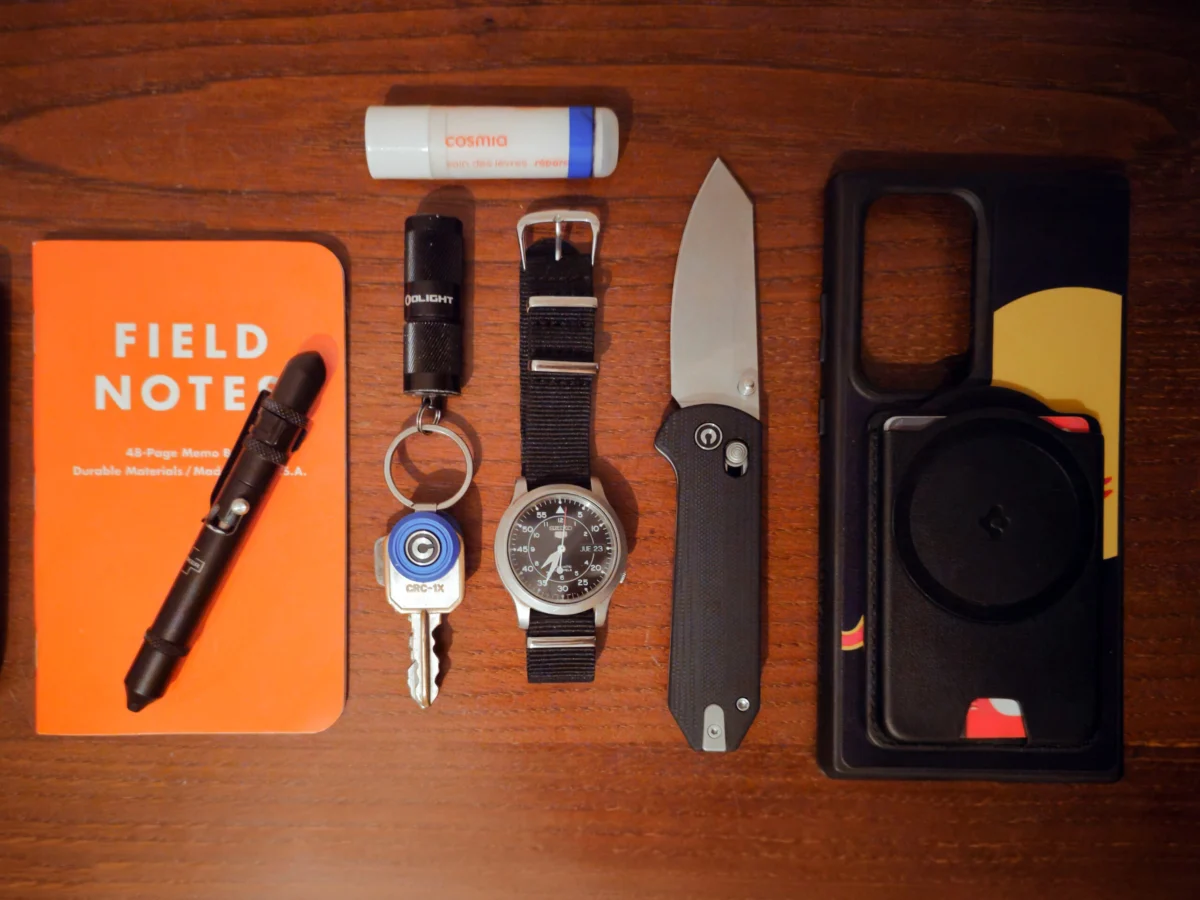
The concept of Everyday Carry (EDC) has transcended its origins as a niche hobby for survivalists and outdoor enthusiasts, evolving into a sophisticated discipline of urban preparedness and personal efficiency. Among the professionals who have adopted this practice is Ruben, an aeronautical automation operator based in Portugal. His current kit serves as a compelling case study on how modern workers in high-precision fields curate their pockets to balance the demands of technical environments with the necessity of compact, functional design. By integrating specialized tools like the CIVIVI Yonder, which recently garnered accolades at the 2024 Blade Show, and maintaining a focus on minimalist utility, professionals are reshaping how they interact with their tools during both high-stress operational shifts and personal time.
The Anatomy of a High-Precision Carry
For an aeronautical automation operator, the work environment requires a specific set of criteria for gear: tools must be reliable, easily accessible, and unobtrusive. The transition from general-purpose utility to field-specific equipment often involves a careful curation of items that can withstand the rigors of an industrial facility while remaining lightweight enough for daily movement.
Ruben’s approach emphasizes consolidation. By utilizing a magnetic wallet integrated into his mobile device, he reduces the physical footprint of his essential items. This strategy is common among professionals who require a streamlined workflow where the clutter of a traditional wallet is replaced by digitized identification and payment methods. This core philosophy—the optimization of limited space—extends to his choice of a compact key organizer and a mini bolt-action pen. Such tools are not merely decorative; they serve as critical components for documentation and rapid mechanical adjustments in settings where bulky gear is either forbidden or physically impractical.
Chronology of Gear Integration and Selection
The evolution of an EDC kit is rarely static. It follows a trajectory influenced by both professional requirements and the emergence of new technologies. The recent addition of the CIVIVI Yonder and a Field Notes notebook to Ruben’s repertoire illustrates the cyclical nature of gear acquisition.
- Early Phase: Establishment of a foundational kit consisting of essential communication devices, lighting, and basic mechanical tools.
- Intermediate Phase: Shift toward modularity. The introduction of magnetic wallet systems and compact organizers allowed for increased pocket efficiency.
- Current Phase: High-value integration. The acquisition of the CIVIVI Yonder marks a pivot toward industry-recognized design. The Yonder, designed by Zac Whitmore, won "Best Buy of the Year" at the 2024 Blade Show. Its inclusion in a daily kit is significant, as it represents a shift toward gear that offers high-end performance—such as the crossbar locking mechanism—at an accessible price point, making it an ideal choice for professionals who require a balance of durability and fiscal responsibility.
- Projected Future: The planned rotation between the Kizer Feist and a Casio Edifice watch signifies an awareness of social and professional context. By distinguishing between "on-the-job" utility and "off-duty" aesthetics, the user maintains a versatile collection that serves multiple social environments.
Data and Market Trends in Personal Utility Gear
The market for EDC items has seen substantial growth, driven by an increased consumer interest in personal preparedness and the "buy it for life" (BIFL) ethos. According to industry reports from 2023 and 2024, the pocket knife segment alone has seen a valuation surge of approximately 6.5% annually. The success of the CIVIVI Yonder is emblematic of a broader trend: the democratization of high-quality materials.
The use of materials like G10, carbon fiber, and premium blade steels (such as Nitro-V or 14C28N) in mid-range EDC items has made professional-grade equipment available to a wider demographic. Furthermore, the rising popularity of "miniaturized" tools—such as keychain flashlights with high lumen outputs and micro-bolt action pens—correlates with an increase in urban density. As individuals spend more time in transit or in office-centric environments, the demand for gear that mimics the functionality of full-sized shop tools without the associated bulk has reached an all-time high.
Professional Implications and Operational Efficiency
For an aeronautical automation operator, the implications of a well-curated EDC kit are twofold: improved situational readiness and psychological organization. In an environment where automated systems require constant monitoring, the ability to deploy a precise tool, such as a pen for rapid log-keeping or a knife for package opening or material inspection, minimizes downtime.
The inclusion of a notebook like Field Notes suggests a commitment to analog backup. In sectors where digital systems are the primary mode of operation, the ability to capture information manually is often seen as a critical fail-safe. This duality—the marriage of high-tech automation in the workplace with the tactile reliability of a paper notebook—highlights a nuanced approach to modern work. It acknowledges that while technology drives industry, the individual operator remains the final arbiter of operational success, and their personal gear is the interface through which they interact with the physical world.
The Aesthetics of Professionalism: The Kizer and Casio Duo
The planned rotation of his watch to a Casio Edifice with a Tiffany-style dial speaks to the evolving aesthetic standards within the professional EDC community. The "Tiffany dial" trend, popularized by luxury watchmakers, has filtered down into the more accessible quartz market, allowing professionals to maintain a "dressier" appearance without sacrificing the functional integrity of a reliable, water-resistant timepiece.
The Kizer Feist, often noted for its sleek, front-flipper deployment and minimalist silhouette, provides a contrast to the more robust CIVIVI Yonder. This intentional variety allows the user to adapt their equipment to the occasion. For an aeronautical professional, this choice is not merely about style; it is about social navigation. Whether in a high-security facility or a social setting, the equipment chosen communicates a level of preparedness that is valued in both professional and personal circles.
Analysis: The Future of Curated Utility
The trend observed in Ruben’s carry highlights a departure from "gadget-heavy" collections toward a more refined, purposeful selection. This is a reaction to the oversaturation of consumer goods. Professionals are increasingly auditing their pockets, removing items that do not provide a clear, recurring benefit.
The integration of the CIVIVI Yonder is a prime example of this trend. By choosing a tool that has been externally validated by industry experts—in this case, through the Blade Show awards—the user minimizes the risk of gear failure. This reliance on peer-reviewed, high-performance equipment is becoming the standard for the modern professional.
Furthermore, the influence of social platforms, such as Instagram and dedicated EDC forums, has accelerated the exchange of information regarding gear longevity and performance. This community-driven feedback loop ensures that only the most reliable and efficient items remain in the long-term kits of professionals. As we look toward the remainder of the decade, it is likely that the emphasis will continue to shift away from "more" gear toward "better" gear—tools that are lighter, more durable, and more specifically tailored to the unique demands of the user’s profession.
Conclusion
The everyday carry of a professional in the aeronautical automation sector is a reflection of the precision required by their industry. By curating a set of tools that balances the mechanical, the digital, and the aesthetic, individuals like Ruben are able to navigate their professional and personal lives with greater efficiency. Whether it is the inclusion of an award-winning folding knife or the strategic rotation of a timepiece for social occasions, these choices are rooted in a philosophy of preparedness. As the EDC market continues to mature, the focus on high-value, functional, and minimalist gear will likely remain the gold standard for professionals across the globe. Through the careful selection of every item—from the pen in their pocket to the watch on their wrist—they define the modern standard of what it means to be ready for the challenges of a complex, automated world.