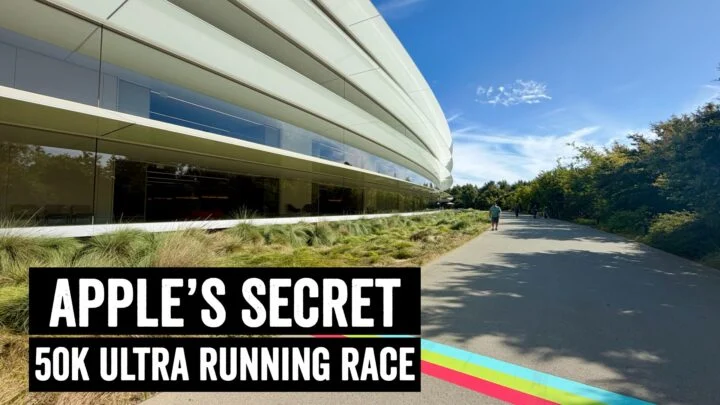
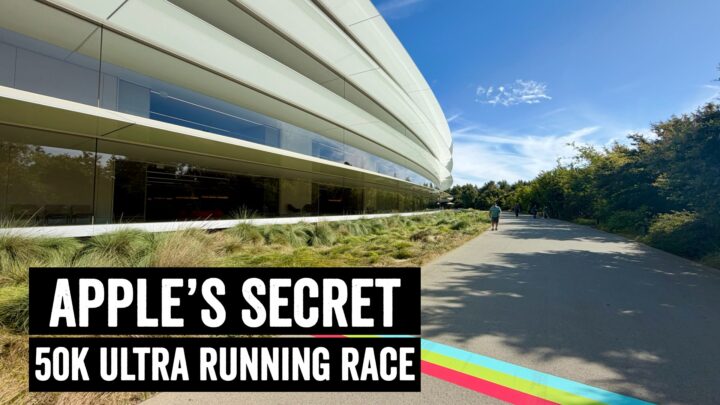
The atmosphere surrounding Apple Inc.’s corporate headquarters in Cupertino, California, is typically defined by high-stakes product launches, software development, and corporate strategy sessions. However, earlier this year, a unique athletic endeavor temporarily shifted the focus of the technology giant’s iconic campus away from silicon chips and operating systems. A select group of runners gathered inside Apple Park to tackle a grueling 50-kilometer (31.06 miles) ultramarathon, tracing a continuous loop around the circumference of the company’s famous circular main building, colloquially known as "The Spaceship."
The event, which took place under relative secrecy, captured the intersection of corporate wellness culture, endurance athletics, and the burgeoning ecosystem of fitness-tracking technology. While Apple frequently integrates health and fitness metrics into its core hardware and software ecosystem—most notably through the Apple Watch and Fitness+ platforms—hosting an official or semi-official ultramarathon of this scale directly on corporate grounds represents an unusual convergence of the company’s internal culture and the broader endurance sports community.
Main Facts of the Apple Campus Ultramarathon
The event challenged participants to complete a demanding 50-kilometer distance by navigating repetitive loops around the perimeter of Apple Park. Designed by renowned architect Norman Foster, the ring-shaped building spans approximately one mile in circumference, meaning participants had to complete roughly 31 full circuits to reach the 50K threshold.
Throughout the event, organizers and course announcers repeatedly emphasized a singular phrase to the participating athletes: "This is not a race." This designation reframed the gathering from a competitive contest into a shared endurance challenge, emphasizing completion, personal stamina, and camaraderie over podium finishes and record-breaking paces.
The timing of the event’s public disclosure coincides with broader industry anticipation regarding Apple’s wearable technology lineup. Endurance events held on corporate campuses often serve as internal testbeds for hardware validation, algorithmic stress-testing, and executive validation of fitness-tracking metrics under real-world athletic conditions. The 50-kilometer distance far exceeds a standard marathon (42.195 kilometers) and places severe demands on both human physiology and the battery life, GPS accuracy, and biometric sensors of any wearable devices worn by the participants.
Chronology and Background of Apple Park Endurance Culture
Apple’s relationship with fitness and running is deeply embedded in the architectural and cultural design of Apple Park, which opened its doors to employees in 2017. The 175-acre campus was conceived by Steve Jobs as a blend of corporate efficiency and natural landscape, featuring thousands of drought-tolerant trees, a central pond, and extensive walking and running trails winding through the grounds.
While casual running and walking have long been staple activities for Apple employees utilizing the campus paths, organized long-distance events on the primary ring are rare. The decision to permit a 50K ultramarathon required significant logistical coordination between facilities management, corporate security, and event organizers to ensure that runner safety was maintained without disrupting ongoing corporate operations within the ring.
The evolution of Apple Park as an athletic venue mirrors a broader trend within Silicon Valley, where major technology firms increasingly invest in comprehensive health, wellness, and fitness infrastructure for their workforces. From state-of-the-art fitness centers to marked running routes and corporate sports leagues, technology campuses are frequently designed to support holistic employee well-being. However, opening the high-security perimeter of the main Apple Park ring to an endurance event of this magnitude remains an extraordinary occurrence.
Supporting Data and Technological Implications
Ultramarathon running has experienced a substantial surge in global popularity over the past decade. According to data from the International Trail Running Association (ITRA) and various endurance sports registries, participation in ultra-distance events has grown by over 300% globally over the last fifteen years. As the sport has scaled from a niche extreme discipline into a mainstream athletic pursuit, the demand for advanced physiological monitoring tools has intensified.
Athletes competing in 50-kilometer events require continuous, high-precision data tracking, including:
- Real-time heart rate variability (HRV) monitoring
- Advanced GPS route tracking and elevation profiling
- Recovery metrics and training load analysis
- Battery endurance capable of sustaining continuous tracking for upwards of four to eight hours
Events held in controlled corporate environments, such as the Apple Park loop, provide a unique testing environment for engineers and product developers. The concrete and glass architecture of "The Spaceship," combined with its distinct circular geometry, presents specific challenges for GPS signal acquisition and multipath interference—making it an inadvertent testing ground for location-accuracy algorithms.
Furthermore, the integration of fitness data within the Apple ecosystem relies heavily on continuous algorithmic refinement. By observing runners navigating dozens of repetitive loops at varying paces, software developers and exercise physiologists can gather nuanced datasets regarding stride metrics, cadence stability, and cardiovascular strain over extended durations.
Official Responses and Industry Context
While Apple Inc. has not issued a formal, wide-release commercial press statement detailing the administrative origins of the 50K event, the gathering aligns closely with the company’s ongoing marketing and product development strategies. Apple has increasingly positioned the Apple Watch—particularly the Apple Watch Ultra series—as the premier tool for endurance athletes, marathoners, and outdoor adventurers.
The philosophy behind the event’s governing mantra—“This is not a race”—reflects a broader cultural shift within modern endurance sports toward inclusivity, personal achievement, and mental resilience. By stripping away the pressure of a traditional competitive race, participants were able to focus purely on the physiological and psychological challenges of sustaining output over 50 kilometers.
Industry analysts note that tech giants often utilize controlled internal testing events to build authenticity within specific consumer verticals. When engineers, designers, and executives personally test hardware and software under extreme conditions on their own campus, it fosters a direct feedback loop that ultimately influences consumer-facing product iterations.
Broader Impact and Future Outlook for Endurance Tech
The intersection of corporate campuses and extreme sports highlights how deeply fitness technology has permeated daily professional and personal life. As wearables become more sophisticated, the boundary between consumer lifestyle tracking and professional-grade athletic analysis continues to blur.
The secretive nature of the Apple Park ultramarathon underscores the tech industry’s balancing act between internal experimentation and public presentation. While the event was conducted away from the immediate glare of public media, the subsequent sharing of video documentation and anecdotal accounts provides a rare glimpse into the active lifestyle culture cultivated within Silicon Valley’s most secretive corporation.
As the endurance sports market expands and the demand for precise, reliable biometric monitoring grows, events like the Apple Park 50K serve as practical demonstrations of how technology companies engage with the very disciplines their products aim to support. Whether similar athletic gatherings will become a recurring fixture of the Cupertino campus remains to be seen, but the event firmly establishes that the paths surrounding "The Spaceship" are capable of sustaining elite-level human endurance.