The release of the Apple Watch Series 12, coupled with the comprehensive overhaul of the Apple Health application within the iOS 27 ecosystem, marks a significant departure from previous iteration strategies. For years, the wearable technology market has been bifurcated: users seeking high-level, actionable recovery data often gravitated toward dedicated fitness trackers like WHOOP, while those prioritizing daily utility, communication, and ecosystem integration remained loyal to the Apple Watch. With the latest hardware and software updates, Apple has systematically addressed the technical gaps that previously necessitated the use of secondary fitness devices, signaling a potential consolidation of the health-tracking sector.
A Chronology of Apple’s Health Evolution
To understand the magnitude of the Series 12 update, one must examine the progression of Apple’s health-sensing capabilities over the last decade. Since the introduction of the original Apple Watch in 2015, the device has transitioned from a notification-centric accessory to a sophisticated medical-grade health monitor.
In 2018, the Series 4 introduced ECG capabilities, a watershed moment that moved the device into the realm of clinical-adjacent utility. By 2020, the introduction of blood oxygen saturation (SpO2) monitoring further refined its longitudinal tracking capabilities. However, a persistent criticism remained: the frequency of data sampling. While competitors focused on continuous, high-fidelity monitoring for recovery optimization, Apple opted for a periodic sampling approach—often every five minutes—to preserve battery life.

The launch of the Series 12 in September 2026 effectively bridges this gap. By increasing heart rate sampling frequency to every five seconds, Apple has moved significantly closer to the continuous monitoring standard. This change is not merely technical; it represents a fundamental shift in how the device interprets physiological stress, exertion, and recovery.
The Impact of the iOS 27 Health App Redesign
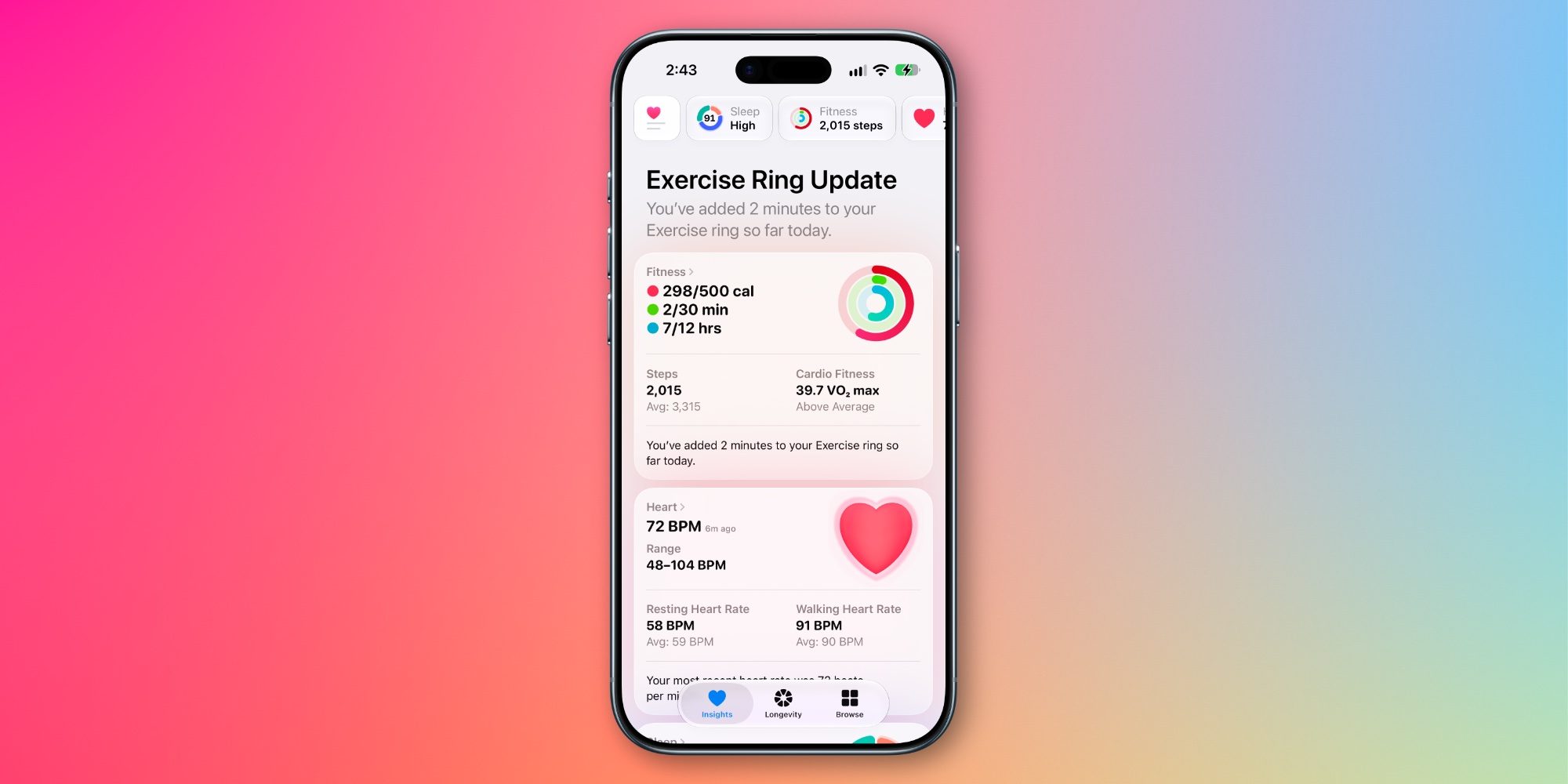
The hardware improvements of the Series 12 are inextricably linked to the software environment provided by iOS 27.2. The recent overhaul of the Apple Health app addresses the primary criticism regarding data presentation. Historically, the Health app acted as a repository for disparate data points—sleep, steps, heart rate, and noise levels—often requiring users to synthesize the information themselves.
The redesigned dashboard in iOS 27 employs a more intuitive, user-centric interface that aggregates complex biological metrics into digestible insights. By leveraging advanced machine learning, the app now highlights correlations between, for instance, late-night caloric intake and resting heart rate elevation, or the impact of travel on sleep quality. This shift toward "contextual health" allows users to understand the "why" behind their metrics, rather than simply viewing a historical log of data points.
Readiness Scores: The New Gold Standard for Recovery
Perhaps the most significant addition to the Series 12 is the dedicated Readiness app. For users accustomed to dedicated recovery trackers, the readiness score is the most critical metric. Previously, the Apple Watch offered a sleep score that was often criticized for being overly simplistic—equating time spent in bed with high-quality recovery.
The new Readiness system utilizes Heart Rate Variability (HRV), sleep staging, respiratory rate, and resting heart rate to calculate a 1-to-10 score. This metric serves as a barometer for the body’s current physiological state, providing users with a daily recommendation on whether to push for high-intensity training or focus on active recovery. By integrating this functionality natively, Apple has eliminated the need for third-party subscriptions or secondary hardware for many casual to semi-pro athletes.
Comparative Analysis: Apple Watch vs. Specialized Trackers
The debate between the Apple Watch and specialized trackers like WHOOP often centers on the trade-off between "utility" and "focus." Specialized trackers operate on a "screenless" model, which minimizes distraction and promotes a "wear-and-forget" mentality. Conversely, the Apple Watch is a high-utility device that serves as a wrist-based computer.
The industry impact of this convergence is profound. For the average consumer, the requirement to wear two devices—one for communication and one for deep health analytics—is a significant barrier to entry. If the Series 12 provides sufficient data accuracy to satisfy the requirements of a fitness-conscious individual, the market share for dedicated, screenless trackers may face downward pressure.
Furthermore, Apple’s ecosystem advantage cannot be overstated. When the Health app integrates data from a user’s calendar, their home lighting systems (via HomeKit), and their sleep schedule, the granularity of the health insights becomes significantly more robust than a tracker that only monitors physical activity.

Technical Limitations and Future Implications
Despite the advancements, it is important to maintain an objective view of the remaining technical disparities. While the five-second heart rate sampling rate is a vast improvement over the previous five-minute window, it remains distinct from the one-second sampling rate offered by some specialized fitness trackers. For professional athletes who require beat-to-beat variability analysis during high-intensity interval training (HIIT), the difference may still be meaningful.
However, for the vast majority of the population—including those who identify as highly active—the marginal benefit of one-second vs. five-second sampling is negligible. The trade-off is the significant battery consumption associated with higher sampling rates. Apple’s decision to optimize for the five-second interval suggests a strategic balance between power efficiency and the need for data accuracy.
Broader Industry Impact
The release of the Series 12 is indicative of a broader trend in wearable technology: the "all-in-one" device. As Apple continues to integrate more complex sensors—including non-invasive glucose monitoring and blood pressure tracking, which have been subject to ongoing testing—the Apple Watch is rapidly approaching the status of a comprehensive personal health diagnostic tool.
For the healthcare industry, this creates a new frontier. When patients arrive at their primary care physicians with years of high-fidelity, actionable health data, the nature of the consultation changes. The focus shifts from diagnostic reactive medicine to preventative proactive health management. The ability of the Series 12 to provide long-term, consistent monitoring ensures that anomalies in data can be identified much earlier than in traditional episodic care models.

Expert Perspectives on Wearable Evolution
Industry analysts point out that Apple’s strength lies in its ability to democratize health data. By bringing features like Readiness scores and improved sampling to a mainstream device, the company is effectively forcing the entire wearable market to elevate its standards. Manufacturers who cannot provide similar value-added insights are finding it increasingly difficult to compete on hardware alone.
The integration of these features into the core watchOS experience also underscores Apple’s commitment to the "Health" vertical as a primary pillar of its corporate strategy. While iPhone sales remain the cornerstone of the company’s revenue, the "Wearables, Home, and Accessories" segment has become a critical driver of user retention. By making the Apple Watch indispensable to an individual’s daily health regimen, Apple significantly increases the "switching cost" for users considering a move to other smartphone ecosystems.
Conclusion: The Future of Personal Monitoring
The transition from a basic activity tracker to a holistic health companion is complete with the Series 12. While specialized trackers will always maintain a niche for the ultra-serious athlete or those who prefer a distraction-free experience, the gap between the Apple Watch and its competitors has never been narrower.
For the average user, the combination of the Series 12’s enhanced sensor suite and the comprehensive data synthesis provided by the iOS 27 Health app offers a compelling case for a single-device solution. The ability to monitor readiness, track sleep with nuance, and maintain constant connectivity without sacrificing data integrity is a milestone for wearable technology. As we look toward future iterations, the focus will likely shift toward even more specialized diagnostics, further blurring the line between the consumer wearable and the clinical diagnostic tool. The Series 12 is not merely a new watch; it is a testament to the maturation of the quantified-self movement, providing users with the tools necessary to take agency over their own long-term health outcomes.