







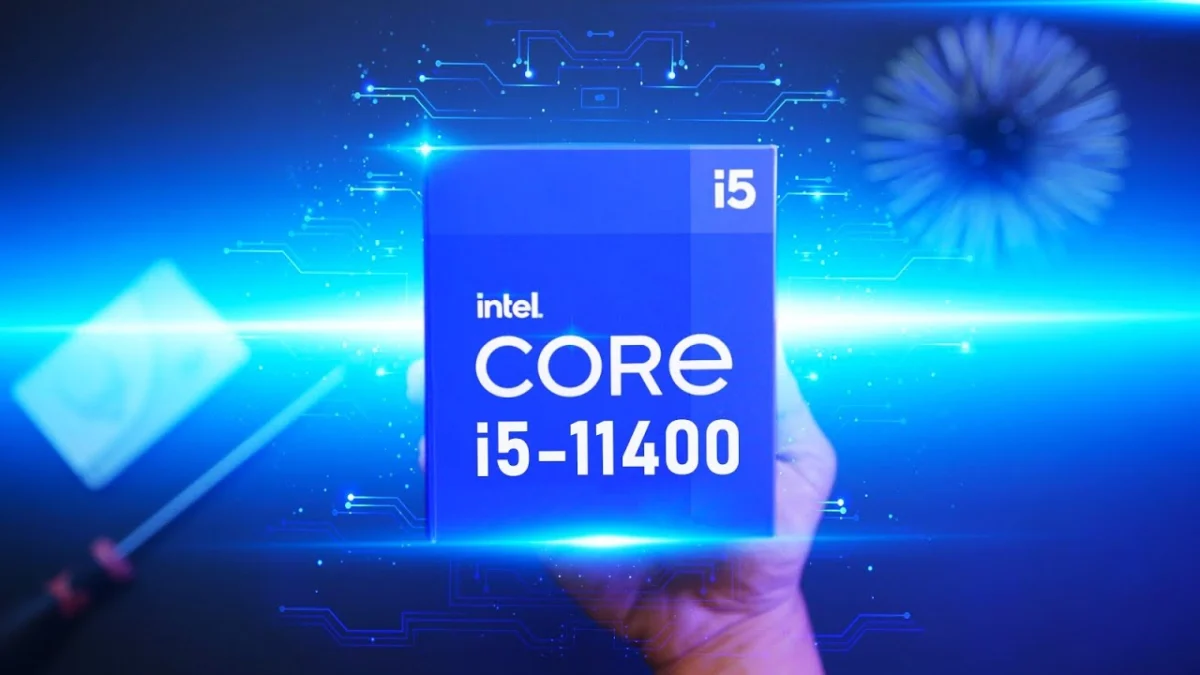
The launch of Intel’s 11th-generation Rocket Lake desktop processors introduced the computing community to a mixed landscape of architectural improvements and thermal challenges. Among the most popular entries in this product stack is the Intel Core i5-11400, a six-core, twelve-thread processor positioned as an affordable entry point for mainstream builders. Retailing at approximately $185 USD for the standard variant with integrated graphics—and an even lower price point for the F-series variant lacking an integrated GPU—the chip has garnered widespread media praise for its competitive pricing and performance relative to AMD’s older Ryzen 3000 series. However, a deeper examination of the processor reveals a complex interaction between factory specifications, motherboard manufacturer optimizations, and thermal management that often distorts performance expectations for everyday consumers.
The context of the Core i5-11400 release stems from a highly competitive CPU market where Intel sought to reclaim market share in the budget and mid-range segments. While AMD’s Zen 3 architecture largely dominated high-end desktop benchmarks, the supply constraints and higher price points of competing AMD processors left a distinct vacancy in the sub-$200 market. Intel’s Rocket Lake architecture, which finally brought a new core design to the lower-tier i5 segment while leaving older Comet Lake architectures for the Core i3 and Pentium lines, seemed well-equipped to fill this void. Yet, the real-world deployment of the i5-11400 has exposed significant discrepancies between Intel’s official power guidelines and the operational behavior enforced by modern motherboard manufacturers.
A primary technical complication involving the Core i5-11400 and its sibling processors is the implementation of Multi-Core Enhancement (MCE)—referred to by various proprietary names depending on the motherboard vendor. Intel specifies the processor with a nominal Thermal Design Power (TDP) or Power Limit 1 (PL1) of 65W, alongside a short-term Power Limit 2 (PL2) of 154W that is designed to sustain higher turbo frequencies for a duration of up to 28 seconds (known as the Tau value). Under Intel’s official guidelines, the processor should drop from its high-power state down to its baseline 65W envelope after this brief interval.
However, extensive testing across multiple motherboards from leading manufacturers—including ASUS, Gigabyte, and MSI—reveals that automatic BIOS settings frequently override these specifications. Rather than adhering to Intel’s 28-second limit for PL2, these motherboards apply MCE by default, locking the processor at its maximum power consumption indefinitely. This unconstrained power delivery generates substantial performance gains in synthetic benchmarks, effectively inflating review scores and public perception. Unfortunately, it also introduces severe thermal penalties that catch unsuspecting builders off guard, particularly those utilizing compact form-factor chassis or lower-end cooling solutions.
The practical implications of these motherboard defaults were highlighted during small-form-factor testing utilizing a low-profile Noctua NH-L9i cooler. Despite the i5-11400’s official 65W rating, running the processor under unrestricted motherboard power limits caused thermal loads that overwhelmed the cooling capacity of the compact heatsink. Under stock Intel parameters, the cooler functions adequately within thermal limits; however, with MCE enabled by default, temperatures rapidly surged to 96 degrees Celsius before thermal throttling engaged to reduce clock speeds by approximately 200MHz. Similar thermal stress was observed when utilizing Intel’s bundled stock cooler, which features a copper core and updated black aesthetic but struggles under sustained 154W loads. Consequently, cooling manufacturers such as Noctua have found it necessary to update their product documentation, adding power warnings for low-end Rocket Lake processors to manage consumer expectations.
The variance introduced by unconstrained power limits extends directly into benchmark performance, creating a bifurcated reality for testers and end-users alike. In synthetic multi-threaded workloads such as Cinebench R20, processors operating with enhanced power limits yield significantly higher scores—often exceeding 3,600 points—compared to those running strictly within Intel’s 65W baseline parameters. This discrepancy explains the wide performance variance reported across various technology publications. Single-threaded applications and light workloads remain largely unaffected, as the processor can easily sustain its maximum turbo frequency without exceeding baseline thermal or electrical thresholds.
In real-world productivity applications, such as GPU-accelerated video editing suites like Adobe Premiere and DaVinci Resolve, the benefits of MCE depend heavily on the duration and threading profile of the workload. In heavily multi-threaded tasks, the stock i5-11400 occasionally lags behind higher-priced competitors due to its conservative baseline clock speeds, but enabling MCE bridges this performance gap, making the processor appear exceptionally competitive against more expensive alternatives. Conversely, in gaming scenarios, the advantages of Multi-Core Enhancement exhibit diminishing returns. Most video games rely on peak single-core or few-core frequencies rather than sustained all-core power delivery. Consequently, even a strictly stock i5-11400 matches or outperforms legacy AMD Ryzen 3000 series processors in gaming benchmarks, providing a reliable foundation for budget-conscious gaming builds.
Efforts to reclaim performance benefits through memory overclocking yield similarly nuanced results. Enabling higher memory speeds, such as DDR4-4000 in Gear 2 mode, offers minimal improvement in most standard operating environments, as the architecture does not fully leverage the expanded bandwidth. While minor performance gains can be observed in select gaming titles, the cost associated with high-speed memory kits generally outweighs the marginal benefit for budget-tier system builders.
Industry analysts and hardware reviewers have noted that while the Core i5-11400 remains a high-value processor at its core price point, the broader ecosystem practices surrounding motherboard defaults undermine the plug-and-play simplicity expected by mainstream consumers. Motherboard vendors have an incentive to maximize performance metrics out of the box to secure favorable reviews, but overriding manufacturer power limits without transparent user notification creates substantial friction for builders relying on standard cooling hardware. As the market continues to navigate component shortages and pricing volatility, transparency regarding thermal and electrical specifications remains essential for maintaining consumer trust and ensuring reliable system operation.