







The global memory semiconductor industry achieved a historic milestone in the third quarter of 2026, recording nearly $200 billion in worldwide DRAM revenue. According to market intelligence from Counterpoint Research, this staggering figure represents a 369% increase compared to the same period in the previous year. Driven by an insatiable appetite for artificial intelligence infrastructure, data center expansion, and advanced computing accelerators, the memory market has entered a transformative supercycle. However, industry analysts note that this revenue explosion is overwhelmingly fueled by record-setting average selling prices rather than massive expansions in physical manufacturing volume. As global chip fabricators struggle to keep pace with unprecedented demand, the broader technology ecosystem faces severe cost pressures that are reshaping everything from enterprise hardware procurement to the retail pricing of consumer electronics.
The Anatomy of a Supercycle: Volume Versus Value
To understand the mechanics behind the Q3 2026 financial windfall for memory manufacturers, industry observers must look closely at the divergence between shipment volume and financial yield. Historically, memory market booms have been characterized by a combination of high demand and expanded factory output. In the current cycle, however, physical supply remains tightly constrained and price-inelastic.
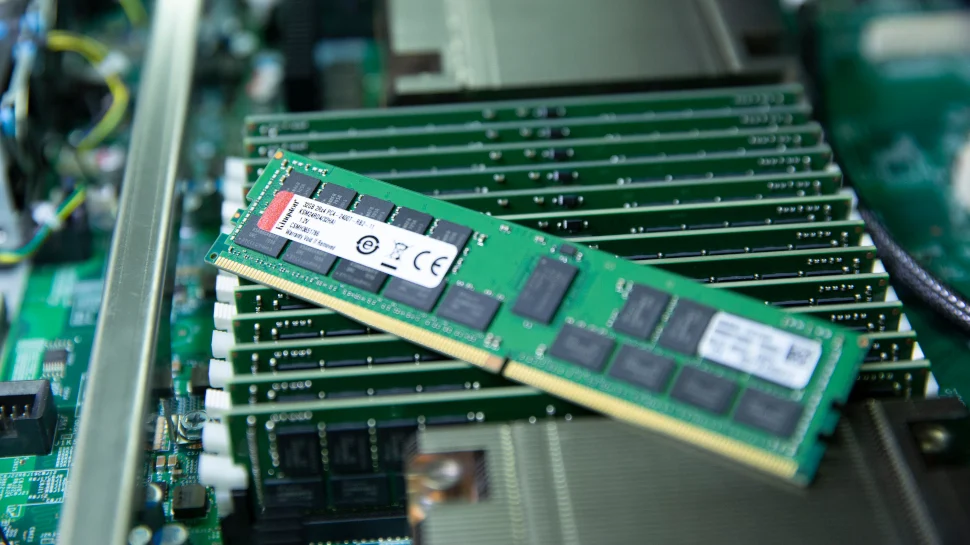
Data compiled by Counterpoint Research indicates that total bit shipments rose by a modest 4% year-over-year during the third quarter. Instead of flooding the market with silicon, memory makers are capitalizing on severe scarcity. The blended average selling price (ASP) for DRAM reached $1.90 per gigabit during the quarter, a sharp climb from historical norms where prices hovered between 20 and 30 cents per gigabit.
At the component level, the price escalation is even more pronounced. Contract prices for standard 16Gb DDR5 memory chips surged from $8.70 in October 2025 to $48 by September 2026, marking an increase of more than 450%. Meanwhile, benchmark DDR4 8Gb PC modules hit a record $27.50 in October, continuing a relentless upward trajectory tracked by DRAMeXchange. Industry leaders point out that today’s blended averages are nearly double the peak levels witnessed during previous market supercycles, such as the server module price highs recorded in 2018.
Chronology of the 2026 Memory Boom
The unprecedented financial expansion of 2026 did not happen overnight; it represents the culmination of a multi-year convergence between generative AI adoption and constrained semiconductor manufacturing capacity.

- Early 2026: Market analysts noted the beginning of rapid acceleration, with global DRAM revenue surging to approximately $97 billion in the first quarter—a 260% year-over-year jump that signaled the start of the current supercycle.
- Mid-2026: As enterprise investments in AI data centers accelerated, fab capacity was increasingly diverted toward High Bandwidth Memory (HBM) and high-performance server modules. Component shortages began cascading down into the consumer PC and smartphone sectors.
- Third Quarter 2026: Global DRAM revenue nearly doubled again within a six-month window, reaching just under $200 billion. Standard DRAM and LPDDR memory growth outpaced HBM growth as agentic AI workloads increased demand for general-purpose CPU servers.
- Late 2026 (September–November): Component pricing reached historic highs, with individual 16Gb DDR5 chips stabilizing near $48. Major memory producers, including Samsung, SK hynix, and Micron, reported record-breaking operating profits, while major tech executives engaged in public disputes over component allocation.
Divergent Trends: DRAM Soars While NAND Stabilizes
While the DRAM market continues to scale unprecedented heights, the flash memory sector is exhibiting different market dynamics. NAND flash pricing, which experienced a prolonged 21-month recovery rally, has begun to show signs of plateauing. The benchmark 128Gb MLC NAND price held flat at $30.61 during the third quarter.
Industry executives have offered varied interpretations of this stabilization. Leadership at firms like Transcend suggest that NAND and DRAM prices may be approaching a ceiling, with limited room for further exponential increases. Conversely, projections from TrendForce indicate that conventional DRAM contract prices are expected to climb an additional 10% to 15% sequentially in the fourth quarter of 2026, with continued upward momentum projected well into the first quarter of 2027.
The Shift Toward Consumer-Grade Components and AI Competition
A critical finding in recent market analyses is the expanding footprint of AI workloads within consumer-grade hardware architectures. While initial memory shortages were primarily concentrated around specialized graphics cards and high-end server clusters utilizing HBM, the rapid rise of agentic AI systems has fundamentally changed consumption patterns.
Agentic AI requires robust general-purpose computing capabilities, driving intense demand for standard DDR5 and LPDDR memory modules. This shift has placed personal computer manufacturers, smartphone brands, and hyperscale data center operators in direct competition for the exact same semiconductor fabrication lines.
The resulting friction has sparked high-profile industry commentary. OpenAI CEO Sam Altman publicly criticized the allocation of valuable DRAM capacity to personal consumer devices, describing the current distribution as detrimental to large-scale AI deployment. Though Altman later clarified his remarks on social media—posting "I want you to have so much RAM"—the underlying tension remains palpable. High-level corporate meetings, such as Altman’s discussions with dozens of Samsung executives in Yongin, underscore the fierce race among AI developers to secure guaranteed supply allocations.
Corporate Winners and Consumer Casualties
The financial bifurcation between memory producers and consumer device manufacturers is stark. Semiconductor giants have minted historic profits on the back of the shortage:

- Samsung Electronics maintained its market leadership, capturing approximately 38% of total DRAM revenue and posting a record third-quarter operating profit of 107.4 trillion won (roughly $80 billion). Ironically, Samsung’s own mobile and network division reported an operating loss of roughly 600 billion won due to the elevated cost of internal memory components.
- SK hynix reported quarterly revenues topping 100 trillion won for the first time in its history, with operating profits soaring 632% year-over-year.
- Micron Technology announced fiscal fourth-quarter revenues of $54.23 billion—a 379% increase—backed by an extraordinary gross margin of 86.8%.
Conversely, the downstream effects on finished goods manufacturers and retail buyers have been severe. Global smartphone shipments declined by 20% year-over-year in the third quarter, marking the weakest third-quarter performance since 2012, while retail handset prices climbed by approximately 20%. In the personal computer market, IDC reported shipments of 62.7 million units, down significantly from 78.5 million units in the prior year. TrendForce estimates that core components—specifically the CPU, RAM, and SSD—now account for an astonishing 68% of the total bill of materials for a standard $900 notebook.
Long-Term Industry Implications and Structural Changes
As the industry looks toward the remainder of the decade, major memory producers are offering sobering assessments regarding future supply availability. SK hynix has formally warned that memory supply constraints could persist through 2030. Similarly, Micron executives have stated that market tightness will intensify through 2027 and 2028, noting that new fabrication facilities—such as Micron’s upcoming Idaho plant—will not yield commercial wafer volumes until mid-2027.
Skeptics within the financial and academic communities point out that the memory sector has historically operated in intense boom-and-bust cycles. Commentators like Harvard Business School professor Willy Shih suggest that historical precedents indicate pricing bubbles inevitably deflate once greenfield manufacturing capacity comes online, potentially arriving in late 2027 or 2028.
However, industry defenders argue that structural changes in contract negotiations may alter the traditional cyclicality of the market. Leading manufacturers have increasingly adopted multi-year, "take-or-pay" contract structures. Micron alone has secured multi-year agreements covering over 35% of its projected revenue through 2030, backed by tens of billions of dollars in guaranteed customer commitments.
If these long-term contractual obligations hold firm, a potential cooling in enterprise AI demand may not immediately translate into lower retail prices for RAM modules. For consumers, system builders, and device manufacturers waiting for market normalization, the persistence of elevated pricing represents a profound structural shift in the economics of modern computing.